2nd Corinthians 5:20: And What it Means to All People!!
By: Anthony Joseph Hopkins April 2, 2021
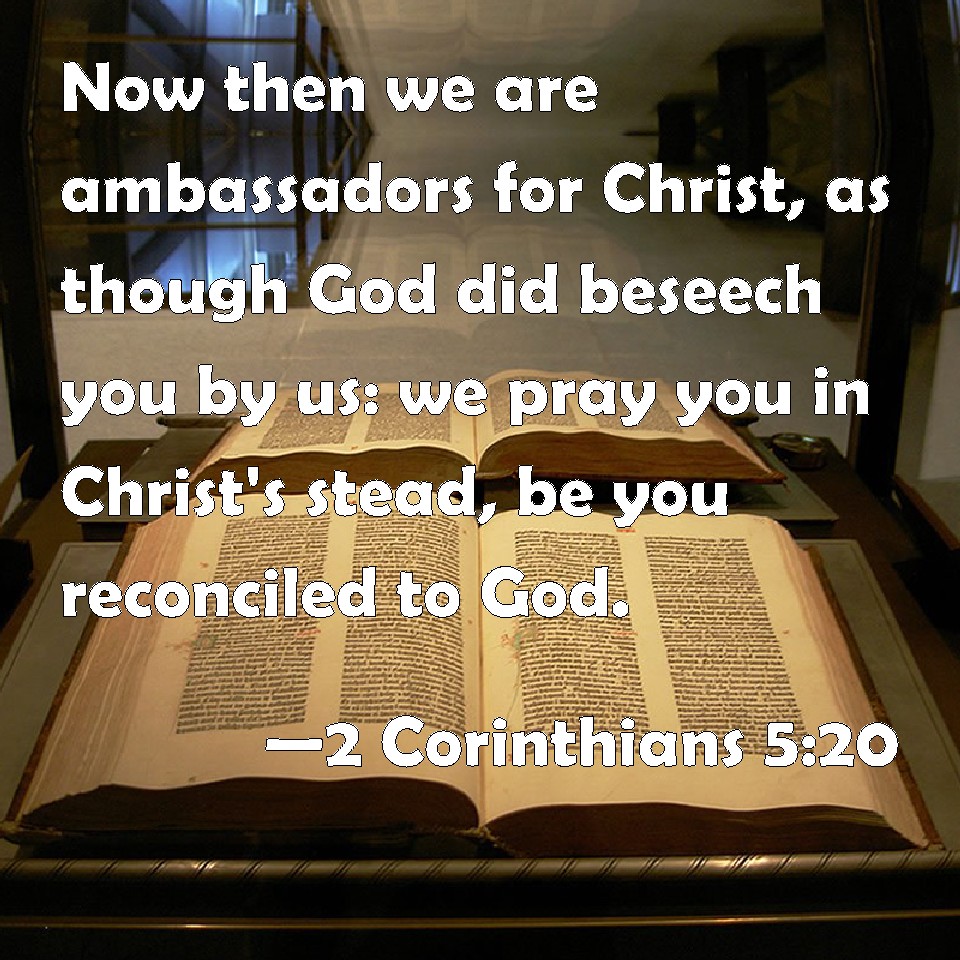
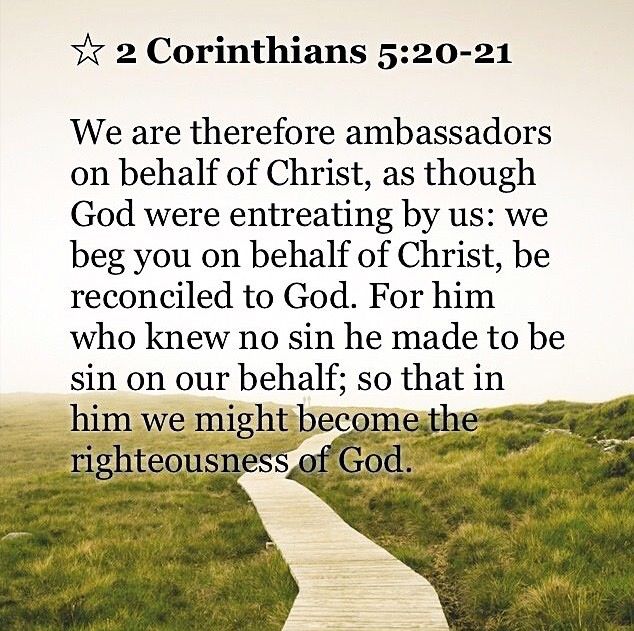
Praise the Lord Saints!! Praise the Lord!! How are all of you doing today? Fine, I hope. I would like to say that we are ambassadors for Christ. According to 2nd Corinthians 5:20 says: Now then we are ambassadors for Christ, as though God did beseech you by us: we pray you in Christ’s stead, be you reconciled to God. I am an ambassador for Christ Jesus. I want to inform all of you that I am also a Child of God.
I know that this essay is professing my love for Jesus Christ. I know that I have come a very long way in my personal life. I know that I have been a drug user as well as a gang member before. From September 1, 1979 until January 15, 1990. I used to affiliate myself with gang members. Furthermore, I want to mention that I started drinking alcohol at the age of 7. My mother and her husband were alcoholics. I became an alcoholic actually at birth. I do recall sweating a whole lot. I also used to shiver inside of the bed. I used to have cold spells while I was sleeping.
In Addition, I have joined gangs at an early age. I became a gang member at the age of 9. Although my grandmothers used to shield me from gang violence. Currently, I am an ambassador for Christ because I have rededicated my life back to Jesus Christ on February 15, 2015. I have dedicated my life to Him because I have taken things seriously. I know that I read the Bible every single day of the week.
Also, I had a whole lot of fun while living inside of my grandmother’s house. My two grandmothers are responsible for taking me to church. They are responsible for praying for me as well. My grandmothers and grandfathers used to walk me to school. This is because my so-called friends used to beat me up all of the time. Right now, I am getting ready to focus on the lesson. What is the role of an ambassador of Christ? Ambassadors also have great responsibilities for the Kingdom in order to rescue people from acts of warfare. As ambassadors of Christ, we take commands well and are very responsible. Since we are acting on behalf of the King we represent, we must live in Christlike holiness and power while on the earth. What is a church Ambassador?
A Church Ambassador takes their personal heart and passion for the life-affirming work of New Life and shares it with their congregation and works to build and establish an intentional partnership between the two. A Church Ambassador allows us [the church] to know what is going on locally at a Care Center of the Church.
Further, I want to say that an ambassador conducts herself or himself like Jesus Christ. Ambassadors do not use any vulgarity whatsoever. An Ambassador is a person who lives Christ-like manner. Ambassadors are responsible for the affairs of Jesus Christ. Ambassadors read the Bible everyday of the week. Ambassadors always listen to music that is design to edify Jesus Christ as well as the Church. Ambassadors raise their children according to Church rules. Ambassadors are well groomed and dressed.
Finally, I want to say that I am an ambassador who really needs work. I am considered as a Work in Progress. This means that my whole attitude must change for the better. This is because a close friend of mine informed me that I have to conduct myself like a Kingdom Man. A Kingdom Man is a God-Fearing Man. A Kingdom man is an ambassador for Jesus Christ.
What Is Sacrilege? Bible Meaning and Modern Examples
What are forms of sacrilege today? Discover the Bible meaning of sacrilege and modern examples in our world today.Christianity.com Editorial Staff
“Thou that sayest a man should not commit adultery, dost thou commit adultery? thou that abhorrest idols, dost thou commit sacrilege?” (Romans 2:22, KJV)
Definition of Sacrilege
According to the KJV Dictionary, Sacrilege is defined as the following:
The crime of violating or profaning sacred things; or the alienating to laymen or to common purposes what has been appropriated or consecrated to religious persons or uses.
“And the hid treasures in her sacred tomb with sacrilege to dig.”
For additional context, Wikipedia gives the following definition of sacrilege: “Sacrilege is the violation or injurious treatment of a sacred object, site or person. This can take the form of irreverence to sacred persons, places, and things. When the sacrilegious offense is verbal, it is called blasphemy, and when physical, it is often called desecration.”
Sacrilege is an act of disrespect toward a sacred person, place, or object. Sacrilege happens when someone intentionally mistreats a sanctified object, defiles a sacred place, or talks in an impious manner of something associated with God. The term “sacrilege” has Latin origins: sacer (“sacred”) and legere (“to steal”).
Originally, the word sacrilege seemingly applied to acts of grave robbers who desecrated tombs but has come to refer to any “stealing” of sacredness from a spiritual place, object, or person.
Jesus rebuked the Pharisees for their sacrilegious practice of hypocritic oath-taking. In their oaths, the Pharisees tried to make a differentiation between the temple and the gold in the temple treasury and between the altar and the gift on the altar, giving preference to the gold and gift of the altar. null
Jesus preached that the temple and everything connected with it was ordained to God, so any oath made on any part of the temple was binding before God (see the following Bible text).
“Woe to you, blind guides, who say, ‘Whoever swears by the temple, it is nothing; but whoever swears by the gold of the temple, he is obliged to perform it.’ Fools and blind! For which is greater, the gold or the temple that sanctifies the gold? And, ‘Whoever swears by the altar, it is nothing; but whoever swears by the gift that is on it, he is obliged to perform it.’ Fools and blind! For which is greater, the gift or the altar that sanctifies the gift Therefore he who swears by the altar, swears by it and by all things on it. He who swears by the temple, swears by it and by Him who dwells in it And he who swears by heaven, swears by the throne of God and by Him who sits on it” (Matthew 23:16-22).
Modern Examples of Sacrilege
One of the most common forms of sacrilege today is the profaning of God’s holy name and the name of our Lord Jesus. This is in blatant violation of Exodus 20:7, “You shall not misuse the name of the Lord your God, for the Lord will not hold anyone guiltless who misuses his name” and Psalm 139:20, “They speak against you with malicious intent; your enemies take your name in vain!”
The New Testament forbids “corrupting talk” which surely includes using God’s name as a swear word. “Let no corrupting talk come out of your mouths, but only such as is good for building up, as fits the occasion, that it may give grace to those who hear” (Ephesians 4:29).null
Another form of modern sacrilege is blasphemous media such as movies, television shows, music, or artwork that dishonor the sanctity of Jesus, God, or the Bible. While sacrilegious artwork may be legally permitted in modern liberal countries, all sacrilege and blasphemy will ultimately be judged by God. “Do not be deceived, God is not mocked; for whatever a man sows, that he will also reap” (Galatians 6:7).
Bible Verses about Sacrilege
“You then who teach others, do you not teach yourself? While you preach against stealing, do you steal? You who say that one must not commit adultery, do you commit adultery? You who abhor idols, do you rob temples? You who boast in the law dishonor God by breaking the law. For, as it is written, “The name of God is blasphemed among the Gentiles because of you” (Romans 2:21-24).
“They must be silenced, because they are disrupting whole households by teaching things they ought not to teach—and that for the sake of dishonest gain” (Titus 1:11).
“If anyone destroys God’s temple, God will destroy that person; for God’s temple is sacred, and you together are that temple” (1 Corinthians 3:17).
“The elders who are among you I exhort, I who am a fellow elder and a witness of the sufferings of Christ, and also a partaker of the glory that will be revealed: Shepherd the flock of God which is among you, serving as overseers, not by compulsion but willingly, not for dishonest gain but eagerly; nor as being lords over those entrusted to you, but being examples to the flock; and when the Chief Shepherd appears, you will receive the crown of glory that does not fade away” (1 Peter 5:1-4).null
“For those who eat and drink without discerning the body of Christ eat and drink judgment on themselves” (1 Corinthians 11:29).
Why Did Jesus Have to Die for Our Sins on the Cross?
Heather Riggleman| Crosswalk.com Contributing Writer202115 Mar
Each day I notice the fingerprints of God around me. I see it in the sunrise or feel it in the warmth of my blankets on a cold winter night. Sometimes I see it in the rain and even the way a cup of coffee tastes. Why? Because these momentary pleasures are gifts. Each whisper of the essence of what eternity will be like with God. Had Jesus not died on the cross, these little moments would be empty distractions instead of eternal promises. The cross echoes the stories of what Jesus did for us. But some ask, “Why?”null
Why did Jesus have to die on the cross? Why did He have to take on our sins so we could have a pathway to God? Why couldn’t God just erase everyone’s sins?
Get your FREE Holy Week Guide here. Have encouragement delivered straight to your inbox!
Why Did Jesus Have to Die?
Before we can get to the end of the story, we need to travel back to the very beginning. At the beginning when God created Adam and Eve. In this scene is a beautiful garden where we see Adam eating the delicious fruit of a living tree. The next, we find ourselves standing at the foot of the hill so ugly, it was called, “the place of the skull.” Here, we find a wrecked man, battered, disfigured, and dying. He hung on a tree—a cross—gasping for air. The first man of this story is Adam, the second man of this story is our savior, Jesus. Jesus came to be a living sacrifice for our sins because humans have been corrupted by sin the moment Adam took that very first bite. Our sinful nature makes us want to do what we want, not what God wants. We are too darkened by our sin to find our way back to God on our own. And God’s justice requires that there be a price for our sin. Yet despite our flaws, God loves us and wants us to be reunited with him. Jesus, God’s Son, came to earth to make our reconciliation with God possible.
Matthew 20:28 reminds us that he “did not come to be served, but to serve, and to give his life as a ransom for many.”In theological terms, this is called “substitutionary atonement.” Christ died on the cross as our substitute. Without Him, we would suffer the death penalty for our own sins. Here are a few verses that explain this concept:null
‘He [God] made Him who knew no sin to be sin on our behalf, so that we might become the righteousness of God in Him” (2 Corinthians 5:21).
“And while being reviled, He did not revile in return; while suffering, He uttered no threats, but kept entrusting Himself to Him who judges righteously; and He Himself bore our sins in His body on the cross, so that we might die to sin and live to righteousness; for by His wounds you were healed” (1 Peter 2:23-24).
“And if Christ has not been raised, our preaching is useless and so is your faith… your faith is futile; you are still in your sins”(1 Corinthians 15:14, 17).
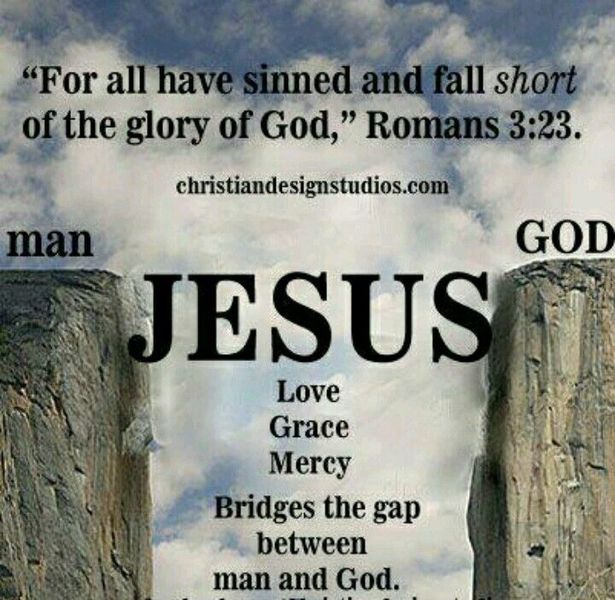
“For all have sinned and fall short of the glory of God” (Romans 3:23).
Could There Have Been Another Way for Salvation?
The apostle Peter declared that “Christ died for sins, once for all” (1 Peter 3:18). The apostle Paul reminded us that “Christ died for our sins, according to Scriptures” (1 Corinthians 15:3). Why did Jesus have to die for our sins? We all have sinned, and the consequence is death. We are all headed for judgment, condemnation, and eternal death until God himself intervened. He sent His Son Jesus into this world. Before Jesus willingly chose to take our place on the cross, He proclaimed, “I am the Way, and the truth, and the Life; no one comes to the Father, but through Me”(John 14:6). The Apostles echoed this claim, stating, “And there is salvation in no one else; there is no other name under heaven that has been given among men, by which we must be saved” (Acts 4:12).null
This doesn’t sound very fair, does it? We want to object. We want to say this sounds like pride and arrogance but it’s not. God chose this way of salvation because He is God. To have another way of salvation, a person must change the goal of salvation itself. And we cannot do that because we are merely human beings created by a mighty God. He chose this salvation through adoption and regeneration in order to have a loving, mentoring relationship with our Creator God. As Adam walked with God, so should we. And now we can because of Jesus!
What Does Jesus’ Death Symbolize?
When Jesus came to this earth, he wasn’t just a man—he was God clothed in human skin. He knew the only way to help us was to send His one and only Son to this earth. Jesus came to use in the form of a child and lived a life just like every other human being—only He remained sinless. After Adam had sinned, a system of sacrifices was created in order to pay the debt of our sins. God’s laws determined what types of sacrifices were required in order to atone for different sins. Most living sacrifices were to be perfect animals without blemish. Yet, in the New Testament, Jesus, God’s Son, came to earth to reunite us with God through the ultimate sacrifice: his own life. He became a living sacrifice. John 3:17 says, “God did not send the Son into the world to condemn the world, but in order that the world might be saved through him.” By sacrificing himself for us on the cross, he took the punishment for all of our sins at once. This made him the ultimate sacrifice —once and for all satisfying the demands God’s justice required.null
In other words, God reaffirmed His promises of sacrifice through men such as Abraham and Moses, and then God provided the perfect sacrifice to atone for this sin of His people. God’s perfect Son fulfilled God’s perfect requirement of God’s perfect law. It is perfectly brilliant in its simplicity. “God made Him (Christ), who knew no sin, to be sin for us that we might become the righteousness of God in Him” (2 Corinthians 5:21).
God is not like us. He is perfect and holy, completely loving and completely just. He tells us in Isaiah 55:8-9, “My thoughts are not your thoughts, neither are your ways my ways. As the heavens are higher than the earth, so are my ways higher than your ways and my thoughts than your thoughts.”Jesus’ death was the only possible way to atone for the sins of the world and Jesus is the only way to a relationship with God the Father.
Why Was it Necessary for Jesus to Die?
Without the atoning sacrifice of Jesus, we would be without hope and without forgiveness. Isaiah 64:6 teaches us even our righteous acts are like filthy rags. Even on our best days and with our best intentions, without the blood of Jesus, we would deserve death as the punishment for sin. “He was pierced for our transgressions, he was crushed for our iniquities; the punishment that brought us peace was on Him, and by His wounds we are healed” (Isaiah 55:6). We did nothing to earn our forgiveness and everything to deserve punishment. But in God’s great love for us, He sent His son and took our punishment upon Himself. null
Although God is all-merciful, all-powerful, and all-forgiving, God is also holy, righteous, and just. Holiness is incompatible with sin. Our sin completely separates us from God and His holiness demands that sin and rebellion be paid for by punishment. The only penalty or payment for sin is eternal death. If Jesus hadn’t died on the cross to take our place, we would be forever separated from God. We are covered by His blood through His sacrificial death, our sins are paid for, and we no longer have to die an eternal death. We receive eternal life through Jesus Christ. This is why Jesus had to die. Romans 5:10 says, “For since we were restored to friendship with God by the death of his Son while we were still his enemies, we will certainly be delivered from eternal punishment by his life.”
God loved us enough to save us from ourselves! If you haven’t asked God for salvation and forgiveness, it’s never too late. Romans 10:9-10 says that “if you declare with your mouth, “Jesus is Lord,” and believe in your heart that God raised him from the dead, you will be saved. For it is with your heart that you believe and are justified, and it is with your mouth that you profess your faith and are saved.”
Sinner’s Prayer from Scripture – (Psalm 51, King David)
“Have mercy on me, O God, according to Your unfailing love; according to Your great compassion blot out my transgressions. Wash away all my iniquity and cleanse me from my sin. For I know my transgressions, and my sin is always before me. Against You, You only, have I sinned and done what is evil in Your sight, so that You are proved right when You speak and justified when You judge. Surely I have been a sinner from birth, sinful from the time my mother conceived me…Cleanse me with hyssop, and I will be clean; wash me and I will be whiter than snow…Create in me a pure heart, O God, and renew a steadfast spirit within me. Do not cast me from Your presence or take Your Holy Spirit from me. Restore to me the joy of Your salvation and grant me a willing spirit to sustain me. Then will I teach transgressors Your ways, and sinners will turn back to You.”
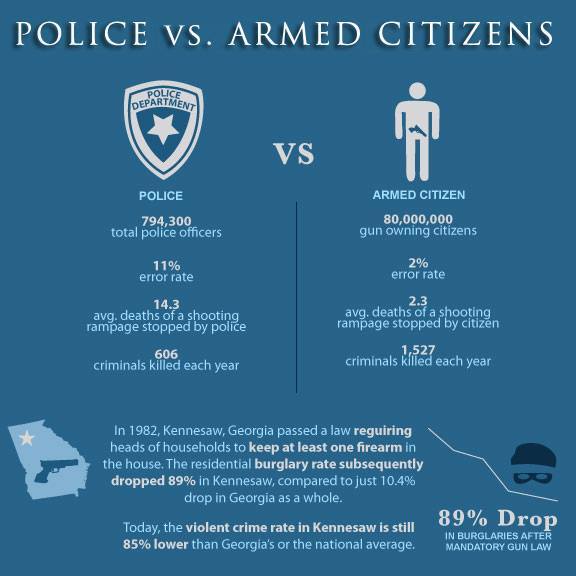
Who do you think would win? This is an example of what the laws of Kennesaw, Georgia did back in 1982. I guess since the President is talking about arming public school teachers with weapons. How do you feel about that? The criminals are still getting away with other related crimes such as wire fraud, money laundering and cyber bullying. What do you all think about this? I know that it affects all of us. I will admit that I used to carry guns a very long time ago. Right now, I do not need a gun to defend myself. I can use my hands to fight with instead of using a gun or knife to devour someone. According to the Holy Bible, it specifically states that if a person live by the sword, they will die by the sword. This is very serious. My grandmothers and mother constantly told me not to bring guns and knives inside of their houses. I had to comply. Therefore, I do not carrying anything but a Bible with me. My job is to make disciples out of everyone. According to Matthew 28:20, that is what I would prefer to do for the rest of my life.
Currently, there are a whole lot of people who are victims of cyber bullying every day since 1995. When I was in college at the University of Toledo in Toledo, Ohio I did not have a cell phone. From 1991-1996, children were not allowed to take cell phones to school. When it comes to organized crime, it only takes two or more people to make up a street gang. I want to say when it comes to this type of problem, all human behavior is learned. If a child is watching something bad going on inside of their home or neighborhood, chances are, they are going to imitate that form of behavior.
It is time to take our streets back from these criminals. It is time to teach our young people how to become God Fearing Men and Women. I know that I have nieces and nephews who are under the age of 18, and I have to get to know them. It hurts when your brothers and sisters do not want you around their children. I am a God Fearing Man.
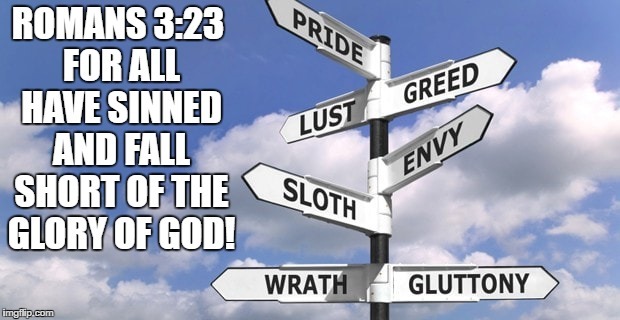
I am responsible for raising my brothers and sisters all by myself, while my mother was in the streets. I am a victim of cyber bullying myself. The only thing that I can do is pray for those who despise and persecute you. I refuse to argue with anyone anymore. I will walk away from you. I will pray for you, and leave. I am getting older right now. I have to continue to do the right things in my personal life. I will say that I am not a perfect man. Romans 3:23 says for all have sinned and fallen short of the glory of God. If no one did not tell you that they did not love you today, I am telling all of you who read this blog that I love you very much. I love you as if you are in my own family. Please have a Blessed Day!!
What Is the Meaning of Palm Sunday and Why Celebrate it?
Compiled & Edited by| BST Editorial Staff202112 Mar
Perhaps your church has children wave palm branches down the aisles of the congregation. Or maybe they use burn palm branches from year’s past to create crosses on foreheads during Ash Wednesday. No matter what the case, many Christians celebrate a holy event known as Palm Sunday. This event commemorates when Jesus rode into Jerusalem on a donkey, right before his death. Although the people cried “Save us, now” and greeted him with anxious expectation, by Friday, they would crucify him. And a week after he enters Jerusalem, he resurrects.null
In this article, we’ll explore what the holiday means and why we celebrate it.
Get your FREE Holy Week Guide here. Have encouragement delivered straight to your inbox!
What Is the Meaning of Palm Sunday?
The various Gospels hold accounts of what happened on Palm Sunday. Let’s take a look at Matthew’s account.
Matthew 21:1-11: “As they approached Jerusalem and came to Bethphage on the Mount of Olives,Jesus sent two disciples,saying to them,“Go to the village ahead of you, and at once you will find a donkey tied there, with her colt by her. Untie them and bring them to me.If anyone says anything to you, say that the Lord needs them, and he will send them right away.” This took place to fulfillwhat was spoken through the prophet “Say to Daughter Zion, ‘See, your king comes to you,gentle and riding on a donkey,and on a colt, the foal of a donkey.’” The disciples went and did as Jesus had instructed them.They brought the donkey and the colt and placed their cloaks on them for Jesus to sit on.A very large crowd spread their cloakson the road, while others cut branches from the trees and spread them on the road.The crowds that went ahead of him and those that followed shouted, “Hosannato the Son of David!” “Blessed is he who comes in the name of the Lord!” “Hosannain the highest heaven!” When Jesus entered Jerusalem, the whole city was stirred and asked, “Who is this?” The crowds answered, “This is Jesus, the prophetfrom Nazareth in Galilee.”
Palm Sunday remembers when Jesus rode into Jerusalem on a donkey, as foretold in a prophecy found in the Old Testament in Isaiah and Zechariah. The people wanted an insurrectionist to topple Rome. Jesus did come to defeat an enemy, but not the one they had in mind. Instead, he came to defeat the enemy of sin that ensnares every man and woman.https://e7b2b7eb9c85312784b507add9f0c4f2.safeframe.googlesyndication.com/safeframe/1-0-38/html/container.html
What is Palm Sunday? According to Crosswalk, “Palm Sunday was the first day of Holy Week leading up to the Jewish holiday of Passover. Jesus rode on a donkey through the town of Jerusalem on His way to conquer death and bring us life through His sacrifice on the cross.” —Emma Danzey
Jesus served as our sacrificial Passover lamb when they lead him to his death the Friday of that week.
What Do Palm Branches Represent?
So why did the people wave palm branches and place them at the feet of Jesus’ colt? No doubt in Palestine, where Jesus ministered, they had plenty of palm trees scattered throughout the land. But do these trees mean anything in particular?
According to Bible Study Tools, the branches and trees actually have a significant meaning. People didn’t just grab whatever leaves they could find for no reason.
“Its branches are a symbol of victory (Revelation 7:9). “Rising with slender stem 40 or 50, at times even 80, feet aloft, its only branches, the feathery, snow-like, pale-green fronds from 6 to 12 feet long, bending from its top, the palm attracts the eye wherever it is seen.” The whole land of Palestine was called by the Greeks and Romans Phoenicia, i.e., “the land of palms.”
The Jewish people wanted victory, victory over the Romans who had invaded their land. Jesus did come to enact a victory, but not quite the one they had in mind.
So how do Christians celebrate this holiday? It depends on which church you attend. Not every church will do something in particular for this day on the church calendar. Some may do as little as putting up a few decorative palm branches or dedicating a sermon to discussing Jesus’ triumphal entry.
Others may have children wave palm branches down the aisles, sometimes singing a song that has the word “Hosanna!” the same phrase used by the Israelite people when Jesus entered Jerusalem.
Many of us, this year, also find ourselves at home watching Livestream services, to limit our exposure thanks to COVID-19. This Crosswalk article has some great ideas for how to celebrate Palm Sunday at home.
“Jesus’ fulfillment of the Old Testament Scriptures on Palm Sunday is recorded in all four New Testament Gospel Accounts: Matthew 21:1-11,Mark 11:1-11, Luke 19:28-44, and John 12:12-19. We can draw close to God by reading the truth of His Word. Scripture promises, where two or more are gathered, He is with them! Scripture also says, when we seek Him with all of our hearts, we will find Him. God is … close! When Jesus rode into the city on Palm Sunday, He was God the Son coming close to us. Because of His sacrifice, He remains with every believer through the Holy Spirit. Reading the story of Palm Sunday aloud, or in private, is an intimate way to draw close to God and celebrate.” —Meg Bucher
No matter how you celebrate, many Christians often use palm branches or read from the passages of the Triumphal Entry, to recognize and celebrate Palm Sunday.null
When Is Palm Sunday?
When is Palm Sunday this year? Palm Sunday always falls a week before Easter Sunday (or Resurrection Sunday). For this year, it falls on March 28, 2021. We’ve also highlighted some upcoming dates for future years.
April 10, 2022
April 01, 2023
March 24, 2024
April 13, 2025
Palm Sunday Prayers
“Lord God, I give you thanks, for you are good, and your mercy is endless. passion and death, And I am distracted by many things. Turn my eyes now to the One who comes in your name the one who opens the gates of righteousness the one who answers when we call. I bless you, Lord, for shining your light upon me, and for sending your son to us, in human frailty. To walk the road we walk. Open my eyes that I may see him coming and may praise him with a pure heart. And may walk in the way of his suffering and share also in his resurrection. Through Jesus Christ our Lord, who lives and reigns with you and the Holy Spirit, one God forever and ever. Amen.”—Rachel Marie Stone
“Dear Jesus, I plead for You to give me Your grief over the people who have missed You and rejected You. This Easter, remind me just how much I need You. Help me see Your grace. Grant me that divine combination of sorrow and tenderness that points people to the cross and to new Life. Dear God, give me Your heart for my world, to see the desperate need for salvation we all have. In Jesus’ Name, Amen.” —Amy Carrollnull
As a person journeys through the Bible, there are some patterns and repeated ideas that emerge. Numbers often repeat throughout both the Old and New Testaments, whether directly, or sometimes as a coefficient. Some of these numbers include seven, twelve, and forty. Another important number is “three”. It is a small number with powerful symbolism.
While some people look to the repeated numbers in the Bible and try to decipher secret codes, hidden messages, and a mysterious hidden meaning, God’s Word is straight-forward. There is no codex to these numbers; they are numbers God chooses to use to communicate to His people. The number three tells us about Him. It is a holy number that relates to harmony and new life, as well as the triune nature of God.
Where Do We See the Number 3 in the Bible?
The use of the number three begins early in the Old Testament, showing up in the earliest accounts of recorded history. It appears 467 times in the Bible. To list the number of times the number appears in the Bible by itself, not including numbers that are multiples of 3, would take up a great deal of time.
A few key examples of where the number three appears include, but are not limited to:
– The Three persons of God: Father, Son, and Holy Spirit
– Noah had three sons
– There were three fathers of Israel: Abraham, Isaac, and Jacob
– The Ark of the Covenant had three objects: gold jar of manna, Aaron’s budded staff, the tablets with the Commandments
– Daniel prayer three times a day
– Jonah was in the belly of the great fish three days
– According to the Law, men had to present themselves at the Temple three times a year at the Feast of Unleavened Bread, the Feast of Weeks, and the Feast of Tabernacles
– Satan tempted Jesus three times in the wildernesshttps://148fa7bafe317d2cdb8f34431bacdc7b.safeframe.googlesyndication.com/safeframe/1-0-38/html/container.html#xpc=sf-gdn-exp-5&p=https%3A//www.biblestudytools.com
When studying the Word, the number three directly relates to the nature of God. It is a complex nature that is hard for people with limited, mortal understanding of the universe to comprehend. It begins with the origins of all things, with the very nature of God, the being, “…who is and who was and who is to come…” (Revelation 1:4). In His form before the world began, the Father, Son, and Holy Spirited coexisted, three-in-one, in perfect harmony and love with one another.
When John baptized Jesus, the Trinity manifested on earth: “…and he saw the Spirit of God descending like a dove and coming to rest on him [Jesus]; and behold a voice from heaven said, ‘This is my beloved Son, with whom I am well pleased’” (Matthew 3:16b-17). Jesus affirmed the Triune nature of God in the Great Commission, telling believers to baptize in the name of the Father, the Son, and the Spirit.
Because His very nature is Triune, in many of the moments where He wants to communicate something about Himself, He works in threes. For example, the patriarchs of Israel have moments that foreshadow Jesus’ death. Abraham, the father, was willing to sacrifice His son in obedience to God, but God stopped him and provided a ram. This act foreshadowed God’s willingness to sacrifice His Son to pay for the sins of the world and Jesus’ willingness to be the sacrifice. Jacob, the third patriarch, came after Abraham and Isaac to be the progenitor of the nation of Israel, like the Spirit came after Jesus’ ascension to help spread the Gospel to the whole world.
When God wanted to emphasize something, He often said it three times. One of his most important prophets was Samuel, who anointed the first king of Israel, Saul, and its most important – David. When Samuel was young, living and working in the temple, God called out to the young boy three times. Every time, Samuel said, “Here I am!” Samuel showed his readiness to serve God by responding positively each time.
Sometimes God tests the resolve of his servants in order to prepare them for service. In the Garden of Gethsemane, Jesus prayed three times, submitting to the will of the Father each time. Again, the importance of Jesus’ obedience was highlighted. Peter denied Christ three times the night of the Lord’s trial, and to reinforce Peter’s need for repentance and submission, Jesus asked him three times, “do you love me?” after the Resurrection.
What Other Numbers Are Significant in the Bible?
The number three carries so much weight and value in the Bible and in God’s great design. He uses other numbers to communicate with His people.
These numbers include, but are not limited to:
Four
A number symbolizing integrity. Jesus’ lineage went back to the fourth tribe Judah, four major prophets (Isaiah, Jeremiah, Ezekiel, and Daniel), four horsemen of the Apocalypse, and four Gospels
Seven
A number of perfection. In Revelation it says the Lord has seven spirits and lamp stands, 777 is seen as the representing the Trinity
Twelve
A number symbolizing totality. There are twelve tribes of Israel, twelve apostles, twelve gates in the New Heaven, and there will be 144,000 sealed individuals from Israel during the Tribulation who are safe from judgment and the Antichrist to evangelize during this timehttps://148fa7bafe317d2cdb8f34431bacdc7b.safeframe.googlesyndication.com/safeframe/1-0-38/html/container.html#xpc=sf-gdn-exp-7&p=https%3A//www.biblestudytools.com
Forty
A number of completion, it is used 146 times in the Bible. Moses stayed on Mr. Sinai for forty days, the Israelites wandered in the wilderness for forty years, and Jesus spent forty days in the desert before being tempted by Satan.
It can be difficult to say why God chose to use certain numbers more than others. Why twelve? Why seven? Humans can only make informed assumptions and hypothesize on this side of Heaven. Part of it is certainly that God is the first Scientist, the first Builder, and the first Architect. He is a God of logic, building a universe of certain rules and principles that allow its systems to work. These systems are both physical, what can be measured by science, and metaphysical, more philosophical and abstract.
An architectural use of the numbers will be in the New Jerusalem, where the walls of the city will be 144.000 cubits thick, or twelve cubits by twelve cubits. The more abstract rules may be related to why He worked through history in certain numerical patterns.
Photo credit: Unsplash/Bethany Laird
God Does Not Hide His Plans Behind Numbers
God’s ways are not our ways; they are higher, and beyond the comprehension of the mortal mind. One of His great mysteries is His triune nature. How can there be three unique identities, yet it is still one person, one true God? Yet it is true. Not only is it true, but it is so important to His character that He works in threes throughout history, and will do so in the future.
Seeking to understand where this number appears, and how it appears in the Biblical record, can reveal something new to the person who chooses to study it, even if its full significance may not be realized until the believer is standing in the presence of Jesus. Putting too much emphasis on deciphering the numerical patterns can become a problem, as some people have fallen into heresy because they thought they contained secret messages. God does not hide His plans for humanity, salvation and redemption. Learning about the importance of the number three can glorify God, as long as it does not become an idol.
As a person journeys through the Bible, there are some patterns and repeated ideas that emerge. Numbers often repeat throughout both the Old and New Testaments, whether directly, or sometimes as a coefficient. Some of these numbers include seven, twelve, and forty. Another important number is “three”. It is a small number with powerful symbolism.
While some people look to the repeated numbers in the Bible and try to decipher secret codes, hidden messages, and a mysterious hidden meaning, God’s Word is straight-forward. There is no codex to these numbers; they are numbers God chooses to use to communicate to His people. The number three tells us about Him. It is a holy number that relates to harmony and new life, as well as the triune nature of God.
Where Do We See the Number 3 in the Bible?
The use of the number three begins early in the Old Testament, showing up in the earliest accounts of recorded history. It appears 467 times in the Bible. To list the number of times the number appears in the Bible by itself, not including numbers that are multiples of 3, would take up a great deal of time.
A few key examples of where the number three appears include, but are not limited to:
– The Three persons of God: Father, Son, and Holy Spirit
– Noah had three sons
– There were three fathers of Israel: Abraham, Isaac, and Jacob
– The Ark of the Covenant had three objects: gold jar of manna, Aaron’s budded staff, the tablets with the Commandments
– Daniel prayer three times a day
– Jonah was in the belly of the great fish three days
– According to the Law, men had to present themselves at the Temple three times a year at the Feast of Unleavened Bread, the Feast of Weeks, and the Feast of Tabernacles
– Satan tempted Jesus three times in the wildernesshttps://148fa7bafe317d2cdb8f34431bacdc7b.safeframe.googlesyndication.com/safeframe/1-0-38/html/container.html#xpc=sf-gdn-exp-5&p=https%3A//www.biblestudytools.com
When studying the Word, the number three directly relates to the nature of God. It is a complex nature that is hard for people with limited, mortal understanding of the universe to comprehend. It begins with the origins of all things, with the very nature of God, the being, “…who is and who was and who is to come…” (Revelation 1:4). In His form before the world began, the Father, Son, and Holy Spirited coexisted, three-in-one, in perfect harmony and love with one another.
When John baptized Jesus, the Trinity manifested on earth: “…and he saw the Spirit of God descending like a dove and coming to rest on him [Jesus]; and behold a voice from heaven said, ‘This is my beloved Son, with whom I am well pleased’” (Matthew 3:16b-17). Jesus affirmed the Triune nature of God in the Great Commission, telling believers to baptize in the name of the Father, the Son, and the Spirit.
Because His very nature is Triune, in many of the moments where He wants to communicate something about Himself, He works in threes. For example, the patriarchs of Israel have moments that foreshadow Jesus’ death. Abraham, the father, was willing to sacrifice His son in obedience to God, but God stopped him and provided a ram. This act foreshadowed God’s willingness to sacrifice His Son to pay for the sins of the world and Jesus’ willingness to be the sacrifice. Jacob, the third patriarch, came after Abraham and Isaac to be the progenitor of the nation of Israel, like the Spirit came after Jesus’ ascension to help spread the Gospel to the whole world.
When God wanted to emphasize something, He often said it three times. One of his most important prophets was Samuel, who anointed the first king of Israel, Saul, and its most important – David. When Samuel was young, living and working in the temple, God called out to the young boy three times. Every time, Samuel said, “Here I am!” Samuel showed his readiness to serve God by responding positively each time.
Sometimes God tests the resolve of his servants in order to prepare them for service. In the Garden of Gethsemane, Jesus prayed three times, submitting to the will of the Father each time. Again, the importance of Jesus’ obedience was highlighted. Peter denied Christ three times the night of the Lord’s trial, and to reinforce Peter’s need for repentance and submission, Jesus asked him three times, “do you love me?” after the Resurrection.
What Other Numbers Are Significant in the Bible?
The number three carries so much weight and value in the Bible and in God’s great design. He uses other numbers to communicate with His people.
These numbers include, but are not limited to:
Four
A number symbolizing integrity. Jesus’ lineage went back to the fourth tribe Judah, four major prophets (Isaiah, Jeremiah, Ezekiel, and Daniel), four horsemen of the Apocalypse, and four Gospels
Seven
A number of perfection. In Revelation it says the Lord has seven spirits and lamp stands, 777 is seen as the representing the Trinity
Twelve
A number symbolizing totality. There are twelve tribes of Israel, twelve apostles, twelve gates in the New Heaven, and there will be 144,000 sealed individuals from Israel during the Tribulation who are safe from judgment and the Antichrist to evangelize during this timehttps://148fa7bafe317d2cdb8f34431bacdc7b.safeframe.googlesyndication.com/safeframe/1-0-38/html/container.html#xpc=sf-gdn-exp-7&p=https%3A//www.biblestudytools.com
Forty
A number of completion, it is used 146 times in the Bible. Moses stayed on Mr. Sinai for forty days, the Israelites wandered in the wilderness for forty years, and Jesus spent forty days in the desert before being tempted by Satan.
It can be difficult to say why God chose to use certain numbers more than others. Why twelve? Why seven? Humans can only make informed assumptions and hypothesize on this side of Heaven. Part of it is certainly that God is the first Scientist, the first Builder, and the first Architect. He is a God of logic, building a universe of certain rules and principles that allow its systems to work. These systems are both physical, what can be measured by science, and metaphysical, more philosophical and abstract.
An architectural use of the numbers will be in the New Jerusalem, where the walls of the city will be 144.000 cubits thick, or twelve cubits by twelve cubits. The more abstract rules may be related to why He worked through history in certain numerical patterns.
Photo credit: Unsplash/Bethany Laird
God Does Not Hide His Plans Behind Numbers
God’s ways are not our ways; they are higher, and beyond the comprehension of the mortal mind. One of His great mysteries is His triune nature. How can there be three unique identities, yet it is still one person, one true God? Yet it is true. Not only is it true, but it is so important to His character that He works in threes throughout history, and will do so in the future.
Seeking to understand where this number appears, and how it appears in the Biblical record, can reveal something new to the person who chooses to study it, even if its full significance may not be realized until the believer is standing in the presence of Jesus. Putting too much emphasis on deciphering the numerical patterns can become a problem, as some people have fallen into heresy because they thought they contained secret messages. God does not hide His plans for humanity, salvation and redemption. Learning about the importance of the number three can glorify God, as long as it does not become an idol.
What Does Romans 7:24 Mean? ► Wretched man that I am! Who will set me free from the body of this death?
Romans 7:24(NASB)
Picture courtesy of David – Imagebase Verse Thoughts Paul was stopped in his tracks on the road to Damascus by the risen, ascended, glorified Lord Jesus. Having been saved by grace through faith on that epic journey… his entire outlook on life and his understanding of the Law was radically changed.
Before his conversion, Paul could boast of his unsurpassed confidence in his own good works and his strict, stringent law-keeping. As an orthodox Jew, he was circumcised on the eighth day, of the nation of Israel, of the tribe of Benjamin – a Hebrew of the Hebrews. As far as the Law was concerned he was perfect, for he was a zealous Jew, a renowned Pharisee, an impassioned persecutor of the church – and Paul considered himself blameless regarding the Law.
However, after having been saved he came to understand that there is no-one who is righteous. Indeed, Paul began to realise that the Law not only exposes the sinfulness of man’s fallen nature and makes us aware that we need a saviour… but it indirectly points us to Christ, the one and only God-Man Who fulfilled the Law perfectly and sacrificed His life for the sin of the world – to the glory of God and for our eternal redemption.
Romans chapter 7 is the preeminent chapter that explains the Christian’s relationship to sin… and the place of the Law in the life of a believer. The perfect Law of God exposes inherent sin in the heart of fallen man. In this chapter, Paul explained his own personal frustration that although his desire was to do good and obey God, to be perfect, to live a holy life, and to fulfil the Law, he discovered that fallen man is incapable of doing good and obeying God. Man is incapable of being holy and fulfilling the perfect Law of God… in his own strength.
The Law not only commands outward purity of the body, but the inner purity of a heart and mind that honours God. This caused Paul the same frustration that everyone else discovers when we try to keep to the letter and spirit of the Law, in our own strength.
Paul came to understand the futility of trying to be perfect when the soul of man is impregnated with sin… and so he cried out in deep frustration, “Oh, wretched man that I am! Who will set me free from the body of this death?”
Paul wanted to be good, but only found that he ended up sinning. Paul wanted to follow the Law, but ended up breaking the Law. Paul wanted to please God and sought to do it in his own strength, but came to understand that he was incapable of keeping the Law by human effort. “The good that I want, I do not do, but I practice the very evil that I do not want to do,” was his great lamentation.
Paul began to recognise that there was a sin principle that works deeply in the heart of all humanity that prevented him from obeying God in his own strength – a sin nature that is at enmity with God and all that is good. “I find that there is a fundamental principle of evil that is present in me,” he wrote, “waging war against the law of my mind, and making me a prisoner to the law of sin, which is in my members.”
However, although Paul was distressed to discover the wretchedness of his sinful nature and that he was incapable of harnessing the good he wanted to do… he praised God to discover the one and only way to overcome this principle of sin and death. “I thank my God, through Jesus Christ our Lord,” was Paul’s amazing discovery.
Paul discovered the answer to living a godly life was found in Jesus Christ Whose grace is sufficient… for His strength is made perfect in our weakness. Paul discovered that the only way to victory over the principle of sin, was by grace through faith in the Lord Jesus Christ – as he allowed His Holy Spirit to rule and reign within until he could say, “it is not I that live, but Christ that lives in me.”
My Prayer Heavenly Father, thank You for the wonderful truths that are contained in Your Word. Thank You that although there is nothing that I can do to gain Your approval, I am accepted in the Beloved. Thank You that my salvation was completed by Christ Who died from me and rose again to pay the penalty for my sin and to break the power of sin in my life. I pray that I may live to Your praise and glory until I can say, “it is not I that lives but Christ Who lives in me.” Thank You Father, in Jesus’ name I pray, AMEN.














 Site Title