Apathy: Lack of interest or concern, especially regarding Scripture. In the believer, apathy occurs when we choose to think independently of God. When this occurs, sins goes on and on, and remains unconfessed. The result is carnality or carnal thinking and activities (worldliness).
When the believer is carnal (out of fellowship) the believer acts and thinks just like the unbeliever. Continuous sin and prolonged indifference (apathy) causes scar tissue to build up on the soul, which causes hardening of the heart. In extreme conditions this leads to the sin unto death (God takes you out of this life), when God can no longer use the believer because of maximum negative volition.
When the believer is in carnality, he/she is “grieving and quenching the Holy Spirit.” Quenching the Spirit is the absence of the Holy Spirit’s mentorship. Grieving the Holy Spirit is the absence of the empowerment of the Holy Spirit.
Apathy is living in the flesh – controlled by the flesh, as in addictions and lust-patterns – blown to and fro by the trends of the world instead of being grounded in the Word. Apathy is human-viewpoint thinking. Apathy is indifference to the call (conviction) of the Holy Spirit (quenching). Apathy is thinking independently of God, which was actually the first sin of satan, the fallen angels who sided with satan, and Eve and Adam. Apathy is literally a repeat of the original sin so that all mankind is guilty of rejecting God in favor of self-rule.
Please note: In the Church Age we have a new commandment that replaces the Mosaic Law: “Be (keep on being) filled with the Spirit” (Ephesians 5:18 cf., Matthew 22:6; Galatians 5:22-23).
Spirituality and carnality are absolutes (Ephesians 4:30; 1 Thessalonians 5:19; 1 John 1:7; 2:10; 3:49). The believer is either spiritual (filled with the Spirit – in fellowship, controlled by the Holy Spirit) or carnal (out of fellowship, controlled by your sin nature – the flesh – quenching and grieving the Holy Spirit).
When the believer is filled with the Holy Spirit, the Holy Spirit produces Divine Good through you, and Jesus Christ is glorified. When the believer is carnal/out of fellowship, he/she produces human good. Spirituality and carnality are basic concepts of experiential Christianity.
Happy Studying!
The preceding explanations are reproduced here, from RBT Bible Ministries’ book “OLD SIN NATURE vs. THE HOLY SPIRIT” (used with permission).
ArchivesArchives Select Month May 2025 (3) April 2025 (1) March 2025 (4) February 2025 (8) January 2025 (22) December 2024 (29) November 2024 (9) October 2024 (11) September 2024 (21) August 2024 (30) July 2024 (71) June 2024 (5) May 2024 (1) May 2023 (2) February 2023 (1) January 2023 (4) December 2022 (1) November 2022 (2) August 2022 (2) May 2022 (1) February 2022 (4) September 2021 (1) June 2021 (1) May 2021 (2) March 2021 (3) February 2021 (2) January 2021 (9) November 2020 (1) October 2020 (5) September 2020 (2) July 2020 (1) June 2020 (1) May 2020 (1) April 2020 (10) March 2020 (3) August 2019 (1) July 2019 (1) June 2019 (2) April 2019 (1) December 2018 (2) October 2018 (3) September 2018 (1) August 2018 (1) July 2018 (1) May 2018 (6) April 2018 (1) March 2018 (1) January 2018 (2) December 2017 (3) November 2017 (6) October 2017 (1) September 2017 (2) August 2017 (5) July 2017 (3) June 2017 (18) May 2017 (6) April 2017 (7) March 2017 (2) December 2016 (1) November 2016 (6) October 2016 (2) September 2016 (1) June 2016 (3) April 2016 (3) March 2016 (1) January 2016 (1) November 2015 (1) October 2015 (4) September 2015 (3) August 2015 (3) June 2015 (2) May 2015 (6) April 2015 (1) March 2015 (3) December 2014 (3) November 2014 (1) September 2014 (1) July 2014 (6) June 2014 (1) May 2014 (7) April 2014 (14) March 2014 (288) November 2009 (1) October 2005 (1) April 2004 (1) March 2004 (1)
Economic Inequality and Poverty in the United States
Learning Objectives
Understand trends in U.S. inequality.
Explain the social distribution of U.S. poverty.
Distinguish the structural and individual explanations of poverty.
List the major effects of poverty.
In his classic book The Other America, Michael Harrington (1962) brought the reality of poverty home to many Americans. In chapter after chapter, he discussed the troubled lives of the poor in rural Appalachia, in our urban centers, and in other areas of the country, and he indicted the country for not helping the poor. His book helped kindle interest in the White House and Congress in aiding the poor and deeply affected its thousands of readers. Almost five decades later, we know much more about poverty than we used to. Despite initial gains in fighting poverty in the 1960s (Schwartz, 1984), poverty is still with us and has worsened since the early 2000s, especially since the onset of the serious economic recession that began in 2008. What do we know about the extent of poverty, the reasons for it, and its consequences?
Economic Inequality
The United States has a very large degree of economic inequality. A common way to examine inequality is to rank the nation’s families by income from lowest to highest and then to divide this distribution into fifths. Thus, we have the poorest fifth of the nation’s families (or the 20% of families with the lowest family incomes), a second fifth with somewhat higher incomes, and so on until we reach the richest fifth of families, or the 20% with the highest incomes. We then can see what percentage each fifth has of the nation’s entire income. Figure 8.6 “Share of National Income Going to Income Fifths, 2016” shows such a calculation for the United States. The poorest fifth enjoys only 3.8% of the nation’s income, while the richest fifth enjoys 53.2%. Another way of saying this is that the richest 20% of the population have as much income as the remaining 80% of the population.
Figure 8.6 Share of National Income Going to Income Fifths, 2016
This degree of inequality is the largest in the industrialized world. Figure 8.7 “Income Inequality Around the World” compares the inequality among several industrialized nations by dividing the median income of households in the 90th percentile (meaning they have more income than 90% of all households) by the median income of households in the 10th percentile (meaning they have more income than only 10% of all households); the higher the resulting ratio, the greater a nation’s inequality. The ratio for the United States, 4.86, far exceeds that for any other nation.
Figure 8.7 Income Inequality Around the World
Ratio of median income of richest 10% in each nation to that of poorest 10%.
Source: Data from Mishel, L., Bernstein, J., & Shierholz, H. (2009). The state of working America 2008/2009. Ithaca, NY: ILR Press [An imprint of Cornell University Press].
Economic inequality in the United States has increased during the last two decades. The loss of manufacturing jobs and changes in taxation and income distribution policies since the early 1980s have favored the rich and hurt the economic standing of the middle class and the poor (Barlett & Steele, 2002; Wilson, 2009). After adjusting for inflation, the post-tax income of the nation’s wealthiest families grew by a much greater amount than that for the poorest families from 1979 to 2005. It grew by only 6% for the poorest fifth but by 80% for the wealthiest fifth, and it also grew by a whopping 228% for families in the top 1% of the nation’s families (Mishel, Bernstein, & Shierholz, 2009). As the saying goes, the rich get richer. To recall our earlier discussion, to be upwardly mobile, it helps to be well-off to begin with.
Poverty
When U.S. officials became concerned about poverty during the 1960s, they quickly realized they needed to find out how much poverty we had. To do so, a measure of official poverty, or a poverty line, was needed. This line was first calculated in 1963 by Mollie Orshansky who proposed determining the poverty line by multiplying the cost of a very minimal diet by three, as a 1955 government study had determined that the typical American family spent one-third of its income on food. Thus a family whose income is lower than three times the cost of a very minimal diet is considered officially poor.
The measure of official poverty began in 1963 and stipulates that a family whose income is lower than three times the cost of a minimal diet is considered officially poor. This measure has not changed since 1963 even though family expenses have risen greatly in many areas.
This way of calculating the poverty line has not changed since 1963, even though many other things, such as energy, child care, and health care, now occupy a greater percentage of the typical family’s budget than was true in 1963. As a national measure, the poverty line also fails to take into account regional differences in the cost of living. For all of these reasons, many experts think the official measurement of poverty is highly suspect. As a recent report observed, “Most poverty analysts strongly believe that the official poverty statistics are inadequate to the task of determining who is poor in America” (Mishel, Bernstein, & Shierholz, 2009, p. 298).
The poverty line is adjusted annually for inflation and takes into account the number of people in a family: the larger the family size, the higher the poverty line. In 2018, the poverty line for a nonfarming family of four (two adults, two children) was $25,100. A four-person family earning even one more dollar than $25,100 in 2018 was not officially poor, even though its “extra” income hardly lifted it out of dire economic straits. Policy experts have calculated a no-frills budget that enables a family to meet its basic needs in food, clothing, shelter, and so forth; this budget is about twice the poverty line. Families with incomes between the poverty line and twice the poverty line are barely making ends meet, but they are not considered officially poor. When we talk here about the poverty level, keep in mind that we are talking only about official poverty and that there are many families and individuals living in near-poverty who have trouble meeting their basic needs, especially when they face unusually high medical or motor vehicle expenses or the like. For this reason, some analyses use “twice-poverty” data (i.e., family incomes below twice the poverty line) to provide a more accurate understanding of how many Americans face serious financial difficulties.
The Extent and Social Distribution of Poverty
With this caveat in mind, how many Americans are poor, and who are they? The U.S. Census Bureau gives us some answers. In 2009, 14.3% of the U.S. population, or almost 44 million Americans, lived in (official) poverty (DeNavas-Walt, Proctor, & Smith, 2010). This percentage represented a decline from the early 1990s but was higher than the rate in the late 1960s (see Figure 8.8 “U.S. Poverty, 1959–2017”). If we were winning the war on poverty in the 1960s, since then poverty has fought us to a standstill.
Another way of understanding the extent of poverty is to consider episodic poverty, defined by the Census Bureau as being poor for at least 2 consecutive months in some time period. From 2004 to 2007, the last years for which data are available, almost one-third of the U.S. public, equal to about 95 million people, were poor for at least 2 consecutive months, although only 2.2% were poor for all 3 years (DeNavas-Walt, Proctor, & Smith, 2010). As these figures indicate, people go into and out of poverty, but even those who go out of it do not usually move very far from it.
Learning From Other Societies
Poverty and Poverty Policy in Other Western Democracies
To compare international poverty rates, scholars commonly use a measure of the percentage of households in a nation that receive less than half of the nation’s median household income after taxes and cash transfers from the government. In 2000, the latest date for which data are available, 17% of U.S. households lived in poverty as defined by this measure (Mishel, Bernstein, & Shierholz, 2009). By comparison, selected other Western democracies had the following rates (Mishel, Bernstein, & Shierholz, 2009, p. 384):Canada11.4%Denmark9.2%France8.0%Germany8.3%Norway6.4%Spain14.3%Sweden6.5%United Kingdom12.4%
The average poverty rate of Western democracies excluding the United States is 9.8%. The U.S. rate is thus 1.73 times greater than this average.
Why is there so much more poverty in the United States than in its Western counterparts? Several differences between the United States and the other nations stand out. First, other Western nations have higher minimum wages and stronger unions than the United States has, and these lead to incomes that help push people above poverty. Second, the other nations spend a much greater proportion of their gross domestic product on social expenditures (income support and social services such as child care subsidies and housing allowances) than does the United States. As a recent analysis concluded,
Other peer countries are much more likely than the United States to step in where markets have failed to live their most disadvantaged citizens out of poverty. This suggests that the relatively low expenditures on social welfare are at least partially implicated in the high poverty rates in the United States. (Mishel, Bernstein, & Shierholz, 2009, p. 387)
In short, the United States has so much more poverty than other democracies in part because it spends so much less than they do on helping the poor. The United States certainly has the wealth to follow their example, but it has chosen not to do so, and a high poverty rate is the unfortunate result.
Who are the poor? Contrary to popular images, the most typical poor person in the United States is white: approximately 44% of poor people are white (non-Latino), 29% are Latino, 23% are black, and 4% are Asian (see Figure 8.9 “Racial and Ethnic Composition of the Poor, 2009 (Percentage of Poor Persons in Each Group)”). At the same time, race and ethnicity affect the chances of being poor: while only 9.4% of non-Latino whites are poor, 25.8% of African Americans, 12.5% of Asians, and 25.3% of Latinos (who may be of any race) are poor (see Figure 8.10 “Race, Ethnicity, and Poverty, 2009 (Percentage of Each Group That Is Poor)”). Thus African Americans and Latinos are almost three times as likely as non-Latino whites to be poor. (Because there are so many non-Latino whites in the United States, the plurality of poor people are non-Latino white, even if the percentage of whites who are poor is relatively low.) Chapter 10 “Race and Ethnicity” further discusses the link between poverty and race and ethnicity.
Figure 8.9 Racial and Ethnic Composition of the Poor, 2009 (Percentage of Poor Persons in Each Group)
Source: Data from DeNavas-Walt, C., Proctor, B. D., & Smith, J. C. (2010). Income, poverty, and health insurance coverage in the United States: 2009 (Current Population Report P60-238). Washington, DC: U.S. Census Bureau.
Figure 8.10 Race, Ethnicity, and Poverty, 2009 (Percentage of Each Group That Is Poor)
Source: Data from U.S Census Bureau Current Population Survey. (2008). POV01: Age and sex of all people, family members and unrelated individuals iterated by income-to-poverty ratio and race. Retrieved from http://www.census.gov/hhes/www/macro/032008/pov/new01_100.htm.
Turning to age, almost 21% of children under age 18 are poor (amounting to more than 15 million children), including 35.7% of African American children and 33.1% of Latino children (DeNavas-Walt, Proctor, & Smith, 2010). The poverty rate for U.S. children is the highest in the Western world and 1.5 to 9 times greater than the corresponding rates in Canada and Western Europe (Mishel, Bernstein, & Shierholz, 2009). At the other end of the age distribution, 8.9% of people aged 65 or older are poor (amounting to about 3.4 million seniors). Turning around these U.S. figures, about 36% of all poor people in the United States are children, and about 8% of the poor are 65 or older. Thus some 44% of Americans living in poverty are children or the elderly.
The poverty rate for U.S. children is the highest in the Western world.
The type of family structure also makes a difference: whereas only 8.5% of children living with married parents live in poverty, 43% of those living with only their mother live in poverty (2007 data). This latter figure is about 32% for Asian children and for non-Latino white children and rises to slightly more than 50% for African American children and Latino children (Moore, Redd, Burkhauser, Mbawa, & Collins, 2009). As these latter numbers indicate, families headed by a single woman are much more likely to be poor. Poverty thus has a female face.
Explaining Poverty
Explanations of poverty focus on problems either within the poor themselves or in the society in which they live (Iceland, 2006). The first type of explanation follows logically from the functional theory of stratification and may be considered an “individual” explanation. The second type of explanation follows from conflict theory and is a structural explanation that focuses on problems in American society that produce poverty. As the “Sociology Making a Difference” box discusses, the explanation of poverty people favor affects how sympathetic they are to the poor.
According to the individual explanation, the poor have personal problems and deficiencies that are responsible for their poverty. In the past, the poor were thought to be biologically inferior, a view that has not entirely faded, but today the much more common belief is that they lack the ambition and motivation to work hard and to achieve. According to the World Values Survey, 60% of Americans believe that people are poor “because they are lazy and lack will power.” This percentage reflects the tendency of Americans to favor individual explanations of poverty (Davidson, 2009).
A more sophisticated version of this type of explanation is called the culture of poverty theory (Banfield, 1974; O. Lewis, 1966). According to this theory, the poor generally have beliefs and values that differ from those of the nonpoor and that doom them to continued poverty. For example, they are said to be impulsive and to live for the present rather than the future. Critics say this view exaggerates the degree to which the poor and nonpoor do in fact hold different values and ignores discrimination and other problems in American society (Iceland, 2006).
According to the second, structural explanation, U.S. poverty stems from problems in American society that lead to lack of equal opportunity. These problems include (a) racial, ethnic, gender, and age discrimination; (b) lack of good schooling and adequate health care; and (c) structural changes in the American economic system, such as the departure of manufacturing companies from American cities in the 1980s and 1990s (Iceland, 2003). These problems help create a vicious cycle of poverty in which children of the poor are often fated to end up in poverty or near-poverty themselves as adults.
Sociology Making a Difference
Attributions for Poverty and Public Education Campaigns
The text discusses two general explanations for poverty. The first attributes poverty to lack of willpower and other problems among the poor themselves, while the second attributes poverty to structural obstacles and lack of opportunity in the larger society. As the text notes, Americans tend to favor the first explanation more than the second explanation. They also tend to disagree that the government should do more to help the poor. Could these two sets of views be linked? If so, what would such a link imply for poverty policy?
Sociological research finds that the explanation we favor for poverty—the attribution for poverty we hold—affects whether we want the government to take an active role in helping the poor (Bradley & Cole, 2002). People who attribute poverty to problems in the larger society are much more likely than those who attribute it to deficiencies among the poor to believe that the government should take such a role. The attribution for poverty we hold presumably affects the amount of sympathy we have for the poor, and our sympathy, or lack of sympathy, in turn affects our views about the government’s role in helping the poor. As sociologist Theresa C. Davidson (2009) observes, “Beliefs about the causes of poverty shape attitudes toward the poor.”
This body of research strongly suggests that public support for government aid for the poor is weak because so much of the public attributes poverty to failings among the poor themselves. If so, the public might very well begin to endorse greater government aid if its attribution for poverty became more structural instead of individual. Public education campaigns that call attention to the lack of opportunity and other structural problems that account for poverty thus might further poverty policy by beginning to change public perceptions of the poor.
Most sociologists favor the structural explanation. As our earlier Monopoly example illustrates, poverty greatly blocks opportunities for success. Later chapters document racial and ethnic discrimination, lack of adequate schooling and health care, and other problems that make it difficult to rise out of poverty. On the other hand, some ethnographic research supports the individual explanation by showing that the poor do have certain values and follow certain practices that augment their plight (Small, Harding, & Lamont, 2010). For example, the poor have higher rates of cigarette smoking (34% of people with annual incomes between $6,000 and $11,999 smoke, compared to only 13% of those with incomes $90,000 or greater (Goszkowski, 2008), which helps lead them to have more serious health problems. Adopting an integrated perspective, some researchers say these values and practices are in many ways the result of poverty itself (Small, Harding, & Lamont, 2010). These scholars concede a culture of poverty does exist, but they also say it exists because it helps the poor cope daily with the structural effects of being poor. If these effects lead to a culture of poverty, they add, then poverty becomes self-perpetuating. If poverty is both cultural and structural in origin, these scholars say, a comprehensive national effort must be launched to improve the lives of the people in the “other America.”
The Effects of Poverty
However poverty is explained, it has important and enduring effects, which later chapters will continue to discuss. For now, we can list some of the major consequences of poverty (and near-poverty) in the United States. As we do so, recall the sociological perspective’s emphasis on how our social backgrounds influence our attitudes, behaviors, and life chances. This influence on life chances is quite evident when we look at some of the effects of poverty (Moore, Redd, Burkhauser, Mbawa, & Collins, 2009; Iceland, 2006; D. Lindsey, 2009):
Poor children are more likely to have inadequate nutrition and to experience health, behavioral, and cognitive problems.
The poor are at greater risk for family problems, including divorce and domestic violence. The stress of being poor is thought to be a major reason for these problems.
The poor are also at greater risk for health problems, including infant mortality, earlier mortality during adulthood, mental illness, and inadequate medical care. Many poor people lack health insurance. Poor children are more likely to have inadequate nutrition and to suffer health, behavioral, and cognitive problems. These problems in turn impair their ability to do well in school and land stable employment as adults, helping to ensure that poverty will persist across generations.
Poor children typically go to rundown schools with inadequate facilities where they receive inadequate schooling. They are much less likely than nonpoor children to graduate from high school or to go to college. Their lack of education in turn restricts them and their own children to poverty, once again helping to ensure a vicious cycle of continuing poverty across generations.
The poor are, not surprisingly, more likely to be homeless than the nonpoor but also more likely to live in dilapidated housing and unable to buy their own homes. Many poor families spend more than half their income on rent. The lack of adequate housing for the poor remains a major national problem.
Key Takeaways
Inequality refers to the gap between the rich and the poor. The United States has a high degree of inequality.
Although the official poverty line measure has been criticized for several reasons, in 2017 about 12.3% of the U.S. population, or more than 40 million people, were living in official poverty.
About 18% of U.S. children live in official poverty; this rate is the highest in the Western world.
Explanations of poverty focus on problems either within the poor themselves or in the society in which they live. These two types of explanations reflect the functionalist and conflict views, respectively.
Poverty has several important and enduring consequences, including many kinds of health problems.
Self Check
about:blank
Reducing U.S. Poverty: What Sociology Suggests
It is easy to understand why the families in Wichita, Kansas, discussed in the news story that began this chapter might be poor in the middle of a deep economic recession. Yet a sociological understanding of poverty emphasizes its structural basis in bad times and good times alike. Poverty is rooted in social and economic problems of the larger society rather than in the lack of willpower, laziness, or other moral failings of poor individuals themselves. Individuals born into poverty suffer from a lack of opportunity from their first months up through adulthood, and poverty becomes a self-perpetuating, vicious cycle. To the extent a culture of poverty might exist, it is best seen as a logical and perhaps even inevitable outcome of, and adaptation to, the problem of being poor and not the primary force driving poverty itself.
This sort of understanding suggests that efforts to reduce poverty must address first and foremost the structural basis for poverty while not ignoring certain beliefs and practices of the poor that also make a difference. An extensive literature on poverty policy outlines many types of policies and strategies that follow this dual approach (Moore, Redd, Burkhauser, Mbawa, & Collins, 2009; Iceland, 2006; D. Lindsey, 2009; Cancian & Danziger, 2009; Turner & Rawlings, 2005). If these were fully adopted, funded, and implemented, they would offer great promise for reducing poverty. As two poverty experts recently wrote, “We are optimistic that poverty can be reduced significantly in the long term if the public and policymakers can muster the political will to pursue a range of promising antipoverty policies” (Cancian & Danziger, 2009, p. 32). Although a full discussion of these policies is beyond the scope of this chapter, the following measures are commonly cited as holding strong potential for reducing poverty:
Adopt a national “full employment” policy for the poor, involving federally funded job training and public works programs.
Increase federal aid for the working poor, including earned income credits and child care subsidies for those with children.
Establish well-funded early childhood intervention programs, including home visitations by trained professionals, for poor families.
Improve the schools that poor children attend and the schooling they receive and expand early childhood education programs for poor children.
Provide better nutrition and health services for poor families with young children.
Strengthen efforts to reduce teenage pregnancies.
References
Banfield, E. C. (1974). The unheavenly city revisited. Boston, MA: Little, Brown; Lewis, O. (1966). The culture of poverty. Scientific American, 113, 19–25.
Barlett, D. L., & Steele, J. B. (2002). The great American tax dodge: How spiraling fraud and avoidance are killing fairness, destroying the income tax, and costing you. Berkeley: University of California Press.
Bradley, C., & Cole, D. J. (2002). Causal attributions and the significance of self-efficacy in predicting solutions to poverty. Sociological Focus, 35, 381–396.
Cancian, M., & Danziger, S. (2009). Changing poverty and changing antipoverty policies. Ann Arbor: National Poverty Center, University of Michigan.
Davidson, T. C. (2009). Attributions for poverty among college students: The impact of service-learning and religiosity. College Student Journal, 43, 136–144.
DeNavas-Walt, C., Proctor, B. D., & Smith, J. C. (2010). Income, poverty, and health insurance coverage in the United States: 2009 (Current Population Report P60-238). Washington, DC: U.S. Census Bureau.
Harrington, M. (1962). The other America: Poverty in the United States. New York, NY: Macmillan.
Iceland, J. (2003). Dynamics of economic well-being, 1996–1999 (Current Population Report P70–91). Washington, DC: U.S. Census Bureau.
Iceland, J. (2006). Poverty in America: A handbook. Berkeley: University of California Press.
Lindsey, D. (2009). Child poverty and inequality: Securing a better future for America’s children. New York, NY: Oxford University Press.
Mishel, L., Bernstein, J., & Shierholz, H. (2009). The state of working America 2008/2009. Ithaca, NY: ILR Press [An imprint of Cornell University Press].
Schwartz, J. E. (1984, June 18). The war we won: How the great society defeated poverty. The New Republic, 18–19.
Small, M. L., Harding, D. J., & Lamont, M. (2010, May). Reconsidering culture and poverty. The Annals of the American Academy of Political and Social Science, 629, 6–27.
Turner, M. A., & Rawlings, L. A. (2005). Overcoming concentrated poverty and isolation: Ten lessons for policy and practice. Washington, DC: The Urban Institute.
Wilson, W. J. (2009). The economic plight of inner-city black males. In E. Anderson (Ed.), Against the wall: Poor, young, black, and male (pp. 55–70). Philadelphia: University of Pennsylvania Press.
Distinguish objective and subjective measures of social class.
Discuss whether the United States has much vertical social mobility.
Most sociologists define social class as a grouping based on similar social factors like wealth, income, education, and occupation. These factors affect how much power and prestige a person has. Social stratification reflects an unequal distribution of resources. In most cases, having more money means having more power or more opportunities. There is a surprising amount of disagreement among sociologists on the number of social classes in the United States and even on how to measure social class membership. We first look at the measurement issue and then discuss the number and types of classes sociologists have delineated.
Measuring Social Class
We can measure social class either objectively or subjectively. If we choose the objective method, we classify people according to one or more criteria, such as their occupation, education, and/or income. The researcher is the one who decides which social class people are in based on where they stand in regard to these variables. If we choose the subjective method, we ask people what class they think they are in. For example, the General Social Survey asks, “If you were asked to use one of four names for your social class, which would you say you belong in: the lower class, the working class, the middle class, or the upper class?” Figure 8.3 “Subjective Social Class Membership” depicts responses to this question. The trouble with such a subjective measure is that some people say they are in a social class that differs from what objective criteria might indicate they are in. This problem leads most sociologists to favor objective measures of social class when they study stratification in American society.
Figure 8.3 Subjective Social Class Membership
Source: Data from General Social Survey, 2008.
Yet even here there is disagreement between functionalist theorists and conflict theorists on which objective measures to use. Functionalist sociologists rely on measures of socioeconomic status (SES), such as education, income, and occupation, to determine someone’s social class. Sometimes one of these three variables is used by itself to measure social class, and sometimes two or all three of the variables are combined (in ways that need not concern us) to measure social class. When occupation is used, sociologists often rely on standard measures of occupational prestige. Since the late 1940s, national surveys have asked Americans to rate the prestige of dozens of occupations, and their ratings are averaged together to yield prestige scores for the occupations (Hodge, Siegel, & Rossi, 1964). Over the years these scores have been relatively stable. Here are some average prestige scores for various occupations: physician, 86; college professor, 74; elementary school teacher, 64; letter carrier, 47; garbage collector, 28; and janitor, 22.
Despite SES’s usefulness, conflict sociologists prefer different, though still objective, measures of social class that take into account ownership of the means of production and other dynamics of the workplace. These measures are closer to what Marx meant by the concept of class throughout his work, and they take into account the many types of occupations and workplace structures that he could not have envisioned when he was writing during the 19th century.
For example, corporations have many upper-level managers who do not own the means of production but still determine the activities of workers under them. They thus do not fit neatly into either of Marx’s two major classes, the bourgeoisie or the proletariat. Recognizing these problems, conflict sociologists delineate social class on the basis of several factors, including the ownership of the means of production, the degree of autonomy workers enjoy in their jobs, and whether they supervise other workers or are supervised themselves (Wright, 2000).
The American Class Structure
As should be evident, it is not easy to determine how many social classes exist in the United States. Over the decades, sociologists have outlined as many as six or seven social classes based on such things as, once again, education, occupation, and income, but also on lifestyle, the schools people’s children attend, a family’s reputation in the community, how “old” or “new” people’s wealth is, and so forth (Coleman & Rainwater, 1978; Warner & Lunt, 1941). For the sake of clarity, we will limit ourselves to the four social classes included in Figure 8.3 “Subjective Social Class Membership”: the upper class, the middle class, the working class, and the lower class. Although subcategories exist within some of these broad categories, they still capture the most important differences in the American class structure (Gilbert, 2011). The annual income categories listed for each class are admittedly somewhat arbitrary but are based on the percentage of households above or below a specific income level.
The Upper Class
The upper class is considered the top, and only the powerful elite get to see the view from there. In the United States, people with extreme wealth make up 1 percent of the population, and they own one-third of the country’s wealth (Beeghley 2008).
The upper class in the United States consists of about 1% of all households and possesses much wealth, power, and influence.
Money provides not just access to material goods, but also access to a lot of power. As corporate leaders, members of the upper class make decisions that affect the job status of millions of people. As media owners, they influence the collective identity of the nation. They run the major network television stations, radio broadcasts, newspapers, magazines, publishing houses, and sports franchises. As board members of the most influential colleges and universities, they influence cultural attitudes and values. As philanthropists, they establish foundations to support social causes they believe in. As campaign contributors, they sway politicians and fund campaigns, sometimes to protect their own economic interests.
U.S. society has historically distinguished between “old money” (inherited wealth passed from one generation to the next) and “new money” (wealth you have earned and built yourself). While both types may have equal net worth, they have traditionally held different social standings. People of old money, firmly situated in the upper class for generations, have held high prestige. Their families have socialized them to know the customs, norms, and expectations that come with wealth. Often, the very wealthy don’t work for wages. Some study business or become lawyers in order to manage the family fortune. Others, such as Paris Hilton and Kim Kardashian, capitalize on being a rich socialite and transform that into celebrity status, flaunting a wealthy lifestyle.
However, new-money members of the upper class are not oriented to the customs and mores of the elite. They haven’t gone to the most exclusive schools. They have not established old-money social ties. People with new money might flaunt their wealth, buying sports cars and mansions, but they might still exhibit behaviors attributed to the middle and lower classes.
The Middle Class
Many people consider themselves middle class, but there are differing ideas about what that means. People with annual incomes of $150,000 call themselves middle class, as do people who annually earn $30,000. That helps explain why, in the United States, the middle class is broken into upper and lower subcategories. Upper-middle-class people tend to hold bachelor’s and postgraduate degrees. They’ve studied subjects such as business, management, law, or medicine. Lower-middle-class members hold bachelor’s degrees from four-year colleges or associate’s degrees from two-year community or technical colleges.
The upper-middle class in the United States consists of about 4.4% of all households, with incomes ranging from $150,000 to $199,000.
Comfort is a key concept to the middle class. Middle-class people work hard and live fairly comfortable lives. Upper-middle-class people tend to pursue careers that earn comfortable incomes. They provide their families with large homes and nice cars. They may go skiing or boating on vacation. Their children receive high-quality education and healthcare (Gilbert 2010).
In the lower middle class, people hold jobs supervised by members of the upper middle class. They fill technical, lower-level management or administrative support positions. Compared to lower-class work, lower-middle-class jobs carry more prestige and come with slightly higher paychecks. With these incomes, people can afford a decent, mainstream lifestyle, but they struggle to maintain it. They generally don’t have enough income to build significant savings. In addition, their grip on class status is more precarious than in the upper tiers of the class system. When budgets are tight, lower-middle-class people are often the ones to lose their jobs.
The Working Class
The working class in the United States consists of about 25% of all households, whose members work in blue-collar jobs and less skilled clerical positions.
Working-class households generally work in blue-collar jobs such as factory work, construction, restaurant serving, and less skilled clerical positions. People in the working class typically do not have 4-year college degrees, and some do not have high school degrees. Although most are not living in official poverty, their financial situation is very uncomfortable. A single large medical bill or expensive car repair would be almost impossible to pay without going into considerable debt. Working-class families are far less likely than their wealthier counterparts to own their own homes or to send their children to college. Many of them live at risk for unemployment as their companies downsize by laying off workers even in good times, and hundreds of thousands began to be laid off when the U.S. recession began in 2008.
The Lower Class
The lower class or poor in the United States constitute about 25% of all households. Many poor individuals lack high school degrees and are unemployed or employed only part time.
Although lower class is a common term, many observers prefer a less-negative sounding term like the poor, which is used here. Just like the middle and upper classes, the lower class can be divided into subsets: the working class, the working poor, and the underclass. Compared to the lower middle class, lower-class people have less of an educational background and earn smaller incomes. They work jobs that require little prior skill or experience and often do routine tasks under close supervision.
The working poor have unskilled, low-paying employment. However, their jobs rarely offer benefits such as healthcare or retirement planning, and their positions are often seasonal or temporary. They work as sharecroppers, migrant farm workers, house cleaners, and day laborers. Some are high school dropouts. Some are illiterate, unable to read job ads.
How can people work full-time and still be poor? Even working full-time, millions of the working poor earn incomes too meager to support a family. Minimum wage varies from state to state, but in many states it is approaching $8.00 per hour (Department of Labor 2014). At that rate, working 40 hours a week earns $320. That comes to $16,640 a year, before tax and deductions. Even for a single person, the pay is low. A married couple with children will have a hard time covering expenses.
The underclass is the United States’ lowest tier. Members of the underclass live mainly in inner cities. Many are unemployed or underemployed. Those who do hold jobs typically perform menial tasks for little pay. Some of the underclass are homeless. For many, welfare systems provide a much-needed support through food assistance, medical care, housing, and the like.
We will discuss the poor further when we focus later in this chapter on inequality and poverty in the United States.
Social Mobility
Social mobility refers to the ability to change positions within a social stratification system. When people improve or diminish their economic status in a way that affects social class, they experience social mobility.
Individuals can experience upward or downward social mobility for a variety of reasons. Upward mobility refers to an increase—or upward shift—in social class. In the United States, people applaud the rags-to-riches achievements of celebrities like Oprah Winfrey or LeBron James. But the truth is that relative to the overall population, the number of people who rise from poverty to wealth is very small. Still, upward mobility is not only about becoming rich and famous. In the United States, people who earn a college degree, get a job promotion, or marry someone with a good income may move up socially. In contrast, downward mobility indicates a lowering of one’s social class. Some people move downward because of business setbacks, unemployment, or illness. Dropping out of school, losing a job, or getting a divorce may result in a loss of income or status and, therefore, downward social mobility.
A college education is a key step toward achieving upward social mobility. However, the payoff of education is often higher for men than for women and for whites than for people of color.
A key vehicle for upward mobility is formal education. Regardless of the socioeconomic status of our parents, we are much more likely to end up in a high-paying job if we attain a college degree or, increasingly, a graduate or professional degree. Figure 8.4 “Education and Median Earnings of Year-Round, Full-Time Workers, 2007” vividly shows the difference that education makes for Americans’ median annual incomes. Notice, however, that for a given level of education, men’s incomes are greater than women’s. Figure 8.4 “Education and Median Earnings of Year-Round, Full-Time Workers, 2007” thus suggests that the payoff of education is higher for men than for women, and many studies support this conclusion (Green & Ferber, 2008). The reasons for this gender difference are complex and will be discussed further in Chapter 11 “Gender and Gender Inequality”. To the extent vertical social mobility exists in the United States, then, it is higher for men than for women and higher for whites than for people of color.
Figure 8.4 Education and Median Earnings of Year-Round, Full-Time Workers, 2007
Source: Data from U.S. Census Bureau. (2010). Statistical abstract of the United States: 2010. Washington, DC: U.S. Government Printing Office. Retrieved from http://www.census.gov/compendia/statab.
It is not uncommon for different generations of a family to belong to varying social classes. This is known as intergenerationalmobility. For example, an upper-class executive may have parents who belonged to the middle class. In turn, those parents may have been raised in the lower class. Patterns of intergenerational mobility can reflect long-term societal changes.
Similarly, intragenerational mobility refers to changes in a person’s social mobility over the course of his or her lifetime. For example, the wealth and prestige experienced by one person may be quite different from that of his or her siblings.
Structural mobility happens when societal changes enable a whole group of people to move up or down the social class ladder. Structural mobility is attributable to changes in society as a whole, not individual changes. In the first half of the twentieth century, industrialization expanded the U.S. economy, raising the standard of living and leading to upward structural mobility. In today’s work economy, the recent recession and the outsourcing of jobs overseas have contributed to high unemployment rates. Many people have experienced economic setbacks, creating a wave of downward structural mobility.
When analyzing the trends and movements in social mobility, sociologists consider all modes of mobility. Scholars recognize that mobility is not as common or easy to achieve as many people think. In fact, some consider social mobility a myth. The American Dream does exist, but it is much more likely to remain only a dream unless we come from advantaged backgrounds. In fact, there is less vertical mobility in the United States than in other Western democracies. As a recent analysis summarized the evidence, “There is considerably more mobility in most of the other developed economies of Europe and Scandinavia than in the United States” (Mishel, Bernstein, & Shierholz, 2009, p. 108).
Key Takeaways
Several ways of measuring social class exist. Functionalist and conflict sociologists disagree on which objective criteria to use in measuring social class. Subjective measures of social class, which rely on people rating their own social class, may lack some validity.
Sociologists disagree on the number of social classes in the United States, but a common view is that the United States has four classes: upper, middle, working, and lower. Further variations exist within the upper and middle classes.
The United States has some vertical social mobility, but not as much as several nations in Western Europe.
Self Check
about:blank
References
Beeghley, Leonard. 2008. The Structure of Social Stratification in the United States. Upper Saddle River, NJ: Prentice Hall.
Coleman, R. P., & Rainwater, L. (1978). Social standing in America. New York, NY: Basic Books.
Gilbert, D. (2011). The American class structure in an age of growing inequality (8th ed.). Thousand Oaks, CA: Pine Forge Press.
Green, C. A., & Ferber, M. A. (2008). The long-term impact of labor market interruptions: How crucial is timing? Review of Social Economy, 66, 351–379.
Hodge, R. W., Siegel, P., & Rossi, P. (1964). Occupational prestige in the United States, 1925–63. American Journal of Sociology, 70, 286–302.
Mishel, L., Bernstein, J., & Shierholz, H. (2009). The state of working America 2008/2009. Ithaca, NY: ILR Press [An imprint of Cornell University Press].
Warner, W. L., & Lunt, P. S. (1941). The social life of a modern community. New Haven, CT: Yale University Press.
Wright, E. O. (2000). Class counts: Comparative studies in class analysis. New York, NY: Cambridge University Press.
GoodTherapy® Find a Therapist Find Telehealth Find a Facility Find an Event Find a Supervisor Select a State AlabamaAlaskaArizonaArkansasCaliforniaColoradoConnecticutDelawareDistrict of ColumbiaFloridaGeorgiaHawaiiIdahoIllinoisIndianaIowaKansasKentuckyLouisianaMaineMarylandMassachusettsMichiganMinnesotaMississippiMissouriMontanaNebraskaNevadaNew HampshireNew JerseyNew MexicoNew YorkNorth CarolinaNorth DakotaOhioOklahomaOregonPennsylvaniaRhode IslandSouth CarolinaSouth DakotaTennesseeTexasUtahVermontVirginiaWashingtonWest VirginiaWisconsinWyoming
Empathy is the ability to recognize and relate to other people’s emotions and thoughts. Empathic thinking is often characterized as the willingness and ability to place oneself in another person’s situation, to feel another person’s feelings, or to recognize that another person might experience feelings in the same way as oneself. Empathy on the part of the therapist for those in therapy is also an important characteristic of therapeutic relationships.
Understanding Empathy
Empathy is distinct from sympathy, which is the ability to care about and acknowledge another person’s feelings. It is also distinct from compassion, a trait that combines elements of both empathy and sympathy. Empathy enables compassion as well as acts of charity but is not a necessary prerequisite for either; people may behave kindly for a number of reasons, many of which are not related to empathy.
Altruism, or unselfish behavior that benefits others, is closely related to empathy. Altruistic acts generally indicate that a person experiences a high level of compassion for others. Studies show that many animals other than humans, such as primates and bears, are capable of altruistic behavior.
Empathy and Psychology
People who score high on measures of empathy generally report larger social circles and more satisfying relationships, as empathy plays a pivotal role in personal relationships: Couples in counseling are frequently advised to work on developing empathy for one another. Empathy is not only essential in relating to loved ones but also in anticipating motives, persuading others, and working successfully with colleagues and employers.
Lack of empathy plays an important role in several mental health conditions, particularly antisocial personality, which causes a long-term pattern of exploitation, sociopathic behavior, and violation of the rights of others. A diagnosis of certain mental health conditions, such as narcissistic personality, may also indicate a lack of empathy or difficulty feeling or expressing it.
Role of Empathy in Therapy
Empathy is considered essential to therapy because for any therapeutic tactic to work, the therapist has to make the person in treatment feel understood. To do this, the therapist must not only understand what a person says in a therapy session but also understand what the person is not saying and communicate this understanding. Therapists who are highly empathic can help people in treatment face past experiences and obtain a greater understanding of both the experience and feelings surrounding it.
Empathy is different from sympathy, which can imply pity, and conveying empathy is also not a passive process. A good therapist will generally be able to sense another person’s emotion through concentration and active listening, but the process requires continued engagement. Because empathy can be expressed in many ways, especially in therapy, there is no “right” way for a therapist to demonstrate understanding and acceptance to those in treatment.
Five-Point Scale to Measure Empathy
Several scales have been developed to measure empathy. The Empathy Quotient test, for example, can measure how easily one picks up on the feelings of others and how much one is affected by those feelings. This test shows that women typically have greater empathy than men, and that those with Asperger’s or high-functioning autism typically demonstrate a lower capacity for empathy.
Another test, Carkhuff’s five-point scale, can be applied to all human relations, but it is effective at measuring the use of empathy by therapists in session. It is based on observable behavior and attempts to eliminate the ambiguity of previous scales.
Level 1 (nonempathic behavior): The therapist responds in a way that ignores the message of the person in treatment.
Level 2 (nonempathic behavior): The therapist attempts to understand and respond to the message but does so in a way that lessens the impact.
Level 3: The therapist responds to a stated message and surface expressions but ignores or is unable to hear the implicit message and feelings of the person in treatment. This may be an appropriate response at times, but if a therapist always responds at this level, he or she is generally not expressing deep empathy.
Level 4: The therapist’s response adds to what the person has said, demonstrating that the therapist has understood both what was said and what may have been only implied.
Level 5: The therapist understands what the person in treatment meant, and the therapist’s response adds to what the person has said in such a way that he or she is able to accurately expand upon the person’s thoughts without beginning to interpret or suggest new explanations.
Origins of Empathy
Empathy is probably, to some extent, an evolved trait. It allows humans to be able to be able to reach out to others emotionally from a young age but also to understand the situations of others. Empathy likely evolved, according to researchers, out of the necessity to be aware of the needs of the young, but also out of the knowledge that when the group does well, the individual does well.
Researchers believe that empathy develops early in childhood, as even young infants react to the distress of others. Studies show that when parents discipline children by pointing out how their behavior has affected another, the children may then become more empathic. Empathy can also be affected by being around strangers, studies have found. Being around strangers leads to increased levels of stress, which appears to affect a person’s ability to feel the pain of another. However, doing an activity with strangers, such as playing a game, can lead to a reduction in stress and an increase in empathy.
Empathy in Animals
Several studies have indicated that animals are capable of empathetic reactions. The ability to feel empathy can be a survival strategy, as it enables an animal to anticipate reactions and to form social bonds, which may have a protective effect in an unstable environment.
Many kinds of apes show empathy. Chimpanzees are very attuned to the emotions of others, so much that humans studying them can use displays of emotion, such as feigned sadness, to cause a disobedient chimp to behave. Orangutans and gorillas care for each other, especially for family members, and react to the emotions of others. Some apes will avoid taking a treat if doing so causes another ape to receive a painful shock. This altruistic behavior demonstrates the empathy primates have for other members of their species.
Other animals that show empathy include rodents: Rats refused to pull a lever to shock littermates, even if they were only fed after doing so, and mice grimace when mice they have shared a cage with are in pain. Elephants and some birds, such as crows, ravens, and jays, have all been known to show empathy to other members of their species, as well. Dogs and cats also demonstrate empathy, both toward humans and other animals.
The “Cost of Caring”
Recent research shows that some people may be affected more than others by negative life events experienced by other people. This “cost of caring” suggests that too much empathy can occasionally lead to emotional distress. According to a 2013 study, highly empathetic women who saw on social media that a close friend or family member was injured, hospitalized, demoted, or mourning a loss experienced a stress level that was 5-14% higher than that of other women. Men with high levels of empathy who saw that a friend or family member was demoted or accused of a crime experienced a stress level 9-15% higher than that of other men.
Because highly empathetic people may be more affected by the distress of family, friends, and others in their care and become overwhelmed as a result, maintaining a self-care routine and establishing emotional boundaries can be helpful in preventing any negative effects that taking on the stress of others may have on mental health.
References:
Baron-Cohen, S., & Wheelwright, S. (2004, April 1). The empathy quotient: An investigation of adults with Asperger syndrome or high functioning autism, and normal sex differences. Retrieved from http://www.ncbi.nlm.nih.gov/pubmed/15162935.
anthonySeptember 28th, 2016 at 2:40 AMhi i would just like to know the author of the blog “Empathy” for my reference list. thank youReply
The GoodTherapy.org TeamSeptember 28th, 2016 at 8:13 AMHi Anthony, This article does not have a single author, but you can attribute it to GoodTherapy.org staff members.Kind regards, The GoodTherapy.org TeamReply
PaulOctober 17th, 2016 at 12:10 AMThats what I wanted to learn. Thanks alot.Reply
GoodTherapy.org is not intended to be a substitute for professional advice, diagnosis, medical treatment, or therapy. Always seek the advice of your physician or qualified mental health provider with any questions you may have regarding any mental health symptom or medical condition. Never disregard professional psychological or medical advice nor delay in seeking professional advice or treatment because of something you have read on GoodTherapy.org.
My name is Anthony Joseph Hopkins and I am from Dayton Ohio. I am a 59 year old man who has written three books within a 23 year period . My Book Publisher is Authorhouse Publishing Company in Bloomington Indiana. My supervisor is Mrs. Heather Carter. My three books are called Essays, My Grace is Sufficient for Me, and The Best of Anthony Hopkins. My books are about my personal relationship with Jesus Christ. I am a person who is academically lifted. I am extremely intelligent and smart. I have made a lot of mistakes and bad choices in my personal life. I graduated from Paul Laurence Dunbar High School in Dayton Ohio three years late. My grade point average in high school was a 1.1. I graduated from the University of Toledo in Toledo Ohio on Saturday June 12th 1993 and on Saturday June 17, 1995 with my Associates Degree in Applied Sciences in Social Services Technology and my Bachelors Degree in Interdisciplinary Studies. I minored in American Sign Language . I love to be around other people as well as being all by myself. I have been writing for over 30 years now. I have a birthday coming up within the next 18 days. I will be 60 years old this year. I have been in the hospital for two weeks recently. I still suffer from Schizoid Affective Disorder, Diabetes, Gastric Ulcers, and Schizophrenia. I have a learning disability in math and reading. I failed math in college twice at the University of Toledo and I also failed economics in college I failed a general business class my freshman year in high school at Nettie Lee Roth High School in Dayton Ohio from 1979 to 1980. I used to be a juvenile delinquency for 8 years. I was truancy from high school for three years straight. I even failed the Permit Tedt to get a Driver’s License in Dayton Ohio and Charlotte North Carolina. I also failed the test in the State of Michigan as well. I am responsible for holding myself back because I have been complainant and a procrastinator. I almost failed my family therapy class in college as well as my drug awareness class. I do not take multiple choice test very well throughout my entire life. I suffer from athletic foot fungus right now. For the past 36 years I have lived in the Toledo Ohio Area for almost 6 years. I used to live inside of a Crack house for three years from 1991 through 1994. I worked for 49 years of my life . I am a Born Again Christian Man and a Grateful Recovering Alcoholic. I am a Child of The Most High God.
7 Core Personality Factors: Definitions and Examples
Home » Blog » 7 Core Personality Factors: Definitions and Examples
Personality has long captivated the field of psychology, serving as one of its most fascinating and widely applied areas. The roots of experimental psychology and the study of human personality trace back to the late 19th century, when German physiologist and philosopher Wilhelm Wundt laid the groundwork for this burgeoning field1. Over the next century, research advanced significantly, culminating in a study by Costa and McCrae that found most personality traits can be viewed as facets of five core personality factors: Openness to Experience, Conscientiousness, Extraversion, Agreeableness, and Neuroticism (low Emotional Stability).2 These traits collectively form the Five-Factor Model (FFM), often summarized by the acronym “OCEAN.”
Building on this foundation, Canadian psychology professors Kibeom Lee and Michael C. Ashton introduced the HEXACO model by adding Honesty/Humility as a sixth factor.3 Today, the Jackson Personality Inventory™-3 (JPI™-3) has further refined our understanding by dividing Conscientiousness into two distinct higher-order factors: Industriousness and Methodicalness, resulting in a seven-factor model. This expanded framework offers a deeper understanding of individuals’ conscientiousness, which has been described as “the most potent, non-cognitive predictor of workplace performance.”4 In this blog, SIGMA’s experts delve into the definitions, benefits, and key considerations for each of these seven core personality factors.
7 Core Personality Factors
Agreeableness
Emotional Stability
Extraversion
Honesty/Humility
Industriousness
Methodicalness
Openness to Experience
What is Personality?
Though personality is an abstract concept, it can be defined in a few fundamental ways. At its core, personality is composed of the unique characteristics that distinguish individuals from one another. These traits — distinctive patterns of thoughts, feelings, and behaviors — help us recognize similarities and differences among people. Although personality traits are non-physical, although they often manifest in physical expressions, such as choices in clothing or hairstyle, though these expressions are not personality traits themselves.
Personality is shaped by a combination of biological factors and environmental influences, and generally remains consistent throughout adult life. However, certain traits can be developed to modest degrees through life events, or behavioral interventions and coaching. This potential for growth is crucial when assessing talent and identifying opportunities for personal and professional development.
1. Agreeableness
What is Agreeableness?
Agreeableness refers to the tendency to get along easily with others and be willing to help those in need. People who score high on Agreeableness are forgiving, non-judgmental, and trusting in nature.
High scores on Agreeableness are positively related to group performance.5
High scores on Agreeableness are negatively related to abusive supervision.6
Agreeableness is positively related to supportive leadership7 and the charismatic dimension of transformational leadership.8
Agreeableness has been shown to predict the growth of interpersonal relationships9.
Cautions for High Scores on Agreeableness:
May prefer to avoid conflict rather than manage or proactively mitigate it.
May try to please others and avoid offering alternative opinions or ideas, even if they are viable or better options.
May be overly trusting of other people, allowing them to be taken advantage of.
Cautions for Low Scores on Agreeableness:
May be prone towards instigating or exacerbating conflict.
May adopt a contentious perspective for unproductive purposes.
May disrupt group cohesion, teambuilding, and unity.
2. Emotional Stability
What is Emotional Stability?
Emotional Stability refers to the tendency to remain calm and composed when faced with uncertain or stressful situations. People who score high on Emotional Stability are confident and capable of regulating their moods.
6 Traits of Emotionally Stable People:
Accepting of criticism, carefree, even-tempered, capable of handling stress, optimistic, strong self-esteem.
Benefits of Strong Emotional Stability:
High scores on Emotional Stability have been linked to greater career resilience.10
The ability to regulate emotions is associated with better mental health outcomes.11
Emotional Stability is related to better job satisfaction and performance.12
Cautions for High Scores on Emotional Stability:
May not be able to share in strong emotions to the same extent as others on their team.
May struggle to understand or be patient with those who are more sensitive to negative emotions
May not take emotional factors into account when communicating or making decisions.
Cautions for Low Scores on Emotional Stability:
May not effectively handle pressure, uncertainty, or stressful situations.
May struggle with receiving constructive criticism and managing conflict.
May let emotions impede job productivity and satisfaction.
3. Extraversion
What is Extraversion?
Extraversion refers to the tendency to enjoy, feel comfortable, and demonstrate confidence in group settings, including persuading others and assuming leadership roles. Extraverted people are able to modify their actions and words to suit different situations.
Out of all personality traits, Extraversion is the best and most consistent predictor of important leadership outcomes;13 Extraversion has also been found to be positively related to transformational leadership14,15,16,17,18 and charismatic leadership.19
Extraversion is associated with greater life satisfaction and positive relationships.20
On average, extraverted individuals score higher on motivation and performance.21
Cautions for High Scores on Extraversion:
May struggle to stay motivated and focused when working independently.
May have a tendency of dominating conversations and struggle with active listening.
May have a hard time working remotely if living on their own.
Cautions for Low Scores on Extraversion:
May avoid meetings and teamwork even when they would be beneficial.
May take longer to adapt to new teams.
May be less inclined towards management, liaison, or other roles that require more assertiveness or leadership skills.
4. Honesty/Humility
What is Honesty/Humility?
Honesty/Humility refers to the tendency to be truthful, humble, and straightforward with others. People who score high on Honesty/Humility avoid taking risks and carefully follow established rules.
Studies have shown that leaders’ Honesty/Humility is negatively related to abusive supervision22 and positively related to ethical23 and authentic leadership.24
Honesty/Humility is positively correlated with supervisor ratings of overall job performance;25 in fact, in measures of individual and contextual performance, humility has been shown to compensate for lower cognitive ability.26
Leaders’ expressed humility is positively related with follower engagement.27
Cautions for High Scores on Honesty/Humility:
May be less adept at communicating strategically and knowing when it is wise to omit information.
May overlook opportunities due to a strong aversion to risk.
May struggle to be innovative and creative if they strictly adhere to established procedures.
Cautions for Low Scores on Honesty/Humility:
May be more prone towards risk-taking and bending the rules.
May be inclined toward twisting or obscuring difficult news or undesired outcomes.
May disrupt group cohesion by acting entitled and arrogant.
5. Industriousness
What is Industriousness?
Industriousness refers to the tendency to strive tirelessly for excellence. People who score high on Industriousness work hard, set challenging goals, and derive meaning from work.
Employees who are engaged in their work tend to do better on overall scores of productivity, well-being, and organizational citizenship.28
Organizations are more profitable and productive when their employees are engaged.29
Employee competitiveness is positively related to innovation and career satisfaction.30
Cautions for High Scores on Industriousness:
May wear out, stress, or frustrate individuals who cannot match their high and sustained energy.
May disrupt teamwork with their strong competitive spirit.
May prioritize achievement over maintaining relationships or work/life balance.
Cautions for Low Scores on Industriousness:
May struggle to stay motivated or to motivate others.
May be more prone to giving up when a project or relationship becomes difficult.
May be less inclined to strive for excellence in their work.
6. Methodicalness
What is Methodicalness?
Methodicalness refers to the tendency to act in a deliberate and planful manner. People who score high on Methodicalness can be counted on to meet commitments and deadlines.
Employees with good time management skills are more engaged, proactive, and productive in their roles.31
There is a positive association between time management skills and reduced stress levels among employees.32
Self-control is related to higher salary and occupational prestige.33
Cautions for High Scores on Methodicalness:
May focus excessively on planning and neglect to implement plans.
May struggle to make quick decisions or take part in activities spontaneously.
May have difficulty being flexible and adapting project goals and timelines.
Cautions for Low Scores on Methodicalness:
May have difficulty adhering to standardized processes.
May deprioritize punctuality and reliability.
May struggle to spot subtle mistakes or deliver a high-quality product when the work requires attention to detail.
7. Openness to Experience
What is Openness to Experience?
Openness to Experience refers to the tendency to enjoy creative pursuits and original thinking. People who score high on Openness to Experience thrive when there is an opportunity to learn, discuss differences of opinion, or try something new.
6 Traits of People Who Are Open to Experience:
Abstract thinking, appreciation of aesthetics, breadth of interest, embraces change, embraces differences, innovative.
Benefits of Strong Openness to Experience:
Openness to Experience is positively related to subjective well-being.34
Being open minded has a positive, significant effect on group learning capacity.35
Trying something new has been found to increase the brain’s ability to adapt and solve problems.36
Cautions for High Scores on Openness to Experience:
May be inclined towards change and innovation when maintaining the status quo is the better option.
May require a variety of tasks to satisfy their intellectual curiosity.
May prolong the completion of routine, practical tasks because of a preference for those involving thinking or creativity.
Cautions for Low Scores on Openness to Experience:
May prefer to follow established procedures rather than trying novel methods that might be more effective.
May struggle to appreciate different personalities, experiences, and approaches to work.
May have difficulty grasping “the big picture,” including abstract concepts such as long-term strategy or mission/vision statements.
7 Core Personality Factors: How to Measure
Are you ready to measure the seven core personality factors outlined above? The JPI-3 provides a convenient and scientifically validated solution. Administered online through SIGMA’s state-of-the-art platform, this assessment takes only 20 minutes to complete, making it an ideal tool for your research and talent development initiatives. Complete the form below to share your objectives, and let us help you unlock the full potential of your team. We look forward to hearing from you.
For Researchers
Discounts are available for researchers interested in using SIGMA’s assessments in their studies. If you are interested in using the JPI-3 for research, apply for a research discount below.
Get Started with SIGMA
Are you interested in using our assessments? Apply for a research discount or follow the steps below to submit an order.
Step 1: Complete the Test User Qualifications Form
If you have any questions about our assessments or the application process, please don’t hesitate to contact us. Our team would be happy to speak with you.
Speak With an Expert
Would you like to learn more about SIGMA’s personality assessments? Submit the form below and our team will be in touch with you shortly.
null
1 Rieber, R. W. (Robert W. ). (1980). Wilhelm Wundt and the making of a scientific psychology. Plenum Press. 2 Costa, P. & McCrae, R. R. (1999). A five-factor theory of personality. The Five-Factor Model of Personality: Theoretical Perspectives, 2, 51-87. 3 Ashton, M. C., & Lee, K. (2007). Empirical, theoretical, and practical advantages of the HEXACO model of personality structure. Personality and Social Psychology Review, 11(2), 150-166. https://doi.org/10.1177/1088868306294907. 4 Campbell, D. (2019, November 4). Being conscientious is one of the strongest predictors of success in the workplace, U of T study finds. University of Toronto. https://www.utoronto.ca/news/being-conscientious-one-strongest-predictors-success-workplace-u-t-study-finds. 5 Yukl, G., & Van Fleet, D. D. (1992). Theory and research on leadership in organizations. In M. D. Dunnette & L. M. Hough (Eds.), Handbook of industrial and organizational psychology (2nd ed., pp. 147-197). Consulting Psychologists Press. 6 Breevaart, K., & de Vries, R. E. (2017). Supervisor’s HEXACO personality traits and subordinate perceptions of abusive supervision. The Leadership Quarterly, 28(5), 691-700. https://doi.org/10.1016/j.leaqua.2017.02.001. 7 de Vries, R. E. (2012). Personality predictors of leadership styles and the self-other agreement problem. Leadership Quarterly, 23(5), 809-821. https://doi.org/10.1016/j.leaqua.2012.03.002. 8 Judge, T. A., & Bono, J. E. (2000). Five-factor model of personality and transformational leadership. Journal of Applied Psychology, 85(5),751-765. https://doi.org/10.1037/0021-9010.85.5.751. 9 Yang, D., & Tu, C. (2020). Influence of college students’ agreeableness on interpersonal relationships: Moderating role of empathy. Education and Urban Society, 53(4), 383-401. https://doi.org/10.1177/0013124520928609. 10 Arora, R., & Rangnekar, S. (2015). Relationships between emotional stability, psychosocial mentoring support and career resilience. Europe’s Journal of Psychology, 11(1), 16-33. https://doi.org/10.5964/ejop.v11i1.835. 11 Kraiss, J. T., ten Klooster, P. M., Moskowitz, J. T., & Bohlmeijer, E. T. (2020). The relationship between emotion regulation and well-being in patients with mental disorders: A meta-analysis. Comprehensive Psychiatry, 102, Article 152189. https://doi.org/10.1016/j.comppsych.2020.152189. 12 Judge, T.A., & Bono, J. E. (2001). Relationship of core self-evaluations traits—self-esteem, generalized self-efficacy, locus of control, and emotional stability—with job satisfaction and job performance: A meta-analysis. Journal of Applied Psychology, 86(1), 80-92. https://doi.org/10.1037/0021-9010.86.1.80. 13 Zhang, J., Yin, K., & Li, S. (2022). Leader extraversion and team performance: A moderated mediation model. PLoS One, 17 (12), Article e027876. https://doi.org/10.1371/journal.pone.0278769 14 Felfe, J., & Schyns, B. (2006). Personality and the perception of transformational leadership: The impact of extraversion, neuroticism, personal need for structure, and occupational self efficacy. Journal of Applied Social Psychology, 36(3), 708-739. https://doi.org/10.1111/j.0021-9029.2006.00026.x. 15 Judge, T. A., & Bono, J. E. (2000). Five-Factor Model of personality and transformational leadership. Journal of Applied Psychology, 85(5), 751-765. https://doi.org/10.1037/0021-9010.85.5.751. 16 Lim, B. C., & Ployhart, R. E. (2004). Transformational leadership: Relations to the Five-Factor Model and team performance in typical and maximum contexts. Journal of Applied Psychology, 89(4), 610-621. https://doi.org/10.1037/0021-9010.89.4.610. 17 Phipps, S. T., & Prieto, L. C. (2011). The influence of personality factors on transformational leadership: Exploring the moderating role of political skill. International Journal of Leadership Studies, 6(3), 430-447. 18 Rubin, R. S., Munz, D. C., & Bommer, W. H. (2005). Leading from within: The effects of emotion recognition and personality on transformational leadership behaviour. The Academy of Management Journal, 48(5), 845-858. https://doi.org/10.5465/AMJ.2005.18803926. 19 de Vries, R. E. (2012). Personality predictors of leadership styles and the self-other agreement problem. Leadership Quarterly, 23(5), 809-821. https://doi.org/10.1016/j.leaqua.2012.03.002. 20 Wilmot, M. P., Wanberg, C. R., Kammeyer-Mueller, J. D., & Ones, D. S. (2019). Extraversion advantages at work: A quantitative review and synthesis of the meta-analytic evidence. Journal of Applied Psychology, 104(12), 1447–1470. https://doi.org/10.1037/apl0000415. 21 Ibid. 22 Breevaart, K., & de Vries, R. E. (2017). Supervisor’s HEXACO personality traits and subordinate perceptions of abusive supervision. The Leadership Quarterly, 28, 691–700. https://doi.org/10.1016/j.leaqua.2017.02.001. 23 de Vries, R. E. (2012). Personality predictors of leadership styles and the self-other agreement problem. Leadership Quarterly, 23(5), 809-821. https://doi.org/10.1016/j.leaqua.2012.03.002. 24 Malik, M. F., Burhan, Q., & Khan, M. A. (2023). The role of HEXACO in the development of authentic leadership and its consequences on task performance. Leadership & Organization Development Journal, 44(1), 52-71. https://doi.org/10.1108/LODJ-08-2022-0356. 25 Shen, M., Rowatt, W. & Petrini, L. (2011). A new trait on the market: Honesty-Humility as a unique predictor of job performance ratings. Personality and Individual Differences, 50(6), 857-862. https://doi.org/10.1016/j.paid.2011.01.011. 26 Owens, B. P., Johnson, M. D., & Mitchell, T. R. (2013). Expressed humility in organizations: Implications for performance, teams, and leadership. Organization Science, 24(5), 1517-1538. https://doi.org/10.1287/orsc.1120.0795 27 Ibid. 28 Gallup. (2024). The relationship between engagement at work and organizational outcomes: Q12® Meta-Analysis [11th Ed.]. Gallup. https://www.gallup.com/workplace/321725/gallup-q12-meta-analysis-report.aspx 29 Ibid. 30 Songke, X., Meng, X., Chaoping, L., & Dege, L. (2023). Can trait competitiveness foster positive outcomes? The role of perceived insider status and leader competitiveness. Personality and Individual Differences, 202, Article 111968. https://doi.org/10.1016/j.paid.2022.111968. 31 Claessens, B. J. C., van Eerde, W., Rutte, C. G., & Roe, R. A. (2007). A review of the time management literature. Personnel Review, 36(2), 255–276. https://doi.org/10.1108/00483480710726136. 32 Bond M. J., & Feather, N.T. (1988). Some correlates of structure and purpose in the use of time. Journal of Occupational Psychology, 61(4), 319-329. https://doi.org/10.1037/0022-3514.55.2.321. 33 Converse, P., Pathak, J., DePaul-Haddock, A., Gotlib, T., & Merbedone, M. (2012). Controlling your environment and yourself: Implications for career success. Journal of Vocational Behavior, 80(1), 148-159. https://doi.org/10.1016/j.jvb.2011.07.003. 34 Tucaković, L., & Nedeljković, B. (2023). Personality and affective correlates of openness to experience from Big Five and HEXACO personality models: The dual nature of Big Five openness. Journal of Personality Assessment, 105(4), 544-554. https://doi.org/10.1080/00223891.2022.2117047. 35 Lord, M. (2015). Group learning capacity: The roles of open-mindedness and shared vision. Frontiers in Psychology, 6, Article 150. https://doi.org/10.3389/fpsyg.2015.00150. 36 Park, A. J., Harris, A. Z., Martyniuk, K. M., Chang, C.-Y., Abbas, A. I., Lowes, D. C., Kellendonk, C., Gogos, J. A., & Gordon, J. A. (2021). Reset of hippocampal-prefrontal circuitry facilitates learning. Nature, 591(7851), 615–619. https://doi.org/10.1038/s41586-021-03272-1.
SIGMA Assessment Systems provides talent assessments, succession planning, executive coaching, and consulting services to help organizations hire and develop strong performers.
We are The Insights Empowerment Company. We help research, product and marketing teams drive informed decisions with efficient, scalable & impactful insight.
About Chris Martin
Chris is an experienced executive and marketing strategist in the insight and technology sectors. He also hosts our MRX Lab podcast.
In today’s data-obsessed world, it’s easy to get lost in quantitative data with businesses able to generate quantitative data at scale in quicker times than ever before. But true insight experts know …
With a suite of impactful integrated data collection, analysis and activation tools, FlexMR’s InsightHub platform is used by many insight teams and experts for impactful insight generation and activat…
Surveys have been the most popular research method since the conception of market research. They are a still-flourishing method that stakeholders continually turn to as a first port of call and resear…
KNOWLEDGE of self is the key to the knowledge of God, according to the saying: “He who knows himself knows God,”[1] and, as it is Written in the Koran, “We will show them Our signs in the world and in themselves, that the truth may be manifest to them.” Now nothing is nearer to thee than thyself, and if thou knowest not thyself how canst thou know anything else? If thou sayest “I know myself,” meaning thy outward shape, body, face, limbs, and so forth, such knowledge can never be a key to the knowledge of God. Nor, if thy knowledge as to that which is within only extends so far, that when thou art hungry thou eatest, and when thou art angry thou attackest some one, wilt thou progress any further in this path, for the beasts are thy partners in this? But real self-knowledge consists in knowing the following things: What art thou in thyself,
[1. Traditional saying of Muhammad.]
{p. 20}
and from whence hast thou come? Whither art thou going, and for what purpose hast thou come to tarry here awhile, and in what does thy real happiness and misery consist? Some of thy attributes are those of animals, some of devils, and some of angels, and thou hast to find out which of these attributes are accidental and which essential. Till thou knowest this, thou canst not find out where thy real happiness lies. The occupation of animals is eating, sleeping, and fighting; therefore, if thou art an animal, busy thyself in these things. Devils are busy in stirring up mischief, and in guile and deceit; if thou belongest to them, do their work. Angels contemplate the beauty of God, and are entirely free from animal qualities; if thou art of angelic nature, then strive towards thine origin, that thou mayest know and contemplate the Most High, and be delivered from the thraldom of lust and anger. Thou shouldest also discover why thou hast been created with these two animal instincts: whether that they should subdue and lead thee captive, or whether that thou shouldest subdue them, and, in thy upward progress, make of one thy steed and of the other thy weapon.
{p. 21}
The first step to self-knowledge is to know that thou art composed of an outward shape, called the body, and an inward entity called the heart, or soul. By “heart” I do not mean the piece of flesh situated in the left of our bodies, but that which uses all the other faculties as its instruments and servants. In truth it does not belong to the visible world, but to the invisible, and has come into this world as a traveller visits a foreign country for the sake of merchandise, and will presently return to its native land. It is the knowledge of this entity and its attributes which is the key to the knowledge of God.
Some idea of the reality of the heart, or spirit, may be obtained by a man closing his eves and forgetting everything around except his individuality. He will thus also obtain a glimpse of the unending nature of that individuality. Too close inquiry, however, into the essence of spirit is forbidden by the Law. In the Koran it is written: “They will question thee concerning the spirit. Say: ‘The Spirit comes by the command of my Lord.'” Thus much is known of it that it is an indivisible essence belonging to the world of decrees, and
{p. 22}
that it is not from everlasting, but created. An exact philosophical knowledge of the spirit is not a necessary preliminary to walking in the path of religion, but comes rather as the result of self-discipline and perseverance in that path, as it is said in the Koran: “Those who strive in Our way, verily We will guide them to the right paths.”
For the carrying on of this spiritual warfare by which the knowledge of oneself and of God is to be obtained, the body may be figured as a kingdom, the soul as its king, and the different senses and faculties as constituting an army. Reason may be called the vizier, or prime minister, passion the revenue-collector, and anger the police-officer. Under the guise of collecting revenue, passion is continually prone to plunder on its own account, while resentment is always inclined to harshness and extreme severity. Both of these, the revenue-collector and the police-officer, have to be kept in due subordination to the king, but not killed or expelled, as they have their own proper functions to fulfil. But if passion and resentment master reason, the ruin of the soul infallibly ensues. A
{p. 23}
soul which allows its lower faculties to dominate the higher is as one who should hand over an angel to the power of a dog or a Mussalman to the tyranny of an unbeliever. The cultivation of demonic, animal, or angelic qualities results in the production of corresponding characters, which in the Day of Judgment will be manifested in visible shapes, the sensual appearing as swine, the ferocious as dogs and wolves, and the pure as angels. The aim of moral discipline is to purify the heart from the rust of passion and resentment, till, like a clear mirror, it reflects the light of God.
Some one may here object, “But if man has been created with animal and demonic qualities as well as angelic, how are we to know that the latter constitute his real essence, while the former are merely accidental and transitory?” To this I answer that the essence of each creature is to be sought in that which is highest in it and peculiar to it. Thus the horse and the ass are both burden-bearing animals, but the superiority of the horse to the ass consists in its being adapted for use in battle. If it fails in this, it becomes degraded to the rank
{p. 24}
of burden-bearing animals. Similarly with man: the highest faculty in him is reason, which fits him for the contemplation of God. If this. predominates in him, when he dies, he leaves behind him all tendencies to passion and resentment, and becomes capable of association with angels. As regards his mere animal qualities, man is inferior to many animals, but reason makes him superior to them, as it is written in the Koran: “To man We have subjected all things in the earth.” But if his lower tendencies have triumphed, after death he will ever be looking towards the earth and longing for earthly delights.
Now the rational soul in man abounds in, marvels, both of knowledge and power. By means of it he masters arts and sciences, can pass in a flash from earth to heaven and back again, can map out the skies and measure the distances between the stars. By it also he can draw the fish from the sea and the birds from the air, and can subdue to his service animals, like the elephant, the camel, and the horse. His five senses are like five doors opening on the external world; but, more wonderful than this,
{p. 26}
his heart has a window which opens on the unseen world of spirits. In the state of sleep, when the avenues of the senses are closed, this window is opened and man receives impressions from the unseen world and sometimes foreshadowings of the future. His heart is then like a mirror which reflects what is pictured in the Tablet of Fate. But, even in sleep, thoughts of worldly things dull this mirror, so, that the impressions it receives are not clear. After death, however, such thoughts vanish and things are seen in their naked reality, and the saying in the Koran is fulfilled: “We have stripped the veil from off thee and thy sight today is keen.”
This opening of a window in the heart towards the unseen also takes place in conditions. approaching those of prophetic inspiration, when intuitions spring up in the mind unconveyed through any sense-channel. The more a man purifies himself from fleshly lusts and concentrates his mind on God, the more conscious will he be of such intuitions. Those who are not conscious of them have no right to deny their reality.
{p. 26}
Nor are such intuitions confined only to those of prophetic rank. Just as iron, by sufficient polishing, can be made into a mirror, so any mind by due discipline can be rendered receptive of such impressions. It was at this truth the Prophet hinted when he said, “Every child is born with a predisposition towards Islam; then his parents make a Jew, or a, Christian, or a star-worshipper of him.” Every human being has in the depths of his consciousness heard the question “Am I not your Lord?” and answered “Yes” to it. But some hearts are like mirrors so befouled with rust and dirt that they give no clear reflections, while those of the prophets and saints, though they are men “of like passions with us,” are extremely sensitive to all divine impressions.
Nor is it only by reason of knowledge acquired and intuitive that the soul of man holds the first rank among created things, but also by reason of power. Just as angels preside over the elements, so does the soul rule the members of the body. Those souls which attain a special degree of power not only rule their own body but those of others also. If
{p. 27}
they wish a sick man to recover he recovers, or a person in health to fall ill he becomes ill, or if they will the presence of a person he comes to them. According as the effects produced by these powerful souls are good or bad they are termed miracles or sorceries. These souls differ from common folk in three ways: (1) what others only see in dreams they see in their waking moments. (2) While others’ wills only affect their own bodies, these, by will-power, can move bodies extraneous to themselves. (3) The knowledge which others acquire by laborious learning comes to them by intuition.
These three, of course, are not the only marks which differentiate them from common people, but the only ones that come within our cognisance. Just as no one knows the real nature of God but God Himself, so no one knows the real nature of a prophet but a prophet. Nor is this to be wondered at, as in everyday matters we see that it is impossible to explain the charm of poetry to one whose ear is insusceptible of cadence and rhythm, or the glories of colour to one who is stone-blind. Besides mere incapacity, there are other
{p. 28}
hindrances to the attainment of spiritual truth. One of these is externally acquired knowledge. To use a figure, the heart may be represented as a well, and the five senses as five streams which are continually conveying water to it. In order to find out the real contents of the heart these streams must be stopped for a time, at any rate, and the refuse they have brought with them must be cleared out of the well. In other words, if we are to arrive at pure spiritual truth, we must put away, for the time, knowledge which has been acquired by, external processes and which too often hardens into dogmatic prejudice.
A mistake of an opposite kind is made by shallow people who, echoing some phrases which they have caught from Sufi teachers, go about decrying all knowledge. This is as if a person who was not an adept in alchemy were to go about saying, “Alchemy is better than in gold,” and were to refuse gold when it was offered to him. Alchemy is better than gold, but real alchemists are very rare, and so are real Sufis. He who has a mere smattering of Sufism is not superior to a learned main, any more
{p. 29}
than he who has tried a few experiments in alchemy has ground for despising a rich man.
Any one who will look into the matter will see that happiness is necessarily linked with the knowledge of God. Each faculty of ours delights in that for which it was created: lust delights in accomplishing desire, anger in taking vengeance, the eye in seeing beautiful objects, and the ear in hearing harmonious sounds. The highest function of the soul of man is the perception of truth; in this accordingly it finds its special delight. Even in trifling matters, such, as learning chess, this holds good, and the higher the subject-matter of the knowledge obtained the greater the delight. A man would be pleased at being admitted into the confidence of a prime minister, but how much more if the king makes an intimate of him and discloses state secrets to him!
An astronomer who, by his knowledge, can map the stars and describe their courses, derives more pleasure from his knowledge than the chess-player from his. Seeing, then, that nothing is higher than God, how great must be the
{p. 30}
delight which springs from the true knowledge of Him!
A person in whom the desire for this knowledge has disappeared is like one who has lost his appetite for healthy food, or who prefers feeding on clay to eating bread. All bodily appetites perish at death with the organs they use, but the soul dies not, and retains whatever knowledge of God it possesses; nay, increases it.
An important part of our knowledge of God arises from the study and contemplation of our own bodies, which reveal to us the power, wisdom, and love of the Creator. His power, in that from a mere drop He has built up the wonderful frame of man; His wisdom is revealed in its intricacies and the mutual adaptability of its parts; and His love is shown by His not only supplying such organs as are absolutely necessary for existence, as the liver, the heart, and the brain, but those which are not absolutely necessary, as the hand, the foot, the tongue, and the eye. To these He has added, as ornaments, the blackness of the hair, the redness of lips, and the curve of the eyebrows.
{p. 31}
Man has been truly termed a “microcosm,” or little world in himself, and the structure of his body should be studied not only by those who wish to become doctors, but by those who wish to attain to a more intimate knowledge of God, just as close study of the niceties and shades of language in a great poem reveals to us more and more of the genius of its author.
But, when all is said, the knowledge of the soul plays a more important part in leading to the knowledge of God than the knowledge of our body and its functions. The body may be compared to a steed and the soul to its rider; the body was created for the soul, the soul for the body. If a man knows not his own soul, which is the nearest thing to him, what is the use of his claiming to know others? It is as if a beggar who has not the wherewithal for a meal should claim to be able to, feed a town.
In this chapter we have attempted, in some degree, to expound, the greatness of man’s soul. He who neglects it and suffers its capacities to rust or to degenerate must necessarily be the loser in this world and the next. The true greatness; of man lies in his capacity for eternal
{p. 32}
progress, otherwise in this temporal sphere he is the weakest of all things, being subject to hunger, thirst, heat, cold, and sorrow. Those things he takes most delight in are often the most injurious to him, and those things which benefit him are not to be obtained without toil and trouble. As to his intellect, a slight disarrangement of matter in his brain is sufficient to destroy or madden him; as to his power, the sting of a wasp is sufficient to rob him of ease and sleep; as to his temper, he is upset by the loss of a sixpence; as to his beauty, he is little more than nauseous matter covered with a fair skin. Without frequent washing he becomes utterly repulsive and disgraceful.
In truth, man in this world is extremely weak and contemptible; it is only in the next that he will be of value, if by means of the “alchemy of happiness” he rises from the rank of beasts to that of angels. Otherwise his condition will be worse than the brutes, which perish and turn to dust. It is necessary for him, at the same time that he is conscious of his superiority as the climax of created things, to learn to know also his helplessness, as that too is one of the keys to the knowledge of God.


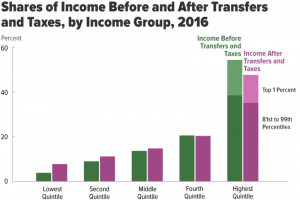


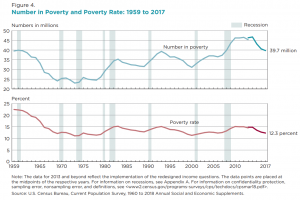


























 Site Title
