“Blud” is a slang term commonly used among Gen Z to refer to a close friend or companion. It is akin to calling someone “bro” or “buddy.”
“Blud” Origins
The term “blud” originates from British street slang, an evolution from the word “blood” often used within ethnic communities in the UK and the Caribbean to signify brotherhood and close kinship. Over time, it has been embraced by younger generations as a casual way to address friends.
Examples of Use for “Blud”
The following are some ways people might use this term in conversation or messaging:
“Yo, blud, what’s up?”
“Thanks for the help, blud.”
“I haven’t seen you in ages, blud.”
Incorporating “blud” Into Your Vocabulary
The term “blud” is a friendly slang, often used to refer to a close friend or mate. Here are some ways to include it in your daily interactions:
Greeting a Friend: When you meet a close friend, you can say, “Hey blud, how’s it going?”
Showing Appreciation: If a friend helps you out, you might respond with, “Thanks, blud! I owe you one.”
Casual Conversation: During a chat, if you agree with your friend, you could say, “You’re right, blud. That’s exactly what I was thinking.”
Is “Blud” Positive or Negative?
“Blud” is generally a positive term as it reflects camaraderie and a sense of community among peers.
85 Hindu Goddess Names for Baby Girl (Hindu Vedic Names)
These Hindu goddess names for baby girl mean intelligence, beauty, and wealth. Choose a Hindu Vedic name for your baby girl inspired by a Hindu goddess.
Hindu Vedic names are traditional names used in Hindu culture, that are derived from the Vedas, a collection of ancient texts often associated with Hindu deities. Vedic names are typically given to babies at the time of birth and are believed to have a profound impact on the child’s life.
The Vedas are the oldest scriptures in Hinduism. Vedic names are derived from the Sanskrit language and are often associated with Hindu deities.
Hindu Vedic names are typically chosen based on the child’s birth star, or Nakshatra. Each Nakshatra is associated with a specific sound or syllable, and often parents will choose a corresponding Vedic baby name beginning with the corresponding sound.
In addition to their significance in Hindu culture, Vedic names are also gaining popularity in other parts of the world. Many parents will choose a Hindu Vedic name inspired by Hindu goddesses or mythology for its unique spiritual significance. Some of our favorite Hindi names include Ahalya, who was the most beautiful woman, Divya, the divine mother Goddess, Aditi, the personification of infinity who held up the sky, and Shakti, the embodiment of feminine power.
Learn more about the meaning of Hindu goddess names and Vedic traditions as well as Hindu naming customs across India, including naming traditions in Tamil Nadu and Telegu with our full list of Hindu names for your beautiful goddess.
Hindu Goddess Names and Hindu Vedic Names for Girls
Discover the divine beauty of Vedic Indian baby girl names alongside their profound meanings, rooted in ancient Hindu traditions.
Ahalya – The most beautiful woman in the universe, Ahalya was created by Brahma. She is also the Goddess of the moon and the beautiful wife of Sage Gautam Mahirshi.
Aspara – Hinduism, Buddhism, spirit of the clouds, moves in the clouds; Celestial maiden.
Bhumi – Goddess of the earth.
Buddhi – This Hindu girl’s name means “intelligence.” Buddhi was the wife of Ganesha.
Daksha – Sanskirt, able, dextrous; Hinduism, one of several agents of creation.
Divya – Hinduism, the divine mother; Divine brilliance.
Gayatri– The personified form of a Vedic hymn called the Gayatri Mantra. Another name of Saraswati. .
Jambavati – A wife of Lord Krishna.
Kali – Hindu mythology, the goddess of Death and destruction.
Kalindi– Daughter of the sun god and the cloud Goddess, Kalindi is the wife of Lord Krishna.
Saraswati – The Hindu goddess Saraswati represents art and music, knowledge and wisdom, speech, and learning.
Satrajiti – The incarnation of the earth goddess and the wife of Lord Krishna.
Satyabhama – the incarnation of the earth goddess and the wife of Lord Krishna.
Satya – A wife of Lord Krishna. .
Shakti – Hindu philosophy, feminine power.
Siddhi – Sanskrit, fulfillment, success; Hinduism, the wife of Ganesha.
Sita -The female protagonist in the Ramayana, a Hindu epic. The goddess Sita was the wife of Lord Rama.
Uma – Sanskrit, daughter of the mountain; Hinduism, the wife of Lord Shiva.
Vidya – A Hindu tantric religion. Vidya means knowledge or learning.
Vedic Indian Baby Girl Names (With Meanings)
Dive into the enchanting world of Vedic Indian baby girl names, each carrying a profound meaning rooted in the rich tapestry of Hindu culture and spirituality.
Esther Goldstein, LCSW, Trauma Psychotherapist explains how childhood trauma can affect parents and provides tips for parents to cope with their trauma so it doesn’t impact their kids.
Being a survivor of childhood trauma can bring its own unique set of challenges to parenting. While we may wish to leave our trauma histories behind us, those experiences still lurk in the back of our minds. They can even influence how we parent our children.
That’s why parents who experienced childhood trauma need to learn how to best raise emotionally secure kids.
In this article, trauma experts provide insight to help you learn from your own adverse childhood experiences. With the right help and support, it’s possible to break the cycle of abuse and end generational trauma.
How Does Childhood Trauma Affect Your Parenting?
The Diagnostic and Statistical Manual of Mental Disorders (DSM) V defines childhood trauma as “exposure to actual or threatened death, serious injury, or sexual violence.” This includes direct exposure to trauma, witnessing a traumatic event, and/or learning about something traumatic that happened to a loved one or family member.
Esther Goldstein, LCSW, Trauma Psychotherapist, EMDR Consultant, Founder and Owner of Integrative Psychotherapy, shares that there are two types of childhood trauma:
The trauma of commission: a trauma where something happened. These types of trauma include physical harm, sexual abuse, domestic abuse, and vehicular crashes.
The trauma of omission: a trauma where something didn’t happen. These types of trauma include not receiving basic human needs, and lacking comfort, physical touch, and support.
Traumatic experiences can be further broken down into two categories: “small t” and “Big T” traumas.
“Big T” traumas refer to highly distressing events, such as war, near-death experiences, sexual abuse, and physical abuse.
“Small t” traumas are experiences that overwhelm the mind or body. These may seem less dramatic, but they cause feelings of intense distress. “Small t” traumas include emotional abuse and chronic stress. These situations can cause long-term effects, such as perpetual feelings of overwhelm. Image source: Getty Images
“Trauma often gets buried until something kicks it up to the surface — starting a family can often be the catalyst, causing our past pains or traumas to resurface,” explains Goldstein.
When someone has experienced trauma during their early years, it can deeply impact the way they approach parenting.
For example, if a person grew up in an environment where they didn’t feel safe or had unstable relationships, they may struggle to form secure attachments with their own children. Individuals who experienced childhood trauma may have difficulties in emotional regulation and tolerating negative emotional states.
Parenting is not an easy journey. It can be overwhelming and challenging, with a host of stressors. Parents who had traumatic childhood experiences are more likely to have a disproportionate response during stressful situations. In turn, their children learn unhealthy patterns of emotional regulation.
These parents do not intentionally react emotionally or in a neglectful manner. But the unresolved pain and coping mechanisms from their past can get in the way of the consistent care that their children need.
What is Generational Trauma?
Generational trauma is a concept that hits close to home for many of us. It refers to the psychological and emotional impact of traumatic events experienced by one generation, which are transmitted to subsequent generations.
The painful events experienced by our ancestors can have lasting effects on our own mental and emotional well-being.
It’s like passing down a family story, but instead of a happy memory, it’s emotional scars and struggles that get passed along. Traumatic events like child abuse, violence, and oppression leave deep imprints on our family’s history and shape how we handle stressors. It’s a ripple effect: what our great-grandparents went through can influence how we behave today.
Generational trauma can show up in different ways, from feeling anxious or depressed to coping with substance abuse. Breaking the cycle of generational trauma is crucial for healing and fostering a brighter future for everyone.Image source: Getty Images
How Does Parenting Trigger Past Trauma?
Heather Toews, Registered Clinical Counsellor specializing in trauma therapy supporting individuals in recovering from childhood and other complex traumas, explains that pain from our early intimate relationships acts as triggers for unprocessed, unconscious pain.
“We then project that pain from the past onto our relationships today. This pain then becomes intergenerational. This can be triggered by our child’s age,” adds Toews.
For example, if we experienced childhood trauma at age 6, having a 6-year-old child may trigger us.
Toews explains that our memories are explicit and implicit which means “we can have conscious recollections of some memories and other memories are more fragmented and stored without context and are wordless.”
The memories that live outside of our awareness often come out as triggers. But since these occurred in the context of a relationship, they also get triggered in the context of a relationship such as the one between a parent and a child.
“As much as pain is intergenerational, so is healing,” shares Toews.
Babies and Infants
The infant stage can be an overwhelming and stressful experience for many first-time parents. Caring for a newborn comes with a multitude of challenges, from sleepless nights to constant feedings and diaper changes.
The demands of parenting an infant can lead to elevated stress levels. This may impact a parent’s emotional and mental well-being. Increased stress levels can trigger parents and cause heightened irritability and emotional reactivity.
Toddlers
Toddlers are known for their boundless energy, curiosity, and emerging independence. Parents may find themselves navigating temper tantrums, defiance, and frequent mood swings. Parents need to keep a close eye on toddlers as they can quickly get into trouble.
Parents with childhood trauma may over-shelter their children. They fear what happened to them will also occur to their own child.
Child
Parents with a history of trauma may emotionally separate from their children as they struggle to regulate their own emotions. As a result, they experience dissociation and cannot tolerate moments when their child shows vulnerability or expresses strong emotions.
Teen
As children learn more about the world, they begin to form their own opinions. Trauma can cause an individual to feel like they do not have control over what happens to them. This creates an extreme fear of uncertainty.
Parents with unresolved trauma may avoid talking about taboo topics with their teenagers. They may try to compensate for their anxiety by controlling their children and limiting the types of experiences they have.
Tips on How to Cope and Manage Triggers
Image source: Getty Images
There are many ways to manage triggers as a parent with a history of childhood trauma. Toews suggests the following tips:
1. Look Inward
Use your parenting experiences to learn. Ask yourself: What am I triggered by? Extreme reactions can be fuelled by unresolved past trauma.
Remember, it isn’t about what happened to you as a child, but how you cope with this trauma now. We often get triggered by the particular age of our children and find ourselves doing the very things to our children that felt hurtful to us as a child.
2. Know Yourself
To repair our ability to connect to our children we need to develop inner security as adults. Dr. Daniel Siegel refers to this as a “coherent narrative.” A coherent narrative is a deep understanding of who you are, what is happening to you, and why this is happening throughout your life story.
3. Regulate Your Emotions
We learn regulation from being regulated. So if we didn’t receive that, we won’t be able to do this without relying on external factors (i.e. food, alcohol, zoning out).
Find people to share the burden of life with. Others can show you the experience of care and understanding–reshaping your regulation abilities.
It is best to regulate your emotions before addressing an issue with your child(ren), outside of immediate safety issues. Sometimes taking three deep breaths can mean all the difference between a reaction and a response.
4. Develop Emotional Language
Giving language to your emotions allows your nervous systems to calm down and return to baseline.
5. Practice Self-Compassion
Remember you didn’t get to where you are overnight, and it will take you time to get out of it. Offer yourself compassion.
I believe that the best parenting strategy is an apology. It teaches our children that nobody is perfect and we are all only human.
Cultivating self-compassion is essential, as it allows parents to acknowledge that their struggles are not a reflection of their worth, but rather a consequence of the pain they endured.
6. Learn New Skills
We don’t know what we don’t know until we know it. If your parenting strategies aren’t working for your child, learn new ways of parenting. I always recommend searching out attachment-based trauma-informed parenting strategies.
How to Break the Cycle of Abuse as a Parent
Image source: Getty Images
Seeking therapy can help you gain insight into how past trauma affects your parenting style. Professional support can teach you coping strategies to address challenges.
Child-Parent Psychotherapy (CCP)
Goldstein explains that Child-Parent Psychotherapy (CCP), a therapeutic model designed by Selma Fraiberg, can help both the primary caregiver and their child heal from trauma together.
CCP is for children who have experienced trauma, mental health, or behavioral concerns. CCP sessions include both the primary caregiver and the child. Primarily based on the attachment theory, CPP understands the importance of how a baby connects to their primary caregiver. It also includes components from psychodynamic, developmental, and behavioral theories.
CPP focuses on strengthening the parent-child relationship. It isn’t about a therapist swooping in to cure the child. Instead, it encourages the primary caregiver to provide safety and soothing to their distressed child. Utilizing play therapy, a therapist supports the primary caregiver in helping their child make sense of past traumas. CCP helps the primary caregiver gain a greater level of understanding of what hardships they have been through.
“Understanding and making sense of our trauma allows us, as parents to consciously choose how we would like to relate to our children and recognize that most often, our child/children’s behaviors may be an attempt to protect themselves from scary or painful experiences.
It allows parents [to have] more compassion for their children and provides them with skills for responding to challenging behaviors. The primary goal of Child-Parent Psychotherapy is to cultivate a healthy relationship between the child and caregiver, through which both the child can regain wellness and optimal functioning,” explains Goldstein.
The impact of childhood trauma on parents is not set in stone. The first step towards building a healthier parent-child relationship is to understand the effect of one’s own childhood experiences.
With the right support and a commitment to self-growth, parents can create a nurturing environment for their children and provide them with the care they need for healthy child development.
Parental alienation (PA) is when a parent uses strategies to distance their child from the other parent intentionally. Typically, this occurs as the result of a messy divorce or separation. One parent may not allow the other to see their children during their assigned visitation time, or trash talks them to the kids in order to get a better custody agreement.
In most cases, parental alienation is done purposefully, even if the parent doing the damage has never heard the term parental alienation syndrome. However, PA can also happen unintentionally if adults are not conscious of their words and actions.
Parental alienation syndrome describes the symptoms or side effects the afflicted child experiences. Child psychologist Richard Gardner coined the term PAS or parental alienation syndrome in 1985; however, the Diagnostic and Statistical Manual of Mental Disorders has yet to recognize it.
The most recent revision, the DSM-5, was revised in 2013, and it included PAS in the section “Other Conditions that May Be a Focus of Clinical Attention” under the heading “A Child Affected by Parental Relationship Distress” or (CAPRD).
There is no indication of when the DSM-6 will be released and whether or not it will contain PAS. But even without an official clinical definition, child development experts and mental health professionals can almost all agree that purposefully damaging your child’s relationship with the other parent has long-term, harmful consequences.
This article uses trusted resources to explain what parental alienation and parental alienation syndrome look like, why and how to avoid it, and what to do if you are a child or parent who has suffered the consequences of PA due to the actions of family members.
Divorce and separation are often messy and emotional events. For some parents, marriage was never even in the picture, but a difficult break-up or battles over custody can also wreak havoc on the parent-child relationship. No matter how much you despise your child’s other parent or family, it is essential for your child’s well-being that you do not engage in alienating behavior or language.
Regardless of whether the claims of the alienator are valid, bad-mouthing your co-parent or their extended family in front of your child can have devastating effects. Even if your children are adult children, you can still inflict damage when you engage in a campaign of denigration. Therefore, it is essential that parents also speak to their extended family and ask that they also avoid speaking negatively about their co-parent in front of their child.
While one parent typically commits parental alienation against another parent. It can extend to other family members such as grandparents, half-siblings, step-parents, aunts, and uncles. However, the emotional damage in those cases may not be as severe depending on your child’s relationship with their extended family.
Regardless, discussions that reflect poorly on parents and other significant adults in a child’s life should be done out of earshot for the best interests of the child.
Effects of Parental Alienation
The effects of parental alienation are long-lasting and often affect your child for the rest of their life. Common side-effects include:
Feelings of increased anger
Heightened feelings of neglect (Children may experience actual neglect because parents are fighting or overwhelmed.)
Adopting destructive behavioral or emotional patterns that they pass on to others
Having a skewed view of reality
Becoming prone to lying about others
Feelings of worthlessness or low self-esteem
Experiencing difficulty bonding with others; attachment and trust issues
Becoming combative with others due to learning an “us vs. them” mentality
Seeing things as very literal and in “black and white.”
Lacking empathy for others
Engaging in risky, attention-seeking behaviors
Signs of Parental Alienation
Sometimes, parents feel angry and abandoned, particularly when dealing with a nasty divorce or complex custody case. As a result, they engage in narcissistic behavior and direct their anger at the other parent, hoping they will look like the “good parent” or the “reliable parent.”
Whether or not they aimed to undermine the targeted parent or simply blow off steam, parental alienation behaviors can affect their child’s life.
Common behaviors alienators engage in include:
Preventing their child from seeing the other parents
Insist that all personal items stay at their house and not go to the other parents
Plan tempting or fun activities at the same time the child is supposed to be spending time with the other parent
Frequently break or alter custody arrangements in their favor
WIthhold information from the co-parent; medical documents, report cards, updates about school, activities, or friends
Ask their child for personal information or “gossip” about the other parent
Talk up their new partner or spouse over the child’s biological parent. For example, “Your step-dad loves spending time with you much more than your dad does.”
Making false accusations of physical or sexual abuse
Parental alienation is considered by many psychologists and mental health professionals as a form of brainwashing and even child abuse. In severe cases of parental alienation, the child’s rejection of the other parent is long-lasting, harsh, and may have life-long after effects.
How to Avoid Undermining Your Co-Parent
The easiest way to avoid undermining your co-parent after divorce is to not speak negatively about them in front of your child. For example, if your co-parent has canceled their scheduled parenting time or has done something that angers you, find another adult you can speak to and vent your frustration privately.
Have conversations with your co-parent that have the potential to blow up in a neutral spot; a coffee shop, park bench, or a mutual friend’s house who acts as a mediator. Don’t assume that once your children are in bed, you can raise your voices or have heated debates, and they won’t hear.
Respect your co-parent’s time and rules. For example, if they are supposed to be spending time with your child at 3 pm on Saturday, don’t show up at 3:45. Not only does that show your child your co-parent’s time isn’t valued, but it could affect child custody proceedings if you’re not holding up your end of the bargain.
Similarly, if your co-parent has expressed strong views about particular television shows, religious or cultural aspects, or activities, don’t undermine them and ignore their wishes. This also shows your child that the other parent’s rules and ideas don’t matter. If you disagree with a rule or decision, find a time to discuss it.
Dos and Donts
Do speak positively about your co-parent.
Do encourage a loving relationship between your child and their parent
Do respect their wishes and rules in regards to culture and religion
DOshare school, medical, and other important information with your co-parent
DO involve them in major decisions pertaining to your child
DO respect court orders and any provisions the family law court sets forth.
DO make provisions to protect your child in cases of sexual, physical, or emotional abuse.
DO consider family therapy or individual therapy for you and your child
DO be flexible when it comes to holidays, vacations, and emergency schedule changes
DO seek out the help of a parenting coordinator if needed
———-
DON’T blame the other parent’s behavior for problems affecting your child
DON’T withhold important information or exclude the co-parent from important events
DON’T make false allegations against your co-parent
DON’T discuss personal issues about your high-conflict divorce within earshot of your child
DON’T blame the other parent for financial problems (even if they are not paying child support)
DON’T give your child a choice over visitation or custody arrangements
DON’T discuss adult or marital issues with your children; even older teens and adult children should not know intimate details
DON’T blame or bad-mouth step-parents or significant others as the reason for problems with your ex-spouse
DON’T praise your new spouse or partner over your child’s biological parent
What To Do If You’re the Alienated Parent
It can be challenging to make amends if you are on the receiving end of parental alienation, either as the parent or alienated child. Often, severe parental alienation goes on for years, and the targeted parent and child may not even be aware they are being subjected to the situation.
As with most mental health situations, early intervention is best. Family or individual therapy can help. If you are not the custodial parent, you may be able to present a case in family court, which can bring about child custody evaluations or changes. But proceed with caution as these events are often traumatic for children.
If you are the target of parental alienation, you mustn’t do it yourself and begin to target the other parent. Instead, document what you are seeing, hearing, and experiencing, and allow legal professionals to intervene as appropriate.
An excellent place to start is by speaking with your child’s pediatrician or contacting a family counseling center in your area.
The United States Department of Justice (2015) defines gangs as organized groups of three or more people with a collective identity surrounding criminal activity. Gangs have dangerous effects on communities, with as many as 90% of violent crimes in U.S. cities attributed to gang involvement (National Gang Intelligence Center, 2011). In addition to causing danger to communities, gangs are problematic and dangerous for their members, especially youth members. Over one million gang members in the United States are under 18 years of age—a number that recent research suggests is growing (Pyrooz & Sweeten, 2015). Gang-involved youth are at risk of experiencing physical violence, incarceration, substance abuse, and unemployment (Gilman, Hill, & Hawkins, 2014). In order to reduce these negative effects on both communities and gang members, it is imperative to collect and synthesize empirical research on youth gang involvement. Specifically, while there is myriad research on correlates of youth gang involvement, there is a dearth in attempts to understand why these correlates may be related to or even predictive of gang involvement. As such, this review attempts to explain the relations between these correlates and gangs by utilizing Maslow’s (1943) Hierarchy of Needs as a theoretical framework.
Maslow’s (1943) theory comprises of two main points relevant to framing risk factors for gang involvement. First, he posits that all humans have a hierarchy of basic needs that must be met in order to reach positive outcomes. These needs include physiological, safety, love, and esteem. Second, he claims that the necessity to fulfill these basic needs drives nearly all motivation. Only after all of these basic needs are met can an individual begin to achieve self-actualization, or the drive to be the best that one can be (Maslow, 1943). If these basic needs are not met, an individual is motivated to fulfill them by any means necessary, regardless of consequences (Maslow, 1943). Therefore, individuals who do not have their basic needs met by their families and environments may seek out gang membership as a way to fulfill them. This paper will review literature on risk factors for gang involvement by using Maslow’s (1943) Hierarchy of Needs as a framework for understanding why such factors increase individuals’ risk of gang involvement. Such a review is necessary to inform future research and policy decisions aimed at reducing youth gang membership and their impact on communities.
Physiological Needs
When one’s physiological needs are not met, individuals yearn to satisfy them however they can (Maslow, 1943). Poverty has been found to be a correlate of food insecurity and unstable housing, as well as gang involvement (Pyrooz & Sweeten, 2015; Tapia, 2011). Thus, while money itself may not be a physiological need, hunger and housing (e.g. shelter from dangerous elements and weather) are related to gang membership where food insecurity and unstable housing are predictive of involvement (Carlson, Andrews, & Bickel 1999; Voisin, King, Diclemente, & Carry, 2014). Maslow’s (1943) theory would suggest a causal relation between these variables in which individuals are using gangs as a source of income to meet their physiological needs of food and shelter. Because legal means of income may not be accessible to youth under the legal working age of 14 (U.S. Department of Labor, 1938), or simply unattractive due to the long hours and minimal pay, joining a gang may appeal to a youth in need of money. Gangs can provide income through criminal activity such as drug and weapons trafficking (U.S. Department of Justice, 2015). In addition to money, gangs can give members a feeling of protection by providing them with weapons and a sense of safety in numbers, or a sense that they have people who will fight with them if needed (Decker & Van Winkle, 1996). Such provisions may help youth to address their safety needs.
Safety Needs
Maslow (1943) explains that all individuals have a need to feel safe in their environment. Youth living in areas run by gangs and violence are at an increased risk of membership themselves (Li et al., 2002), which may be due to safety needs. In other words, youth exposed to violence may feel that their safety is at risk and that they do not have means to protect themselves nor a group of peers to fight beside them. Thus, they may look to gang membership to fill these needs. Studies suggest that for at-risk youth, this lack of safety exists across contexts, including their neighborhood (e.g., Farmer & Hairston, 2013; Merrin, Hong, & Espelage, 2015) and home (e.g., Wood, Furlong, Rosenblatt, & Robertson, 1997).
One recent study found that individuals living in neighborhoods where there was a significant gang presence had a greater likelihood of joining a gang (Alleyne & Wood, 2012; Hill et al., 1999). Alleyne and Wood (2012) suggest that learned behavior is the cause of this relation, where witnessing gang violence leads to engaging in violence. However, the Hierarchy of Needs (1943) illustrates this relation between neighborhood gangs and gang involvement as due to youth feeling unsafe in their environments, thus looking to meet their safety needs through gang membership.
The need to establish safety also exists in the home, as approximately 71% of gang members have experienced family violence (Wood et al., 1997). Wood and colleagues (1997) found that numerous gang members had experienced sexual (22%) or physical (42%) abuse, often at the hands of their caregivers. Moreover, histories of trauma are predictive of gang involvement in girls (Hill, Howell, Hawkins, & Battin-Pearson, 1999; Voisen et al., 2014). Survivors of trauma may look to gangs with the hope of finding protection against another traumatic experience occurring. In addition to providing individuals with a sense of safety, belonging to a gang and the assumed camaraderie that comes with it can also be attractive to those looking to fill their love needs.
Love Needs
Maslow (1943) defines the love needs as a yearning for a sense of belonging and friendship in both groups and one-on-one; both romantically and platonically. He adds that individuals will “strive with great intensity to achieve this goal” (p. 381). Joining a gang, by definition, means being part of cohesive group with a shared identity (U. S. Department of Justice, 2015; Vigil & Long, 1990). Thus, gang involvement is an attractive means of fulfilling the love needs as it allows the youth to have a sense of belonging to a group. Research shows that many gang-involved youth lack close ties with their families, friends, and schools (e.g., Li et al., 2002; Merrin, Hong, & Espelage, 2015; Pyrooz & Sweeten, 2015)
Within families, for instance, a lack of parental support is directly related to gang membership (Lenzi et al., 2015; Li et al., 2002). Specifically, Pyrooz and Sweeten (2015) found that numerous gang-involved youth come from single-parent households, with the mother often being the sole caretaker. This correlation may exist because the single parent is the family’s only source of income and may have less time to spend with the child. Additionally, low family involvement, poor communication, and low parental monitoring are all found to be risk factors of gang involvement (Li et al., 2002; Voisen, et al., 2014). Voisen et al. (2014) explains that these factors are indicative of a family relationship in which an individual does not feel a sense of love and belonging, and thus the youth may seek other ways to satisfy the need for familial connections, such as with peers.
If a youth can find love or belonging among peers in school, he or she will be less likely to be involved in a gang (Merrin, Hong, & Espelage, 2015). Research also demonstrates that having a poor attachment to school academically (e.g., showing disinterest, low grades, truancy) is predictive of gang involvement (Hill et al., 1999). When youth have low attachment to school and poor relationships at home, they may turn to peers for support. While research shows that peer support can be protective against gang involvement (McDaniel, 2012), associating with delinquent and/or gang involved peers can increase his or her risk of membership (Bell, 2009; Bjerregaard & Cochran, 2012; Esbensen & Carsen, 2009; Hill et al., 1999; Lenzi et al., 2015; Voisen et al., 2014). Conversely, peer rejection also increases risk for gang involvement (Farmer & Hairston, 2013). These relationships between peers and gang involvement can be explained by Maslow’s (1943) theory in two ways. First, as mentioned above, this rejection may negatively influence an individual’s sense of belonging and make them feel unloved. Second, such rejection might impact one’s esteem, which is another important need in Maslow’s (1943) theory.
Esteem Needs
Maslow (1943) defines esteem needs as including both self-esteem and the perception of being held in high esteem by others. These two forms of esteem are actually reciprocal, as evidence suggests that our perceptions of ourselves are directly related to how we think others see us (Leary, Tambor, Terdal, & Downs, 1995). Peer rejection, for example, occurs when one is held in low esteem by others, which would then negatively affect one’s self-esteem. Low-self esteem has been found to predict gang membership in numerous studies (e.g., Dmitrieva, Gibson, Steinbert, Piquero, & Fagan, 2014; Farmer & Hairston, 2013; Voisen et al., 2014), likely due in part to factors such as the aforementioned peer rejection and poor school outcomes (Hill et al., 1999; Merrin, Hong, & Espelage, 2015). Regardless of the reason for this trend, youth with greater esteem needs will search to increase both their self-esteem and the esteem others hold of them. If one’s esteem needs are not met, they are left feeling discouraged and may do nearly anything to prove their worthiness and gain respect. Gangs provide an attractive means to gratify this need. Gangs often carry “street cred,” or a reputation of power and prestige in a given neighborhood (Brantingham, Tita, Short, & Reid, 2012). Joining a gang with a high level of street cred, therefore, can increase one’s esteem by association. Furthermore, gangs give individuals a sense of power, which can be attractive to individuals who may feel they have been marginalized in other aspects of their lives (Capozzoli & McVey, 2000). In sum, becoming involved in a gang can boost one’s esteem by providing them with a sense of empowerment.
Discussion
Youth gang involvement is increasing dramatically in the United States (Pyrooz & Sweeten, 2015). This paper synthesizes the existing research on risk factors of gang involvement using Maslow’s (1943) Hierarchy of Needs as a theoretical framework. When viewed through this hierarchy, individuals are at an increased risk for joining a gang when their basic needs are not met. For instance, physiological needs such as hunger can be met through the drug-dealing aspect of gang membership by providing that individual with money from sales. Safety needs can be met through the camaraderie a gang offers, which provides protection against dangerous neighborhoods and rival gangs. This same camaraderie addresses the love need by providing an individual who may be cast out by family and peers with a sense of belonging. Finally, gangs can address the esteem need by increasing one’s prestige and reputation through association with the gang.
Based on the research presented in this review and the Hierarchy of Needs theory, the author developed an answer to the research question in which unmet needs lead to both desperation to meet these needs and the inability to self actualize, both of which then lead to gang involvement. When one’s primary four basic needs are not met, that individual is unable to self-actualize and therefore does not try to reach his or her full potential (Maslow, 1943). Additionally, he or she will experience an intense sense of urgency to satiate the basic four needs however he or she can. The combination of this urgency to meet needs and the inability to self-actualize then leads to an increased risk of gang-involvement.
Limitations
Much of the existing literature analyzes correlations between variables and youth already in gangs, rather than longitudinal studies of those exhibiting risk factors and evaluating if the participants join gangs at a later time-point. Having such research would allow more predictive inferences: researchers would be able to conclude that one variable leads to gang involvement in contrast to declaring that these two variables are related with no evidence of directionality. Having directionality would strengthen the argument that reducing risk factors may truly have an impact on a reduction of gang involvement.
A second limitation is that Maslow’s Hierarchy of Needs posits that one’s needs must be met in order from bottom to top, yet no research currently suggests the existence of this order in this context: that an individual’s desire to feed themselves is any more of a motivator to join a gang than fulfilling a sense of belonging. Finally, because this model focuses on needs related primarily to external factors, individual differences may influence the relation between the reviewed risk factors and becoming involved in a gang, as not all individuals with these risk factors become involved in gangs. In other words, a perfect causal relation cannot be assumed between the environmental risk factors reviewed and gang involvement.
Implications
Framing the correlates of youth gang membership around Maslow’s Hierarchy of Needs has clear implications for theory, research, policy, and practice. The model supports Maslow’s theory to an extent, but brings into question whether the suggested hierarchy has the same (or any) order in this context. For instance, there is no evidence that a youth is yearning to meet his or her safety needs before his or her esteem needs. Future research should explore if gang-involved youth rank the reasons they joined a gang in the order that Maslow surmised. Because there is nothing to suggest one level of the hierarchy is more important than another in this context, policy and practice initiatives should target needs at each level of the hierarchy and find ways to meet individual’s needs through means other than gangs. If the directionality of Maslow’s Hierarchy is correct, policies should aim to impact from the ground up, starting with physiological needs.
Addressing poverty through both legislation (e.g., tax reforms) and micro-level initiatives (e.g., donations to local food banks and shelters) could go a long way in improving the lives of impoverished youth and decreasing their risk of gang membership. Following this, safety needs can be addressed through initiatives such as better community policing. Community policing refers to when police have more positive relationships with the communities in which they serve so that their presence is not feared and people are more willing to call them following a crime (Bureau of Justice Assistance, 1994). Additionally, greater focus on treatment for those who have experienced trauma and abuse may provide survivors with alternative ways to cope and feel protected rather than join a gang.
Third, belonging needs could be addressed through a policy change that would increase funds for school programs in order to increase school engagement, both during and after school hours. Such programs could increase one’s feeling of belonging in school and diminish their need to find relationships in gangs. Further, instituting more group- and family-centered interventions for at-risk youth where positive bonds can be formed in safe, structured environments could help to fulfill the love needs in healthier ways. One component of such therapies could be the use of positive reinforcement (Premack, 1959), which can also serve to address Maslow’s fourth need, self-esteem. As such, viewing unmet needs of at-risk youth as predictors of gang membership has important implications for reducing youth gang involvement. Such reductions could lead to minimization of in youth arrests, substance use, and unemployment, as well as vast reduction of violent crimes in cities across the United States.
References
Alleyne, E., & Wood, J. L. (2012). Gang membership: The psychological evidence. In Youth gangs in international perspective (pp. 151-168). New York, NY: Springer.
Bell, K. E. (2009). Gender and gangs: A quantitative comparison. Crime & Delinquency, 55(3), 363-387.
Bjerregaard, B., & Cochran, J. A. (2012). The role of school-related bonding factors and gender: Correlates of gang membership among adolescents. Women & Criminal Justice, 22(1), 30-53.
Brantingham, P. J., Tita, G. E., Short, M. B., & Reid, S. E. (2012). The ecology of gang territorial boundaries. Criminology, 50(3), 851-885.
Capozzoli, T. K., & McVey, R. S. (1999). Kids killing kids: Managing violence and gangs in schools. Boca Raton, FL: CRC Press.
Carlson, S. J., Andrews, M. S., & Bickel, G. W. (1999). Measuring food insecurity and hunger in the United States: Development of a national benchmark measure and prevalence estimates. The Journal of Nutrition, 129(2), 510-516.
Decker, S. H., & Van Winkle, B. (1996). Life in the gang: Family, friends, and violence. Cambridge, England: Cambridge University Press.
Dmitrieva, J., Gibson, L., Steinberg, L., Piquero, A., & Fagan, J. (2014). Predictors and consequences of gang membership: Comparing gang members, gang leaders, and non-gang-affiliated adjudicated youth. Journal of Research on Adolescence, 24(2), 220-234.
Esbensen, F. A., & Carson, D. C. (2012). Who are the gangsters? An examination of the age, race/ethnicity, sex, and immigration status of self-reported gang members in a seven-city study of American youth. Journal of Contemporary Criminal Justice, 28(4), 465-481.
Farmer, A. Y., & Hairston Jr., T. (2013). Predictors of gang membership: Variations across grade levels. Journal of Social Service Research, 39(4), 530-544.
Gilman, A., Hill, K. G., & Hawkins, J. D. (2014). Long-term consequences of adolescent gang membership for adult functioning. American Journal of Public Health, 104(5), 938-945.
Hill, K. G., Howell, J. C., Hawkins, J. D., & Battin-Pearson, S. R. (1999). Childhood risk factors for adolescent gang membership: Results from the Seattle Social Development Project. Journal of Research in Crime and Delinquency, 36(3), 300-322.
Lenzi, M., Sharkey, J., Vieno, A., Mayworm, A., Dougherty, D., & Nylund-Gibson, K. (2014). Adolescent gang involvement: The role of individual, family, peer, and school factors in a multilevel perspective. Aggressive Behavior, 41, 386-397.
Li, X., Stanton, B., Pack, R., Harris, C., Cottrell, L., & Burns, J. (2002). Risk and protective factors associated with gang involvement among urban African American adolescents. Youth & Society, 34(2), 172-194.
Maslow, A. H. (1943). A theory of human motivation. Psychological Review, 50(4), 370-396.
McDaniel, D. D. (2012). Risk and protective factors associated with gang affiliation among high-risk youth: A public health approach. Injury Prevention, 18, 253-258.
Merrin, G. J., Hong, J. S., & Espelage, D. L. (2015). Are the risk and protective factors similarfor gang-involved, pressured-to-join, and non-gang-involved youth? A social-ecological analysis. American Journal of Orthopsychiatry, 85(6), 522-535.
Vigil, J. D., & Long, J. M. (1990). Emic and etic perspectives on gang culture: The Chicano case. In C. R. Huff (Ed.), Gangs in America (pp. 55-68). Thousand Oaks, CA: SAGE Publications.
Voisin, D. R., King, K. M., Diclemente, R. J., & Carry, M. (2014). Correlates of gang involvement and health-related factors among African American females with a detention history. Children and Youth Services Review, 44, 120-125.
Wood, M., Furlong, M. J., Rosenblatt, J. A., Robertson, L. M., Scozzari, F., & Sosna, T. (1997). Understanding the psychosocial characteristics of gang-involved youths in a system of care: Individual, family, and system correlates.Education and Treatment of Children, 20(3), 281-294.
ARCHIVED July 1, 2009. This document may contain dated information. It remains available to provide access to historical materials.National Drug Intelligence CenterProduct No. 2005-L0559-001
Street gangs, outlaw motorcycle gangs (OMGs), and prison gangs are the primary distributors of illegal drugs on the streets of the United States. Gangs also smuggle drugs into the United States and produce and transport drugs within the country.
Street gang members convert powdered cocaine into crack cocaine and produce most of the PCP available in the United States. Gangs, primarily OMGs, also produce marijuana and methamphetamine. In addition, gangs increasingly are involved in smuggling large quantities of cocaine and marijuana and lesser quantities of heroin, methamphetamine, and MDMA (also known as ecstasy) into the United States from foreign sources of supply. Gangs primarily transport and distribute powdered cocaine, crack cocaine, heroin, marijuana, methamphetamine, MDMA, and PCP in the United States.
Located throughout the country, street gangs vary in size, composition, and structure. Large, nationally affiliated street gangs pose the greatest threat because they smuggle, produce, transport, and distribute large quantities of illicit drugs throughout the country and are extremely violent. Local street gangs in rural, suburban, and urban areas pose a low but growing threat. Local street gangs transport and distribute drugs within very specific areas. These gangs often imitate the larger, more powerful national gangs in order to gain respect from rivals.
Some gangs collect millions of dollars per month selling illegal drugs, trafficking weapons, operating prostitution rings, and selling stolen property. Gangs launder proceeds by investing in real estate, recording studios, motorcycle shops, and construction companies. They also operate various cash-based businesses, such as barbershops, music stores, restaurants, catering services, tattoo parlors, and strip clubs, in order to commingle drug proceeds with funds generated through legitimate commerce.
What is the extent of gang operation and crime in the United States?
There are at least 21,500 gangs and more than 731,000 active gang members in the United States. Gangs conduct criminal activity in all 50 states and U.S. territories. Although most gang activity is concentrated in major urban areas, gangs also are proliferating in rural and suburban areas of the country as gang members flee increasing law enforcement pressure in urban areas or seek more lucrative drug markets. This proliferation in nonurban areas increasingly is accompanied by violence and is threatening society in general.
According to a 2001 Department of Justice survey, 20 percent of students aged 12 through 18 reported that street gangs had been present at their school during the previous 6 months. More than a quarter (28%) of students in urban schools reported a street gang presence, and 18 percent of students in suburban schools and 13 percent in rural schools reported the presence of street gangs. Public schools reported a much higher percentage of gang presence than private schools.
What are the dangers associated with gang activity?
Large street gangs readily employ violence to control and expand drug distribution activities, targeting rival gangs and dealers who neglect or refuse to pay extortion fees. Members also use violence to ensure that members adhere to the gang’s code of conduct or to prevent a member from leaving. In November 2004 a 19-year-old gang member in Fort Worth, Texas, was sentenced to 30 years in prison for fatally shooting a childhood friend who wanted to leave their local street gang.
Authorities throughout the country report that gangs are responsible for most of the serious violent crime in the major cities of the United States. Gangs engage in an array of criminal activities including assault, burglary, drive-by shooting, extortion, homicide, identification fraud, money laundering, prostitution operations, robbery, sale of stolen property, and weapons trafficking.
What are some signs that young people may be involved in gang activity?
Changes in behavior such as skipping school, hanging out with different friends or, in certain places, spray-painting graffiti and using hand signals with friends can indicate gang affiliation.
In addition, individuals who belong to gangs often dress alike by wearing clothing of the same color, wearing bandannas, or even rolling up their pant legs in a certain way. Some gang members wear certain designer labels to show their gang affiliation. Gang members often have tattoos. Also, because gang violence frequently is glorified in rap music, young people involved in gangs often try to imitate the dress and actions of rap artists.
Finally, because substance abuse is often a characteristic of gang members, young people involved in gang activity may exhibit signs of drug or alcohol use.
National Drug Intelligence Center 319 Washington Street, 5th Floor Johnstown, PA 15901-1622 Telephone: 814-532-4601 FAX: 814-532-4690NDIC Washington Liaison Office 8201 Greensboro Drive, Suite 1001 McLean, VA 22102-3840 Telephone: 703-556-8970 FAX: 703-556-7807
NDIC publications are available on the following web sites:
Let’s have a good look at this for a moment. What we mean by a playground is this? A playground consists of a very large space that is filled with equipment and activities for children to play inside of it. When it pertains to Satan we all have to be extremely careful. This playground can hinder us in various ways. For instance, it can prevent anyone from serving the Lord. 1st Thessalonians 2:18 in the New International Version says for we wanted to come to you-certainly, I Paul did again and again, but Satan blocked our way. This means that Satan prevents us from performing certain tasks for God.
He also keeps us from reading the Word of God, which is the sword of the spirit. Another way of looking at this playground that belongs to Satan is the way it causes billions of people to get addicted. A person can get easily captivated through the women who are online wearing certain apparel, or the music that we listen to on a daily basis. Some of it is demonic. For example, there are certain beats, lyrics, and tunes that easily captivate our minds and draw us into the music. There is an inner voice that communicates to each and every one of us. It is Satan using the internet as his playground. His purpose is to deceive the nations worldwide. The internet has been around for over 40 years.
The internet did not become available for public use until 1996. However, this major search engine and tool has changed so much over the past 20 years that it has caused millions of people to break up their marriages, relationships, and families. This is simply because of its graphic content that it contains. James 1:14-15 indicates that but each person is tempted when they are dragged away by their own evil desire and enticed. Then after desire has conceived, it gives birth to sin and sin when it is full grown gives birth to death. This means that we must pay close attention to all of the things that we are doing behaviorally, psychologically, and socially, so that it pleases God.
It is not easy because we are in a constant battle with our flesh each and every single day. It is a war that is going on inside of the mind itself. Satan captures your mind and draws you completely away from what you are supposed to do for God. The Playground that I am talking about right now consists of not only the internet, but music, nightclubs, as well as other churches and occults. The internet is emphasized at this time because it is the main thing that people are using right now for research and entertainment.
There are more women online than men. There are more children between the ages of 12 to 30 online more than ever before. This is the main reason why parents need to start paying attention to the activities that each of their children is doing each day. James 1:21 says therefore get rid of all moral filth and evil that is so prevalent and humbly accept the word planted in you which can save you. This means that we must get rid of anything that contaminates our minds and accepts God’s word as a seed and allow it to grow inside of us. Also, we must get rid of anything that goes against God. Psalms 119:89 states that Your Word O Lord is eternal: it stands firm in the heavens. This means that God’s Word is the only thing that will remain on earth. The internet itself will dissolve just like the heavens and the earth. Technology is something that will not last forever. It is only a trend or fad. Trends and Fads are temporary and this is something that only last for a very short period of time.
This also includes the internet if it is a major problem for you. The internet as a playground is very serious. It is technology, which is true. Matthew 24:35 says that heaven and earth will pass away, but my words will never pass away. Jesus told His disciples this information while He was reading the End of Times. Jesus also told his disciples in Mark 13th chapter to watch because you do not know when the world will come to an end. Watch therefore watch!! Satan’s playground consists of many places. These places where Satan is deceiving the nations are everywhere. The internet itself is propaganda that is either positive or negative. The internet is also filled with images that are capable of causing the conscious to erode. Therefore, causing billions to become addicted and there is no way out of it. This addiction is just as bad as smoking cigarettes. How come the internet is Satan’s playground? This is a very good question because there are things that go on regularly that causes everyone to panic. This is especially when there are hacking incidents that are going on worldwide. This is a major threat to national security. We are have to realize that this is very serious and we have to pay attention to what is going on around us through the use of our eyes and the rest of our 5 senses.
The traditional family structure consists of two married individuals providing care for their offspring, but this is becoming more uncommon.
Learning Objectives
Analyze the statistical data regarding types of family composition and living arrangements
Key Points
The nuclear family is considered the ” traditional ” family. The nuclear family consists of a mother, father, and their biological children.
A single parent is a parent who cares for one or more children without the assistance of the other biological parent.
Step families are becoming more familiar in America. Divorce rates, along with the remarriage rate are rising, therefore bringing two families together as step families.
The extended family consists of grandparents, aunts, uncles, and cousins.
Key Terms
nuclear family: a family unit consisting of at most a father, mother and dependent children.
Family Structure: a family support system involving two married individuals providing care and stability for their biological offspring.
extended family: A family consisting of parents and children, along with either grandparents, grandchildren, aunts or uncles, cousins etc.
The traditional family structure in the United States is considered a family support system which involves two married individuals providing care and stability for their biological offspring. However, this two-parent, nuclear family has become less prevalent, and alternative family forms have become more common. The family is created at birth and establishes ties across generations. Those generations, the extended family of aunts, uncles, grandparents, and cousins, can all hold significant emotional and economic roles for the nuclear family.
Nuclear Family
The nuclear family is considered the “traditional” family and consists of a mother, father, and the children. The two-parent nuclear family has become less prevalent, and alternative family forms such as, homosexual relationships, single-parent households, and adopting individuals are more common. The nuclear family is also choosing to have fewer children than in the past. The percentage of married-couple households with children under 18 has declined to 23.5% of all households in 2000 from 25.6% in 1990, and from 45% in 1960. However, 64 percent of children still reside in a two-parent, household as of 2012.
Single Parent
A single parent is a parent who cares for one or more children without the assistance of the other biological parent. Historically, single-parent families often resulted from death of a spouse, for instance during childbirth. Single-parent homes are increasing as married couples divorce, or as unmarried couples have children. Although widely believed to be detrimental to the mental and physical well-being of a child, this type of household is tolerated. The percentage of single-parent households has doubled in the last three decades, but that percentage tripled between 1900 and 1950. In fact, 24 percent of children live with just their mother, and 4 percent live with just their father. The sense of marriage as a “permanent” institution has been weakened, allowing individuals to consider leaving marriages more readily than they may have in the past. Increasingly single parent families are a result of out of wedlock births, especially those due to unintended pregnancy.
Step Families
Step families are becoming more common in America. Divorce rates, along with the remarriage rate are rising, therefore bringing two families together as step families. Statistics show that there are 1,300 new step families forming every day. Over half of American families are remarried, that is 75% of marriages ending in divorce, remarry.
Extended Family
The extended family consists of grandparents, aunts, uncles, and cousins. In some circumstances, the extended family comes to live either with or in place of a member of the nuclear family. About 4 percent of children live with a relative other than a parent. For example, when elderly parents move in with their children due to old age, this places large demands on the caregivers, particularly the female relatives who choose to perform these duties for their extended family.The traditional
family in the U.S.: An American
family composed of the mother, father, children, and extended
The LibreTexts libraries are Powered by NICE CXone Expert and are supported by the Department of Education Open Textbook Pilot Project, the UC Davis Office of the Provost, the UC Davis Library, the California State University Affordable Learning Solutions Program, and Merlot. We also acknowledge previous National Science Foundation support under grant numbers 1246120, 1525057, and 1413739. Privacy Policy. Terms & Conditions. Accessibility Statement. For more information contact us at info@libretexts.org.
The traditional family structure consists of two married individuals providing care for their offspring, but this is becoming more uncommon.
Learning Objectives
Analyze the statistical data regarding types of family composition and living arrangements
Key Points
The nuclear family is considered the ” traditional ” family. The nuclear family consists of a mother, father, and their biological children.
A single parent is a parent who cares for one or more children without the assistance of the other biological parent.
Step families are becoming more familiar in America. Divorce rates, along with the remarriage rate are rising, therefore bringing two families together as step families.
The extended family consists of grandparents, aunts, uncles, and cousins.
Key Terms
nuclear family: a family unit consisting of at most a father, mother and dependent children.
Family Structure: a family support system involving two married individuals providing care and stability for their biological offspring.
extended family: A family consisting of parents and children, along with either grandparents, grandchildren, aunts or uncles, cousins etc.
The traditional family structure in the United States is considered a family support system which involves two married individuals providing care and stability for their biological offspring. However, this two-parent, nuclear family has become less prevalent, and alternative family forms have become more common. The family is created at birth and establishes ties across generations. Those generations, the extended family of aunts, uncles, grandparents, and cousins, can all hold significant emotional and economic roles for the nuclear family.
Nuclear Family
The nuclear family is considered the “traditional” family and consists of a mother, father, and the children. The two-parent nuclear family has become less prevalent, and alternative family forms such as, homosexual relationships, single-parent households, and adopting individuals are more common. The nuclear family is also choosing to have fewer children than in the past. The percentage of married-couple households with children under 18 has declined to 23.5% of all households in 2000 from 25.6% in 1990, and from 45% in 1960. However, 64 percent of children still reside in a two-parent, household as of 2012.
Single Parent
A single parent is a parent who cares for one or more children without the assistance of the other biological parent. Historically, single-parent families often resulted from death of a spouse, for instance during childbirth. Single-parent homes are increasing as married couples divorce, or as unmarried couples have children. Although widely believed to be detrimental to the mental and physical well-being of a child, this type of household is tolerated. The percentage of single-parent households has doubled in the last three decades, but that percentage tripled between 1900 and 1950. In fact, 24 percent of children live with just their mother, and 4 percent live with just their father. The sense of marriage as a “permanent” institution has been weakened, allowing individuals to consider leaving marriages more readily than they may have in the past. Increasingly single parent families are a result of out of wedlock births, especially those due to unintended pregnancy.
Step Families
Step families are becoming more common in America. Divorce rates, along with the remarriage rate are rising, therefore bringing two families together as step families. Statistics show that there are 1,300 new step families forming every day. Over half of American families are remarried, that is 75% of marriages ending in divorce, remarry.
Extended Family
The extended family consists of grandparents, aunts, uncles, and cousins. In some circumstances, the extended family comes to live either with or in place of a member of the nuclear family. About 4 percent of children live with a relative other than a parent. For example, when elderly parents move in with their children due to old age, this places large demands on the caregivers, particularly the female relatives who choose to perform these duties for their extended family.The traditional
family in the U.S.: An American
family composed of the mother, father, children, and extended
The LibreTexts libraries are Powered by NICE CXone Expert and are supported by the Department of Education Open Textbook Pilot Project, the UC Davis Office of the Provost, the UC Davis Library, the California State University Affordable Learning Solutions Program, and Merlot. We also acknowledge previous National Science Foundation support under grant numbers 1246120, 1525057, and 1413739. Privacy Policy. Terms & Conditions. Accessibility Statement. For more information contact us at info@libretexts.org.
Nuclear family | Definition, Characteristics & Benefits – Britannica
Britannica
Modernizing The Nuclear Family: Adapting To Changing Times
BetterHelp
See all
A nuclear family is a traditional family structure consisting of
two parents (usually a mother and father) and their children living together in the same household. It is also referred to as the immediate family or elementary family.
Here’s a breakdown of the nuclear family structure and some key points about it:
Characteristics:
Core Unit: The nuclear family centers on the core unit of parents and children, as opposed to extended family members like grandparents, aunts, uncles, and cousins who would live separately.
Parents: Typically, a nuclear family includes two adult parents. While historically viewed as a married heterosexual couple, the definition has evolved to include unmarried couples and same-sex parents.
Children: Nuclear families include one or more children, who can be biological or adopted.
Contrast with Other Family Structures:
Extended Family: Nuclear families differ from extended families, where multiple generations or relatives live together under one roof.
Single-Parent Households: Nuclear families are also distinct from single-parent households, where one parent raises children independently.
Historical Context and Modern Trends:
Rise in Prominence: The nuclear family model gained prominence, especially in Western societies, after World War II, coinciding with the Industrial Revolution and its impact on economic practices and living arrangements.
Idealized in the Mid-20th Century: The nuclear family was often seen as the ideal structure for raising children and was promoted in popular culture.
Decline and Diversity: While still common, the prevalence of nuclear families, particularly in Western countries, has declined significantly since the 1960s. This shift is attributed to factors like increased female workforce participation, evolving social values, and a rise in single-parent households.
Increased Acceptance of Diverse Structures: Diverse family structures, including single-parent families, cohabiting couples, blended families, and same-sex parent families, are increasingly recognized and accepted today.
Advantages and Disadvantages:
Advantages: Privacy, independence, potentially stronger parent-child bonds, financial stability, and flexibility in relocation.
Disadvantages: Potential for social isolation, increased pressure on parents, reduced access to a wider support system, and potential for children to have limited exposure to diverse viewpoints.
The nuclear family, while historically significant, is now part of a diverse landscape of family structures, reflecting the evolving nature of society and individual choices.
What is a nuclear family? The definition of a nuclear family consists of a mother, father, and the children that they have together. Here in the United States, the nuclear family has diminished. It only consists of a single mother or father raising their children. According to the United States Department of Vital Statistics, in the year 2013, there are over 70% of adults raising their own children all by themselves. This is a very serious problem!! This is simply because the majority of these single parents are women. There are over 60% of single women who are raising their own children. This is simply because of the fact that; the father is absent from the home. This is due to incarceration or death. In most cases, there are over 40% of single women who have children by different fathers. This means that the child was born out of wedlock.
I am speaking about this now because this is a very serious problem in this country. There are men and women who are having children by different people every single day. The expectations change because of the fact that a man or woman usually renege on their promises. In my case, I have not seen my own biological father in over 58 years. This is his fault because he did not tell my mother at the time that he was married to another woman. This is very painful because out of my mother’s 9 children, I am the only one who has a different father from the rest of my half siblings. Anytime that another person tells a person who is in this situation to “get over it.” It only causes a lot of damage to the person’s psyche. It affects them to the point that; a person who is experiencing this usually goes through a great deal of depression. This is simply because a person would like to see their absent parent before they die.
As far as the nuclear family is concerned, there are times when a person would choose not to have any children. This is simply because of financial hardships as well as other forms of hardships that tend to adversely affect the person who is going through this experience. This is not very easy to deal with because most parents, who are living right now, usually refuse to talk about their experiences as well as the past. Children who are growing up in the year 2013 are having a great deal of hardship and pain. The pain comes from not having a father or their own biological father in their life. There are children today who are involved in blended families a whole lot more than ever before. During the time that I grew up, I had my grandparents who raised me when my own mother was not able to. I relied on extended family, which composed of my grandmothers, aunt, uncle, as well as cousins. This is exactly what is really going on right now. A child has to spend most of his time with other relatives instead of his or her own siblings.
The nuclear family will not exist within the next 10 to 20 years. The reason why is because women are taking care of their own children all by themselves. Furthermore, they are also refusing to have additional children for personal reasons. I really think there is a great deal of resentment out there because of the fact that a man refuse to take care of his responsibilities. This also applies to women as well. There are women who are heavily dependent on street drugs. This causes the courts to get involved and physically remove the children from the home. There are crimes such as domestic violence, which has gone up 500% within the past 10 years. This is simply because women or men are engaging in this crime.
This particular crime disrupts the home and it also has an adverse affect on the family. When it comes to the nuclear family, it is time for both men and women to step up to the plate and take care of their own children. It is time for men and women to step up to the plate and address the issues of each child that is inside of the home. There are times when men and women refuse to attend parent child school related conferences. There are a lot of bad choices being made by both parents; especially when it comes to dealing with the family. This is not a very easy topic to address to neither the public nor the family as a whole. Jesus Christ really needs to come down from heaven and address issues such as the nuclear family. God Bless all of you. I will keep each and everyone who have children in my prayers.
In the Bible, “lazy faith” is a term used to describe a passive or inactive approach to faith, where one professes belief but does not actively live out their faith through obedience and good works. It’s a faith that lacks the “diligence” and “earnestness” called for in scripture. Instead of actively seeking God’s will and putting faith into action, lazy faith settles for a superficial profession without the corresponding transformation.
Here’s a more detailed breakdown:
What Lazy Faith Isn’t:
Not genuine saving faith:Saving faith involves trust in Jesus Christ and a commitment to follow him. Lazy faith lacks this active commitment and fruit.
Not reliance on God’s grace:While salvation is by grace, the Bible emphasizes that true faith produces good works as a natural outflow of a transformed life.
Not a license for idleness:The Bible does not teach that God’s grace excuses believers from living a productive and purposeful life.
What Lazy Faith Is:
A lack of diligence:Lazy faith is characterized by a lack of effort, a failure to persevere, and an unwillingness to put in the necessary work to grow in faith.
A passive approach:It involves professing belief but failing to translate that belief into action, such as prayer, Bible study, and acts of service.
A disconnect between belief and behavior:Lazy faith is a faith that doesn’t match the actions of the believer.
Spiritual complacency:It can involve a lack of passion, a lack of engagement with spiritual disciplines, and a lack of desire for spiritual growth.
Examples in Scripture:
The parable of the talents (Matthew 25:14-30) illustrates the consequences of burying one’s talents (gifts and opportunities) rather than using them for God’s glory.
The book of James (James 2:14-26) emphasizes that faith without works is dead, meaning that a true, living faith will always be accompanied by action.
2 Thessalonians 3:10-13 addresses those who are idle and do not work, instructing them to work quietly and earn their own living.
In essence, lazy faith is a state of spiritual apathy and inaction, where a believer professes faith but fails to actively pursue God’s will and live out their faith in tangible ways. Theology resources note emphasizes that laziness can be a spiritual problem that needs to be addressed and corrected.
Oct 23, 2023 — Do our works save us? Zach and Randy examine the book of James to take a closer look at faith and works. In this episode, we will study scripture th…
Lifeaudio
Lazy Faith – Pastor Michael Todd – Transformation Church Notes – BIM
Oct 2, 2021 — Lazy Faith vs Crazy Faith * Crazy faith sees obstacles as opportunities, but Lazy faith thinks an attempt is adequate. Most people turn around at th…
Bold Insider Marketing
James #5 – How does faith work when you are feeling lazy
Oct 10, 2021 — god doesn’t need your good works but here’s who does need your good works your neighbor. your neighbor what he’s talking about here is a guy who’s g…
YouTube ·
Pastor Mark Driscoll
7 Signs that You’re a Lazy Christian – Kris Reece
Oct 6, 2022 — Christianity is not a spectator sport. There are no rewards or passes for spiritual laziness. It requires diligence perseverance and growth, but some…
Kris Reece
Laziness and Slothfulness — Don’t Allow Either in Your Life
“Quit being slothful — quit acting like someone who has lost his enthusiasm and excitement and has now sunk into a state of being slow, boring, monotonous, slug…
Renner Ministries
Your Laziness is Offending God–What the Bible Says About …
Proverbs 12:24 says: “The hand of the diligent will rule, while the slothful will be put to forced labor.” We discussed this verse recently in the college group…
tosavealife.com
What Jesus Thinks of Laziness – Rick Renner
He loves the person, but He strongly dislikes the lazy attitudes that keep them from reaching their maximum potential. In Matthew 25:30, Jesus continues by call…
Renner Ministries
Bible Verses About Laziness & It’s Sinfulness
Jul 19, 2023 — Bible Verses about Being Lazy 1. “Diligent hands will rule, but laziness ends in forced labor” (Proverbs 12:24). 2. “Laziness brings on deep sleep,
Bible Study Tools
What Does the Bible Say About Lazy People? – OpenBible.info
Hebrews 6:11-12 ESV / 12 helpful votes And we desire each one of you to show the same earnestness to have the full assurance of hope until the end, so that you …
Open Bible Info
2 Thessalonians 3:10-13 Share – Bible.com
For even when we were with you, we would give you this command: If anyone is not willing to work, let him not eat. For we hear that some among you walk in idlen…
Oct 23, 2023 — In this episode, we will study scripture that shows us how to trade “lazy faith” for faith that’s enduring, has movement, is full of patience, …
Oct 6, 2022 — 7 Signs that You’re a Lazy Christian · Sign #1 – You need Scriptures spoon-fed to you. · Sign #2 – You always need emotional support. · Sign #3 – …
Laziness has no place in the character of a follower of Jesus. Read what the Bible has to say about being lazy and the heart-breaking consequences of having …
Aug 19, 2024 — Some, myself included, are lazy in faith. We know we are already healed, but we fail to utilize our faith. Healing is part of our covenant with God.
We are a bunch of lazy churches. We’re comfortable with being spoon fed. We want others to do the work of steeping and studying, grinding up the meat, and …
That ye be not slothful, but followers of them who through faith and patience inherit the promises. … It upset me to think the Lord would think of me as lazy.
In the Bible, “lazy faith” is a term used to describe a passive or inactive approach to faith, where one professes belief but does not actively live out their faith through obedience and good works. It’s a faith that lacks the “diligence” and “earnestness” called for in scripture. Instead of actively seeking God’s will and putting faith into action, lazy faith settles for a superficial profession without the corresponding transformation.
Here’s a more detailed breakdown:
What Lazy Faith Isn’t:
Not genuine saving faith:Saving faith involves trust in Jesus Christ and a commitment to follow him. Lazy faith lacks this active commitment and fruit.
Not reliance on God’s grace:While salvation is by grace, the Bible emphasizes that true faith produces good works as a natural outflow of a transformed life.
Not a license for idleness:The Bible does not teach that God’s grace excuses believers from living a productive and purposeful life.
What Lazy Faith Is:
A lack of diligence:Lazy faith is characterized by a lack of effort, a failure to persevere, and an unwillingness to put in the necessary work to grow in faith.
A passive approach:It involves professing belief but failing to translate that belief into action, such as prayer, Bible study, and acts of service.
A disconnect between belief and behavior:Lazy faith is a faith that doesn’t match the actions of the believer.
Spiritual complacency:It can involve a lack of passion, a lack of engagement with spiritual disciplines, and a lack of desire for spiritual growth.
Examples in Scripture:
The parable of the talents (Matthew 25:14-30) illustrates the consequences of burying one’s talents (gifts and opportunities) rather than using them for God’s glory.
The book of James (James 2:14-26) emphasizes that faith without works is dead, meaning that a true, living faith will always be accompanied by action.
2 Thessalonians 3:10-13 addresses those who are idle and do not work, instructing them to work quietly and earn their own living.
In essence, lazy faith is a state of spiritual apathy and inaction, where a believer professes faith but fails to actively pursue God’s will and live out their faith in tangible ways. Theology resources note emphasizes that laziness can be a spiritual problem that needs to be addressed and corrected.
Oct 23, 2023 — Do our works save us? Zach and Randy examine the book of James to take a closer look at faith and works. In this episode, we will study scripture th…
Lifeaudio
Lazy Faith – Pastor Michael Todd – Transformation Church Notes – BIM
Oct 2, 2021 — Lazy Faith vs Crazy Faith * Crazy faith sees obstacles as opportunities, but Lazy faith thinks an attempt is adequate. Most people turn around at th…
Bold Insider Marketing
James #5 – How does faith work when you are feeling lazy
Oct 10, 2021 — god doesn’t need your good works but here’s who does need your good works your neighbor. your neighbor what he’s talking about here is a guy who’s g…
YouTube ·
Pastor Mark Driscoll
7 Signs that You’re a Lazy Christian – Kris Reece
Oct 6, 2022 — Christianity is not a spectator sport. There are no rewards or passes for spiritual laziness. It requires diligence perseverance and growth, but some…
Kris Reece
Laziness and Slothfulness — Don’t Allow Either in Your Life
“Quit being slothful — quit acting like someone who has lost his enthusiasm and excitement and has now sunk into a state of being slow, boring, monotonous, slug…
Renner Ministries
Your Laziness is Offending God–What the Bible Says About …
Proverbs 12:24 says: “The hand of the diligent will rule, while the slothful will be put to forced labor.” We discussed this verse recently in the college group…
tosavealife.com
What Jesus Thinks of Laziness – Rick Renner
He loves the person, but He strongly dislikes the lazy attitudes that keep them from reaching their maximum potential. In Matthew 25:30, Jesus continues by call…
Renner Ministries
Bible Verses About Laziness & It’s Sinfulness
Jul 19, 2023 — Bible Verses about Being Lazy 1. “Diligent hands will rule, but laziness ends in forced labor” (Proverbs 12:24). 2. “Laziness brings on deep sleep,
Bible Study Tools
What Does the Bible Say About Lazy People? – OpenBible.info
Hebrews 6:11-12 ESV / 12 helpful votes And we desire each one of you to show the same earnestness to have the full assurance of hope until the end, so that you …
Open Bible Info
2 Thessalonians 3:10-13 Share – Bible.com
For even when we were with you, we would give you this command: If anyone is not willing to work, let him not eat. For we hear that some among you walk in idlen…
Oct 23, 2023 — In this episode, we will study scripture that shows us how to trade “lazy faith” for faith that’s enduring, has movement, is full of patience, …
Oct 6, 2022 — 7 Signs that You’re a Lazy Christian · Sign #1 – You need Scriptures spoon-fed to you. · Sign #2 – You always need emotional support. · Sign #3 – …
Laziness has no place in the character of a follower of Jesus. Read what the Bible has to say about being lazy and the heart-breaking consequences of having …
Aug 19, 2024 — Some, myself included, are lazy in faith. We know we are already healed, but we fail to utilize our faith. Healing is part of our covenant with God.
We are a bunch of lazy churches. We’re comfortable with being spoon fed. We want others to do the work of steeping and studying, grinding up the meat, and …
That ye be not slothful, but followers of them who through faith and patience inherit the promises. … It upset me to think the Lord would think of me as lazy.
“One thing I have desired of the LORD, that will I seek: That I may dwell in the house of the LORD all the days of my life, to behold the beauty of the LORD, and to inquire in His temple.” Psalm 27:4 (NKJV)
List of Lectures:
What Is Theology?
Scope & Purpose of Theology
General Revelation & Natural Theology
Special Revelation
Inspiration & Authority of Scripture
Infallibility & Inerrancy
Canonicity
Scripture & Authority
The Science of Interpretation
Knowledge of God
One in Essence
Three in Persons
Incommunicable Attributes
Communicable Attributes
The Will of God
Providence
Creation Out of Nothing
Angels & Demons
The Creation of Man
The Nature of Sin
Original Sin
Transmission of Sin
The Covenants
The Christ of the Bible
The Christ of the Creeds
The Names of Christ
The States of Christ
The Offices of Christ
Substitutionary Atonement
Why Did Christ Die?
The Extent of the Atonement
The Holy Spirit in the Old Testament
The Holy Spirit in the New Testament
The Paraclete
The Baptism of the Holy Spirit
The Gifts of the Spirit
The Fruit of the Holy Spirit
Are Miracles for Today?
Common Grace
Election & Reprobation
Effectual Calling
Justification by Faith Alone
Saving Faith
Adoption & Union with Christ
Sanctification
Perseverance of the Saints
Biblical Images of the Church
The Church: One & Holy
The Church: Catholic & Apostolic
Worship in the Church
The Sacraments of the Church
Baptism
The Lord’s Supper
Death & the Intermediate State
The Resurrection
The Kingdom of God
The Millennium
The Return of Christ
The Final Judgment
Eternal Punishment
The Believer’s Final Rest
What Is Theology?
Theology defined:
The word theology can be understood by dividing it into its Greek root words, theos and logos. Logos means “word” or “reason” and Theos means “God.” Theology concerns the application of logic to God.
Some aversions to systematic theology:
The idea of a systematic way of understanding reality has been opposed by several ideologies.
People try to squeeze Biblical ideas into preconceived, anti-Biblical systems, such as Existentialism and Relativism.
The nature of Biblical revelation:
Biblical revelation consists of three branches of theology – Biblical Theology, Historical Theology and Systematic Theology.
Biblical revelation has diversity, but within it there is order – Unity, Coherence and Consistency.
The Systematic theologian depends upon the Biblical scholar and the Historical scholar, for theology is rooted in the details of Scripture. Every detail of theology has an impact on every other detail of it.
Scope & Purpose of Theology
In theology, we must avoid bringing an external system of assumptions to the Bible and intentionally interpret it through that system.
Theology is a science that attempts to gain a consistent knowledge of God.
A “paradigm shift” is a radical shift in the operating principles of a science.
An “anomaly” is an exception to a paradigm, but when anomalies build up, a paradigm shift eventually will occur. A new model must be constructed to make sense of the new information and experiences.
What would a paradigm shift in theology look like? Why would it come?
We have had the same basic data for two thousand years. But shifts are driven by new philosophies and societal changes, as people desire to view the data differently.
Throughout Church history, there have been periods of “progress” in theology as well as periods of “non-progress” in theology, due to paradigm shifts.
There are three spheres of theology:
“Biblical theology” is concerned with going through the Bible and studying all its passages on a given topic. The Biblical theologian looks at the data, not the history or systems of thought. (Biblical theology has been corrupted by “atomism,” which leads to isolating Biblical ideas, claiming that different writers of Scripture had radically different theologies and understandings of God.)
“Historical theology” is a study of the history of theological development. Much can be derived from this kind of study, especially when we meet “new” doctrines that have in fact been dealt with hundreds of years previously. Knowing historical theology is one key to remaining orthodox as you search the Scriptures.
“Systematic theology” is done when commentators teach how to interpret the whole scope of Scripture. The systematic theologian relies on the previously mentioned branches of theology.
What is the value or of Theology?
2 Timothy 3:16 is the Biblical response to those who deny the importance of theology: “All Scripture is given by inspiration of God, and is profitable for doctrine, for reproof, for correction, for instruction in righteousness,”
General Revelation & Natural Theology
The word “revelation” comes from the Greek word apokalupsis, which means, “to take off the cover.”
Christianity is not based on speculation; it is a revealed faith. The truth we embrace has come from God. We call this revelation.
Theologians divide revelation into two categories.
(1) The first category is “general” revelation; the revelation accessible to all mankind through which God reveals His existence and His activity by creating and sustaining all things.
God reveals Himself in nature on the whole.
God reveals Himself in the laws that govern nature.
God reveals Himself in the harmonious structure of the human body.
God reveals Himself in the aspects of humanity that transcend physical explanation.
Scripture attests to general revelation in many places, such as Psalm 19, Acts 17, and Romans 1.
(2) The second category is “special” revelation (also called “particular” revelation), the revelation by which God speaks directly and specifically.
God has spoken directly and specifically in multiple ways throughout the history of redemption.
Special revelation has culminated in the sixty-six books of the Bible, which point to Jesus as the Christ.
“General revelation” and “special revelation” are the two sources of information we have about God. God is the source of all truth, whether “spiritual” or not.
General revelation goes out to the entire world. Psalm 19:1 says, “The heavens declare the glory of God; and the firmament shows His handiwork.” Furthermore, an internal consciousness of God is taught in Romans 1.
General revelation is not in the Bible. It is God’s revelation of Himself through nature.
“Natural revelation” is usually used as a synonym for general revelation.
But there is another category that is often confused with general revelation: “Natural theology”.
“Natural theology” can be distinguished from general revelation.
Between God and man is nature. Through the medium of nature, God communicates to us basic things about Himself. Natural theology is the result of this, in that we form assumptions about God based on what we see in nature.
There have been opponents of natural theology in the Church. But Romans 1 seems to indicate that through natural theology, we do have a limited, non-salvific knowledge of God.
On the other hand, Paul says in 1 Corinthians 1:21 that the natural man cannot know God. Which is right?
The verb “to know” is used in different ways (Example: Old Testament references to “knowing” people).
In Romans 1:18–20, God is concerned about how people respond to what they know about Him. Verse 21 says they know about God, but refuse to acknowledge Him as their Creator, even though general revelation has been perfectly revealed.
Natural theology is distorted by our sin.
Special Revelation
General revelation has divisions we have already discussed, but there are other important ones:
“Mediate” – Revelation given by God through a medium other than Himself (see Romans 1).
“Immediate” – Revelation planted inside us by God, not gleaned via a medium (see Romans 2).
“Special revelation” has historically been received through the inspiration of prophetic Scripture, and, only occasionally have men received special revelation any other way.
Hebrews 1 is a good example of this kind of revelation.
Special revelation is knowledge derived directly from God with the highest possible certitude.
Sometimes, special revelation has not always been through the prophets and Scripture. For example:
Dreams and visions.
Urim and Thummim.
A “theophany”: An outward manifestation of the visible God; for instance, the burning bush in Exodus 3.
Angelic messengers.
In ancient Israel, there were three tests used to distinguish between true and false prophets:
Was their commission from God?
Did God manifest miracles through them?
Was there a Divine fulfillment of their predictions and announcements?
Hebrews 1 tells us of the supreme revelation of God to us through His Son.
Jesus is the ultimate revelation of God to us.
In the Upper Room, Jesus says that “He who has seen Me has seen the Father.” (John 14:9).
Inspiration & Authority of Scripture
During the Reformation the main issue of debate was the doctrine of justification by faith alone. But before this debate could be settled, another issue had to be decided upon, which was the question of authority.
The slogan “Sola Scriptura” means that Scripture alone, because it is the inspired Word of God, has the final authority in all matters of faith, practice and doctrine.
Popes, Counsels and Creeds do not have this same authority.
The Reformers referred to the Bible as Verbum Dei, “The Word of God” and Vox Dei, “The Voice of God”.
This leads us to study and understand the doctrine and nature of “inspiration”.
2 Timothy 3:16 is the primary text that teaches this doctrine.
The English translation of 2 Timothy 3:16 and the way we use the term “inspiration” in theological language must be distinguished.
The Greek word is theopneustos, which means that all of Scripture is “breathed out by God”—literally “expired” from God.
How does God superintend the writing of Scripture by human authors?
We don’t know exactly how this happens from Scripture, but we know what it is not—mechanical inspiration.
God did not “dictate” the words of the Bible to its authors.
The human writers’ personalities showed through in their writings, but were carefully guarded by God from inflicting error upon the texts.
Verbal inspiration of the Scriptures was taught by Jesus. He said that not even one “jot” or “tittle” could pass from the Law (see Mathew 5:18). He also defended a doctrine in His debates with the Pharisees and Sadducees by emphasizing a single word from Scripture.
Liberal and neo-orthodox ideas suggest that only the “concepts” contained in Scripture are inspired, which leads some to translate the Bible in any way they see fit to express those concepts. They see the Bible as a witness to revelation, but not as revelation itself.
Infallibility & Inerrancy
Discussions about the nature of Scripture must deal with matters of infallibility and inerrancy.
Both have come under attack in recent years.
Inerrancy is alleged to be a creation of the Protestant Scholastics of the 17th century, foreign to the biblical writers and the Reformers.
However, Martin Luther said, “The Scriptures never err”.
The doctrine of inerrancy states that “if Scripture is God’s Word, the doctrine of inerrancy must follow”.
Scripture, as the Word of God, reflects His character.
Numbers 23:19 says, “God is not a man, that He should lie, nor a son of man, that He should repent. Has He said, and will He not do? Or has He spoken, and will He not make it good?”
This passage links God’s Word with His character, which remains true, reliable, and trustworthy.
Arguments for inerrancy can be very simplistic and faulty, however that does not mean the doctrine of inerrancy is false.
Infallibility is a higher claim than inerrancy. One can be “inerrant” as a human for a short period of time or in a very specific sense, but “infallible” means that a document or person never errs in any way.
Conservatives say that the Bible is the only infallible rule of faith and practice.
Liberals use a similar phrase with a much different meaning. They say, “Only infallible when it speaks to matters of faith and practice.”
The first uses the word “only” to point to the uniqueness of the Bible.
The second uses the word “only” to restrict infallibility to certain sections of Scripture. This is called “limited” infallibility, and is a false teaching.
The question of the authority of the Bible rests upon the authority of Christ.
“God’s Inerrant Word” was published in the early 1970s from a conference on inerrancy.
Each scholar had a view of the Bible that was influenced by their view of Christ.
Their question was, “What did Jesus think about the Bible?” Even liberal scholars agreed that Jesus had an exalted view of Scripture.
If the Bible is a basically reliable historical document, then accept it on that level.
Take note of the basic teachings about Christ, the claims He makes about Himself, and the claims He makes about Scripture. If these claims are basically reliable, then accept His declaration.
Canonicity
What is the Holy Bible?
Biblios is the Greek word for Bible, and means “books” or a “collection of books”.
Canon is from the Greek word kanon, which means “measuring rod” or “standard”.
Protestants and Roman Catholics think differently about the issue of the Canon. In Roman Catholicism, the Roman Catholic Church establishes the Canon.
Protestants substitute the word “establishes” for the word “recognize.”
The process of canonization is the process of the church recognizing which books are canonical and which are not.
How do we know that the right books have been included in our Bible? This is the question of “canonicity”.
Most Protestant Bibles contain 39 books in the Old Testament, and 27 books in the New Testament. A total of 66 books. Most Protestant translators of the Old Testament do not include the Apocrypha because they are not found in the Hebrew Bible.
Catholic Bibles contain all the same books, plus other Apocryphal and Deuterocanonical books which were written during the four hundred year period between the Old and New Testaments.
The Apocryphal books were included in the Greek translation called the “Septuagint” (between the 3rd and 2nd century B.C.), and was probably the translation of the Old Testament used by Greek speaking Jews and Gentile Christians of the 1st century A.D.
The original translation of the Authorized King James Version of A.D. 1611 contained the Apocrypha books between the two Testaments. Although rejected as “inspired”, the translators felt they should be retained for their historical value.
Scripture is the “norma normans et sine normative”, a Latin term meaning (roughly translated): “it is the standard and has no equal” (or, “peer”).
This is a very high view of Scripture and was held by the Reformers and is contained in the Westminster Confession.
For this reason, later Protestant publishers removed the Apocrypha from the King James Version, and since then, almost all newer Protestant translations of the Bible do not contain the Apocrypha except those endorsed by the World Council of Churches or the Ecumenical movement.
What is the scope and purpose of the Canon?
The scope and purpose of establishing a “canon” of Scripture was to insure that only those books giving sufficient evidence of being “inspired by God” were in the collection we call the Holy Bible.
Of the thousands of possible books, only 66 were chosen. But could some books have been overlooked? Not really. The overwhelming majority of the other candidates were obvious frauds.
Only three un-inspired books were given serious consideration for inclusion but did not make it into the Canon: The Didache, the Shepherd of Hermas, and the Epistle of Clement.
The inspired books of Hebrews, James, 2 Peter, John’s epistles, and Jude were not accepted by all immediately.
It wasn’t until A.D. 398 when the process of canonization was completed. But from the beginning of the Church, all 27 of the New Testament books were used and had “functional” canonicity.
What prompted the Church to establish an official Canon was when the heretic Marcion created his own canon of scripture. He eliminated books that he did not like and kept those that fit his theology.
This action, not any confusion in the Church, made it necessary for the Church to make the true Canon official.
The three-fold test for the canonicity of the inspired books of the New testament:
The first test was Apostolic origin. To meet this criterion, a book had to have been written by an apostle or under the direct sanction of an apostle. (What about Luke and Mark, neither of whom were apostles? The authority of Paul stood behind Luke, and that of Peter stood behind Mark. There was no debate about these gospels because of the oversight of the apostles.)
The second test was that the book must have been gladly received by the early Church.
The third test was whether the book in question was in agreement with the books already in the Canon. The “core” books of the Canon, the ones which were accepted without argument, stood in judgment of other books. (For instance, Hebrews 6 was questioned as being out of sorts with apostolic teaching. This was resolved, however, when the early Church concluded that Hebrews was written by the Apostle Paul.)
Is the Canon infallible?
The Jewish canon (the Hebrew Masoretic text) does not include the Apocrypha.
The Alexandrian canon (the Greek Septuagint translation of the Old Testament) includes the Apocrypha.
The Protestant view of the Canon says that each book in the Bible is infallible. But the historic process that the Church took was fallible. It appeared to be guided by the Holy Spirit, but the Church was not, and is not, infallible in its pronouncements. So we have a fallible collection of infallible books.
The Roman Catholic view is that we have an infallible collection of infallible books. The Church could not (and does not) err in her official pronouncements.
Considering the historical circumstances which necessitated establishing an official Canon, the Church did the right thing. We have no reason not to be fully assured that we have a perfect Canon in the 66 books accepted by all the major branches of Christianity, Catholic, Protestant and Orthodox.
Scripture & Authority
What is the relationship between Scripture and tradition?
The Council of Trent spoke directly to this question. It stated that the revelation of God comes through Scripture and holy tradition. This is called the “dual source” of revelation.
We know now that the first draft of the 4th session of Trent contained the words “partimpartim”. That is, the revelation of God is found partially in Scripture and partially in tradition. This wording was protested by two priests, but we don’t know how the assembly responded to them. But in the place of “partim partim” in the final draft was simply the word et, or “and”, meaning the revelation of God is found in Scripture “and” tradition.
The Catholic response to the Protestant “Sola Scriptura” argument is to say that the Bible gets its authority from the Church.
It was by the Church’s decision that certain books were canonized. But this in no way makes the Bible subject to the Church.
Catholics go on to teach “apostolic succession”, further undergirding their view of the Pope as the vicar of the Church, with Christ as his head.
But the doctrine of Apostolic succession cannot be proven from Scripture alone, without the support of tradition.
The Church used a term to describe the generation of the Canon: “recipio”. The Church did not arrogantly claim to have created the Canon of Scripture; it said it “received” the Canon. This humble reception of the Scriptures reveals an intuative subordination to them, not authority over them.
We have spoken in abstract terms about the nature of God’s revelation to us. But if we have no mastery of the content of His revelation, the Bible, we will always be ignorant of God’s will for us in faith and practice.
The Science of Interpretation
“Hermeneutics” is the science of Biblical interpretation in which we seek to understand the message of the Scriptures.
As we approach the Bible, the first principle we should use is to interpret the bible “literally”.
There is no hidden or mysterious meaning in the text.
Spiritualistic interpretation turns the Bible into a book of magic.
We should also give attention to “literary forms”.
Phenomenological language.
Language of appearances, such as, round numbers.
Hyperbole.
Metaphors.
Anthropomorphic language.
Personification.
The historical narrative.
Parallelisms.
The “implicit” is to be interpreted in light of the “explicit”.
An explicit statement is made forthrightly, directly, and clearly—what the Scriptures actually say.
The implicit requires rational powers of deduction to draw inferences from the text.
Inferences drawn from implicit passages often lead to error.
Every passage of Scripture must be measured and interpreted against the whole of Scripture.
We must be careful when interpreting Scripture in the light of “culture” not to confuse a local custom with an enduring principle.
A Biblical principle is a teaching, admonition, or precept that is transcultural; it applies to all people in all cultures and in all ages.
A cultural custom is a principle governing people at particular time and in a particular locality.
Practical guidelines to help in determining what is principle and what is custom:
(1) Examine the Bible for apparent areas of custom.
Language.
Styles of dress.
Monetary systems.
(2) Allow for Christian distinctives in the first century.
(3) Never assume that everything the Bible says merely reflects the cultural situation of the day.
Example:
First Corinthians 11 is often interpreted as Paul telling women to cover their heads so as not to appear as the Corinthian prostitutes.
This is an erroneous interpretation of Scripture in relation to culture.
Paul gives a reason for the covering of the head which is based upon submission to the husbands authority, appealing to the creation ordinance.
Putting it to practice:
(1) Choose a text.
Read the passage over in several translations.
Note discrepancies in translations.
Record questions or problems that come to mind.
Record parallel or related passages that come to mind.
(2) Study the context (Every text has a context and its interpretation depends upon identifying the context.)
Where does the text begin and where does it end?
What comes before and what comes after the text? What, if any, bearing might they have upon the interpretation and analysis? Paragraphs before and after? Chapters before and after? Books before and after (placement in the Canon)?
What is the historical context of the passage? Where does it fit in biblical history?
(3) What were the prevailing political, social and economic conditions behind the passage?
Who wrote the passage?
Why was it written?
To whom was it written?
(4) What is the literary context of the passage? Does it occur in an historical narrative, wisdom literature, Gospel, letter, or poetic book?
(5) Interpreting the text.
Note important grammatical features—questions, statements, commands, etc.
Identify key words and phrases.
Do word studies.
(6) Recognize theological issues.
What does the text tell us about God?
What does it tell us about mankind?
What problems or questions does the text raise or answer?
(7) Applying the text.
Read several commentaries on the passage.
Where do the commentators agree or disagree?
Where do you agree or disagree with the commentators? Make any adjustments in your interpretation.
(8) Think through applications.
To whom does the text apply? All people of all times or specific groups?
What in the text does not apply to twentieth century hearers?
What in the text does apply?
To what areas of life should the text be applied?
(9) Make a list of personal responses.
Knowledge of God
We come now to “Theology Proper” which is the study of God Himself and is a sub-discipline of Systematic Theology.
As people understand the character of God, so they will understand every other doctrine in the Bible.
What is the first thing you study in theology proper?
The incomprehensibility of God is the first area of study.
“Incomprehensible” in this context means that our knowledge of God is always partial in this world. As the Apostle Paul says in 1 Corinthians 13:12, “For now we see in a mirror, dimly, but then face to face. Now I know in part, but then I shall know just as I also am known.”
Finitum non capax infiniti is a Latin term meaning, “The infinite cannot be contained”.
The Bible often describes God in anthropomorphic language (meaning, language that ascribes to God human form and attributes).
This does not mean that God “is like us”, but rather that we are “like Him” – created in His image.
Early theologians used these Latin expressions in an attempt to describe this, however unsuccessfully: Via negative, “He is not like us and His creation”, yet, Via eminentiae, “He is like us, only exalted”.
In theology we use three kinds of language to describe God:
Univocal means “having only one meaning, unambiguous” and is used for words that describe characteristics that we share with God.
Equivocal means “having two meanings.” It describes a term that radically changes its definition depending upon the one to whom it is referring.
Analogical means “likeness or similarity.” Analogical language is a representation based on proportion. The meaning changes in direct relationship to that which is described.
One in Essence
Pagans of all types lack an understanding of the unity of God.
In the midst of many polytheistic cultures, Judaism fiercely clung to monotheism.
Some liberal scholars claim the Jews were not monotheists, but that the Bible has been edited to make it appear so. But those critical theories do not consider the multiple evidences from multiple sources testifying of the religion of the Jews.
The Jews put great stress on the singularity of God.
The “Shema”, found in Deuteronomy 6:4, is at the core of Jewish spirituality. “Hear, O Israel: The LORD (literally, “YaHVeH” – the personal name of God) our God (literally, “Elohim” – can be singular or plural), the LORD is one!”
The Jews did not take the prescription in the Shema as hyperbole. They were so serious about their monotheism, they literally placed the message of it on their foreheads, doorposts, and arms. They regularly taught their children the command that they should “have no other God before Me.”
The Trinity is a difficult, mysterious doctrine, yet it is taught in Scripture. How can Christians be faithful to the religion of the Old Testament and hold an orthodox doctrine of the Trinity?
This question is not answered by a simple investigation of the history of theology.
The New Testament is the key to unlocking much of the confusion surrounding the Trinity.
John 1:1 is a key text for understanding God’s unity and plurality. “In the beginning was the Word, and the Word was with God, and the Word was God.”
The Greek word Logos is translated as “Word.” In the beginning, the Logos was with the Father. (One person was with another person.)
“With” is also a key word in this text. There are three ways this English word is brought through from the Greek. In this case, the Greek word translated as “with” in this passage is pros, which means “face to face intimacy.” Jesus was intimately associated with the Father.
The verse also says that Jesus (the Word) not only was with God, but that He was God. The Word (Logos) is differentiated from God, but is also identified with God.
It was because of plain teaching like this in the New Testament that the Church developed the doctrine of the Trinity.
There are other references to the Trinity in the New Testament.
The testimony of Thomas, who cried out “My Lord and my God!” as he witnessed his resurrected Lord, plainly shows that Jesus is God.
Jesus stated several times that He was God, for instance when He said He was Lord of the Sabbath or when He said He was given all authority.
Also, for Jesus to say that He was the Way, the Truth, and the Life was a clear testimony from Jesus’ lips that He believed He was God.
The distinctions of each Person of the Godhead do not destroy Their deity. Neither does emphasizing the deity of each Person do away with Their distinctions.
Three in Persons
Is the Trinity a contradiction?
Some educated people say so based on logic, but the formula for the Trinity is paradoxical, not contradictory.
“One in essence, three in person” is the classical statement of the Trinity.
This formula does not violate the law of non-contradiction, because it is not referring to the same thing at the same time and in the same relationship.
God is not both one and three at the same time and in the same relationship.
What is a paradox?
The word “paradox” is made up of two Greek roots: para, “alongside” and dox, “seem”, or “appear”.
A paradox occurs when two things, placed alongside each other, appear to be contradictory. But when you look closely, you can see that there is no contradiction.
Some words related to the understanding of the Trinity:
Essence, “being, substance, intrinsic nature”.
Person, “an individual of a specified character”.
Subsistence, “the act or fact of maintaining or being self-supporting; the state of remaining in force or effect”.
The Father, Son, and Holy Spirit subsist, not exist.
One being; three persons.
Incommunicable Attributes
God is identified by His attributes, but they are divided into two groups:
“Communicable attributes” are those which also are found in humans, but to a lesser degree.
“Incommunicable attributes” are those which are found in God alone.
What are the incommunicable attributes of God?
Holiness – Holiness is God’s perfection of character and without flaw and without sin but with complete goodness, justice, mercy, love, etc. (Psalm 71:22; Isaiah 6:3; 1 Peter 1:16).
Immutability – God’s nature does not change in any way. His essence has always been and will always be exactly the same (Psalm 90:2; Malachi 3:6; Hebrews 13:8).
Infinite – God is without measure or limit in scope or duration. There are no constraints upon Him from outside of Himself that would restrict Him in His scope or duration (Genesis 21:33; Deuteronomy 33:27; Isaiah 40:28; Psalm 90:2).
Omnipotence – God is capable of performing anything He desires. (Psalm 33:9; Isaiah 40:28; 46:10).
Omnipresence – God is in all places and in all dimensions simultaneously. Nothing in the universe exists outside the presence of God (Psalm 139:7-12; Jeremiah 23:24).
Omniscience – God has perfect, complete knowledge. He never learns, nor does He forget. He knows all things that exist and all things that could have existed. God cannot grow in knowledge, understanding, or wisdom (Romans 16:27; Hebrews 4:13; 1 John 3:20).
Self-existence, Non-contingency – God is not dependent upon anything else for His existence. He is uncaused–the infinite Being who has always existed (Psalm 90:2; 93:2; Hebrews 13:8; 1 Tim. 6:15; Revelation 1:8).
Self-sufficiency – God needs nothing outside of Himself to maintain His existence; therefore, He does not need us to fill a void (Psalm 102:24–27).
Sovereignty – God is the supreme being who answers to no one and who has the absolute right to do with His creation as He desires (1 Timothy 6:15; Isaiah 46:10).
Spirit – God exists completely and sufficiently as an immaterial being–without physical characteristics (John 4:24; Luke 24:39).
Transcendence – God’s transcendence is the product of the relationship between God’s essence and creation. God transcends space and time in that He is not dependent on them nor affected by them (Psalm 139:7-10).
Uniqueness – God alone is God. There is no one like him. He is completely “other” than all things that exist (Isaiah 43:10; 44:6-7).
There are certain attributes that God cannot transfer from Himself. This can be demonstrated by answering the following hypothetical question: Is it possible for God to create another “god”? The answer is No, because the new god would not be independent and uncreated.
What are some of the differences between God and man?
The real difference between God and man is His being; it is very different from ours.
He is independent, but we are entirely dependent on Him. What He creates, He sustains.
A correct understanding of the law of “cause and effect”:
Perhaps you have heard the argument some atheists make to disprove the existence of God: “If every effect must have a cause, then who caused God?” John Stuart Mill erred in his understanding of the law of causality.
God is not an “effect” therefore He does not need a “cause”. He is the “Cause” of everything except Himself. Can He be self-creating? No. But He is self existent.
Aseity is the self-existence of God. The concept of “aseity” refers to the property by which a being exists in and of itself and from itself.
The one who is supreme deserves our worship and our awe.
Communicable Attributes
As mentioned in the previous lecture, there are communicable and incommunicable attributes of God.
Ephesians 5:1: “Therefore be imitators of God as dear children” implies that we can imitate some of God’s attributes. This is what is meant by “communicable” attributes.
We can imitate God only if there are certain things we share with Him.
One attribute is debatable: “holiness”.
Theologians from the Holiness movement of the 19th century insisted that practical holiness is possible for all Christians.
However the Bible seems to be plain in its teaching that only God is perfectly holy, and that Christians are called “saints” only because the “righteousness of Christ” has been imputed to them.
There is a big difference between striving for holiness and actually being as perfectly holy as God.
Why is the word “holy” attached to the third person of the Trinity?
What are the communicable attributes of God?
(Paul confirms that love is shared by God and humans. The goodness of God can be imitated. God is just, and we are called to be workers of justice as well. God is wise, and we are instructed by books such as Proverbs, James, and Song of Solomon to be wise also. We are not sinners because we sin; we sin because we are sinners.)
Goodness – Being good can only be understood in relationship to God and His character. Humans can be good in relation to one another, but their standard is subjective. Therefore, true goodness is understood in light of the revelation of God in His Word. We can emulate the goodness of God, but we can never be perfectly good.
Hate – God hates (Psalm 5:5; 11:5), and He does so righteously and with perfect judgment and knowledge. However, we often hate unrighteously and in ignorance.
Justice – Where God always does what is perfectly right according to the law, we do not behave perfectly. We can be lawful, and in so doing we emulate the perfect justice of God.
Knowledge – Where God knows all things (1 John 3:20), we only know partially. Our knowledge is incomplete and always will be incomplete.
Love – God is love (1 John 4:8) and expresses His love perfectly through Jesus. Because we are touched by sin, our expression of love towards others will always be tainted. But we are still able to express it.
Rationality – God’s mind is perfectly rational since all that God possesses in knowledge and wisdom necessitates His perfect thought. We, on the other hand, are imperfectly rational. Our conclusions and deductions are not always correct. They cannot be since we are affected by sin and do not have all knowledge.
Mercy – Mercy is not getting what we deserve. We can exhibit mercy to others though we do not always do it properly and perfectly.
Speech – We can speak and communicate. This is an attribute we possess, but our communications are never perfect. An attribute of God is His speech. He said “let there be light” (Genesis 1:3), and it was so. God always speaks truth, and it contains power. Our speech is not always true, nor does it contain the same creative power as God’s speech.
Truthfulness – Truth is a quality where statements properly reflect actuality, but it is also a quality of character possessed by God. We can be truthful, but our ability to be truthful is damaged in part because of our lack of all knowledge and also because of our sin.
Wisdom – People are capable of expressing wisdom, which is the proper use of knowledge. But this is best done in light of scriptural revelation. We can possess wisdom but not perfectly. God, however, possesses wisdom perfectly and always makes the right decisions as well as the best ways to accomplish His decisions.
The Will of God
The primary question asked of Ministers is: “How can I know the will of God for my life?”
29:29: “The secret things belong to the LORD our God, but those things which are revealed belong to us and to our children forever, that we may do all the words of this law.”
The “hidden” and “revealed” will of God.
Deus absconditus – Latin, “The hidden God”.
Deus revelatus – Latin, “The revealed God”.
These two concepts are found in Deuteronomy 29:29.
Uses of the Term “Will of God”.
The “derective will”: What God sovereignly, absolutely, efficaciously, brings to pass. It is what He has determined will occur.
The “preceptive will”: What God has spoken as right and true. It can be and quite frequently is resisted.
“How can I know God’s will?” is a question that demands a follow-up: “What kind of will are you talking about?”
“Where God closes His holy mouth, I will desist from inquiry.” – John Calvin.
“The secret things belong to the LORD our God…” This explains the practical reasons behind God’s restrictions concerning divination.
What do the Scriptures say?
“This is the will of God for you, even your sanctification” 1 Thess. 4:3.
How do you know which job? Which mate? Etc.
Study the preceptive will of God and learn how to live day to day.
Study God’s law, and find a way to live that most fulfills His holy commands.
Tomorrow is the surest revelation of the hidden will of God.
“…but those things which are revealed belong to us and to our children forever…” Note to whom the revealed things belong: They belong to our children and
Even though we have the New Testament revelation of Christ, we may still use the Old Testament Law, as it reveals the character of God.
Providence
“Providence” is the sovereign and interventive, protective care of God.
The root of this word means “to see.” The prefix means “beforehand.” But this word, theologically, does not simply mean foreknowledge. It is more akin to “provision.”
Paul says in Romans 8:28 that God causes all things to work for the good of those who love Him. This is stated with extraordinary strength.
Romans 8:28–30: “And we know that all things work together for good to those who love God, to those who are the called according to His purpose. For whom He foreknew, He also predestined to be conformed to the image of His Son, that He might be the firstborn among many brethren. Moreover whom He predestined, these He also called; whom He called, these He also justified; and whom He justified, these He also glorified.”
Verse 31 asks,“What then shall we say to these things?” What is our response? “If God is for us, who can be against us?” Deus pro nobis means “God for us.”
We are first introduced to the idea of providence in Genesis 22, when God provides Abraham with a substitutionary sacrifice in place of his son Isaac.
Providence covers several areas:
Sustaining (or preserving).
Provision.
Protection.
Direction.
What is the doctrine of “concurrence”?
In theology, a concurrence is defined as “the simultaneous occurrence of events or circumstances; a supernatural coincidence.”
Providence is often seen in concurrent events.
How do our lives relate to the sovereign government of God? As Americans, our thoughts on this matter have changed radically since the founding of our country.
Creation Out of Nothing
What is the doctrine of “creation”?
The Judeo-Christian doctrine of Creation states that God made the Universe from nothing.
Creatio ex nihilo – Latin, “Creation out of nothing”.
The central issue that separates secularism and supernatural religion is the doctrine of creation.
“In the beginning, God created the heavens and the earth”. Beginning… God… Creation.
What was the beginning of the universe like?
Even most secularists acknowledge the universe had a beginning. But the nature of that beginning is disputed.
There are three basic options for answering the questions of how the universe came into existence:
(1) The universe is eternal (self-existent).
(2) The universe is created by someone who is self-existent (includes Christian worldview)
(3) The universe is self-created (irrational). Spontaneous generation is the conceptual grandfather of the self-creation hypothesis.
Chance is a legitimate scientific concept to be used when trying to discover mathematical possibilities. But chance is not a being or power. It cannot influence anything. It is a mathematical entity, not a thing.
The idea of a self-existent material world is a popular idea. It is thought that there is a stable, self-existent part of the universe somewhere. That portion is like a power core, or battery. So there is no need for a transcendent being to create or sustain the visible universe.
Ex nihilo nihil fit means “out of nothing, nothing comes.”
That something could create itself is an intellectual absurdity.
“Creatio ex nihilo” teaches that God called the universe into existence. He did not shape or form it from pre-existing material.
God gave the word, the divine “fiat”, and the universe began.
Angels & Demons
“There can be no biblical theology without demonology,” – G. C. Berkhower.
The world the New Testament describes is filled with angels and demons.
What is it about Satan that is so unbelievable?
In the teachings of Christ, angels are discussed more than love or sin.
An early heresy in the Church was that Jesus was actually an angel. The author of Hebrews challenges that assumption (See Hebrews 1).
Angels are created beings that have various functions.
Mysterious: invisible, visible, various shapes and forms.
Ministering spirits: seraphim, cherubim; help to Jesus.
Messengers: announcing John’s and Jesus’ births; making Old Testament visits.
How do “fallen” angels differ? They are lesser angels who fell with Satan and are under his command. Satan is not God. Particularly, he is not all-knowing and all-present. Do not attribute too much power to Satan.
Satan is called in Scripture:
Tempter.
Deceiver.
Accuser (Rev. 12:10).
A warning: Satan, like other angels, is metamorphic. He can change images as easily as we change our clothes. He can appear as something good – pure as light.
The Bible on angels:
The Greek word angelos occurs more often than the word agape in the New Testament Scriptures. Angels are also found at the very beginning of the Biblical narrative (Gen. 3:24), and continue to show up throughout the text.
“Angelos” simply rendered, means “messenger.” It almost exclusively refers to supernatural beings, as well as their activities in heaven and earth.
Revelation chapter 4: The throne of heaven.
The myriads of angels that surround the throne of God and attend to the presence of God are called “the host of heaven”. “Host” in the Bible is synonymous with “army.”
Angels worship God because He is worthy. And they worship Him constantly—that is, without end.
Angels often come in the likeness of human beings. For example, in Genesis 18, “theLORD appeared to [Abraham] by the terebinth tree” (v. 1).
This angel of the LORD is so closely associated with God Himself, that he accepts worship, and so must either be a Theophany or a Christophany.
Angels appear many times in Scripture as ministers to God’s people.
Angels as “messengers”. The quintessential angelic messenger—Gabriel—appears in the biblical narrative at precisely the most intense times, announcing God’s cataclysmic plans for the world.
The cursed angel of darkness, Satan.
Everywhere in the Bible he is described as the “adversary” of God and His people on earth.
The Scriptural witness about Satan.
The word “Satan” literally means “adversary”.
He is especially the arch-enemy of Christ Jesus Himself.
He is crafty, like the serpent, who with subtlety attacked our first parents.
He is a liar, indeed, he is the father of lies. His greatest lie of all is that mankind can act autonomously, that is, without subjugation to the almighty God.
He is incredibly powerful. While he is far beneath God, he is much stronger than we are. Consider the time when Jesus informs Saint Peter that he will deny Him (Luke 22:31–34). Satan desired to “sift like wheat” the apostle.
Consider also this metaphor Saint Peter uses to describe him: “… Your adversary the devil prowls around like a roaring lion, seeking someone to devour” (1 Peter 5:8).
This view of Satan, however, must always be tempered with the fact that his strength is limited. “Resist the devil, and he will flee from you” James says in chapter 4: verse 7).
Satan’s metamorphic character.
Satan apparently has the ability to manifest himself sub species boni, or, “under the auspices of good.”
He often appears as an “angel of light” (2 Cor. 11:4).
The “tempter” and “accuser” (Revelation 12:10).
In the Lord’s Prayer, we are taught to pray for our deliverance from him everyday: “And lead us not into temptation, but deliver us from the evil one” (Matt. 6:13).
Daemonia – Latin, “Evil spirits”.
Satan has a whole army of soldiers, commonly called “demons.”
Notice that there was heightened demonic activity during the Incarnation. There are numerous accounts in the Gospels of possessions, oppressions, physical harm, and property damage.
Regenerate persons cannot be held hostage by the power of Satan through demon possession. But the Church can be oppressed, harassed, tempted, and even attacked. Through all the fiery darts of the devil, however, God’s people must always cling to the fact that “He who is in you is greater than he who is in the world” (1 John 4:4).
The Creation of Man
The creation of mankind is closely connected to the overall doctrine of Creation. With the assault on Creation by Liberal scientists and theologians, the dignity of man is also in question.
One philosopher has said, “We are at best grown-up germs, sitting on one cog on one wheel of a vast cosmic machine that is destined for annihilation.”
An Existential philosophy and a sense of the futility of life are the effects of ignoring the dignity that flows from the divine Creation of human beings. (Ecclesiastes 1:2-3, “ …all is vanity”; 1 Corinthians 15:32b, “…If the dead do not rise, ‘Let us eat and drink, for tomorrow we die!’”)
Non-Christians have no reason to give mankind any dignity. They live on borrowed capital from the Christian worldview.
In Genesis 1:26, man’s creation is described as initiated by God, just like that of the rest of Creation. But we are different in our function and form from the rest of Creation.
We are made in the image of God, the “imago Dei”.
What precisely is the “imago Dei”?
Man is rational and instinctive, volitional, emotional, male and female, responsible and able.
Mankind has a unique ability to mirror the character of God.
Since the Fall, do we still have the image of God? Yes, though it has been marred.
The Nature of Sin
Something is very wrong with the world in which we live.
God created the universe in its perfect state, but the fall of mankind into sin brought tragedy and curse upon the entire universe.
There are cosmic ramifications of sin. Because humans were in charge of the entire earth, the earth was cursed along with Adam and humanity.
What are the effects of sin upon mankind and the Universe?
People are alienated or estranged.
Estranged from nature.
Estranged from God.
Estranged from each other.
Estranged from self.
What is the nature of sin?
Sin can be defined, from both the Hebrew and Greek biblical words, as “missing the mark,” as when an archer misses his bull’s-eye. It is the standard or norm of God’s law that is the target.
Sin is, according to its theological definition, “any want of conformity to, or transgression of, the law of God.” (See, 1 John 3:4.)
What is the origin of sin? Did God cause sin?
Sin in the Bible is primarily defined in “negative” terms, over against the “positive” norm of God’s character or law. It is the opposite of the Law and character of God. Sin is evil.
But do not think that just because we define sin negatively that it is an illusion. It is real. It is something in which we are personally involved.
Original Sin
A popular misunderstanding is that the doctrine of Original Sin refers to the first sin. But it is a description of the results of that first sin, not the sin itself.
We are not sinners because we sin, but we sin because we are sinners.
Original Sin describes the fallen condition of the human race.
Jonathan Edwards said, “If the Bible did not tell us that there is a problem with our moral disposition by nature, we would have to affirm it on the basis of rational observation because of the pervasive presence of evil in the world of human beings.”
If “sinless perfection” were possible in our present state, wouldn’t you expect most people to be able to attain and maintain it? But even pagans acknowledge that “Nobody’s perfect.”
Original Sin is a judgment of God upon rational creatures.
The classic study of this doctrine was done by St. Augustine and was the center of the Pelagian controversy of the fourth century.
God made man posse peccare, or “able to sin”. Humans had the power to sin. We know that because they sinned.
They also were created posse non peccare, or “able to not sin”. They had the moral ability to obey God.
In the Fall, mankind lostposse non peccare and receivednon posse, non peccare. They lost the “ability to not sin” and received the “inability to not sin”.
This does not mean man cannot do anything to obey the commandments in an outward But he cannot keep them rightly, from the heart.
Even “born-again” Christians are subject to this rule until they receive their “glorified bodies” at the Resurrection. (see, 1 Corinthians 15:50-56.)
All people are unable to obey God rightly and completely. Things that we refer to as “mistakes” are often rooted in our “fallen” nature. If we loved God with all our hearts and minds, we would not make nearly as many “errors.”
Jesus says in John 6:44 that people cannot do the good work of coming to God without the enabling of God. The doctrine of Original Sin makes the “effectual calling” of God absolutely necessary.
Many do not agree, and claim that people are able to turn to God of their own volition. This view is not biblical (Rom. 3:10–11).
We were made in the image of God. But we lost the “image of God”, in the moral and spiritual sense, in the Fall.
Transmission of Sin
The doctrine of Original Sin raises the question, “How can God hold us accountable for sin when we cannot do anything but sin?”
How is the sin nature (and therefore guilt) transferred from Adam to us?
Do we duplicate in our own life the fall of Adam, and therefore make the transfer of guilt unnecessary? No.
Romans 5:12: “Therefore, just as through one man sin entered the world, and death through sin, and thus death spread to all men, because all sinned.”
There are three positions on exactly how Adam’s guilt is transferred.
(1) Realism, “crass version”—It would be just for God to visit us with fallen natures only if we actually sinned. So we were really there in the garden with Adam. Our souls were pre-existent, present in the garden, participating in some way in the Fall. The ministry of Melchizedek is mentioned as “proof” of this, as recorded in Hebrews 7:10.
(2) Realism, “sophisticated version”—In the mind of God, you pre-existed. He had a perfect idea of you, and this idea was real. If you were there in God’s mind, you were really there. But this depends on a platonic view of ideas. Jonathan Edwards held this view.
(3) Federalism—Adam represents us, just as Jesus represents us. Adam does not act alone, but acts on our behalf. His probation is our probation since he is our representative. This view is most compatible with the teaching of Scripture and is therefore the correct view.
We were accurately represented and flawlessly represented in Adam.
God perfectly chose Adam as our representative.
God chose Adam to represent the human race, just as God selected Jesus to represent His elect.
The Covenants
In Hebrews 8:3–6, the author says Jesus was mediator of a better Covenant that was established on better promises.
The author goes on to explain exactly why the New Covenant is a better covenant.
This passage reveals the nature of covenants, demonstrating that the structure of a divine covenant provides a framework for all God’s relationships with man.
The covenants God has made with man progressed from the covenant made with Adam to one with Noah, then Abraham, then Moses, then David, and then with all believers through Christ.
Covenants are based on the promises of God toward man. They include stipulations—conditions to be fulfilled. Ceremonies follow that dramatize the words of the agreement.
God has given us His word, in Christ, that He will fulfill all He has said.
Jesus’ life and ministry were part of the dramatic revelation of the vast expanse of God’s promises toward us.
There are three major covenants in Scripture:
The covenants of Redemption, Works, and Grace are the three main covenants God has made.
The first is the covenantal agreement that was made in eternity between the Persons of the Godhead. As a result, the creation of the world came to be.
In “Redemption”, the Trinity worked together to bring about the plan of salvation. The Father makes the plan, the Son carries it out, and the Spirit seals our salvation.
The second is the covenant God made with Adam. In the probationary scenario of the garden, Adam and Eve covenanted with God to obey him and live. The destiny of the human race was to be decided on the basis of the “works” (obedience) of Adam and Eve. They disobeyed, failed the probation, and condemned the world.
And, third, the covenant of “Grace” provided by Christ promotes us to the state that Adam and Eve would have achieved if they had obeyed God.
Confusion sometimes occurs when we read that we are saved by grace (Eph. 2:8–10). Jesus is the new Adam, the one who comes into the world and places Himself under the obligations of the covenant of works. He succeeds where Adam failed.
The life and works of Christ save us, so in this sense we are saved by “works”. Not our works, though, but the works of Christ.
So the Covenant of Grace does not nullify the Covenant of Works. It fulfills it.
These two covenants fit together and fulfill the promises and requirements of God from all eternity.
The Christ of the Bible
One of the most intimidating sections of theology is Christology.
We must be most careful at this point because Jesus is at the very center of our faith.
It is difficult to summarize God. This problem is compounded with Jesus, as He is richly presented to us in all His splendor throughout Scripture.
Some of the most significant passages revealing the glory of Christ are found in Revelation 5.
Verse 2, “Who is worthy to open the scroll and to loose its seals?” No one was found who could do it—until Jesus stepped forward.
This section is skillfully written to produce a sense of expectation. But in the end, John sees a bloody Lamb. This profound contrast reveals the great humiliation and great exaltation of Christ’s life.
What has God revealed to us in the Gospels concerning Jesus?
God gave us four Gospels: Matthew, Mark, Luke and John, to give us different perspectives on Jesus’ person and ministry.
We also see the various responses of people to the person of Christ through these multiple witnesses. The contemporaries of Christ testified to the vastness of His character.
Jesus also attested to His own person and origin in the Gospels. The “I am” statements of Christ (“Ego emi”) are particularly revealing of His nature.
In Greek, the words recorded in John 8:58 are “‘prin abraam genesthai ego eimi.” Literally, this is “Before Abraham was existing, I am.” “Ego eimi” is literally, “I am.” This is the meaning of God’s personal name, “YaHVeH” given to Moses at the burning bush in Exodus 3:13-14 and 6:2-3. (Commonly rendered Jehovah, Yahweh or LORD in English Bibles.)
Jesus was more than a perfect man. He was “Immanuel,” or “God with us.”
The Council of Chalcedon said Jesus was, “Deum verum et hominem verum”—truly God and truly man. This was so carefully defined because both His natures are so boldly presented.
How do the apostles preach Christ to us?
Paul shows how Jesus is our Mediator, accomplishing our redemption.
The book of Hebrews gives us one of the highest, most beautiful teachings on the person of Christ.
How does the Old Testament teach us about Jesus Christ?
His person and work are typologically represented in the tabernacle.
The prophets are filled with references to the coming Messiah.
Christ is preached on virtually every page of the Old Testament.
The Christ of the Creeds
The greatest concern for the early Church was to establish a clear, Biblical portrait of Jesus that revealed the unity and diversity of the Godhead.
The various councils during the fourth and fifth centuries are a result of that struggle.
The person of Christ is has been greatly assaulted in our time.
Throughout its history, the Church has had to defend against attacks on the person of Christ similar to those of the “Jesus Seminar” today.
Was the Council of Chalcedon a terminal council?
C. Berkouwer, a professor of Theology at the Free University of Amsterdam during the 60s, believed it was the last council of Church history to define the person of Christ. It was unimaginable that any council could go beyond those statements.
Chalcedon, the fourth ecumenical council (A.D. 451), was brought about because of errors concerning the two natures of Christ.
On the one hand was the error of Eutyches, the promoter of Monophysitism. He taught that the incarnate Christ had only one nature, called a theanthropic nature. It was a hybrid, neither human nor divine.
On the other was the heresy of Nestorius, which was named after him. Nestorius did not deny that Christ had two natures, but he said Jesus also had two distinct personalities. Jesus was actually two persons in his view.
Chalcedon said, “Deum verum et hominem verum”. Jesus was “truly God and truly man”.
Four negatives also were established concerning the two natures of Christ. The two natures of Christ were (1) without mixture, (2) without confusion, (3) without separation and (4) without division.
Distinguishing the two natures is not the same as separating them.
The mystery of how Christ can be truly God and truly man cannot be penetrated by creeds or reason. It is beyond our full understanding.
We can only say so much positively concerning the person of Christ. If you try to think and write beyond Chalcedon, you might as well pick your heresy.
Each nature retains its own attributes—a teaching that must not be ignored.
The Names of Christ
The titles of God are revealing of His character.
An interesting study is to look up all the names and titles of Jesus as found in Scripture.
Look up the definitions of those names and titles and study the context in which the Scripture assigns a title to Jesus.
The major titles of Jesus are revealing of His nature.
His most frequent title is Christ. “Christ” is not Jesus’ last name! Christ means “Messiah” or “the Anointed One.”
For Jesus to be the Messiah, He must be the Lamb of God, the Great High Priest, and many other things. Many titles of Jesus interconnect with Messiah.
The title “Lord” got Jesus’ followers into a great deal of trouble. This meant that Caesar was not Lord, nor was anyone else. Jesus alone was the Christians’ true king, and this claim was at the heart of the persecution of the early Church. (However, the title also meant “sir.”)
“Son of Man” is used far less frequently than the other titles. It is Jesus’ favorite title for Himself, though. All but three of 80 usages are of Jesus referring to Himself. It is a designation of a royal Deity and Judge, as noted in Daniel 7:13.
The States of Christ
The names of Christ, the states of Christ, and the offices of Christ are three ways the Bible discusses the person and work of Jesus.
The states of Christ begin, not with His birth, but with His pre-incarnate state.
In John 1, John says that Jesus existed prior to His birth. His divine nature is eternally co-existent with the Father.
The Old Testament records several encounters with a being thought to be the pre-incarnate Christ (Josh. 5:13; Ex. 3:2). Such an encounter is called a Christophany.
The Apostles’ Creed refers to the birth, death, resurrection, ascension, and final return of Jesus. These are generally known as the “states” of Christ.
The nature of Jesus’ states generally flows from humiliation to exaltation.
Jesus is humiliated in His incarnation and daily life, culminating in the Crucifixion, but from that point He experiences greater and greater glory, which will culminate in His return.
This is agreeable up to a point, but has its limits.
In his book “The Glory of Christ”, R.C. Sproul looked at the manifestations of glory throughout Christ’s life. This book shows that Scripture testifies that Christ was always glorious, even in the midst of His pre-resurrection humiliation.
A carry-over from His state of humiliation was His physical body. The same body that died came out of the tomb. This reveals that the Incarnation was not completely filled with humiliation, just as the time of humiliation was not devoid of glory.
The greatest moment of Christ’s glory so far has been the Ascension. (Acts 1.) The importance of this event is highly underestimated.
Jesus ascended to sit, rule, and intercede on behalf of all believers at the right hand of God the Father.
It is from this place of majesty that He will return to judge.
The Offices of Christ
Scholars have chosen to parse the person of Christ in several ways. The richness of His being is not easily summarized in a single formula. One excellent way to understand the person of Christ is to view Him through His offices.
Christ is called our Mediator. He is a go-between, someone who stands between two parties. In this case, God and man are in dispute and Jesus is the agent.
There are three kinds of mediators in the Old Testament. They are prophets, priests, and kings. Christ fulfills all three of the Old Testament offices at once.
What is the nature of Jesus’ role as “prophet”?
The prophet was a spokesperson for God, an agent of revelation to mankind.
God gave His word to the prophet, then he or she delivered it to the people.
The prophet’s words were prefaced by the idea, often the words themselves, “Thus saith the Lord.”
False prophets often prove attractive to many. God said to Jeremiah that he should not be concerned about false prophets, but should focus on rightly proclaiming God’s word.
Jesus was the perfect prophet. Most who met Him immediately knew they were in the presence of a great prophet (John 4). But He did not simply proclaim the Word; He was the Word. In this sense, He was the fulfillment of the prophetic ministry.
Jesus was also the object of the prophetic teachings of the Old Testament.
How does Jesus fulfill the role of the “priest”?
What Old Testament passage is quoted most frequently in the New Testament? Answer: Psalm 110. This incredible prophecy begins, “The LORD said to my Lord. . . .” The book of Hebrews gives much attention to this tremendous passage.
The Old Testament priest came to make intercession for the people, ministering in the most holy of places as he did his work.
In Psalm 110, both ultimate kingship and priesthood are promised to the Messiah.
The writer of Hebrews affirms that Jesus is a greater priest than any other.
Christ’s work as priest continues until now as He intercedes for His people at the right hand of the Father.
Just as with Old Testament prophecy, Jesus is the subject and object of the sacrificial system.
Jesus perfectly fulfilled the role of the “king”.
Jesus manifested the justice and rule of God in a better way than the Old Testament kings. Even though they had been given authority by God, they failed.
In the Scriptures we never find a separation of State from God. Church from State, yes. But rulers are accountable to God as to how they exercise their reign. Only God can make a man a ruler.
David is the closest we have to a perfect king. But even his rule makes us long for a perfected version of David. The promise of the Old Testament prophets was that the Messiah would be born King of Israel, and Jesus’ claims to Kingship were what put Him on the cross.
Jesus perfectly fulfills the role of king by wrapping the other offices up into this one. He was a priestly king, a prophetic king, and a kingly king.
Right now, Jesus is the King. He holds the highest office in the universe by being seated at the right hand of God today. There is no other office higher.
And He shall reign forever.
Substitutionary Atonement
The atonement of Christ is one of the most magnificent parts of theology.
Anselm’s “Cur Deus Homo” or “Why the God-Man?” is one of the most famous works that dealt with Christ’s death.
Karl Barth said that the most important word in the New Testament was huper, or “in behalf of”.
The New Testament uses several metaphors to describe the Atonement; it is like a tapestry, with several strands woven through it. The death of Christ was like a:
Redemption (or purchase)
Ransom
Bride price
Satisfaction of justice
The “satisfaction” theory gets at the heart of the cause and need of the Atonement. This theory is based on the justice of God. God’s justice is closely related to His righteousness and goodness.
The Satisfaction theory assumes the following:
God’s justice is perfect.
Will not the judge of all the world do what is right?
We have both pecuniary and moral debt toward God.
God is both just and the justifier of the ungodly.
Why Did Christ Die?
In a Homiletics class, the professor would critique the presentation of the student’s sermon. But if the “substitutionary atonement of Christ” is the subject, he would also comment on the sermon’s content.
Is the substitutionary atonement a vital part of Christianity? All orthodox (and even some unorthodox) theologians agreed that it is.
Karl Barth said that the most important word in the New Testament was huper, or “in behalf of”.
Through the First Adam, we all fell. But through the Second Adam, we are redemptively represented.
Anselm highlighted this relationship in the previously mentioned “Cur Deus Homo”.
Insights from the Old Testament are essential for understanding this aspect of the Atonement.
The “Day of Atonement” is instructive as to the transfer or imputation of our sins to Christ.
It pointed to the concept of substitution.
It pointed to the importance of Jesus’ very life being given for us, not simply the shedding of His blood.
It makes propitiation: horizontal atonement
It makes expiation: vertical atonement
What do we do with our guilt? It is placed on the sacrifice.
(2) The covenant structure of the Atonement is also revealed in the Old Testament.
It promises blessing (God’s presence) far as the curse is found.
Paul makes this aspect of the Atonement clear in Galatians 3:1–14.
The Extent of the Atonement
One of the most controversial issues surrounding the Atonement is its extent.
In theology, the T.U.L.I.P. acrostic was developed in Holland in 1618-19 as an acronym used to summarize the Five Points of Calvinism, which were codified in the Canons of Dort by the Synod of Dort in response to the Remonstrants, a group of semi-Pelagian theologians.
U.L.I.P. stands for, Total Depravity, Unconditional Election, Limited Atonement, Irresistible Grace and Perseverance of the Saints.
Many Christians believe the other four points of the acrostic, but reject the “L”.
What is not meant by the idea of “limited atonement”?
The Biblical idea of the Atonement is not best summarized by the aforementioned phrase. This problem is inevitable when you reduce a complicated doctrine to two words.
This discussion about Christ’s sacrifice is not about its value. The value of the Atonement was infinite, once and for all.
Even some pastors mistakenly say that “limited atonement” means that Christ’s atonement was “sufficient” for all, but only “efficient” for some.
That Jesus’ atonement is not applied efficiently to all people is true for any concept of the Atonement outside of “Universalism”.
Jesus did not die to obtain the “possibility” of salvation for all mankind. He died “specifically” for the “elect” – to redeem those God foreknew from eternity past (see Romans 8:29).
The third point of Calvinism would be more correctly understood if it was changed to “Specific Atonement” instead of “Limited Atonement”.
But some Evangelicals display a tendency toward Universalism by claiming that Jesus died for everyone in the same way. This creates the unlikely possibility that all will be saved.
Salvation is designed, in the Arminian view, in potential or conditional terms. In Arminianism, it is the individual’s faith that determines the efficiency of the Atonement. Unless you believe, Jesus’ work is to no avail.
In this view, if Jesus’ atonement actually pays for our sin debt to God, and He then sends sinners to hell, God is guilty of punishing the same sins twice.
So, for Arminians, God must save only potentially, and not really save anyone from His wrath.
How was the Atonement designed?
Who was the designer? God was the planner.
Why did God send Christ to die? Was it to pace up and down heaven’s streets, hoping that someone would accept His Son’s sacrifice?
With a hypothetical redemption, Jesus can die theoretically for everyone (universalism) and theoretically for nobody (futility).
Is salvation of man or of God? Jesus said, “I lay down my life for My sheep.” This does not sound “potential” at all.
In one sense, the offer of the Gospel is not The promises of the Gospel are only offered to the believing, repentant sinner. It is God who enables such a response (and thus enables us to meet His conditions), and so it is accurate to say that the Gospel is offered only to those who respond in faith.
If the Gospel offer is not universal, then can the atonement of Christ be universal?
Every person for whom Christ died is saved. And Jesus died only for the elect.
But what about the passages that say Jesus died for the “world”? Those have been misinterpreted by those from the semi-Pelagian perspective to mean Jesus died for every single person in a potential This is reading far too much into those passages. These passages refer only to the international reality of the Atonement—that Jesus also died for non-Jews. (Jesus died for Gentiles.)
Did Jesus die for Satan or other fallen angels? No. But we accept this limit to the Atonement quite easily.
Jesus did not die for those who were not God’s special objects of favor.
How can someone embrace only four of the points of Calvinism and not embrace “Limited Atonement”?
Total depravity, rightly understood, makes specific atonement absolutely necessary.
Unconditional election, rightly understood, makes specific atonement absolutely necessary.
The five points of Calvinism need to be taken as a group, for they cannot be logically held separately.
The Cross is a part of God’s eternal plan of redemption.
It was His intention that Christ not die in vain but that He accomplish His goal: to save the elect.
The Holy Spirit in the Old Testament
What are the significant events in your life?
If you are a Christian, your conversion experience should be very significant, if not the most significant event in your life.
Who is the Holy Spirit?
The Holy Spirit has a will, knowledge, and affections, all of which add up to His being a person.
A point of confusion is the manifestation of the Holy Spirit in Old Testament times as compared to the New.
Genesis 1:2 says that the Spirit hovered over the waters. This begins our understanding of God the Holy Spirit in the Old Testament.
The “gap theory” does not help us at this point.
Carl Sagan, on the first page of his book “Cosmos,” makes a point of saying that we live in a “cosmos”, not a “chaotic” Universe. What we have in Genesis 1 is a proclamation of God’s oversight, via the Holy Spirit, of all that was made.
The overwhelming power of God that is manifested in the Old Testament narratives is focused through the Holy Spirit. He is the dunamis – Greek, “miraculous power” of God.
The offices of the prophet, priest, and king were all charismatic offices, that is, empowered, gifted or anointed by the Holy Spirit.
That the Holy Spirit could anoint or empower someone to do a certain task did not necessarily mean that he had been regenerated by the Spirit. Gifted, yes, but not internally changed.
The Holy Spirit in the New Testament
God did not create humans as empty sculptures. We were given “spirits.” God breathes into us His own life. The Holy Spirit is the genesis of life. In a broad sense, no one is conceived by anything other than the Holy Spirit.
The word for “spirit” in Hebrew and Greek is linked to “breath” and “wind”.
When Jesus says He comes to give life to others, He is saying that He will give them spiritual life.
In the New Testament, we see a new genesis described in depth: regeneration.
The New Testament uncovers more of the internal workings of the Spirit.
The Spirit “regenerates” us.
In Ephesians 2, the Bible teaches that not all people love God; we are born enemies of God. This teaching from Ephesians 2 is quite surprising to many in the church today. But the Holy Spirit is intimately involved in making enemies of God His friends.
John 3 is clear on the necessity of the Spirit’s work in the life of a believer. There are no non-born again Christians. We must experience rebirth by the Spirit (John 3:5).
The Holy Spirit inspired the original record of Scripture. But now He helps us understand the nature of Scripture. He illumines it for us.
An interesting question for a group discussion would be, “Why is the Spirit designated as holy?”
The Paraclete
In John 14:15-17, Jesus said, “If you love Me, keep[d] My commandments. And I will pray the Father, and He will give you another Helper (Gr. “Paraclete”), that He may abide with you forever— the Spirit of truth, whom the world cannot receive, because it neither sees Him nor knows Him; but you know Him, for He dwells with you and will be in you.”
Paraclete is the Greek word for “Advocate”, or “Helper”.
Who is the Paraclete? It is not exactly correct to say that the Holy Spirit is the only Paraclete—Jesus was the first.
The idea of the Paraclete has been associated with comfort, because the old King James Version translates the word as “Comforter”.
Our idea of a comforter and the nature of the Holy Spirit’s comfort can be quite different.
Paraclete means “to call someone alongside.” In Greek culture, this referred to a family attorney who was kept on retainer. Older translations use the word “Advocate,” which is also a good translation.
If we follow the term “comfort” back in its history, we discover that it is a good translation as well. It developed from two words that meant “with” and “strength.” This takes us further away from viewing the Holy Spirit as simply a caregiver.
We are conquerors, developed and strengthened by the Holy Spirit through the application of the Truth.
In the Upper Room Discourse (John chapters 14-17), we learn more about the Holy Spirit than in any other section of the Bible.
The Baptism of the Holy Spirit
The Charismatic movement has had an incredible impact on the Church. What are the roots of the movement?
The history and doctrine of the baptism of the Holy Spirit, as understood by the Charismatic movement, is rooted in Wesleyan “perfectionism”. The baptism of the Holy Spirit and speaking in tongues originally were linked to a perfectionistic view of sanctification.
Originally, it was an experience that marked your arrival at a state of perfection in your walk with God. A “second blessing” apart from salvation. The “sign” that accompanied it was speaking in tongues.
This doctrine began to spill over into different denominations as the Charismatic movement spread.
Neo-Pentecostalism was the result. The baptism was seen in this movement as the sign of a supernatural gifting of God.
Some Neo-Pentecostals disagree over whether the sign of tongues is the only evidence of being baptized with the Holy Spirit. But they do agree that there is a time gap between conversion and the reception of the baptism.
As a result, the body of Christ is split between the “have’s” and the “have not’s”.
The basis for this view of the doctrine is the Acts narrative.
But how do you integrate this doctrine with historic Christianity? The Biblical record in Acts and the Epistles must be the basis of our acceptance or rejection of this doctrine.
What do the events of Pentecost (Acts 2) mean?
There were all sorts of visible and audible signs during Pentecost.
When Peter interprets these events, he quotes a passage from Joel which proclaims that the gifts of the Spirit no longer will be limited to prophets, priests and kings.
This interpretation makes it hard to argue that this baptism is only for some believers. Joel makes it clear that the baptism or gifting of believers was to be for all people everywhere, not just a few.
The Jewish believers at Pentecost all received this new gifting. Not just some, all.
There are three other mini-Pentecosts in Acts:
Gentiles (Non-Jews) received this gifting in these situations found in Acts 8, 10, and 19.
These outpourings have suggested a permanent separation between conversion and gifting.
As the Gospel was preached to these various groups, the question of whether these people were “true” Christians naturally arose.
Luke says “yes” by tracing the expansion of the Gospel through its victories in those from “Jerusalem, Judea, Samaria, and the uttermost parts of the earth.”
Paul says, “Were we not all baptized by one Spirit?” in reference to these Pentecostal events. All Christians are given these gifts, not just a few.
What is the Biblical teaching about the baptism of the Holy Spirit?
1 Corinthians 12:13 seems to teach that all Christians are baptized into the Body of Christ (the Church) by the Holy Spirit at the moment of salvation.
“For by one Spirit we were all baptized into one Body—whether Jews or Greeks, whether slaves or free—and have all been made to drink into one Spirit.”
The Gifts of the Spirit
Why has more been written on the Holy Spirit in the last fifty years than in the two thousand previous?
The Charismatic movement has had a great impact on Protestantism and Catholicism.
Is the revival of tongues a sign of the “latter rain”?
The subject of tongues and the broader question of the gifts of the Spirit have become popular and academic areas of interest.
Is the “speaking in tongues” in Acts the same thing that happened to the Church at Corinth?
At Pentecost, the miracle was not so much in the speaking as in the hearing. There was a miracle of translation, not a production of languages. But there is no explicit teaching of this in Acts, so we must not speculate too strongly.
In Corinth, we see that there is a miracle of language. But that miracle is not uniformly reproduced in church history. The manifestation of tongues has varied in almost every way throughout history, which brings into question whether the event in Corinth is the baseline for the continuance of what we think of as “the gift of tongues.”
Was the tongues speaking in Corinth miraculous, or a natural and permitted event?
The lengthiest discussion of spiritual gifts in scripture is in 1 Corinthians 12–14.
One of the most popular chapters in the Bible is 1 Corinthians 13. In the midst of his discussion of spiritual gifts, Paul writes a poetic and powerful dissertation on love. This must be the basis for the use of the gifts.
In 1 Corinthians 12, Paul begins by stating he does not want people to be ignorant about spiritual gifts.
At the end of the first century, Clement writes the Corinthians and reminds them of Paul’s letters, encouraging them to obey them. They were still struggling with misuse of the gifts, among other problems.
In 1 Corinthians 12:1–10, Paul lists various manifestations of the Holy Spirit present in the Church. There is no reason to believe this is an exhaustive list.
These gifts are diverse.
1 Corinthians 12:11–13 discusses the baptism of the Holy Spirit. Here Paul teaches that all Christians have been baptized by the Holy Spirit, contradicting Pentecostal teachings. Also, he shows that the entire Body has been equipped to minister, not just a designated few.
The priesthood of all believers, which is clearly taught here, was emphasized by the Reformers.
1 Corinthians 12:14–26 illustrates the need to allow this diversity to exist without limiting it or emphasizing one gift over the other.
Paul then goes on to list offices and gifts in the church, putting tongues last.
Some are called “best gifts” and apostleship is demonstrated to be a more important office.
In 1 Corinthians 14, Paul revisits his straightforward teaching concerning the gifts.
In what sense is Paul using the word “prophesy” here? The closest thing to prophesying today would be “preaching” from the inspired Scriptures.
In verses 4–6, Paul seems to clearly designate the tongues in Corinth as different from those in Acts. Focusing on verse 6, tongues then and now were unintelligible.
But “tongues” takes place in many religions. There is no discernible difference between the various religious, ecstatic expressions in other religions and the experience of Christians who speak in tongues. They sound the same.
Paul goes on in verses 6–19 to show how this gift is to be used. The emphasis is on order, not disorder.
Tongues are not bad, but according to Paul, prophecy is better.
The warning for us is that we not exalt this particular gift as a sign of spirituality. It is not a sign of special empowerment of God.
The Fruit of the Holy Spirit
The Church has always struggled with the proper use of the spiritual gifts because of the human penchant for the extraordinary.
The fruit of the Holy Spirit is much more important than the gifts.
One can be very gifted, but be immature and cause great damage in the Church.
In Galatians 5, Paul teaches concerning the importance of the fruit of the Spirit. But he begins by discussing the fruit of the flesh.
Starting in verse 16, he says that we are to walk in the Spirit. There is no shortcut on the path to maturity.
Paul contrasts flesh and spirit in verse 17. The Greek words sarx and soma are terms denoting the English word “body”. But sarx is used often to denote the metaphysical body, the “sinful flesh”. This is the use of “flesh” in Galatians 5.
Paul contrasts the fruit of the Spirit with the fruit of the flesh (19–21).
One of the most frightening passages in the Bible: “Those who practice such things will not inherit the kingdom of God” (Gal. 5:21). What does “practice” mean in this context? To do something deliberately and continuously.
The fruit of the Spirit are in contrast to the fruit of the flesh.
Notice the difference between the fruit and the gifts of the Spirit. The fruit of the Spirit are to be manifested by all
Our understanding of these fruit is lacking. For instance, meekness is maligned as weakness. Actually, meekness is having power but choosing to be gracious.
Gentleness is associated with meekness, as it implies tenderness toward those who are weak and helpless. A gentle person is strong against the strong, but careful with the broken ones.
Joy is more than not being a sourpuss. It does not preclude experiencing pain or sadness. It is an overarching attitude of happiness at being chosen by God.
Longsuffering is related to patience.
These fruits imitate the character of God. It is God who is the source of the fruit of the Christian life.
Kindness is somewhat difficult to explain, but we know it through experience— you know when someone is nice to you or mean to you.
Production of these fruits keeps us from grieving the Holy Spirit, whose goal it is to sanctify us.
Are Miracles for Today?
The topic of the person and work of the Holy Spirit has several controversial questions connected to it. One of the most interesting is the nature of modern miracles.
Did miracles end with the close of the apostolic age?
Can Satan and his minions perform miracles?
Most people think miracles do continue in the Church today and they believe Satan can do miracles.
Those who do not believe in the occurrence of miracles today, by Satan or anyone else, hold a position that is frequently misunderstood.
What is a miracle? Is it only a supernatural work, or can it be something like the birth of a baby?
“Expect a miracle” is not an appropriate saying because if they were ordinary and expected they would not be unexpected. Miracles in the Bible were concentrated around certain people, but these flurries of miracles were often hundreds of years apart.
The Greek and Hebrew languages do not have direct correspondents to the word “miracle”.
The concept we study in theology is one that is taken from three different words: “Signs”, “powers”, and “wonders”.
John’s favorite word for miracle was “sign” because it signified something important in Christ’s teaching. (See John 3, the story of Nicodemus, as an example. Also see Hebrews 2.)
The point is that if an agent of revelation uses signs to prove his words are from God, what happens to that proof if another person, such as the devil, can duplicate those signs? The original proof would not mean anything.
What about those who stand in churches or arenas and proclaim that they are about to perform miracles? If they are performing true miracles, then we need to heed what they say and write down every word as true.
For these reasons, theologians have given a very tight definition of “miracle”. In a broad sense, God has an ongoing supernatural activity in His Church. But in a narrow sense, a miracle is an extraordinary work performed by the immediate power of God in the external, perceivable world. It is an act against nature that only God can do, such as bringing life out of death or something out of nothing. We do not see these events happening today.
Christ was confirmed in His Sonship by the Resurrection.
If Satan can do miracles, how do we know the Resurrection was not done by Satan? As terrible as it is to ask this question, how do we know that Satan did not miraculously support the ministry of Jesus Christ, make Him appear to be the Messiah, and lead all God’s people astray for two thousand years by this deception?
We know because Satan cannot do miracles.
What is a lying sign or wonder? It is a fake miracle.
Satan can be very clever, but he does not have the ability to do things that only God can do.
Common Grace
Another subdivision of theology is “Soteriology”: a summary of the message of salvation as taught in Scripture.
Salvation is seen as rescue from calamity.
Grace is at the heart of Soteriology.
The contrast between “grace” and “justice” is plain, but crucial.
Justice has to do with works and falling short of some standard of merit.
Grace is unearned and God is never obligated to deliver it (Rom. 9). Grace is unmerited favor.
The distinction between “common” grace and “special” grace is not as clear, but crucial.
Common grace is given to all in a broad sense. God providentially causes the rain to fall on the just and the unjust. God preserves His creation, and this is part of His ordinary grace.
Christianity has had a powerful positive effect on the world.
But in the past century, Liberal Christian scholars began to deny historic Christianity. This amounted to a denial of special grace.
But Liberal clergy didn’t want to be out of a job, so they focused on dispensing common grace: caring for the sick and poor, rather than dispensing special grace: the Gospel of Jesus Christ.
But we should not ignore either of God’s gifts.
But can we be “co-belligerents” with non-Christians in matters of common grace?
In arenas of common grace, we tend to join with those who have similar concerns, even if they are not Christian.
In arenas of special grace, such as a worship service or Gospel outreach, we remain separate.
Election & Reprobation
The doctrine of “Election” is either the heart or heartburn of the Church.
This doctrine is open to many distortions and must be treated with great care.
Ephesians 1 makes it clear that “predestination” is not something that was created by Augustine or Calvin.
Serious students of the Bible must have some understanding of the doctrine of Election.
The doctrine of sovereign Election is related to the doctrine of God’s grace. It is a glorious thing.
“To choose beforehand” or “to select” are behind the Greek terms sprinkled throughout the Scriptures in relation to God’s objects of special favor.
Election means that God has contemplated the mass of fallen humanity and has decreed to save some of those sinful people. To the rest, He distributes His just punishment.
Opponents of this doctrine argue that if this is true, God is not fair—but “fair” would mean punishing everyone.
Romans 9 is one of the key chapters that explain election.
Paul refers back to the entire history of redemption to prove his point about election. Specifically, he focuses on Abraham and his descendants. God selected them prior to any good or bad works.
The “foreknowledge” doctrine of Election (or Prescience view) is that God looks at our works and “elects” based on who will say “yes” or “no” to the Gospel.
Does the doctrine of “sovereign” Election mean that God is unrighteous?
If Paul was teaching “foreknowledge” election, why would anyone assume that this would make God unrighteous? This is one of many critical blows to the “Prescience” position.
“So then it is not of him who wills, nor of him who runs, but of God who shows mercy.” Romans 9:16
Included in the doctrine of Election is also “reprobation” (rejection, or “non-election”). Reprobation is God’s decree concerning the non-elect.
Nobody gets injustice. But some get mercy and some get justice.
Effectual Calling
The sovereignty of Divine grace makes necessary a discussion of exactly what God does to draw someone to himself.
Augustine and Pelagius continue to have their representatives in our time as both sides try to explain how someone comes to Christ.
To what degree is grace necessary? Is the sinner’s first step of turning from death to life accomplished monergistically or synergistically?
Monergism means “by works alone”.
Synergism means “by co-operation.”
Does the Holy Spirit add His power to our own volition, or is regeneration a unilateral work of God?
Ephesians 2:1–10 makes it clear that God is giving spiritual life to dead men.
Dead people don’t co-operate. Lazarus was not invited to come out of the tomb—he was commanded. Then, he co-operated. God proves His rich mercy and love by saving dead men.
We are “justified” through “faith”, but “faith” is not something we generate. Dead people don’t have faith.
Unless we are “born again” (regenerated), we cannot enter the kingdom of God. (John 3:3)
A key difference between Reformed theology and many others is that most believe that “faith” precedes But since the days of Paul, the Church has been arguing that “regeneration” precedes faith. You cannot persuade a dead man to live. You can’t change people’s hearts, and neither can they change their own.
Who chooses Christ, then? Does God choose for us?
Grace is a necessary part of salvation. But is it effectual or irresistible?
Do dead people struggle? Do dead people resist? The Arminian view does not take seriously the deadness of the nature of man.
Why do some become believers while others do not? Are some more righteous than others? Are some smarter? If God has left salvation up to us, then “some” are clearly superior to others. The Christian then has reason to boast, counter to Ephesians 2:8–9.
Romans 8:28–30 teaches that there is a chain, a series of logical events, which take place in all those who are saved. All who are internally called by the Holy Spirit are eventually glorified.
Justification by Faith Alone
Reformer Martin Luther called the doctrine of Election the “heart of the church”. But he is known primarily as the recoverer of Sola Fide, “justification by faith alone”.
The formal cause of the Reformation was the authority of the Church, but the material cause was “justification”.
The doctrine of Justification answers the question: “What must I do to be saved?”
The divine justice of God seems to argue against a doctrine of Justification at all.
You can’t simply work harder (legalism), for no one is made righteous by good works.
The Gospel is “good news” because it delivers man from the judgment of God’s Law.
Justification is God’s way of declaring a person righteous.
Simul iustus et peccator – “We are justified sinners”.
Justification is by faith alone.
The instrumental cause of justification, according to the Roman Catholic Church, is the sacrament of Baptism.
According to Reformed theology, the instrument is “faith”.
Mortal sin destroys “justification” in the Roman system, but through penance and the sacraments, it can be restored. So Rome has two causes of justification: Baptism and Penance.
The struggle of the sixteenth century came down to the difference between infusion and imputation.
The righteousness of Christ for us, not in us, is the key to our justification.
Christ was being punished for our sins, not His, when He was on the cross.
“Imputation” is the legal transfer of our guilt to Christ and then the transfer of Christ’s righteousness to us.
Saving Faith
Do Catholics believe that we are saved by works?
They call faith the foundation of justification. But faith is not sufficient to justify us. There also must be works, at least the works of penance.
Rome believes we need grace plus
What is saving faith?
Luther was accused of teaching a cheap faith, “antinomianism”, or the freedom to live as you please as long as you intellectually affirm the right things.
“…if someone says he has faith but does not have works? Can faith save him?” James 2:14
Fides viva, or “a living faith,” is what we must have for salvation. We are saved by faith alone, but not by a faith that is alone.
But our works do not form any grounds for our justification. Our works confirm our faith.
What are the elements of saving faith?
Notitia, or “knowledge”, refers to the content of our faith.
Assensus refers to our emotional “readiness to affirm the truth”.
Fiducia, or “trust”, refers to our faith in God.
What is “conversion” and what are the other benefits of saving faith?
Conversion is synergistic—we perform repentance as a part of it.
Metanoia means “a changing of the mind” and is the basis of “repentance”.
“Adoption” is another benefit of saving faith.
The fruits of justification mentioned in Romans 5 are peace with God and access to Him.
Adoption & Union with Christ
The Apostle John calls us “children of God.” This is no small thing.
In our culture, we take for granted that all people are children of God.
Nineteenth century Liberal theology has polluted our culture at this point.
The Fatherhood of God is a radical concept. In the first century, it was an astonishing idea that anyone could be related to God.
Jeremias studied the idea of the “fatherhood” of God in Judaism. “Father” was not among the titles that Jewish people called God.
Jesus, however, went on to call God “Father” frequently. Judaism did not refer to God as “Father” until the tenth century A.D.
Jesus extended the privilege of calling God “Father” to His disciples.
In the Lord’s Prayer, Jesus told His disciples to pray to “Our Father”.
This immediately passed on the truth of God’s Fatherhood to His disciples.
We obscure the idea of Sonship to God the Son when we say things like, “If the Holy Spirit lives inside you, you are as much a son of God as Jesus is.” This fails to protect the unique nature of Jesus’ Sonship.
The unique nature of Jesus’ Sonship is shown in John chapter 1, especially around verse 12.
“But as many as received Him, to them He gave the right to become children of God, to those who believe in His name.” So “sonship” is a gift.
Romans 8:12 says that we are sons of God who are led by the Spirit of God, the Spirit of adoption.
God brings us into His family when we are regenerated. We are a part of the family of God. The elect are all God’s adopted children.
The mystical union of the believer with Christ transcends our natural experience.
The Greek words en, “in” and eis “into” describe the nature of our union with Christ. Once we have received Christ, then we are in
If I am in Christ, if He is in me and I am in Him, what does that say about my relationships with others in the Church? This union extends beyond “me and Jesus,” creating the bond of unity we experience with other true believers.
Sanctification
Sanctification is partial, but real.
Justification is not partial. It is immediate.
Sanctification is partial, but it is real. By it the people of God are actually made holy.
Sanctification begins immediately after regeneration.
The fruit of our sanctification is inevitable and immediate. People cannot be converted to Christ and never bring forth fruit.
There are no “carnal” Christians. We are not justified by the profession of faith, but the possession of faith.
Our growth in sanctification is not a straight line. It has peaks and valleys. Sometimes we may enter very dark valleys. Maturity means the valleys are no longer as difficult as they were before.
Some in the Church teach “perfectionism”, while others believe in accelerated Christian maturity based on adherence to certain doctrines or experiences. The error here is that a doctrine or experience cannot cause, mechanistically, a victorious Christian life.
It is a rare thing for a Christian to see immediate victory over some sins.
Nothing happens fast in the area of Christian maturity. There are no “three easy steps” to growth.
In Philippians 2:12–13, Paul says we should work out our own salvation, and that God is working with
Note that “fear and trembling” in this passage is a very real part of the work of sanctification.
Sanctification is a cooperative process. It is synergistic, not monergistic. We are active at some points and passive at others.
There are times to be passive and depend upon God. But the teaching that we can offer nothing to the work of sanctification is erroneous.
“Self-righteousness” is a danger in achieving sanctification and Christian maturity. We can look down on others who have not matured as quickly as we have or to the level we have achieved.
Antinomianism and Legalism are two opposites that can create a distorted view of the doctrine of Sanctification.
The” legalist” legislates where God has given us freedom.
While the “antinomian” gives freedom where God has given real restrictions.
Avoiding these errors will go far to aid in our true sanctification.
Perseverance of the Saints
“Perseverance” versus “apostasy”.
People get involved with religious things, but then they drop out, stop coming to Church, and/or repudiate Christ.
Those who are truly converted do not fall away. But as we make Christianity more appealing to the unconverted, they often “accept” Jesus but do not deal with their sin and repent. Their “conversion” is not real and does not last.
The parable of the sower helps us understand the background to spurious conversions.
The Roman Catholic doctrine of salvation teaches that we can lose our salvation through “mortal sin”.
Mortal sin makes it necessary to have a new penance and a new justification.
Semi-Pelagians also believe we can lose our salvation, a belief springing from their free-will theology.
The doctrines of Election and Perseverance go together. There is no question that perseverance flows logically from election. The question Semi-Pelagians ask is whether “perseverance” flows from the Bible.
What is the Biblical evidence for the perseverance of the saints?
Philippians 1:6 teaches a clear doctrine of Perseverance, “being confident of this very thing, that He who has begun a good work in you will complete it until the day of Jesus Christ.”
But there are problematic passages that cause some to doubt the force of passages like these.
Hebrews 6:1–6 is such a passage. Does this passage contradict the teaching of Paul to the Philippians?
Some suggest that the author of Hebrews is not describing regenerate people, only professing church members. But read Hebrews 6:4–6 and see whether all these descriptions would allow for such a reading.
The key point is in vs. 6, “to renew them again to repentance.” Could unbelievers ever be said to repent in the first place? No.
Does this not lead to a denial of Perseverance? No. But it does seem that the writer is speaking of believers.
The answer to this problem is found by discovering the audience to which this was written. The author seems to be writing to people in danger of the Judaizing heresy (Jews who converted to Christianity being tempted to return to Judaism).
If that is true, the writer could be using the “ad hominem” argument, taking his opponent’s presuppositions and making an argument with them, against the opponent. See Hebrews 6:9, which seems to say he has been speaking hypothetically, and not teaching in a straightforward way.
This seems to be the answer: the writer is speaking using the Judaizers’ own logic against them. This section then would not be a repudiation of the teaching from Philippians.
The preservation of the saints is accomplished by God. “For by one offering He has perfected forever those who are being sanctified.” Hebrews 10:14
Biblical Images of the Church
The Church is described in the Bible with many titles and metaphors.
The background of the English word “church” is found by observing the various names for “church” around the world. They are commonly derived from the Greek kuriache, “those who are possessed by the kurios”, or “Lord”.
Ekklesia is another Greek word that we translate “church.” This Greek word is based on the verb kaleo, or “to call.”
St. Augustine described the Church as a corpus per mixtum, a “mixed body”.
In Matthew 13:24-30, Jesus taught that “wheat” and “tares” (true and false believers) exist together in the visible Church.
Theologians throughout history have distinguished between the “visible” and “invisible” Church.
The true people of God are largely a part of the “invisible” Church.
The Church: One & Holy
There are other metaphors used to describe the Church.
The Church is described as a “body”, with Jesus Christ as the “head”.
The Church is also called the Laos tou Theou, or the “People of God.”
The Church is described as a building, built on the foundation of the Apostles and prophets, with Christ as “the Chief cornerstone”. The rest of the Church is made up of the individual stones.
What are the chief characteristics of the Church?
In the fourth century, the Church was defined as “one, holy, catholic and Apostolic” in its character. (“Catholic”, meaning “universal” or “world-wide”.)
These terms are rarely used in Protestantism, but they remain an excellent description of the true Church.
What does it mean that we are “one”?
The Church is a community of saints, or communio sanctorum.
The visible Church always will be fragmented. The invisible Church is necessarily one.
When and why should churches split? Certainly not over minor matters. The error of schismatic behavior is as bad as remaining linked to a corrupt body.
What does it mean that the Church is holy”?
No institution has been so gifted throughout history as the Christian Church. When we fail to obey the mission God has given us, we are all the more blameworthy.
So how can we say the Church is holy? We appear to be very unholy.
“Holy” means “set apart.” The Church is holy in the sense that it has a sacred mission. And God has promised that the Church will not fail in her mission.
Jesus said, “…on this rock I will build My Church, and the gates of Hades shall not prevail against it.” Matthew 16:18
The Church is subject to the concentrated ministry of the Holy Spirit.
The Church is where the saints (“holy ones” or “called out ones”) are gathered, so this makes the Church a holy institution as well.
The Church: Catholic & Apostolic
The third characteristic of the Church is that it is “catholic,” or universal.
The Apostles’ Creed says that we believe in the “catholic” Church. But this is not referring to the Roman institution.
The fellowship of the Church goes beyond regional boundaries.
The final characteristic of the Church is that it is “Apostolic”.
In the first century, the primary authority in the Church was vested in the Apostles. An apostolos is one who is “sent from a kurios (Lord)” to represent him.
There is a significant difference between the disciples (learners) of Christ and His Apostles.
Those who rejected the Apostles rejected Jesus. Groups such as the Gnostics disputed the authority of the Apostles, but tried to keep an allegiance to Jesus and other Biblical characters.
Apostolic authority is challenged today, especially by higher critics and feminist theologians.
Those who attack the Apostles attack the foundations of the Church.
The abandonment of Apostolic authority is at the heart of the demise of the visible Church in Europe.
During the Reformation, as today, it was debated as to who was the true Church. The question is stated more accurately, “What is a true Church – What are its marks?”
Proper preaching of the Gospel.
Proper administration of the sacraments.
Proper discipline and government of God’s people.
Worship in the Church
Revelation 5 is one of the most powerful passages of worship in the Bible.
Every Christian should be able to relate to this kind of heavenly worship.
We were created to worship God. Once we are regenerate, we have a capacity and a hunger to express the worth and value of God.
One of the key functions of God’s Church is to express worship.
Worship is the vocation of the Church. But what is worship?
Worship is a measure of worth, value or honor. Worship honors God as God.
Romans 1 teaches that, in our fallen state, our basic sin is refusal to worship God.
In the Old Testament, worship was seen primarily as an offering or a sacrifice. Some sacrifices were done simply to honor God. Music and praise were seen as a kind of sacrifice in that system, and it is not error to give this kind of sacrifice today (Rom. 12:1–2).
Adoration is another kind of worship that is characterized by expressions of intense love from our inmost being. This is a spiritual expression of love that defies precise definition.
What does it mean to worship God in “spirit and in truth”? John 4 is where Jesus meets the Samaritan woman and tells her how to worship God. But what does it mean?
The second part is not too difficult. We are not to worship God falsely— neither through idolatry nor hypocrisy.
The first part is more difficult. It probably refers to “soulful” worship, worship that flows from the heart, from the very depths of our being.
During the Reformation, the priority was proper worship of God. All the Reformers were concerned with worshiping God in truth, that is, purifying their churches from idolatry.
The patterns of worship were dictated in Old Testament times. One principle we can learn from this was that the entire person should be involved in worship: the mind and the five senses, together with the heart, the will and the spirit.
The Sacraments of the Church
It is the privilege of an ordained minister to administer the sacraments.
As important as it is, Sacramentology is a hotly debated issue, with many controversies surrounding it.
Some churches prefer the word “ordinances”. One reason we use the word “sacraments” is that these actions are sacred.
This explains the seriousness of the debate.
The number of the sacraments of the Church is one of the debated issues.
The Roman Catholic Church has seven sacraments, all of which are said to infuse grace into the soul. This grace is ex opere operato, which means “through the working of the works.”
In the Roman Church the sacrament does not work automatically, but it can be hindered by the recipient.
The first sacrament administered in the New Testament was “baptism”. This will be discussed in full in a subsequent lecture.
Even if a Catholic loses his justification, he is not rebaptized.
At “confirmation”, the second sacrament of the Roman Church, new grace is given to the child to prepare him for this new phase of his life.
“Penance” is the third sacrament in Catholicism. It is the “second plank” of justification. Grace is infused and, if justification is lost, it can be regained via penance.
“Matrimony” is the fourth sacrament and, as before, gives grace to those about to be married.
“Holy orders” is the fifth sacrament of Rome. It is given to those in ministry to enable them to dispense grace and offer the prayer of consecration, which changes the bread and wine into the body and blood of Christ.
The sixth sacrament is “extreme unction”. It originally was not called “last rites,” but was based on James 5, which describes an anointing for healing not
The last sacrament we have left is the “eucharist”. “Communion” or “The Lord’s Supper” dispenses grace to the recipient. It will be discussed in full in a subsequent lecture.
Most Protestants reduce the seven sacraments to two: Baptism and the Lord’s Supper. They are commonly referred to as Ordinances rather than Sacraments, and the other five are usually referred to as Rites.
Luther wrote “The Babylonian Captivity of the Church” against the sacerdotalism of the Roman institution. “Sacramental salvation” was attacked in this book and “justification by faith alone” was exalted.
The Reformers said that the only sacraments they would recognize must be those directly instituted by Christ. This limited the number to two. Other activities, such as “ordination”, could be ordinances, but not sacraments.
The Reformers also said that the sacraments functioned ex opera operantis, meaning that “the benefits are received by faith”.
The Sacraments are signs and seals. They are the Word dramatized. They represent God’s guarantee that we will receive the benefits of salvation.
Baptism
The sacrament of Baptism is practiced in a variety of ways.
We baptize adults and children, and we do so for different reasons.
The baptism of John the Baptist is not the model for baptism today. It was directed specifically to the Jews, who were technically in Old Testament times. It should not be used as a pattern for today.
There was a Jewish practice known as proselyte baptism, one performed on Gentiles. John the Baptist proclaimed the need for Jews to be baptized in a similar manner.
When Jesus instituted the New Covenant, He gave new signs to represent it.
Remember that God gave a sign to Noah to represent the covenant God made with him – the rainbow.
God gave a sign for the Old Covenant as well: Circumcision.
Paul asked, “What advantage is it to be a Jew?” The question was rhetorical — he was saying that the things that made them Jewish (such as the bearing of covenant signs) were not insignificant.
The cutting of circumcision represented not only the blessings of the covenant, but the cursings as well. On this basis, Paul was completely opposed to the Judaizing movement (see Galatians).
There is significant continuity between the Old Covenant and the New. But not identity. They are not separate, but they are distinct.
The reality of our union with Christ is made clearer by our baptism. God has made promises to us, and baptism reminds us of those promises.
In Colossians 2:8–12, Paul discusses exactly what the rite of baptism signifies for us.
If I were the only person in the world God had ordained to save, then Jesus would have had to die on the cross for my sins.
Baptism symbolizes our identification with Christ.
Who qualifies for baptism?
The Scriptural qualification for baptism in the New Testament is that you sincerely believe in the Gospel – the death, burial and resurrection of Jesus Christ.
This was demonstrated in Acts 8:35-37 by Philip and the Ethiopian eunuch: “Then Philip opened his mouth, and beginning at this Scripture, preached Jesus to him. Now as they went down the road, they came to some water. And the eunuch said, ‘See, here is water. What hinders me from being baptized?’ Then Philip said, ‘If you believe with all your heart, you may.’ And he answered and said, ‘I believe that Jesus Christ is the Son of God.’”
Just as the Old Testament signs were given to believers and their children, New Testament signs were also given.
The Old Testament sign of circumcision also symbolized faith in God—there is no change at this point in the New Testament.
The validity of baptism depends not on the recipient or the baptizer, but on God.
Modes of baptism.
Various “modes” of baptism have been used by Christians throughout Church history: Dipping – the head only, Sprinkling, Pouring and Immersion.
Romans 6:3-4 seems to suggest that “immersion” is the Biblical mode because it symbolizes the death, burial and resurrection of our Lord Jesus Christ.
“Or do you not know that as many of us as were baptized into Christ Jesus were baptized into His death? Therefore we were buried with Him through baptism into death, that just as Christ was raised from the dead by the glory of the Father, even so we also should walk in newness of life.” Romans 6:3-4
Some denominations, such as Catholic and Reformed churches, also practice “Infant” (also called “Covenant”) Baptism.
The case against “infant baptism” is found in Acts 8:35-37 where the “requirement” for baptism given by Philip to the Ethiopian eunuch was that he understood and believed the Gospel. An infant cannot meet this requirement.
The Baptismal formula.
The “baptismal formula” used by the majority of Christian denominations is “In nomine Patris et Filii et Spiritus Sancti” (from the Latin Vulgate).
The words of Jesus found in Matthew 28:19, “…baptizing them in the name of the Father and of the Son and of the Holy Spirit.”
The Lord’s Supper
The New Testament makes the Lord’s Supper a central part of the corporate worship of the Church.
The book of Acts records this event (Acts 2).
The Passover meal Jesus shared with His disciples emphasizes the importance of this sacrament.
Jesus changes the classical wording of the Passover rite when He makes reference to the bread being His “body” and the wine His “blood”.
This announcement of the New Covenant marks an important point in redemptive history: the beginning of the New Covenant and the end of the Old. Christ’s death becomes central to the Christian faith from this point on.
But theological controversy has come from this event in the Upper Room. A major point of division for Christians around the world is the exact nature of the Lord’s Supper, both its essence and form.
The Protestant Reformation marked a separation from the Catholic errors concerning the sacraments, but even among themselves, the Protestants could not agree on the mode or manner of the presence of Christ in the sacraments.
Luther retreated to the words of institution: Hoc est corpus meum—“This is My body.”
Priests did the Mass in Latin, which was unknown to the people. They were ridiculed by the common man, who said things like, “Look at the priest and all his ‘hocus pocus’!” This portion of the Mass is where that phrase originates.
The major views of the Lord’s Supper are claimed by the Roman Catholics, the Lutherans, the Anabaptists, and the Calvinists.
The Roman Catholic view is that the bread and wine literally become the body and blood of Jesus.
The doctrine of “transubstantiation” was developed to answer these objections.
The philosopher Aristotle said that all objects are made up of substance and accidens (appearance). The raw matter and the appearance to the senses of a given object were separated in his system.
So in the miracle of the Mass, the substance (inner core, essence) of the bread and wine change. The accidens, or appearance, does not. This was a double miracle—not only did the substance change, but the accidens did not follow that change. Supernaturally, the accidens is sustained even though the substance changes.
Objection: Luther said this is more miraculous than necessary. Jesus can be physically present without the bread and wine being changed. Jesus is added to the bread and wine; thus we call this view “consubstantiation”. The “con” means “with.”
Calvin objected to all of these views; he was concerned that a physical body (which Jesus has) can be in only one place at a time, and Jesus says His is in heaven. Thus, Jesus’ body (which is clearly said to be present in some way by Rome and Luther) can’t be present in the sacraments in any form. But the divine nature of Jesus can be everywhere at once. The divine nature of Christ is therefore present at the Lord’s Supper. He is really there, but spiritually, not physically.
The Anabaptists view the Lord’s Supper merely as a memorial. There is no miracle and no grace is communicated; we only perform a holy duty as instructed by our Lord.
The time factors of the past, present, and future relate to the Lord’s Supper.
The Lord’s Supper focuses us on the past, as the Anabaptists emphasize.
It also focuses us on the present meeting we have with Jesus as we partake of the bread and wine, as taught by the other three positions in some way.
It also focuses us on our future, on the time when we will sit with Jesus and all the saints and happily partake of His holy food in heaven.
Death & the Intermediate State
This section of our study deals with “Eschatology”. This word is derived from the Greek word eschaton, meaning “last.” The beginning of this study is a frank look at death.
Death is the last enemy to be subdued by Christ.
Job asked, “If a man dies, shall he live again?” Job 14:14
What does death mean to the Christian?
Paul’s letter to the Romans explains the origin and current nature of death.
In Romans 5:14 Paul says, “Nevertheless death reigned from Adam to Moses, even over those who had not sinned according to the likeness of the transgression of Adam…”
Death is not a part of the natural order of things. It is a part of the fallen order of things.
When God told Adam and Eve that when they sinned they would die, He was speaking “spiritually”. But the curse had a “physical” component as well: They were rendered under the power of death from that time on. It was an act of mercy that they were allowed to live so long after their sin. All of us are on “death row” because of sin.
Paul’s message to us from Philippians is that death has an aspect of victory and blessing, as well as defeat.
In 1:21-24, Paul says that he is torn between staying on earth or dying and being with Christ. Our faith staggers at this statement of Paul’s faith in the immediate care for His soul by Jesus.
Many Christians are unafraid of death. But the process we may have to go through to die is very fearsome. Dying can be terribly painful, and God does not promise to spare us from suffering.
Paul saw dying for Christ as “gain”. Perhaps it would be a loss for his beloved disciples left on this earth, but it would be a gain for him.
Life and death were seen by Paul as the good and the far better.
What happens to us when we die?
The Apostle’s Creed says, “I believe in… the resurrection of the body, and the life everlasting. Amen.” This refers to our belief that, though we die, God will raise us from the grave.
First Corinthians 15 teaches that, just as Christ was raised, we will be raised from the dead. What will we look like? Paul does not know. But we will be able to recognize each other.
We will have “glorified” bodies. But between the time of our deaths and our resurrections, our souls reside in heaven. We will be souls without bodies, souls that are active and aware. There is an unbroken continuity of personal existence. There is no such thing as “soul sleep”, which is a common heresy.
Even though we are in changing bodies and changing circumstances, our minds remain unchanged. Our personalities remain unchanged. Just because our souls are in a time of transition does not mean they must “sleep”.
The Resurrection
What is the meaning of the word “resurrection”?
The Greek word simply means “to rise again.” But the word takes on deeper theological significance in the way the New Testament uses it.
“I believe in… the resurrection of the body,” the phrase from the Apostles’ Creed, does not refer to the raising of Christ but ourselves. In our case, we are confessing that our bodies, while undergoing the corruption of the grave, nevertheless will be raised and glorified in the Last Day.
What is the Biblical teaching concerning this resurrection?
In Romans 8:11, Paul says that since Christ has been raised from the dead, we also will be changed. Is that change simply spiritual, or is this referring to the final resurrection of our bodies? He goes on to make reference to the raising of Jesus’ mortal body, and then compares that raising to ours. This is not a reference only to the spirit—it is a reference to the body, as well.
The New Testament does not view the Resurrection as an isolated event. Jesus’ resurrection is the first of many.
Was Jesus the first to be resurrected? Yes, because all others who were raised from the dead, such as Lazarus in John 11, eventually died again.
Jesus rose again to never perish, and this points to the change that takes place at the Resurrection.
There are many similarities between the resurrection of Jesus and the raisings of others in the Bible—but the main difference is that Jesus’ body underwent radical changes to become a “glorified” body.
The main doctrinal passage in the Bible concerning the Resurrection is 1 Corinthians 15.
In 1 Corinthians 15, Paul uses the reductio ad absurdum argument against those who oppose the doctrine of the Resurrection.
Paul shows that you cannot have the Christian faith without the doctrine of the Resurrection. (Some Liberal theologians claim that you can have Christianity without a supernatural emphasis, such as the Resurrection.)
The Apostle Paul does not base his case simply on the problems that come from not having a Resurrection. This method of argument is common today, but it proves nothing. Paul goes on to appeal to eyewitnesses, including his own account of seeing Jesus on the road to Damascus.
In 1 Corinthians 15:35, the question is asked, “How are the dead raised up? And with what body do they come?” Paul says he does not know. But he makes an analogy to nature (following Plato) to argue that what we will look like will resemble our former bodies in the way a tree resembles the seed from which it grew. There will be some continuity, but there will be significant discontinuity.
Will our bodies look like Jesus’ when H appeared in the Upper Room? Was His the prototype, or did it have further glorification to attain when He ascended? We do not know.
We will be immortal in heaven. But will we be inherently immortal? No. We will remain sustained by God. God guarantees our immortality, but not in our own strength.
The highest form of life is not what we see now. The apex of human life is still in the future.
We will be like Jesus, receiving the same glorious resurrection as He received.
How many resurrections are there?
Revelation 20:5-6 seems to suggest there are two resurrections separated by 1,000 years (the millennial reign of Christ). “But the rest of the dead did not live again until the thousand years were finished. This is the first resurrection. Blessed and holy is he who has part in the first resurrection. Over such the second death has no power, but they shall be priests of God and of Christ, and shall reign with Him a thousand years.”
Luke 14:14 and Acts 24:15 also seem to be distinguishing separate resurrections for the “just” and “unjust”.
The Kingdom of God
“Until kingdom come” is a casual expression about something that will last forever.
The Lord’s Prayer explains what this phrase means: The kingdom has come and His will is being done even now in heaven, but in this world, this is not completely true yet, therefore it is something we should pray for.
The “kingdom of heaven” in Matthew’s Gospel is synonymous with the “kingdom of God” in the other Gospels.
Matthew was writing to Jews and he did not want to offend them by using the name of God, so he substituted the term “heaven” to represent God’s name.
The kingdom of God is not totally in the future. The Biblical evidence is overwhelming about this.
God’s kingdom is universal and eternal. But the voluntary submission of creatures to God is still in process. This was clear since Old Testament times.
In the New Testament, the kingdom of God is said to be “at hand”, “within you” or “in your midst”.
How do we make visible the “invisible” kingdom?
First, by being Christ’s witnesses here.
Second, by living out His Lordship over us now.
Third, by looking forward to the future consummation of the kingdom.
The progressive character of the kingdom is illustrated in the parables.
“The kingdom of heaven is like a mustard seed…” Matthew 13:31-32
“The kingdom of heaven is like leaven, which a woman took and hid in three measures[a] of meal till it was all leavened.” Matthew 13:33
“But seek first the kingdom of God and His righteousness, and all these things shall be added to you.” Matthew 6:33
Just because the kingdom is invisible does not mean it is not real.
The Millennium
The idea of a literal Millennium is very controversial among differing theological schools. Most contemporary theologians change their positions repeatedly on the subjects of the Millennial reign of Christ, the time of the Rapture, and whether there are two resurrections or one general Resurrection, as they progress in their understanding of Biblical prophecy and “end times” events.
It is not wise to be “dogmatic” on any point in “End Times” studies.
Why? It is because of the nature and genre of the literature in which our facts about these events are found.
See, for example, Revelation 20 for details on the one thousand-year binding of Satan, understood by Premillenialists as taking place at the same time as the Millenial reign of Christ on earth.
The two basic issues concerning this passage are its literary nature and its chronology with other End Times events and how those events have been understood historically by the Church.
Millennial views are described via prefixes, such as “premillenial” or “postmillennial”.
How should we read prophetic or apocalyptic literature?
To interpret “literally” means that we interpret it as it was intended, not that we interpret it the way we read other non-apocalyptic Scripture.
Figurative sections of Scripture should be read figuratively; that is “literally” the correct way to interpret them.
Consistency is very difficult for those who espouse a “literal at all cost” way of reading Scripture.
The various “millennial views” are quite distinct:
Premillennialism sees the many events of the last days occurring prior to the one thousand-year reign of Christ and the corresponding binding of Satan.
Within Premillennialoism, we must distinguish between “Historic premillennialism” and “Dispensational premillennialism” (Historic premillennialism has been around since the Early Church Fathers, whereas Dispensational premillennialism is a 19th century interpretation).
Amillennialism does not see a literal one thousand-year period in Revelation 20.
Postmillennialism sees Christ returning after the events of the “last days”, and coming to a “victorious” Church rather than a “decadent” one (which is contrary to Dispensational Premillennialism).
“Preterism” is a Christian eschatological view that interprets some (Partial Preterism) or all (Full Preterism) end times prophecies of the Bible as events which have already happened.
Full preterism teaches that all predicted events in the New Testament occurred prior to a.d. 100.
Partial preterism teaches that many of the prophecies have come true, and that the first 20 chapters of Revelation have been accomplished.
The Return of Christ
Karl Barth observed in 1949 that Christians should be reading the Bible in one hand and the newspaper in the other. This comment was sparked by the rise of the modern state of Israel.
That the Jewish people would be scattered abroad to every nation and then a “remnant” regathered before Messiah sits on the throne of David is a major theme in Old Testament prophecy.
The immediate expectation of this fulfillment is seen in the words of the disciples present at Christ’s ascension in Acts 1:7, “they asked Him, saying, ‘Lord, will You at this time restore the kingdom to Israel?’ And He said to them, ‘It is not for you to know times or seasons which the Father has put in His own authority.’”
The return of the Jews to their homeland after centuries of exile and the re-establishment of the nation of Israel in modern times is a significant fulfillment of Biblical prophecy.
Jesus predicted that Jerusalem would be occupied until the “times of the Gentiles” were fulfilled.
In Romans 11, Paul uses this phrase as he discusses the question, “I say then, has God cast away His people? Certainly not!” (verse 1).
The events in this century have made some say that we are in the final days.
The expectations of the return of Jesus are at a fever pitch.
This is something for us to place our hope in, but the questions of how and when Jesus will return is an ongoing debate.
The Ascension teaches us much about the return of Christ (Acts 1).
“Men of Galilee, why do you stand gazing up into heaven? This same Jesus, who was taken up from you into heaven, will so come in like manner as you saw Him go into heaven.” Acts 1:11
The return of Christ will be personal, visible, and glorious.
The crisis of the Parousia (Greek term for “second coming”) is caused by the apparent delay in Jesus’ predicted return.
According to nineteenth century critics, the Church should be disappointed that Jesus has not returned in nearly two thousand years.
Others, such as C.H. Dodd, have assumed that all the prophecies of the New Testament must have been fulfilled in the first century.
It seems that Jesus was correct that the Temple would fall and that Jerusalem would be trodden underfoot by armies, but why didn’t Jesus return after His prediction was fulfilled?
Evangelicals have responded to this by saying that prophecy can have a primary and secondary (or, ultimate) fulfillment. This is called the “law of double reference” in Dispensational theology.
“Full Preterism” teaches that Jesus’ return occurred in A.D. 70.
According to Full Preterism, the Jewish age ended and the age of the Gentiles began. Many hold to a secret Rapture and a hidden Resurrection that happened in A.D. 70. Furthermore, the return of Christ in A.D. 70 was but a typological fulfillment. It was a foretaste of His great future coming, just as many prophesied events are fulfilled typologically soon after the prediction, only to be fulfilled literally at a later date.
This, of course, is an erroneous and absurd interpretation of Biblical prophecy!
The Final Judgment
Nietzsche announced in the nineteenth century that God had died. “Humanism” prepared the world to believe that we do not need God.
Civilization is divided into three phases, according to Compte—infancy, adolescence, and adulthood.
World War I was supposed to be the “War to end all wars.”
In all this was the “good” news that since God does not exist, we do not have to worry about facing divine judgment.
Life and death were both meaningless. Optimism was turned to gloom. Futility became the “meaning” of life.
The “Post-evangelical” generation was born.
The New Testament teaches that life and death are real and meaningful. But that means that accountability to our Creator is a reality.
In Acts 17, Paul declares to the Gentiles a God who, in former times of ignorance, was more tolerant. But a critical change has occurred and all men everywhere will be judged in light of the coming of Christ. Since this coming of the Savior has occurred, God will judge unrepentance much more harshly.
The Old Testament warned of the Day of the Lord, a day of great judgment.
Kant said that every human being has a sense of “oughtness” built into his or her mind. This sense is the foundation of his argument for the existence of God. His argument demands divine judgment.
Our own minds record our sin. But all our deeds also are located in the mind of God.
In Matthew’s Gospel, Jesus ends His sermon on the Mount in a dramatic fashion. “Every tree that does not bear good fruit is cut down and thrown into the fire.” Matthew 7:19
We will be judged and rewarded or punished according to our works at the Final Judgment.
In Matthew 25, Jesus teaches that He will judge people who pretended to love and serve Him. The parable of the ten virgins is used to illustrate this truth.
These warnings concerning final judgment must be heeded. They are among Jesus’ most fearful teachings.
The New Testament seems to describe separate Judgments for the “saved” and the “lost”.
The “Great White Throne Judgment” is properly “the Final Judgment” and is God’s judgment of the lost or “unsaved”. It is described in Revelation 20:11-15 and takes place after the 1000 year Millennium. From this passage it appears that everyone at this judgment is thrown into the Lake of Fire, so believers must not be included.
The “Judgment Seat of Christ” is Christ’s judgment of His Church, those that are “saved”. This judgment is described in 2 Corinthians 5:10 and is for believers only. Dispensational theologians differ as to whether this judgment takes place at the Rapture or after the Millennium.
Jesus’ words in Matthew 25:32 also suggests the idea of separate judgments when He says, “…and He will separate them one from another, as a shepherd divides his sheep from the goats.”
Eternal Punishment
Jesus affirms the reality of a future judgment. But what happens after judgment? There is a verdict and—for the unredeemed—a penalty.
God is the perfect judge. He will judge us on the basis of works—either ours or Christ’s.
No person has been or ever will be judged unjustly by God.
“If You, LORD, should mark iniquities, O Lord, who could stand?” Psalm 130:3
No person ever can say he had no idea about God and His basic requirements. Romans 1 teaches that men suppress the clear knowledge of God and His higher attributes.
People will not be judged for rejecting Jesus if people have not actually rejected Him. But they will be judged for rejecting the Father, whom they do know through general revelation.
Our destiny is unalterable after Judgment.
Hebrews 9:27 says, “And as it is appointed for men to die once, but after this the judgment.” There is no purgatory.
The doctrine of Hell (eternal punishment) is one of great difficulty. Hell is so bad that we would not believe in it for a moment except that Jesus taught so clearly about it.
How can we be eternally happy in heaven knowing that our loved ones are in hell?
Our basic affections are rooted in this world. In heaven, we will be sanctified enough to love the vindication of the righteousness of God.
Revelation 20 gives us an image of hell that has a frightening clarity.
Is Hell literally a “lake of fire”? The “lake of fire” imagery is probably the worst thing that Jesus could use to describe it. The reality may be worse than the symbol.
What is the nature of Hell?
The story of the rich man and Lazarus in Luke 16:19-31 gives a good description of the nature of Hell. When the rich man died he was said to be “in torments in Hades”. He was able to see Abraham and Lazarus in Paradise but there was a “gulf” between them so that no one could pass over to the other side. The story says that the rich man was able to feel “thirst” in Hell.
In Mark chapter 9, Jesus describes Hell as a place where “Their worm does not die and the fire is not quenched.”
In Matthew chapters 8, 22 and 25, Jesus describes Hell as a place of “outer darkness”. He also said there would be the sound of people weeping and gnashing their teeth.
It is not only separation from God’s presence but separation from the graces of God.
There are probably degrees of punishment in hell. God is a perfect Judge.
It is not a place of “annihilation”. This ancient heresy has seen a revival in our time, but Scripture remains clear—Hell is conscious, eternal punishment is reserved for those who die in unbelief.
Objection: How could God punish a finite person with infinite punishment?
Answer: Because this finite person has committed infinite offense against God.
Biblical definitions of Hell.
(1) In the Hebrew Old Testament:
“Sheol”, meaning “the grave”; “the place of the dead, whether good or evil”. In Hebrew thought, the dead were “sleeping”.
(2) In the Greek New Testament:
“Hades”, meaning “the place of the dead, whether good or evil”. In Greek thought, Paradise was a “compartment” in Hades for the good.
“Gehenna”, was a burning trash heap outside Jerusalem used as an allegory of Hell.
“Tartaro”, meaning “a place of outer darkness and torment”. From “Tartarus” in Greek mythology which was “a deep, dark abyss for evil dead”.
The Believer’s Final Rest
What happens at the end of the Christian life?
Each Sunday, we experience the Sabbath rest, which foreshadows the coming eternal rest.
Modernists deny the reality of heaven, asking on what basis we have any confidence as to the nature of the next life.
When Lazarus died, Jesus took the opportunity to teach by saying to Martha, “I am the resurrection and the life. He who believes in Me, though he may die, he shall live.” (John 11:25).
In John 14, Jesus teaches that we are not to worry about our future in heaven or the exact nature of the afterlife.
At the Last Supper, in the Upper Room, Jesus makes a point to address the fears of His disciples.
“In My Father’s house are many mansions; if it were not so, I would have told you. I go to prepare a place for you.” (John 14:2).
Jesus has prepared a place for His people. We have every reason to be confident of its reality.
In 1 John 3:1–2, a key eschatological passage in the New Testament, we discover that whatever our exact nature in heaven, we will be, in important respects, like Christ in His glorified state.
The beatific vision of God (visio Dei) is one of the great promises He makes to His people.
“Beatific” is not an ordinary word to us, but words like Beatitudes are. The sermon of Christ in Matthew 5-7 gave the hearers great blessings and promises, a degree of pleasure that transcends any happiness we could experience on earth.
The vision itself carries with it a great blessing. As John says, we don’t know what we will be like, but by seeing God, we will be blessed to such a degree that we will be like Him.
The Old Testament says that there is a limit: God said to Moses, “You cannot see My face; for no man shall see Me, and live.” Even Moses, who begged to see Him, was not allowed to see God. The intimate vision of God was forbidden.
One of the hardest things about the Christian life is that we serve an invisible
If God is invisible, how can we see Him in the first place? Notice the Beatitude that says, “Blessed are the pure in heart, for they shall see God.” When we receive the fullness of our sanctification, the barrier of sin will be removed.
But how can we see a spirit? Great thinkers have struggled with how the Christian will see God. The illustration of the difference between watching televised events and real events helps us understand this.
What we will have in heaven is spirit-to-spirit communication. We don’t know how that will work, but it helps us understand how we can “see” an invisible, spiritual God.
In Revelation 21, we get another vision of the nature of the afterlife.
When the Bible talks about heaven, it focuses on some odd things, things that will be there and things that will not be there. We assume these are symbolic representations, given the nature of this kind of literature, but it should not surprise us if God does have a lavish place prepared for us.
Why no sea? (Verse 1) The sea represented violence and catastrophe.
There will also be no more tears. (Verse 4) In this case, this means there will be no sadness.
In verse 22 and following, we learn that there will be no sun or temple or moon.
God’s heaven will be full of Him. He will fulfill everything that was just a shadow of Himself.
Chris Esguerra on We absolutely love your blog and find most of your post’s to be precisely what I’m looking for. Does one offer guest writers to write content for you? I wouldn’t mind composing a post or elaborating on many of the subjects you write concerning here. Again, awesome website!LikeReply
Twila Sherfield on Amazing! This blog looks just like my old one! It’s on a totally different topic but it has pretty much the same page layout and design. Outstanding choice of colors!LikeReply
Edward Carter on Mark, the page titled”My Notes on Systematic Theology…” appears to be a copy of the notes from Ligonier’s Foundations augmented by Sproul’s “Everyone’s A Theologian.” Is that the case? If so, it should be documented as such.LikeReply
Mark B. Lord on I wrote these Blog years before R.C. authored his book “Everyone’s a Theologian”. I was enrolled in Ligonier Academy and had just completed a 61-lecture course on Reformed Theology. “Everyone’s a Theologian is also a summary of some of his previous works, so perhaps that’s why they sound the same.LikeReply
Edward Carter on Foundations was produced in 1999 and Everyone’s A Theologian in 2014. The latter is almost a transcript of the former. I think you are just a great note taker and indeed transferred what you heard into some very accurate notes. You should compare the Foundations Study Guide to your notes and you will be amazed! Thanks for your response.LikeReply
Mark B. Lord on You’re right, Mr. Edward Carter! I didn’t take the Foundations course until 2011 while I was recovering from a Total Hip Replacement. In 1999 I was still working for the U.S. Postal Service. It seems so long ago.LikeReply


 Tara GunnAbout TaraHailing from Canada, Tara is a graduate of Scotland’s University of St. Andrews in creative… Read moreView more articles from this authorSee our editorial processMeet Our Medical Review BoardLearn About Our Fact Checkers





 Elisa CinelliAbout ElisaElisa is a well-known parenting writer who is passionate about providing research-based… Read moreView more articles from this authorSee our editorial processMeet Our Medical Review BoardLearn About Our Fact Checkers





 Katharine Chan, MSc, BSc, PMPAbout KatharineKatharine is the author of three books,… Read moreView more articles from this authorSee our editorial processMeet Our Medical Review BoardLearn About Our Fact Checkers



 L. Elizabeth ForryAbout L. Elizabeth ForryL. Elizabeth Forry is an Early Childhood Educator with 15 years of classroom… Read moreView more articles from this authorSee our editorial processMeet Our Medical Review BoardLearn About Our Fact Checkers






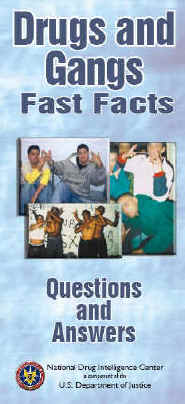











 Chris Esguerra on We absolutely love your blog and find most of your post’s to be precisely what I’m looking for. Does one offer guest writers to write content for you? I wouldn’t mind composing a post or elaborating on many of the subjects you write concerning here. Again, awesome website!Like
 Twila Sherfield on Amazing! This blog looks just like my old one! It’s on a totally different topic but it has pretty much the same page layout and design. Outstanding choice of colors!Like
 Edward Carter on Mark, the page titled”My Notes on Systematic Theology…” appears to be a copy of the notes from Ligonier’s Foundations augmented by Sproul’s “Everyone’s A Theologian.” Is that the case? If so, it should be documented as such.Like
 Mark B. Lord on I wrote these Blog years before R.C. authored his book “Everyone’s a Theologian”. I was enrolled in Ligonier Academy and had just completed a 61-lecture course on Reformed Theology. “Everyone’s a Theologian is also a summary of some of his previous works, so perhaps that’s why they sound the same.Like
 Mark B. Lord on You’re right, Mr. Edward Carter! I didn’t take the Foundations course until 2011 while I was recovering from a Total Hip Replacement. In 1999 I was still working for the U.S. Postal Service. It seems so long ago.Like

 Site Title