You have the traits of extraordinarily brilliant people! You don’t close yourself off to new ideas, and you always seek out alternate viewpoints. You may seem odd to some, because you have a lot on your mind, you talk to yourself, and you sleep less than others. You’re always trying to figure things out and answer complex issues. Keep it up, genius! You’re awesome!
O Lord, my heart is set on vengeance, my eyes see in vengeful ways. I want you to judge the earth and bring vengeance on the proud. I want others to get what they deserve. I want them to pay. When I see their arrogance I am tempted to want revenge.
Have mercy on me O Lamb of God.
I am hurting Lord and I am wondering how long shall the arrogant prosper. I tire of the their arrogant words and their boasting. I am sorrowed when I hear of the murders of the innocents in many lands. I do not understand how people can treat others so vilely.
Rise up O God of the widow and the fatherless!
Dear Lord, please open the eyes of fools and bring wisdom to their hearts. Help those who are spiritually deaf to hear your voice. I am so glad that you hear us. Give us ears to hear. I rejoice that you see us. Give us eyes to see.
We bless you O Creator in Heaven!
You are God and have the right to discipline all peoples. You are the great teacher Lord. You help us to know you and to understand your ways. You know our thoughts and how limited our vision is.
Wonderful are your teachings Heavenly Father!
We are blessed by your discipline and teaching Lord. You give us rest in the midst of trouble and calamity. Your promise is to never leave or forsake is. We trust you and are counting on your blessed justice.
Great is is your mercy O Lord!
We embrace you today Lord and trust in your protection. We are counting on your justice and providence. If you Lord had not been our help, our souls would have languished. When my foot slips your steadfast love, O Lord, holds me up.
Awesome is your loving protection Lord!
When the cares of my heart weigh me down you cheer my soul. When I am preoccupied by the sins of others you set my eyes on your love. When I sorrow for the deaths of the innocents you remind me of Heaven. When I feel alone and abandoned you encourage my heart with song.
How blessed are you O Spirit of God!
You Lord have become our stronghold. You Lord are the rock that we take refuge in. You Lord are righteous in all of your judgments. You Lord are merciful and your forgiveness in great.
We praise you Father, Son and Holy Spirit!
Amen
If you would like to read my other prayerful interpretations from the psalms please click here. These are not word for word prayers but paraphrased thoughts from the psalms.
Rational Emotive Behavior Therapy (REBT) emphasizes changing irrational beliefs to alter emotional outcomes.
It involves identifying & disputing negative thought patterns to develop a healthier mindset.
Practicing REBT techniques can improve emotional resilience & lead to more rational, adaptive behaviors.
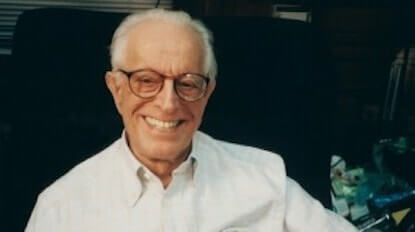
Albert Ellis noticed a gap in therapy work and hypothesized that the thoughts people have and the way they think could be much more vital for understanding and treating clients than current therapies assumed.
His work left a marked impact on the therapy world and introduced a new type of therapy that contributed to the development of one of the most popular and effective forms of therapy available today.
In this piece, you’ll learn about the foundations, theories, and techniques of this groundbreaking therapy: Rational Emotive Behavior Therapy, or REBT.
Before you read on, we thought you might like to download our three Positive Psychology Exercises for free. These science-based exercises will explore fundamental aspects of positive psychology including strengths, values, and self-compassion, and will give you the tools to enhance the wellbeing of your clients, students, or employees.
What is Rational Emotive Behavior Therapy? A Definition
As suggested by the scenario above, rational emotive behavior therapy (REBT) differed from the other mainstream therapies of its day, mainly in the importance it placed on discussing and adapting how clients think (Ellis & Dryden, 1987).
It may sound obvious today, but Ellis’ idea that the way we think has a significant impact on the way we feel was not a popularly held belief before he introduced his form of therapy.
Not only does REBT rest on the belief that the way we think influences our emotions and behavior, it attempts to help clients change the way they think to reduce negative symptoms and improve their quality of life (Albert Ellis Institute, 2014).
“People are not disturbed by things but rather by their view of things.”
Albert Ellis
As this quote from Ellis shows, Rational Emotive Behavior Therapy assumes that many people with emotional or behavioral problems struggle due to the way they perceive their experiences rather than simply the experiences themselves. REBT aims to facilitate change in core beliefs and thought patterns that will clients more effectively deal with their problems and improve their ability to function and feel in a healthy way (Dryden, David, & Ellis, 2010).
REBT also differs from other early forms of therapy in its focus on the present; in fact, according to Ellis, a common irrational belief is that our past has a significant influence on our present life (McLeod, 2015)! While our past does, of course, shape who we are today, it is an irrational belief if you feel you cannot escape your past.
The goal of Rational Emotive Behavior Therapy is best summarized as “disputing” – challenging and questioning our irrational and dysfunctional beliefs and replacing them with more sensible and functional beliefs. The result is not just changes in a few thought patterns or reducing some problematic symptoms, but a new perspective on life (Albert Ellis Institute, 2014).
What is Rational Emotive Behavior Therapy (REBT)?
Theories Behind REBT
The theory underpinning this type of therapy is that humans are not entirely rational creatures (Taylor, 2016). This should go without saying, but sometimes we can use a reminder that humans are not simple computers that take an input, read it logically, and produce an appropriate output; rather, we are complex “computers” with an unfathomably large number of inputs, complicated and mysterious internal processes, and an unfathomably large number of potential outputs.
While it is (as far as we know) impossible to be entirely rational, Ellis believed that approaching our problems in a more rational way could have a significant impact on our negative emotions and dysfunctional behaviors (Albert Ellis Institute, 2014). The most important challenge to tackle on the road to rationality is our dysfunctional or illogical thinking.
Ellis theorized that many of our emotional and behavioral problems spring from basic irrational assumptions or assumptions that are not totally grounded in reality and influence people to act in ways that are inappropriate, unhelpful, or even destructive (McLeod, 2015).
Based on this idea, Ellis developed a model to help explain, describe, and treat emotional and behavioral disturbances.
The ABCDE Model of Emotional Disturbance
Ellis hypothesized that irrational beliefs are the result of a person’s goals or desires being inhibited or blocked. When we don’t get or accomplish what we wanted to, we may develop irrational beliefs about ourselves or the world that help explain what happened (Ross, n.d.).
For example, imagine you are dead set on getting a job you applied for. You study up on the company, practice your interview answers, and make sure you’re looking extra sharp the day of the interview. Although you prepared extensively, the hiring manager decided to go with another candidate.
You may accept that this just wasn’t meant to be, or that you just weren’t the right fit for the job. However, you may also be heavily impacted by the decision and develop an irrational belief about why you didn’t get the job.
You might think, “I didn’t get this job because they can see that I’m a loser. I’m not good at anything and I never will be.”
Or, you might think, “The only reason I didn’t get this job is because the hiring manager had it out for me. It’s like the universe has it out for me!”
Both of these are thoughts that can help you explain why you didn’t get the job, but they are irrational and can lead to negative emotions and behavior down the road.
Using this scenario as an example, this is how the ABCDE model can explain the development (and the solution) of such problems (Ellis & Dryden, 1987):
A – Activating Event / Adversity
An activating event or adversity is something that triggers you to form an irrational belief, such as being turned down for the position. It is the first step in developing an irrational thought because the irrational thought is formed to help you deal with the event.
B – Irrational Belief
The “B” stands for the irrational belief that is formed in response to the activating event. This is a belief that you use to cope with the event, such as “I’m a loser, I’m useless, and I wouldn’t be able to do the job anyway.” While this is, of course, an incredibly hurtful thought, it can still be more comforting than having no idea why you didn’t get the job. Irrational beliefs are surprisingly easy to develop.
C – Emotional and Behavioral Consequences
The third component is the consequences of this irrational belief. Irrational beliefs always have consequences, sometimes emotional, sometimes behavior, and sometimes both. In this case, the consequences may be that you lose your self-confidence or frequently feel sad (emotional) and stop applying to any jobs (behavioral).
D – Disputes or Arguments
At some point, you may realize that you have an irrational belief that is causing you problems. You notice your loss of self-confidence and negative thoughts about yourself and begin to argue against your irrational belief. If you’re working with a therapist, the therapist may help guide you in developing arguments against the belief and help you come up with evidence to the contrary, such as “I have an amazing spouse. My spouse wouldn’t be with a ‘loser’ so I must not be a loser.”
E – New Effect
When you have successfully countered the irrational belief, you will notice new (hopefully more positive!) consequences or effects. In our scenario, these effects might be increased confidence, applying to more jobs, and feeling good about your abilities. These effects are the positive outcomes of holding more rational thoughts, like “I just wasn’t a good fit for that job, but I’ll find another” or “Maybe the hiring manager really didn’t like me, but that’s her loss” (McLeod, 2015).
The ABCDE model can be extremely helpful in tracing the development of irrational thought and providing a high-level outline of how to challenge and replace it.
This is a very small selection of the many great exercises available, but they provide a good representation of the kinds of activities that can help identify, challenge, and adapt harmful or destructive ways of thinking.
Identifying and Challenging Irrational Beliefs
This is a commonly used exercise in Rational Emotive Behavior Therapy and CBT in general, as it gets to the root of the problem according to REBT theory: the irrational belief.
This “Dysfunctional Thought Record” worksheet will walk you through the exercise. It includes a structured journal format in which the client can record their irrational thoughts and look for patterns or commonalities to get to the source of their problems.
The worksheet is divided into seven columns and includes enough space to note multiple irrational or dysfunctional thoughts.
In the first column, the client is to write down the date and time.
In the second column, the client should describe the situation they were in.
The third column is for writing down the automatic thought that arose.
In column four, clients should note the associated emotions they felt.
Column five is where the client should list any cognitive distortions that came up during this situation and automatic thoughts.
In the next column, the client should brainstorm effective alternative thoughts that can fight the dysfunctional automatic thoughts.
Finally, the seventh column is for writing down the outcome of the situation.
This exercise will facilitate the identification of negative, irrational beliefs and the development of effective arguments against these beliefs. Keeping a record of these thoughts can help anyone to organize their thoughts, connect their beliefs to their reactions, and discover potential patterns of irrational beliefs.
Enhance wellbeing with these free, science-based exercises that draw on the latest insights from positive psychology.
Consequences Analysis
This exercise can help clients recognize the consequences of their irrational beliefs about the things that are important to them. It can also assist the client in developing a solution that goes straight to the source instead of applying an emotional “Band-Aid” to their symptoms.
This “REBT Consequences Analysis” form can guide you or your clients through the exercise.
The first section of the worksheet is labeled “Target.” It directs the client to identify a salient issue or problem they are struggling with. In addition, it directs the client to think about what their most important goals or values are, and to write these down as well.
The second section is labeled “Short-term consequences.” This section gives the client space to write down the benefits (gains, pleasures, comforts) as well as the costs (damages, harms, losses) of continuing with their usual behavior. Once they have identified the benefits and costs, they can rate each area in terms of personal importance on a scale from 0 (lowest importance) to 100 (highest importance).
The third section is in the same format as the second section but focuses the client on long-term consequences instead of short-term consequences. Once again, clients are instructed to identify the benefits and costs of continuing with business as usual and rating the importance in these areas on a scale from 0 (lowest importance) to 100 (highest importance).
Finally, the worksheet asks the client, “What is the best outcome for you in the long-term?” Here, the client should consider the short- and long-term benefits and costs, and compare the expected consequences of continuing with their current thinking or behavior versus making some changes now.
Replacing Negative Beliefs with Positive Beliefs
This positive CBT exercise helps clients confront negative and irrational automatic thoughts or beliefs. It encourages the use of reason and rationality to replace old, self-critical beliefs with new, more positive and more functional beliefs.
The Positive Belief Record worksheet can help clients complete this exercise.
It’s an extremely simple and straightforward method of challenging one’s beliefs with a scientific approach.
At the top of the worksheet, the client will find two boxes where he or she can write down the old belief and come up with a new belief to replace it.
Underneath the two beliefs is the heading “Evidence that supports the new belief (or isn’t entirely consistent with the old belief.” As you probably guessed, this is where the client can list the evidence that challenges their negative, irrational beliefs.
Enough space is provided to write down 10 pieces of evidence that support the new belief, or call the old belief into question. This evidence can include experiences you have had, something someone else has said to you, or anything else you can think of that supports the new belief or sheds doubt on the old belief.
“The best positive psychology resource out there!” — Emiliya Zhivotovskaya, Flourishing Center CEO
Problem Formulation
This is another exercise that uses a rational approach to connect a situation to the usual response that follows and compares the usual outcome to the outcome if a more positive response occurred.
This worksheet outlines two types of emotional responses: unhealthy or problematic responses, and healthy (or target) responses.
In the first section, the client is instructed to identify and describe an activating event. This is an event that provokes an emotional response (the “A” in the ABCDE model). There are four subsections for the client to complete:
Describe the situation.
Isolate the critical factor (what it was about the event that affected you).
Notice and accept bodily sensations.
Invent a symbol/metaphor for the experience (one that explains how it felt).
Next, the client will describe the problematic response that follows this activating event (“B” and “C” in the ABCDE model).
The client is instructed to name the emotion, then list the thoughts and images associated with it (i.e., what was happening in your mind during the event?) and the actions and intentions that followed (i.e., how you reacted or wanted to react).
Finally, the client should describe what the healthy response would look like for him or her (the “E” in the ABCDE model).
The first component of the healthy response is the target emotion. Once the client has identified the target emotion, he or she should list the cognitive objectives (i.e., how the client would need to think in order to feel this emotion) and the behavioral objectives (i.e., what the client would need to do in order to feel this emotion).
This worksheet can help guide clients through a comparison of these two types of responses and help them recognize what a healthy response is. It can also help clients develop a plan to make the healthy response their default.
While Rational Emotive Behavior Therapy was developed long before positive psychology arrived on the psychology scene (around 1998-99), they share many of the same goals and areas of focus. Of course, there are some areas of disagreement between the two, such as the strict focus on rationality in REBT versus the importance many positive psychologists place on feelings or even intuition, but in general, they fit together quite well.
Upon review of Rational Emotive Behavior Therapy and positive psychology, it turns out they have a lot in common:
They both focus on removing or challenging the negative.
They both place great importance on not only removing the negative but also on replacing the negative with positive.
They both assume that people are competent and capable, and rely on guiding people through the process of finding better options for themselves and choosing the positive.
They both recognize the vital importance of how people think, rather than focusing only on what they think.
The ultimate goal for both REBT and positive psychology is to help people live better, more fulfilling, and happier lives.
Most importantly, even though there are theoretical differences and disagreements, they are not mutually exclusive. A client or practitioner in Rational Emotive Behavior Therapy will likely find much support and encouragement in positive psychology, and many positive psychologists recognize the importance of therapies like REBT and CBT.
It would not be incongruent to find a form of therapy that draws from both Rational Emotive Behavior Therapy and positive psychology.
Ultimately, any theoretical or philosophical differences between Rational Emotive Behavior Therapy and positive psychology are not really relevant, since they share the goal of improving lives by enhancing positive emotions, positive thoughts, and positive behaviors.
17 Top-Rated Positive Psychology Exercises for Practitioners
Expand your arsenal and impact with these 17 Positive Psychology Exercises [PDF], scientifically designed to promote human flourishing, meaning, and wellbeing.
Created by Experts. 100% Science-based.
A Take-Home Message
Hopefully, this piece has given you a useful introduction to the world of Rational Emotive Behavior Therapy. Although Rational Emotive Behavior Therapy was developed several decades ago, it is still in use by psychologists and therapists around the world, and it helped lay the foundations for subsequent therapies that target the client’s cognition.
Rational Emotive Behavior Therapy remains an effective method for helping people challenge their dysfunctional thoughts, encouraging them to use reason to approach their problem-solving, and replacing their negative beliefs with new, positive, and life-enhancing beliefs.
Albert Ellis Institute. (2014). Rational Emotive & Cognitive-Behavior Therapy. The Albert Ellis Institute. Retrieved from http://albertellis.org/rebt-cbt-therapy/
Dryden, W., David, D., & Ellis, A. (2010). Rational emotive behavior therapy. In K. S. Dobson (Ed.), Handbook of cognitive-behavioral therapies (3rd ed., pp. 226-276). New York, NY: Guilford Press.
Ellis, A. & Dryden, W. (1987). The practice of rational emotive therapy. New York, NY: Springer Publishing Company.
Taylor, M. J. (2016). Rational Emotive Behavior Therapy (REBT), irrational and rational beliefs, and the mental health of athletes. Frontiers in Psychology, 7. https://doi.org/10.3389/fpsyg.2016.01423
About the author
Courtney Ackerman, MA, is a mental health policy researcher for the State of California and a freelance author and consultant. Her areas of expertise include mental and behavioral health policy, violence prevention, and survey research.
How useful was this article to you?
Not useful at allVery useful12345678910
Comments
What our readers think
sara on March 14, 2021 at 00:45Anyone know how to pull up a citation for this articleReply
Nicole Celestine, Ph.D. on March 14, 2021 at 03:49Hi Sara,Unfortunately, there’s no button you can click to produce this, but if you want an APA 7th citation, it’d look like this:Ackerman, C. E. (2020). What is rational emotive behavior therapy? (+4 REBT exercises, PDF). PositivePsychology.com. Retrieved from https://positivepsychology.com/rational-emotive-behavior-therapy-rebt/Hope this helps!– Nicole | Community ManagerReply
Nikki on April 13, 2022 at 03:56You’re amazing, thank you for making the college girls life just a bit easier today!Reply
Nicole Celestine, Ph.D. on April 13, 2022 at 04:38You’re very welcome, Nikki 🙂– Nicole | Community ManagerReply
Tanya on January 24, 2021 at 15:12This opened up the whole gamut of REBT. I aim to use it with my clients. Thanks for the detailed article.Reply
Mona on August 27, 2020 at 12:10Good Morning I just translated into French the basic concepts of REBT. When I did my seminar on Counselling (in Kerala, South India) we went through all the schools of Psychology. REBT was my favourite because it questions the main obstacle of our evolutionary path: our beliefs system, conscious or unconscious. Thank you and Gratitude for sharing this article. Mona, RajasthanReply
Daniela Osu on June 11, 2020 at 17:13It’s all interesting. REBT it’s about finding Rational beliefs, not Positive ones. REBT it’s about disputing and rationalising any irrational beliefs and finding their rational counterpart. Positive beliefs may belong to a different Therapy, definitely not REBTReply
Nicole Celestine on June 12, 2020 at 05:07Hi Daniela, Glad you found the post interesting. You seem to suggest that positive beliefs and rational beliefs cannot go hand in hand. But I challenge whether this is always true. For instance, reassuring ourselves of our positive strengths for which we have external validation may be a rational approach, right? – Nicole | Community ManagerReply
John Kibuchi on May 24, 2020 at 07:33I am very interested in the positive psychology approach and as a student of psychology and counselling I would like to apply the material in helping clients understand REBT and help them resolve deep rooted negative emotionsReply
Fred Stilborn on December 16, 2019 at 04:49This is a great concept. I believe that it would actually be useful to, and used by many people, if provided a link to download printable files of the “worksheets” and “exercises” outlined.Reply
Annelé Venter on December 16, 2019 at 15:36Hi Fred We fully agree, and that is why we are working at creating more worksheets and downloadable PDF’s. In the interim, if you have signed up to the toolkit you will find a fantastic selection of worksheets ready to be used and downloaded. Regards, AnneléReply
maria on December 8, 2019 at 13:01amazing ……..very helpfulReply
William Omondi on November 6, 2019 at 11:00Your material is very helpful to me here in Kenya. I received my first client last Saturday and will definitely use the techniques in the next sessions.Reply
Taiwo on September 24, 2019 at 07:12Very helpfullReply
Let us know your thoughts
Your email address will not be published.
Save my name, email, and website in this browser for the next time I comment.
Chamber of Commerce (KvK) Registration Number: 64733564
Taxation (VAT) Number: NL855806813B01
Contact
PositivePsychology.com
Basisweg 10
1043 AP Amsterdam
The Netherlands
info@positivepsychology.com
Sign up and download tools
Join 550,000+ helping professionals who get free, science-based tools sent directly to their inbox. Plus, be the first to receive exclusive content & discounts.Supporting…ClientsMyself / Someone I loveStudentsMy team/organizationOther
The first half of the Book of Joshua records theologically significant events that occurred after Moses died and before Israel was able to settle in the Promised Land.
A. Preparations for entering Canaan chs. 1-2
The first two chapters provide background information that enable the reader to understand how Israel was able to enter the land and conquer it.
The first word of the book is a conjunction translated “now” or “and.” It shows that this book picks up where Deuteronomy ended.
“’Servant of the LORD’ is a title of honor shared by Abraham, David, and the Servant of the Lord in Isaiah. (It is used most frequently of Moses: Exodus 14:31; Numbers 12:7-8; Deuteronomy 34:5; and thirteen times in Joshua; ’my servant’ occurs twice.) The term ’servant’ was used to designate even the highest officials of a king. . . . Only at the end of his life was he [Joshua] honored with the title ’servant of the LORD’ (Joshua 24:29).” [Note: Madvig, p. 255.]
Joshua was from the tribe of Ephraim (Numbers 13:8; 1 Chronicles 7:27).
In one sense Joshua 1:1-9 are a preamble to the whole book. They contain the basic principles that were to guide Joshua and Israel so they could obtain all that God had promised their forefathers.
The nation had mourned Moses’ death for 30 days (Deuteronomy 34:8). Now God instructed Joshua to prepare to enter the land. The death of any of His servants never frustrates or limits God, though this causes Him sorrow (Psalms 116:15).
God had promised all the land that the Israelites would tread under foot to the patriarchs and Moses (Genesis 13:17; Exodus 23:30-31; Deuteronomy 11:24). The Israelites were now to claim it as their own by taking possession of it.
The area described here includes all that God promised to Abraham and the other patriarchs (Genesis 15:18; et al.). The writer apparently referred to the Hittites in a representative sense to describe all the Canaanite tribes (as in 1 Kings 10:29; 2 Kings 7:6; Ezekiel 16:3). This is a figure of speech called synecdoche in which a part represents the whole or the whole stands for a part (e.g., “bread” means food, or “all the world” equals all the Roman world [Luke 2:1]).
Many students of the book have called this the key verse. Here God promised Joshua His unfailing power and presence so that he might be completely successful in subduing the Canaanites. Joshua’s failure to be entirely successful was not God’s fault but the Israelites’.
“This text [Joshua 1:2-5] summarizes the book. Joshua 1:2 describes the crossing of the Jordan as found in Joshua 1:1 to Joshua 5:12. Joshua 1:3 outlines the ’conquest’ of Joshua 5:13 to Joshua 12:24. Joshua 1:4 implies the distribution of the land in Joshua 13:1 to Joshua 22:34. The emphasis on all the days of Joshua’s life in Joshua 1:5 is found at the end of Joshua’s life in the final two chapters of the book. These verses also introduce the character of the LORD God of Israel. He is one of the main actors in the book. Here he reveals himself through his promises on behalf of Joshua and Israel.” [Note: Hess, p. 68.]
God exhorted Joshua on the basis of this promise (Joshua 1:5) to be “strong” and “courageous” (cf. Deuteronomy 31:6). Ownership of the land depended on God’s faithfulness, but occupation of the land depended on Israel’s faithfulness (cf. Deuteronomy 30:20).
The writer stressed two major theological points in this book: Yahweh’s faithfulness in giving Israel the Promised Land, and Yahweh’s hatred of sin. [Note: Constable, p. 103.]
“The word ’inherit’ [“possession” in the NASB] used to describe the future possession of the land, is of rich theological significance. It has subsequently become a NT term for the enjoyment of the spiritual blessings of salvation (e.g., 1 Peter 1:4).” [Note: Martin H. Woudstra, The Book of Joshua, p. 61. See Joseph C. Dillow, The Reign of the Servant Kings, pp. 43-91, for an excellent explanation of the Old and New Testament revelation concerning believers’ inheritance.]
The same Hebrew word (nahal [verb] or nahala [noun]) also appears in Deuteronomy 1:38; Deuteronomy 12:10; Joshua 11:23; Joshua 14:13; Joshua 16:4; and Joshua 17:6.
Joshua’s responsibility included unswerving obedience to the Mosaic Law. This would be the key to his success. Knowing the law was only the first step. Practicing it was what would make Joshua effective (cf. Deuteronomy 5:32-33).
“The important lesson which we hence learn is, that in nothing is there more scope for the display of the highest moral heroism than in daring, in all circumstances, to cleave steadfastly to the word of God as the rule of our conduct. It is in this chiefly that the fortitude of the Christian soldier is to evince itself.” [Note: Bush, p. 20.]
Moses had left Israel a written document that the Israelites regarded as authoritative law, namely, the Mosaic Law. The Lord commanded Joshua to keep this Word in mind constantly so he would remember his responsibilities under God and find encouragement to keep them (cf. Psalms 1:2; Isaiah 59:21).
“The phrase ’from your mouth’ refers to the custom of muttering while studying or reflecting. The Hebrew word translated ’meditate’ (hagah) literally means ’mutter.’ When one continually mutters God’s Word to himself, he is constantly thinking about it.” [Note: Madvig, p. 257.]
“. . . [Meditation] does not mean theoretical speculation about the law, such as the Pharisees indulged in, but a practical study of the law, for the purpose of observing it in thought and action, or carrying it out with the heart, the mouth, and the hand. Such a mode of employing it would be sure to be followed by blessings.” [Note: Keil and Delitzsch, p. 30.]
We should never view Bible study and memorization as ends in themselves. They are important methods of obtaining the end of being obedient to God’s Word. We cannot obey it unless we understand it and are consciously aware of it as we make decisions day by day.
“The higher any man is raised in office, the more need has he of an acquaintance with the sacred oracles, and the better will he be qualified by the study of them for the discharge of his arduous duties.” [Note: Bush, pp. 21-22.]
This was not just good advice. Joshua was receiving orders from his Commander. Trembling or fearing would betray lack of confidence in God.
Notice the chiastic structure of God’s charge to Joshua.
A I will be with you (Joshua 1:5).
B Be strong and courageous (Joshua 1:6-7).
C That you may have success (Joshua 1:7).
D This book of the law (Joshua 1:8).
C’ Then you will have success (Joshua 1:8).
B’ Be strong and courageous (Joshua 1:9).
A’ The Lord your God is with you (Joshua 1:9).
This structure emphasizes the centrality of the book of the law of God as the key to Israel’s success, Joshua’s effective leadership, and God’s enabling presence with His people. With this challenge Joshua could advance into Canaan confidently.
This passage contains the principles necessary for spiritual success in every age. We must know what God requires, maintain perpetual awareness of that, and be consistently and completely obedient to it in our daily experience to gain victory over our spiritual adversaries. [Note: See Harry Foster, “Joshua, Walking into Battle,” Toward the Mark 11:6 (November-December 1982):116-19.]
Joshua expected to be able to cross the Jordan within three days.
“The Jordan River wanders about two hundred miles to cover the sixty-five mile distance from the Lake of Galilee to the Dead Sea, dropping an additional six hundred feet below sea level as it goes.” [Note: Trent C. Butler, Joshua, p. 17. Cf. The New Bible Dictionary, 1962 ed., s.v. “Jordan,” by J. M. Houston.]
The concept of “rest” (Joshua 1:13; Joshua 1:15) is an important one to grasp to understand what the conquest of the land gave the Israelites. It also clarifies what the writer of the Epistle to the Hebrews had in mind when he referred to the rest that we enjoy as Christians (Hebrews 3-4). [Note: See Dillow, pp. 93-110, for a good exposition of the promises of rest that appear in Scripture.] It was not rest in the sense of freedom from conflict but in contrast to journeying. Even after the seven-year conquest of the land there was still much land that the Israelites still had to take from the Canaanites and possess (Joshua 13:1; Joshua 23:1-13; cf. Joshua 24:1-28; Judges 1:1). Rather, this rest was the entrance into, and initial participation in, the inheritance the Lord had promised His people (cf. Deuteronomy 12:10; Deuteronomy 25:19; Joshua 21:44; Joshua 23:1; 2 Samuel 7:1; 2 Samuel 7:11; 1 Kings 8:56; Psalms 95). [Note: See Hess, p. 78, and especially Butler, pp. 21-22, for a fuller discussion of “rest.”]
“This theologically significant term [rest] . . . is one of the key words for understanding the book of Joshua as well as later revelation.” [Note: Woudstra, p. 65.]
In Christian experience the crossing of the Jordan does not just correspond to the believer’s death and entrance into heaven, which some popular Christian songs suggest. It also parallels the believer’s entrance into the enjoyment of his or her eternal life now through dedication to Jesus Christ (Romans 6:13; Romans 12:1-2) and through walking by means of the Spirit (Galatians 5:16). The wilderness wanderings resemble the experience of the redeemed believer who has not yet fully committed himself or herself to God and is walking in the flesh. When the Israelites crossed the Jordan they encountered enemies and had to contend with their spiritual adversaries, just as a believer does when he dedicates himself to God and walks by the Spirit. The Christian’s rest is not the absence of hostility. It is the beginning of the enjoyment of some blessings God has promised us (i.e., eternal life, the indwelling of the Holy Spirit, victory over our spiritual enemies, etc.).
“Entering the land does not parallel the believer’s entrance to heaven; it signifies his willingness to ’cross the Jordan’ and engage the enemy. In other words, it is a decision by a regenerate saint to submit to the lordship of Christ and trust God for victory in the spiritual battle.” [Note: Dillow, p. 79, n. 57. See also Donald K. Campbell, “Joshua,” in The Bible Knowledge Commentery: Old Testament, p, 335.]
In another sense Canaan corresponds to the additional blessings that believers who follow God faithfully in this life will receive following death. [Note: Dillow, p. 57.]
Not all the warriors from the two and one-half tribes went with (not “before,” Joshua 1:14) their brethren across the Jordan. Only 40,000 of the 110,000 did (cf. Joshua 4:13 and Numbers 26:7; Numbers 26:18; Numbers 26:34). The remainder evidently stayed in Transjordan. We should understand “all” (Joshua 1:14) in this limited sense.
The attitude of the two and one-half tribes was commendable. They followed through with their commitment (Numbers 32:25-27). There were no significant instances of complaining or rebellion among the tribes during Joshua’s lifetime according to what the writer recorded. In this respect the nation enjoyed greater unity during the conquest than it did in its former or later history.
To be successful in our corporate task of overcoming our spiritual enemies, God’s people must unite behind the leaders God has raised up to lead us. We should not complain or rebel against them (Hebrews 13:17). Furthermore, as God’s people we must commit ourselves to entering into conflict with our spiritual enemies, rather than avoiding such conflict, to possess the fullness of God’s inheritance for us. The Christian’s spiritual enemies are the world, the flesh, and the devil (1 John 2:15-17; Romans 7:18-24; 1 Peter 5:8).
1For we know that if our earthly house of this tabernacle were dissolved, we have a building of God, an house not made with hands, eternal in the heavens. 2For in this we groan, earnestly desiring to be clothed upon with our house which is from heaven: 3if so be that being clothed we shall not be found naked. 4For we that are in this tabernacle do groan, being burdened: not for that we would be unclothed, but clothed upon, that mortality might be swallowed up of life. 5Now he that hath wrought us for the selfsame thing is God, who also hath given unto us the earnest of the Spirit.
6Therefore we are always confident, knowing that, whilst we are at home in the body, we are absent from the Lord: 7(for we walk by faith, not by sight:) 8we are confident, I say, and willing rather to be absent from the body, and to be present with the Lord. 9Wherefore we labour, that, whether present or absent, we may be accepted of him. 10For we must all appear before the judgment seat of Christ; that every one may receive the things done in his body, according to that he hath done, whether it be good or bad.
For the Glory of God
11Knowing therefore the terror of the Lord, we persuade men; but we are made manifest unto God; and I trust also are made manifest in your consciences. 12For we commend not ourselves again unto you, but give you occasion to glory on our behalf, that ye may have somewhat to answer them which glory in appearance, and not in heart. 13For whether we be beside ourselves, it is to God: or whether we be sober, it is for your cause. 14For the love of Christ constraineth us; because we thus judge, that if one died for all, then were all dead: 15and that he died for all, that they which live should not henceforth live unto themselves, but unto him which died for them, and rose again.
A New Creature
16Wherefore henceforth know we no man after the flesh: yea, though we have known Christ after the flesh, yet now henceforth know we him no more. 17Therefore if any man be in Christ, he is a new creature: old things are passed away; behold, all things are become new. 18And all things are of God, who hath reconciled us to himself by Jesus Christ, and hath given to us the ministry of reconciliation; 19to wit, that God was in Christ, reconciling the world unto himself, not imputing their trespasses unto them; and hath committed unto us the word of reconciliation.
Ambassadors for Christ
20Now then we are ambassadors for Christ, as though God did beseech you by us: we pray you in Christ’s stead, be ye reconciled to God. 21For he hath made him to be sin for us, who knew no sin; that we might be made the righteousness of God in him.
Want to have your highlights saved across all your devices? Sign up or sign in
Rights in the Authorized (King James) Version in the United Kingdom are vested in the Crown. Published by permission of the Crown’s patentee, Cambridge University Press.
YouVersion uses cookies to personalize your experience. By using our website, you accept our use of cookies as described in our Privacy PolicyHomeBiblePlansVideos





 Site Title
Glad you found the post interesting. You seem to suggest that positive beliefs and rational beliefs cannot go hand in hand. But I challenge whether this is always true. For instance, reassuring ourselves of our positive strengths for which we have external validation may be a rational approach, right?
– Nicole | Community Manager
We fully agree, and that is why we are working at creating more worksheets and downloadable PDF’s. In the interim, if you have signed up to the toolkit you will find a fantastic selection of worksheets ready to be used and downloaded.
Regards,
Annelé