Skip directly to site contentSkip directly to searchSkip directly to On This Page

An official website of the United States government

DiabetesMenuFor Everyone
- Basics
- Symptoms
- Testing
- Risk Factors
- Preventing
- Treatment
- Providing Care
- Living with Diabetes
- View AllHome
Health Care ProvidersPublic HealthRelated Topics
BasicsSymptomsTestingRisk FactorsPreventingTreatmentProviding CareLiving with DiabetesView Menu
For Everyone
May 15, 2024
Vision Loss and Diabetes
What to know
- Diabetes can damage your eyes over time and cause vision loss or blindness.
- Managing your diabetes can help to prevent or delay eye problems.
- Regular eye exams help to diagnose eye problems early so you can get treatment and protect your eyesight.
Diabetic retinopathy
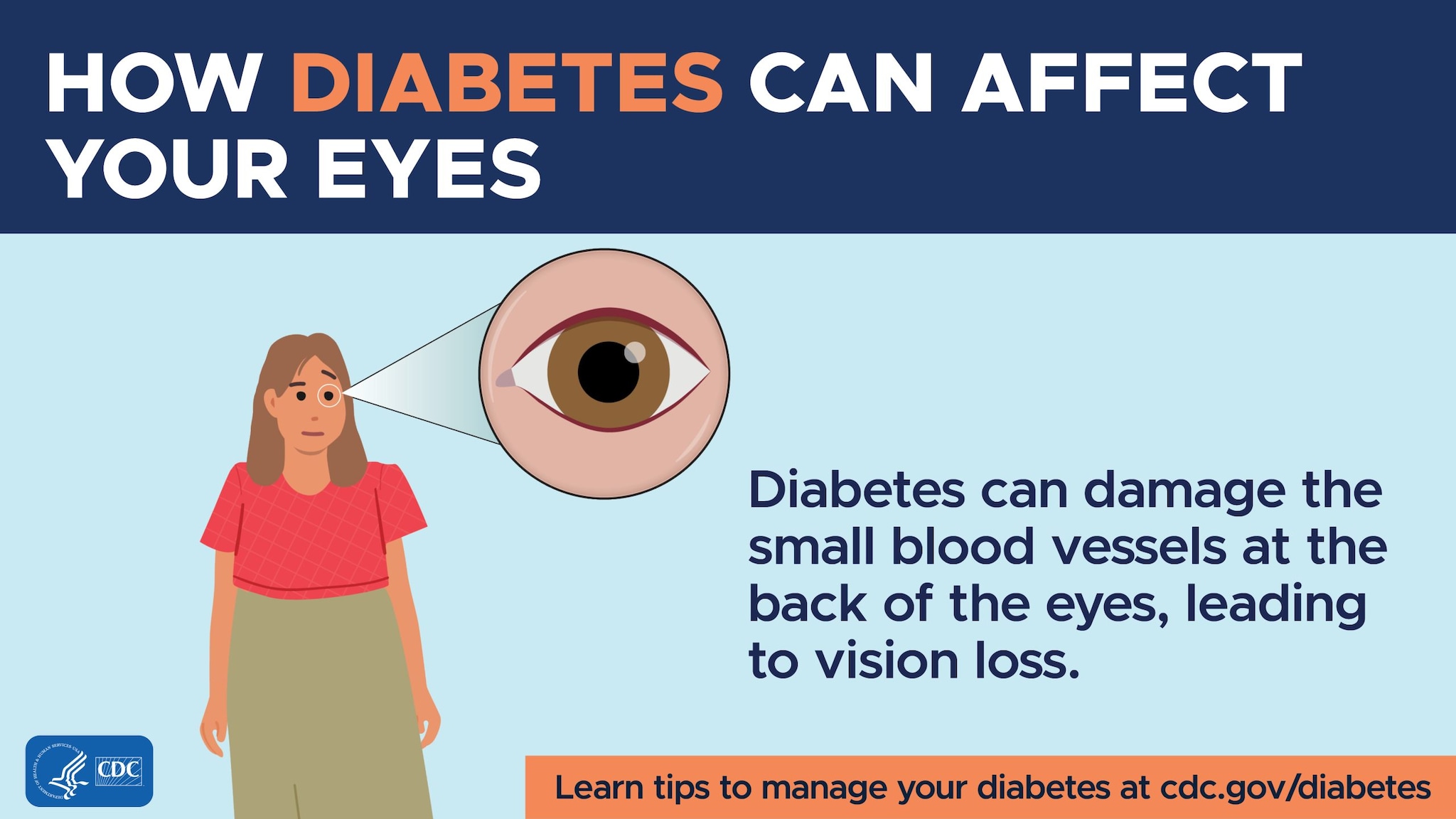
Diabetic retinopathy (DR) is the leading cause of blindness in working-age adults. DR is when high blood sugar damages blood vessels in the retina (a part of your eye). Damaged blood vessels can swell and leak, causing blurry vision. DR usually affects both eyes.
Risk factors
Anyone with type 1, type 2, or gestational diabetes (diabetes while pregnant) can develop DR. The longer you have diabetes, the more likely you are to develop it. These factors can also increase your risk:
- High blood sugar, blood pressure, and cholesterol levels.
- Smoking.
- Being an African American, Hispanic/Latino, or American Indian or Alaska Native person.
Stages of diabetic retinopathy
Early stage (nonproliferative): Blood vessels in the retina weaken and bulge, forming tiny pouches. These pouches can leak, which may cause a part of the retina called the macula to swell and distort your vision. This swelling is known as macular edema and is the most common cause of blindness in people with DR. About half of people with DR will develop macular edema.
Advanced stage (proliferative): The retina begins to grow new blood vessels that are often fragile and bleed. With minor bleeding, you may see a few dark spots that float in your vision. If there’s a lot of bleeding, your vision may be completely blocked.
Symptoms, diagnosis, and treatment for diabetic retinopathy
Symptoms
You may not notice symptoms in the early stages of DR. Symptoms can include:
- Blurry vision.
- Spots or dark shapes in your vision.
- Trouble seeing colors.
- Dark or empty areas in your vision.
- Vision loss.
Diagnosis
During your eye exam, your doctor will check how well you can see from a distance. Your doctor will also dilate your eyes to look at the retina and blood vessels inside your eyes. If you have DR, your eye doctor may want to check your vision more frequently.
The sooner you’re treated for DR, the better that treatment will work. That’s why early diagnosis is so important, even if you don’t have symptoms yet. You should have an eye exam to check for DR immediately if you’re diagnosed with type 2 diabetes. For type 1 diabetes, you should have an eye exam within 5 years of diagnosis.
Call your eye doctor if you notice changes in your vision, especially sudden changes, such as:
- Blurring.
- Spots.
- Flashes.
- Blind spots.
- Distortion.
- Difficulty reading or doing detail work.
Treatment
Treating DR can repair damage to the eye and even prevent blindness in most people. Treatment can start before your sight is affected. Options include:
- Laser therapy (laser photocoagulation).
- Medicines called VEGF inhibitors or corticosteroids.
- Vitrectomy (surgical procedure).
- Reattachment of the retina (if retina detached).
Diabetes and cataracts
A cataract is the clouding of the normally clear lens in your eye. Everyone’s lenses tend to get cloudy as they get older. But people with diabetes are more likely to have cataracts and at a younger age. One reason is that high blood sugar can cause deposits to build up in the lenses and make them cloudy.
Other risk factors include high blood pressure, obesity, too much sun exposure over time, and smoking.
Surgery is the only way to treat cataracts. But you usually don’t have to have surgery right away unless vision loss is getting in the way of daily activities. Using brighter lights in your home and anti-glare sunglasses outside can help early on. Most people have better vision after surgery.
Diabetes and glaucoma
Glaucoma is a group of eye diseases that damage the optic nerve, usually because of too much pressure in the eye. Many types of glaucoma don’t have symptoms, and vision loss can happen very slowly.
People with diabetes are twice as likely to develop open-angle glaucoma, the most common type. Other risk factors include:
- Having a family history of glaucoma.
- Being over age 60.
- Being an African American, Asian, or Hispanic/Latino person.
Diabetes can also cause neovascular glaucoma. This happens sometimes with diabetic retinopathy when new and abnormal blood vessels grow on the iris (colored part of the eye). The new vessels can block off the flow of fluid out of the eye, which raises eye pressure.
There isn’t a way to prevent glaucoma, but treatment can help stop it from getting worse. That’s why catching glaucoma early is so important. Treatment options include medicines, laser treatment, and surgery. Talk to your eye doctor about what choices are best for you.
Prevent or delay eye diseases
You can protect your vision and lower your chance for vision loss with these steps:
Get a dilated eye exam at least once a year so your eye doctor can spot any problems early.
Manage your blood sugar levels. Over time, high blood sugar damages blood vessels in your eyes. It can also affect the shape of your lenses and make your vision blurry.
Manage your blood pressure and cholesterol levels to lower your risk for eye diseases and vision loss.
Quit smoking. Quitting lowers your risk for diabetes-related eye diseases and improves your health in many other ways too.
Get active. Physical activity protects your eyes and helps you manage diabetes.
On This Page
- Diabetic retinopathy
- Symptoms, diagnosis, and treatment for diabetic retinopathy
- Diabetes and cataracts
- Diabetes and glaucoma
- Prevent or delay eye diseases
Was this page helpful?
Thank you for your feedback!
Related Pages
- Diabetes Complications
- Statins and Diabetes: What You Should Know
- Chronic Kidney Disease
- Nerve Damage
- Your Feet and Diabetes
Back to Top
Diabetes
For Everyone
Health Care Providers
- Clinical Guidance
- DSMES for Health Care Providers
- Prevent Type 2 Diabetes: Talking to Your Patients About Lifestyle Change
Public Health
- Community-based Organizations (CBOs)
- Toolkits for Diabetes Educators and Community Health Workers
- National Diabetes Statistics Report
Contact Us About CDC Policies Languages Archive

 Site Title