What Does Philippians 2:9 Mean?

◄ What Does Philippians 2:9 Mean? ►

For this reason also, God highly exalted Him, and bestowed on Him the name which is above every name,

Philippians 2:9(NASB)

Verse Thoughts

Divinity’s Son-of-God became humanity’s Son-of-Man. He set aside eternity’s glories, to be clothed in humility; in poverty; in suffering and in death. It is for this very reason that God, in His wisdom and justice, has raised Him up and honoured Him above all that is in the heaven heights, the earth beneath and the waters under the earth, whether it be men or angels; spiritual principalities or earthly thrones.

Jesus is the very essence of God, Who went from being seated in the highest place of honour and power, to the very lowest, possible position – death on a cross. Being in the form of God from eternity past, He willingly took upon Himself the form of a man, and was born into the very race, He Himself had created. He chose to honour the will of the Father and drink His cup of suffering and humiliation. His desire was to fulfil His Father’s will and redeem the very race that rebelled against Him – by shedding His own blood for us and dying on the cross, in our place.

But Jesus did not lie in the grave. His sinless life was a deathless life, for only the soul that sins shall die… and Jesus lived a perfect, sinless life. Jesus was not deserving of death, but chose to give His life willingly, as the ransom price for the sin of the world. The only payment God could accept in exchange for mankind’s sin, was the sacrifice of a perfect, human life. Only Christ Jesus, the sinless Son, could fulfil the righteous requirements of God’s Law.

Although the lifeless body of Christ was placed in the tomb, death could not hold Him, and He arose from the dead – never to die again. He was the eternal Son and the sinless Man and death had not hold on HIM and He rose again to LIFE. But just as His death secured the full and final payment for the SIN of the whole world, so His resurrection secured LIFE for all who believe… Eternal life. Abundant Life. Immortal Life. The imputed Life of Christ within.

For this reason, Jesus, alone, is to be highly exalted. He alone is to be worshipped and honoured, both in His humanity and in His deity. He alone is equal with God for He was in the beginning with God… because He IS God Almighty – the Lord of heaven and earth forever and ever, amen. Luke reminds us, in Acts, that He Who came from heaven and became a man is the One whom God exalted to His right hand as a Prince and a Saviour, to grant repentance to Israel and forgiveness of sins to all who believe.”

Christ’s sinless, human nature in union with His eternal, divine attributes is infinitely superior to everything else, and He has been highly exalted by the Father, Who has placed all authority; might; majesty; dominion and power into His worthy hands. He is the Wonderful Counsellor and Prince of Peace. He is the King of Righteousness and His name shall be called, Jesus – SAVIOUR, for He shall save His people from their sins.

The simple, common, everyday name of ‘Jesus’ has thus become the name that is greater and more eminent than every other name that is named – for His name is to be the most excellent name that is named in heaven or earth, throughout time and into eternity. He is the unique Man, the incarnate Word of God, Who has secured for us the forgiveness of sin, life everlasting, an eternal inheritance.. and that which is over and above all that we could ask or imagine. He was made sin for us.. so that we, who deserve punishment, may be declared righteous and clothed in His own perfect, purity.

How sweet that name of Jesus sounds in a believer’s ear, for His name combines the holy and eternal attributes of the Godhead with human perfection, and every single spiritual fruit that God requires from man. What music is the lovely name of Jesus in the ear of every sinner, saved by grace, for it calms all sorrow, heals each wound and drives away all our fear.

The life of the Christian should reflect his Lord. The attitude of Jesus should be mirrored in the life of every believer, and yet… His was a life of deep pain and intense suffering. His was a life of humiliation, rejection, betrayal, and death. But His life of humiliation and death preceded His glorious resurrection and exaltation, and we too must share in His suffering, and die to self… if we are to live in newness of life and become a lovely reflection of the beautiful Lord Jesus Christ.

E

My Prayer

Thank You, Father, that all I need can be found in Jesus. I pray that I may decrease, and He may increase in all I think and say and do, until Christ is formed in me, to Your praise and glory. Thank You that Christ is highly exalted and has been given the Name that is above every name. This I pray in the lovely name of JESUS – Son of God and Son of Man – AMEN.

What Does The Bible Say About Doctrine?

What Does The Bible Say About Doctrine?

    A    Praise The Lord Saints!!  Praise The Lord!!  How are all of you doing today?  Fine, I hope.  What does the Bible say about the word doctrine?  What is an example of doctrine? An example of doctrine is the Truman Doctrine that said the US would work to contain the Soviet Union. Doctrine is defined as a principle or group of principles which are taught by a religion or political party. An example of doctrine is the teaching of the Ten Commandments in Christianity.


Doctrine (from Latin: doctrina, meaning “teaching” or “instruction”) is a codification of beliefs or a body of teachings or instructions, taught principles or positions, as the essence of teachings in a given branch of knowledge or in a belief system. The etymological Greek analogue is “catechism”.  What is the true doctrine?

Celsus’s own beliefs, the “true doctrine” referenced in his title, is that of Platonism which from a modern materialist perspective has its own issues of supernatural and thus unproved claims and assumptions. Yet this Platonism is not central to his critique of early Christianity.


B

Doctrine. … Doctrine (from Latin: doctrina, meaning “teaching”, “instruction” or “doctrine”) is a codification of beliefs or a body of teachings or instructions, taught principles or positions, as the essence of teachings in a given branch of knowledge or in a belief system.


This doctrine states that there is one God, a singular divine Spirit, who manifests himself in many ways, including as Father, Son, and Holy Ghost. This stands in sharp contrast to the doctrine of three distinct and eternal persons posited by Trinitarian theology.


C 


Celsus

Celsus was either a Greek or a Roman who wrote during the latter half of the 2nd century AD. Very little is known about his origins or life. The work in its original form has been lost and the True Word survives only as excerpts from a work by the Christian scholar Origen, who quoted Celsus to rebut him.


What is sound doctrine KJV?


The term is found only once in the Bible, in 2 Timothy 4. For the time will come when they will not endure sound doctrine; but after their own lusts shall they heap to themselves teachers, having itching ears; And they shall turn away their ears from the truth, and shall be turned unto fables. — 2 Timothy 4:3-4 KJV.


Where does the Trinity doctrine come from?


The Christian doctrine of the Trinity (Latin: Trinitas, lit. ‘triad’, from Latin: trinus “threefold”) holds that God is one God, but three coeternal consubstantial persons or hypostases—the Father, the Son (Jesus Christ), and the Holy Spirit—as “one God in three Divine persons”.


Did the early church fathers believe in the Trinity?


Whether the earliest Church Fathers believed in the Trinity is a subject for debate. Some of the evidence used to support an early belief in the Trinity are triadic statements (referring to the Father, Son and Holy Spirit) from the New Testament and the Church Fathers.

What Does 1st Timothy 1:8 Mean?

◄ What Does 1 Timothy 1:8 Mean? ►

But we know that the Law is good, if one uses it lawfully,

1 Timothy 1:8(NASB)

Verse Thoughts

It must have been encouraging for Paul to see Timothy, his young ‘son-in-the-faith’ being sufficiently established in his Christian life to be entrusted with pastoring the recently established Church in Ephesus. In this first epistle to Timothy, Paul balances the encouragement and edification he gives, with some necessary warnings about teachers of the Law, who have deviated from the truth, while setting him the task to correct any erroneous doctrine.

Paul wanted Timothy to know the insidious nature of ignorant men, who substituted the truth of the gospel of God for their fruitless discussions, and perverted teaching on God’s Law. The Law of God is good. Indeed, the Law.. given to Israel, through Moses, was perfect. However, Paul knew it was needful to remind Timothy of the reason the Law was given, and the danger of teaching a deviant doctrine. “We know that the law is good,” Paul wrote,  “provided one uses it legitimately”.

Sadly, there were false teachers who were not using the Law legitimately. They had missed the whole purpose of the Law and were undermining the true gospel of God. They were leading people astray with their incorrect understanding. “We know that the Law is not meant for a righteous person,’ Paul wrote, “God’s Law is for the lawless and rebellious, for the ungodly and sinful, for the unholy and irreverent, for those who kill their fathers and mothers, for murderers… for the sexually immoral and homosexuals, for kidnappers, liars, perjurers, and for whatever else is contrary to the sound teaching“.

Illegitimate use of the Law is contrary to the pure gospel of Grace that Paul taught, and he was anxious to ensure that Timothy would not be influenced by this teaching. Paul wanted him to recognise how dangerous it was… to both the unsaved sinner and those that were already born-again.

Timothy, the son of a Gentile mother and Jewish father, had already been taught the real purpose of the Law from Paul. He knew the Law was designed to identify one’s sin. It was to show people that they are ALL fallen sinners. They are ALL in need of a Saviour. It was to teach that the perfect standard God desires from man, is unattainable by man’s own effort.

It was to reinforce the teaching, in Old Testament times, that man is justified by faith and not by works of the Law. It was to remind them that the justified man is to live by faith. It was to help sinful man understand his need of salvation. It was to encourage sinners to turn from their sin and turn to God for the forgiveness of sin – which only comes through faith in Christ – God’s perfect sacrifice for sin.

When the Law is correctly understood it is good, for it brings lost sinners to salvation in Christ. But when it is misapplied, misappropriated and misunderstood it is being used unlawfully… causing sinners to strive to do good works in their own strength, by attempting to keep the righteous requirements of the Law… in the hope that God will forgive them because of their good works and meritorious acts. But this is NOT what Scripture teaches.

It promotes a false sense of security, by encouraging an attitude of self-righteousness. It fosters the mindset of a proud Pharisee. “I am so good because I didn’t do that, but did do this.. and God will be pleased with my efforts and award me a place in heaven!” is the honey-coated lie, around the sharp sting of sin. But this can never be.. for Salvation comes through faith in Christ Jesus… the one and ONLY sacrifice for sin… the one and ONLY Mediator between God and man.

Timothy would have known about Paul’s concern for the Galatian Christians, who had been taught, by false teachers, that they needed to be circumcised to be saved and that they had to continue keeping the Law, so they did not lose their salvation! GOD FORBID! was Paul’s emphatic outburst to these believers, when he was correcting in their foolish attempts to be saved by works and to live by works. “You foolish Galatians”, he spluttered, “who has bewitched you with this erroneous doctrine!”

The Galatians had to be retaught and Timothy had to be reminded that the Law is a schoolmaster that brings us to Christ…and that any attempt to keep the Law through works of the flesh will NEVER be accepted by God. When the Law is used lawfully it points people to Christ – BELIEVE on the Lord Jesus Christ. When the Law is used unlawfully it causes man to try to save himself by works. Believe on the Lord Jesus Christ AND…..

The Law is still good IF one uses it lawfully. But today, as in the days of Paul and Timothy, there are many that teach a different gospel, which ADDs to the work Christ did on the cross. Adding works to Christ’s finished Work of salvation, will NEVER be accepted by God. ‘Believe AND be baptised’. ‘Believe AND give money’.  ‘Believe AND evangelise’. ‘Believe AND do good works’ “Believe AND attend church, AND go to confession, AND say the rosary…………… And so on…

When the question, “what must I do to be saved?….” is asked, and the word “AND”. becomes part of the answer.. Believe on the Lord Jesus Christ AND… BEWARE! When any ‘work of the flesh’ is being added to Christ’s finished work on the cross, it is using the Law unlawfully.

F

My Prayer

Heavenly Father, how I praise and thank You that I am justified freely by Christ’s finished work on the cross, and that salvation is a free gift to all who believe on the Lord Jesus Christ. Thank You that my salvation does not depend on my merit, or anything that I do. Give me discernment to identify teachers, who wittingly or unwittingly, use the Law unlawfully, by adding to Christ’s finished work on the cross. How I praise and thank You that my salvation does not depend on work that I do but is dependent on the work that Christ did at Calvary, on my behalf – for which I praise and glorify Your holy name AMEN.

What Does James 4:11 Mean?

◄ What Does James 4:11 Mean? ►

Do not speak against one another, brethren He who speaks against a brother or judges his brother, speaks against the law and judges the law; but if you judge the law, you are not a doer of the law but a judge of it.

James 4:11(NASB)

Verse Thoughts

The tongue is a tiny member of the body but its ungodly use can cause real damage. James lays out the principles and practice of godly speech. He not only warns against ‘speaking evil’ but explains that ‘evil speech’ is a sin. “Do not speak against one another”, he warns us. “He who speaks against a brother or judges him, speaks against the law. He judges the law. And if you judge the law, you are not a doer of the law but a judge of it”.

James wanted to make it clear that as believers, we should DO the royal law of God, but not be a judge of it, in the lives of others. We are not simply to KNOW the law. The Law of God is to be manifested in our lives through godly living. However, pointing a judgemental finger at a fellow believer is counter to the Law, for there is ONE Lawgiver and ONE Judge – the Man Christ Jesus.

James explained that speaking against a Christian brother exposes a judgemental attitude, that is often manifest in an ‘evil’ way of speaking, that dishonours the Lord. It demonstrates a critical and superior attitude, that elevates self above others. It places ‘self’ in the role of judge – a position of which God alone is worthy. James teaches that disparaging a fellow believer, emanates from a spirit of negativity and unlawful condemnation.

It causes the Christian to fall from grace into legalism. It identifies a self-righteous attitude that is conceived in the scornful heart of a carnal Christian, who finds fault with others, in order to look good themselves.

We are called to be doers of the word and not hearers only. We are called to be doers of God’s royal law of love and not to become judges of the law. It is not our role to adjudicate the actions of others and criticise them, if their behaviour does not line up with our own, personal standards. We are called to judge our own conduct, but not that of others. That responsibility falls to God, alone.

We are called to edify and encourage one another. But pointing the finger of blame, over-stating a brother’s fault, participating in unfounded gossip, censorious speech, or condemning the legitimate, freewill choices of another Christian, when their actions conflict with the freewill standards we have chosen, is considered, by James, to be evil speech.

It is quite sobering to realise that the spirit behind evil, incorrect speech, is not only a sin… because it violates God’s written word, but contravenes every biblical instruction on godly living, for we are not to judge one another. “Judge not,” Christ warned us, “that ye be not judged?”

We are certainly called to judge the spiritual fruit of a pastor and teachers, and check the doctrines they teach against Scripture. We are to be spiritually discerning. We are to beware of false teachers and be able to identify unbiblical teachings and doctrines of demons. However, we are not instructed to judge the thoughts, hearts, motives, and behaviour of others – as it degrades our own testimony and dishonours the Lord, Who is the only one worthy to judge the thoughts of the heart and the actions of a man.

It is the royal law of love, which calls us to love our neighbour as we love ourselves. It is the command of Christ that we should be applying in our lives – “love one another as I have loved you”. To judge the motives of a fellow believer’s actions equates to judging the law. To pass judgement on another believer is to evaluate his heart or to draw a conclusion of his standing before God – which should never be.

Appraising others, sets us up as a judge of the law rather than one who adheres to the Law. Judging a fellow believer, according to one’s own standard, implies that we are superior to the law – but only God, Who gave us the law, holds the right and responsibility to be judge and jury.

God alone knows the thoughts of a man. Only God understands the motives behind a man’s actions and attitude. Only God has the authority to judge righteously. The judging of others does not belong to a Christian… rather it usurps the authority of God – for no one knows the heart of another, save God alone.

James teaches that the tongue is a small member of our body, which can be used for good or evil. May we guard our heart and bridle our tongues, with all vigilance, for out of it can flow springs of life or the curses of death. May we be careful not to become judgemental, or to speak against one another.. for to do so violates God’s holy law, speaks against the law and judges the law – rendering us judges of the law, instead of doers of God’s word.

D

My Prayer

Heavenly Father, I pray that I may become a doer of Your holy law and not fall into the foolish trap of judging it, by condemning the actions of others. Lord, You alone can judge the thoughts of the heart and I have no right to condemn others, through my own self-righteous attitude. Keep me humble before you and help me become an encouragement to my brothers and sisters in Christ, and not their accuser. Keep me from being ‘wise in my own conceit’, or making arbitrary assumptions about the motives of others and above all, teach me to love others as Christ loved me, for in so doing I will honour Your name, as Christ lives in and through me – in His precious name I pray, AMEN.

What Does Galatians 4:6 Mean?

◄ What Does Galatians 4:6 Mean? ►

Because you are sons, God has sent forth the Spirit of His Son into our hearts, crying, “Abba! Father!”

Galatians 4:6(NASB)

Verse Thoughts

What a wonder of divine love and grace that we, who were once at enmity with God, have been so favoured by the Father, that we should be called ‘sons’, “and because we are sons, God has sent forth the Spirit of His Son into our hearts, crying, “Abba! Father!”

The ‘birth certificate’ that confirms this amazing truth is the Person of the Holy Spirit, living in the heart of all who believe. It is He Who bears inner witness that we are sons of God. It is the Holy Spirit of God’s own dear Son, Who has been sent into our heart, Who communes with us and cries affectionately.. Abba! Father!,

The privilege of the permanently, indwelling Holy Spirit began at Pentecost. He takes up residence in the body of every born-again believer, the moment he trusts in Christ. His presence within our heart, is both the guarantee and proof that we have been made ‘sons of God’ and joint-heirs with Christ.

Paul had been explaining to the Galatians… that following the death and resurrection of the Lord Jesus, the status of believers changed from that of an underage child, with a promise of a future inheritance… to a mature son, who has received his inheritance from his father – and the Holy Spirit has been sent into our heart, as the confirmation of this glorious truth.

Before the cross, believers were looking forward with expectation to a promise that was yet to come. The Law that governed their lives was etched on stone tablets, that only permitted a distant, external relationship with God, which was carried out in an earthly Temple, through a human mediator – either a prophet or priest appointed by God.

Following Christ’s ascension into heaven, it is grace that governs our lives. It is not the Law that was written on stone, that determines how we should live. It is the Law of the Spirit of Life in Christ Jesus that presides in our hearts. It is the indwelling Spirit of His Son in our heart Who communes with us and guides us into all truth.

Paul describes those living under the Law as underage children, who had not yet achieved their maturity nor received their promised inheritance. This included all pre-cross believers, like Elijah, Daniel, Isaiah, and John the Baptist. However, those who are living under grace have a new, living, ongoing and intimate relationship with the Father, through the indwelling Spirit. This includes post-cross believers like Peter, James, and John – it includes Christians like you and me.  The proof of sonship is the permanently, indwelling Holy Spirit of Christ – without Whom we would tremble as we approach the Father, but Who cries in our heart – Abba, Father.

While pre-cross believers lived under the Mosaic Law, which governed their external relationship with the Father and placed many limitations on their relationship with Him… post-cross Christians are led by the indwelling Spirit. We are governed by a higher law – a heavenly Law – a limitless law – the Spirit’s Law of life in Christ Jesus, which set us all free from the limited law of sin and of death, that condemns every sinner. We are motivated by a law that is not limited by the flesh but one that is empowered by the Spirit of God, in Christ Jesus our Lord.

What incredible assurance to know that we are accepted by God – in Christ and made sons, through the presence of the indwelling Holy Spirit. He guides us into all truth through His word and empowers us with His sufficient strength. What amazing love that He should pour out the wrath that we so justly deserve upon His dearly Beloved Son. He was despised, rejected and cruelly crucified, on our account. He died to satisfy God’s righteous justice. His blood paid the price for sin, so that we who believe, could be elevated into a position of son-ship and be awarded joint heir-ship with Christ – by grace through faith.

Though once children of wrath and disobedience, all who have trusted Christ for Salvation have been positioned in Him, as children of His love. And by His grace, we have been given the additional gift, and guarantee, of God’s indwelling Holy Spirit, Who took up permanent residence within our hearts, the moment that we trusted in Christ for Salvation.

No name or title for the eternal, almighty Creator and Sustainer of heaven and earth, could be more profoundly personal nor intensely intimate than that of, Abba – dearly loved Father. Such language of sweet endearment is reserved for the closest of unions, and such was the life experience of the Lord Jesus.. and He is our pattern for life. He is our example to follow.

Throughout His earthly life, Jesus showed us how to maintain close, adult fellowship with the Father, and throughout our earthly walk we are to walk as Christ walked and to live as Christ lived – in sweet, mature communion, with Abba, our dearly loved Father.

Jesus set aside His glory for a season, and through humble, prayerful obedience, was enlivened, empowered and animated by the same Holy Spirit of the Father, Who dwells in us. Throughout His life, Jesus only did what He saw His Father doing and only said what His Father told Him – and we are to pattern our life on His life. Like Him, we will be strengthened and enlivened through His Spirit through the same, humble, prayerful obedience.

It is not trying to copy what Jesus did that gives us this intimacy, but living as Christ lived. It is living in mature, intimate fellowship with the Father. For it is as we maintain spirit to Spirit communion – the human spirit with Christ’s Spirit – through the guidance of the indwelling Holy Spirit, that our hearts can whisper in steadfast prayer, joyful praise and intimate communion – Abba, my Father.

B

My Prayer

Abba, my loving Father, I realise I am standing on the holiest of ground. Thank You for doing such great things for me. I desire to develop the depth of fellowship with You that is demonstrated through the life of Jesus, and pray that through the power of Your indwelling Holy Spirit, my human spirit and soul will submit in humble obedience to His guidance – so that my inner spirit may commune with You, in godly intimacy… through Your Holy Spirit, this I ask in Jesus’ name. AMEN.

What is a Caste System?

What is a Caste System? By Anthony Hopkins

What is meant by caste system?

C

        A caste is a class structure that is determined by birth. Loosely, it means that in some societies, if your parents are poor, you’re going to be poor, too. Same goes for being rich, if you’re a glass-half-full person.

The Origins of the Caste System


According to one long-held theory about the origins of South Asia’s caste system, Aryans from central Asia invaded South Asia and introduced the caste system as a means of controlling the local populations. The Aryans defined key roles in society, then assigned groups of people to them.

What is an example of a caste system?

A caste system, then, is a social structure in which people belong to such social categories; historically, an example is the caste system of India. … Interaction between people of different castes is restricted; for example, commonly people must practice endogamy (marriage within their own caste).

D

Who Created The Caste System?


Aryans

According to one long-held theory about the origins of South Asia’s caste system, Aryans from central Asia invaded South Asia and introduced the caste system as a means of controlling the local populations. The Aryans defined key roles in society, then assigned groups of people to them.

Hierarchy:


It comprises four varnas or castes. These in descending order of ranking are Brahmins, Kshatriyas, Vaishyas and Shudras. There are many castes between the two extremes-the Brahmins and the Shudras. Their social status depends upon their distance from the Brahmins.


E

What is class and caste system?


A caste system is one in which social standing is based on ascribed status or birth. Class systems are open, with achievement playing a role in social position. People fall into classes based on factors like wealth, income, education, and occupation.


What are the basic principles of caste system?


According to him, the six main features of the caste system are: segmental division of society, hierarchy of groups, restriction of feeding and social intercourse, allied and religious disabilities and privileges of the different sections, lack of unrestricted choice of occupation, and restriction on marriage.

F

What is the US caste?


Caste is a form of social stratification characterized by endogamy, hereditary transmission of a style of life which often includes an occupation, ritual status in a hierarchy, and customary social interaction and exclusion based on cultural notions of purity and pollution.


Does caste system still exist?


The caste system as it exists today, is thought to be the result of developments during the collapse of the Mughal era and the rise of the British colonial regime in India.


Does Christianity have a caste system?


Caste system among Indian Christians. The caste system among Indian Christians often reflects stratification by sect, location, and the castes of their predecessors. The caste system today is beyond Hinduism (Hindu society) and it exists in most religions in India.


Does Caste Systems Still Exist in The United States?


The answer to this question is yes.  This is simply because it has a whole lot to do with a person’s socioeconomic status.  However, a person can change their status by getting a very good job, and a decent education.  A person in America status has a lot to do with his way of doing things.  I begin to realize that there are 45.7 Million African Americans that are currently living in the United States.  This is based on Census Bureau statistics from the end of last year.  There are 150 Million Caucasians that currently live in the United States.  There are 50 Million Mexican Americans who live in the United States.  Due to the 2016 U.S. Election Results, only 25% of the USA Population only voted.


How Can This Come To An End in America?


Job Creation and Neighborhood Revitalization is the key to resolving this serious problem.  This means that the majority culture, will have to assist those, who are in need.  I know that it is not very easy in a fast paced society.  It is very important that we pay attention to what is really going on all around us.  I know that it will take Jesus Christ to come back to earth; just to resolve our problems that millions are facing every single day of the week.  I understand that it takes a lot of work to make a change for a positive progression in the United States.  This means that modern indentured servitude will have to come to a complete end.

What Does Jeremiah 17:7 Mean?


◄ What Does Jeremiah 17:7 Mean? ►

“Blessed is the man who trusts in the LORD And whose trust is the LORD.

Jeremiah 17:7(NASB)

Verse Thoughts

What tremendous benefits are discovered for the one that trusts the Lord with all their heart and does not lean upon their own understanding. Trusting in the Lord is simply believing what God has said. It is having faith in the incarnate Word of God and trusting all that the Lord has revealed to us in the written Word of God.

The man who trusts in the Lord is simply believing Him in all things – believing His word, trusting His promises and not allowing himself to be shaken by circumstance, sight, emotions or feelings. Blessed, indeed, is the man that trusts in the Lord. Favoured, and fortunate, is the one whose hope is resting in the God of our Salvation.

It was Jeremiah who wrote these words. He was acutely aware of the sins of Judah and the unfaithfulness of the people of Israel. He knew that man’s heart is deceitful above all things, and that fallen man can be swept into deep despondency when faith in the Lord fails or falters. He was surrounded by a nation that had fallen into apostasy, and it was in His distress, that he sought the Lord for healing and deliverance.

At the start of his ministry, Jeremiah had been warned, that the people would not listen to his message, and the guilt of the nation stands in stark contrast with the innocence of this solitary prophet of God. It was as He lamented the unbelief of the people, and became distressed by the destructive consequences of their sin, that he was led to reignite his own faith by confessing the truth – “Blessed is the man who trusts in the LORD. and whose hope is the LORD.”

Trusting the Lord is simply believing that the one and only Way God has provided for fallen man to be saved, is through the sacrificial death and glorious resurrection of the Lord Jesus Christ. It is having faith in the unchangeable Truth that God has opened up for us in the Scriptures and has revealed to us through His only begotten Son. It is accepting, as an unchangeable fact, that the Life which God imparted to us through the Lord Jesus Christ, will save to the uttermost.

It pleases the very heart of God when His children depend on Him utterly; believe in His Word and trust in His Son for Salvation, for without having faith, in Who He is and what He had said, it is impossible to please Him. Without faith we are ships without a rudder that are tossed and adrift on the merciless sea of life, for the one who draws near to God must believe that He exists and that He is a rewarder of those who diligently seek Him.

Trusting in God and hoping in the Lord is simply believing the reality of all that He has disclosed to us in His Word. It is accepting as fact all that God has revealed to us in the Bible. It is trusting all that has been revealed in Scripture about our great God and Saviour, Jesus Christ.

It is believing as fact that Christ has gone to prepare a place for us and loves us with an everlasting love. Christian hope is not a vain, fingers-crossed fantasy, and faith in God is not founded on fiction but on fact. It is seeing with the unclouded eye-of-faith, all God promises as a certain reality and accepting as actuality the truth of His Word.

Trusting in the Lord and hoping in Him is being certain of the existence of things we cannot see. What glorious joy is realised by the one that trusts implicitly in the Lord and places their eternal hope in Him. Blessed is the man who embraces these two gifts of grace, which abide forever – for faith and hope unlock our understanding of the Father-heart of God’s pure love for all His children.

B

My Prayer

Loving Father, I realise more and more, the rich blessings that are received by those who trust in Your word and place their eternal hope in You. Help me to live by faith and not by sight, so that You become increasingly the focus of my heart and joy of my life. Develop in me that child-like trust in You that pleases Your Father-heart of love, in Jesus’ name I pray, AMEN.

How Do We Learn How To Cast Your Care Upon God?

How Do We Learn How To Cast Your Care Upon God?

By: Anthony Joseph Hopkins February 2, 2020

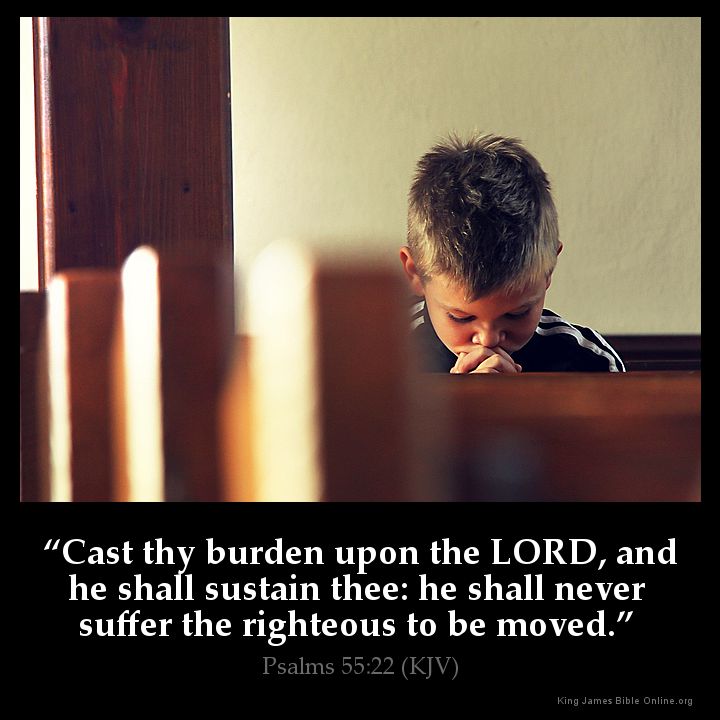
      C  Praise The Lord Saints!! Praise The Lord!! How are you doing today?  Fine, I hope.  I want to ask all of you a question.  How do we learn how to cast our care upon God?

D

 First, I want to inform all of you that all human behavior is learned.  We learn all things by watching our parents, other people, and watching other things.  How do we learn how to cast your care upon God?  Second, we are supposed to pray to God and inform Him that I am casting all of this to you.  I am casting all of my troubles, concerns, and issues to God. 

E

        Next, I want to say that we are supposed to let go of all of the things that concern us.  I am talking about all of the things that are currently bothering all of us.  I want to inform all of you to please establish an intimate relationship with God.

F

 How do we do this, please be honest and truthful with your Higher Power.  I know for me that all of my behaviors that I have learned in my life, were learned by listening to my parents.  I even learned how to use vulgarity from my parents.  Every time my parents used to argue with each other, my siblings and I heard everything that they were saying.  Actually, how do you really cast your care?  Give it to the Lord by telling Him that I no longer can bear this burden. 

  G     

Further, I want to inform all of you that I had to learn how to cast all of my burdens to God.  I want to inform all of you that it has not been easy to cast all of my burdens.  Jesus Christ has listened to all of my concerns for the past 54 years.  I am a 54 year old man, who is suffering from multiple health problems right now.  Casting all of your care is very easy.  I have to learn how to literally let it go.  I will admit that I tend to dwell on things that bothers me for a long period of time. 

H       

Moreover, I want to say that I am a God Fearing Man.  I will admit that I have been dwelling on the past.  For Example, it has taken me 12 years to forgive my ex-wife for what she has done to me.  I will also admit that I have an anger management problem.  I have taken anger management classes for 8 straight years; while living in Charlotte, NC.  I want to inform all of you that I am a very nice person.  For those, who actually know me, I have been allowing other people to take advantage of me.  I know that my family members, and I have our differences, and I love them very much.  I know that some of my family members tend to dwell on the past.

I

        In Addition, I want to say that I have to stop dwelling on my past myself.  I want to inform all of you that I am looking for a solution to all of my current problems.  I want to say that taking medication does not help me.  Therefore, I would like for all of you to please keep me in your prayers because I am in a whole lot of pain right now.  I am in pain physically, emotionally, and mentally.  God knows exactly what is actually going on with me.  Many people actually think that they really know me as a person. 

      J 


Also, I want to inform all of you that only God knows me from the inside out.  When it comes to casting our cares to the Lord, He knew me from the time that I was inside of my mother’s womb.  I know that my life has not been very easy because only God knows my heart.  Man only knows the outer appearance.  It is the Lord that knows my heart.

K


Finally, I want to inform all of you that all of this encourage me to pray every single day and night.  I belong to God.  My money belongs to God.  The air that I breathe each day belongs to God.  Everything belongs to God.


L

In Conclusion, I want to inform all of you that it is time to let go of the things in the past.  It is time to give all of our problems to God.  I know that I am still a Work in Progress.  I am not perfect, but loves me from the inside out.  Please give all of your problems to the Lord Jesus Christ because He really loves you.  I know that I have Him as my personal Savior.  I love all of you very much.  Please take good care of yourselves.