The 10 Most Overlooked People in your Church

Crosswalk.com

Toggle navigation

The 10 Most Overlooked People in Your Church

  • Anne PetersonCrosswalk.com Contributing Writer
  • 202123 Mar
The 10 Most Overlooked People in Your Church

People should feel comfortable in church. They should feel valued and included, but sometimes people feel overlooked. And the very groups created for community might serve as painful reminders of another place people feel invisible.

When Jesus walked the earth, He ministered to everyone; not one person was overlooked. Whether we’re talking about the woman with the issue of blood, the lame, the poor, or even those with leprosy, it is certain that nobody was invisible to Jesus.

As Christ-Followers, we are to look around. If we prayerfully reach out in whatever circles we find ourselves, maybe no one will be overlooked. So who are the people who might feel forgotten?

Here are the ten most overlooked people in your church.

Photo credit: ©Thinkstock

  • 1. Single People 1. Single PeopleThose who are single could be any age. Some have never married, some had marriages that ended in divorce, and some became widows or widowers.No person marries someone thinking that one day their marriage will dissolve.And widowed people thought they married for the long haul, not to have it cut short.Many divorced people are also single parents raising their kids.When you think about programs in the church, with the exception of a short program for those newly divorced, none of them are really geared towards these hurting people.Divorced people are trying hard to provide for their families, and attempting to stand in for the missing parent. They are often quite exhausted, yet they keep putting one foot in front of another. Yes, single people are often overlooked. God tells us to care for one another — surely he meant everyone.Photo Credit: ©Unsplash/PhotobyAndyLee
  • 2. People With Illnesses 2. People With IllnessesSome people struggle with an illness that never seems to end. Others struggle with what they refer to as an invisible illness; someone could look at them and not be able to tell that they struggle. Those who are ill have seen people they care about just remove themselves from their lives. Perhaps their friends simply wish that they would get better so they could resume their friendship. Some cannot accept that their friends will struggle with this long term.Whether it’s an emotional illness or a physical illness, the person who has this journey is exhausted. They are lonely and often wonder if anyone misses them at all.In Mark 2:1-12, we learn how Jesus healed a paralytic. If God cares about those who are ill, so should we. We should let the people who are ailing know they are not forgotten.Photo Credit: ©GettyImages
  • 3. College-Aged Kids 3. College-Aged KidsSome churches have groups for college-aged kids; the problem is that immediately after someone graduates college, they are no longer included in these groups. Some people in church started joining groups from the time their parents carried them into the nursery. During their school-age years, many of them found guidance through youth leaders. Some were lucky enough to be involved with mission trips as well.College kids are still in need of socialization, but so are the ones who finish college. Not everyone will take the path of marriage, and the church is losing a big opportunity to reach out to this group of young people.Even inviting them to other groups would at least be a start. Leaving it up to the individual by simply mentioning it is not enough. A personal invitation makes someone feel wanted. Who wouldn’t want that?Photo Credit: ©GettyImages
  • 4. Emotionally Wounded People 4. Emotionally Wounded PeopleAt times, you may see people in the church who tend to stay back. They seem to like church and attend regularly, but somehow you just sense that something is amiss. There is a chance that they have had a negative church experience in the past. When someone is hurt in the church, it feels like a double whammy. Not only are they wounded, but they are wounded by people they trusted. Going slowly with hurt people is a good idea.Give them grace; let them know you would love to have them in a group. This will make it easier for them to join. Proverbs 18:19 talks about how hard it is to help a brother who has been offended, and yet God is a God of reconciliation.Photo Credit: ©GettyImages/SIphotography
  • 5. People Who Have Lost a Spouse 5. People Who Have Lost a SpouseMartha used to be very active in the church. She used to work in the church years ago, and she knows just about everyone. But not long ago, Earl passed away. Martha attended the grief class, and for a while she felt connected. But now her group has ended, and she feels the loneliness of her life without her husband. Martha and Earl had many friends, but now Martha feels like a third wheel when she sees them. Sometimes Martha just wants to experience that feeling of belonging, and she is afraid that she’ll never have it again.God speaks of widows in James 1:27.Churches should offer groups mixed with people in all stages of life; that way, everyone could learn from each other.Photo Credit: ©GettyImages/CandyBoxImages
  • 6. People from Different Cultural Backgrounds 6. People from Different Cultural BackgroundsWe noticed the young man right away. He had come to our church when he was in the Network of Nations, a group that introduces people of different cultures to the rest of the church. He decided to continue going to the church after he graduated, but struggled to know where he fit in. Those who are from a different culture would love to know that they have a place in the church.My husband and I lived in Germany while he was stationed there. We had the opportunity to rent an apartment in a house belonging to a wonderful German family. The daughter, Monica, answered any questions we had about the country. In a couple of years, her brother was going into a foreign exchange program. Luckily, there are churches who have programs for those with different backgrounds.We should do all we can to help those who are not from our country.Photo Credit: ©GettyImages/RoterPanther
  • 7. People Who Struggle Financially 7. People Who Struggle FinanciallyIt should be no surprise that those who struggle financially feel overlooked. When there is a plea for money, they sit in the seat feeling like they are not able to help. Often, they will not take part in church activities because they cannot afford to.Those who are in need hate the fact that they are unable to pay their bills. They struggle with their self worth, wondering what is wrong with them.Jesus didn’t put down those who had less; in fact, He himself did not have much in terms of this world’s goods. God wants us to reach out to those in need. What better way than to offer them kindness and a place where they can come and worship with us?Photo Credit: ©GettyImages
  • 8. Introverts 8. IntrovertsWhen there is an announcement for new groups forming, you can bet that there will be people who will cringe. They would like to be part of a group and know there is a place where they belong, but they shy away. These people are introverts.Perhaps they tried one group but found it too difficult to interact, when just talking to another person takes so much energy. Then, when the announcements are given, they stand there almost frozen as others move about the church welcoming others. Yes, introverts need to socialize with others; the challenge is getting them comfortable to even try a group. Introverts are sometimes overlooked.Photo Credit: ©GettyImages

  • 9. People Without Children 9. People Without ChildrenAnother group of people who sometimes get overlooked are those who have no children. There just doesn’t seem to be a place for these dear people. The majority of people who are married have children, so when those who don’t are placed in these groups, you can imagine how it must feel when the subject of kids keeps coming up.The church is a diverse group of people, but the common bond is Jesus. Some people, however, make other factors into dividing lines.Photo Credit: ©GettyImages/moodboard

  • 10. People Who Live Different Lifestyles 10. People Who Live Different LifestylesPeople who live different lifestyles are often overlooked. Once again, our focus should be on what unifies us instead of what divides us.Even if we don’t have a lot in common with those who live different lifestyles, we can ask God to show us how we can make a valuable connection with them.Jesus came and died for the world — even those He knew would reject Him. It makes sense to include others. And when we are afraid, God will give us the courage we need to do the job He would have us do.Photo Credit: ©GettyImages/RawpixelAnne Peterson is a poet, speaker, and a published author of 14 books, including a Kindle book, Real Love, which she is offering free to those who sign up to her email list. To find out more about Anne Peterson visit her website. 

NEXT:9 Prayers for Returning Back to Normal after COVID


Psalm 40:1

Verse of the Day ▼
Devotions ▼

Home Verse Of The Day Psalm 40:1

◄ What Does Psalm 40:1 Mean? ►
I waited patiently for the LORD; And He inclined to me and heard my cry.

Psalm 40:1(NASB)

Verse Thoughts
This beautiful Psalm of David is a joyful proclamation to Israel of what the Lord has provided for him personally. It is a great reminder of all that God has done for the nation of Israel historically and it announces ALL that God means to us collectively.

It is a wonderful example of the way that God carries out His plans and purposes in each of our lives. He does this in His own way and in His preferred time. He does this in order to develop our faith in His Word and to enlarge our trust in His never-failing goodness and grace.

For multiplied centuries, we have discovered the unfolding of God’s unchanging character, His gracious plan of redemption, and His faithfulness to His chosen people, Israel. God has promised in His Word to be an ever-present help in times of trouble and to work all circumstances of life together for the good of those that love Him with all their heart, fit in with His plan, and do not lean on their own understanding.

We have His promised assurance that His help will come at the right time. He does not provide His help too soon, for this would not allow the necessary time to build up our faith in Him or deepen our trust in His never-failing Word. However, we are also assured that His help will never be too slow, so that we start to lose heart or become discouraged.

But this is not only a Psalm that has helped countless generations of men and women to develop their trust in the Lord and increase their faith in His Word. It is a Messianic Psalm that, from beginning to end, casts a shadow on the passion of our Saviour, Jesus Christ.

The first few verses make various references to Christ’s glorious Resurrection while the later verses make mention of the sacrificial offering of Himself on our account… which God will not despise.

For nine hours, Christ hung on the Cross as the unique sacrifice for the sin of the whole world. Three of those bitter hours were shrouded in a deep darkness that covered the entire earth. Earlier He had prayed, “if it is possible… take away this cup from Me. Nevertheless, not My will but Thine be done.” Christ had no option but to drain the cup of suffering to its very dregs, for only the shed blood of the sinless Son of God – our perfect Kinsman-Redeemer – could pay the enormous price for the sin of the whole world.

It was during those three bitter hours on the Cross that God’s only begotten Son took the brutal punishment for the sin of the whole world upon His own shoulders. The Father turned His face away from Him and the indwelling Holy Spirit departed as He was made sin – for US. And, as this Messianic Psalm discloses… Jesus waited patiently for the Lord.. and God inclined His ear, and He heard His prayer, “Father forgive them for they know not what they do – Father, into Your hands I commend My spirit.” And Jesus died – according to the Scriptures. He was buried – according to the Scriptures, and He was raised on the third day – according to the Scriptures.

The Lord Jesus waited patiently on the Cross for His Father to hear and answer His prayer once the ransom price for sin had been paid in full. He waited patiently, together with the dying thief. “Today, You will be with me in paradise,” was the precious promise Christ made to this repentant sinner who hung on a cross alongside our Saviour. 

And when the price for sin had been fully paid He cried, “it is finished,” and, “gave up the ghost.” For three days and three nights, Christ’s body lay cold in the grave while His soul remained in the bowels of the earth.

And His soul waited patiently for three days in the depths of the earth for His prayer to be answered according to God’s perfect will. 

Yes, this beautiful Psalm explains that Jesus waited patiently for the LORD, “I waited patiently for the LORD; and He inclined to Me and heard My cry. He brought me up out of the pit of destruction, out of the miry clay, And He set My feet upon a rock making My footsteps firm. He put a new song in My mouth, a song of praise to our God. Many will see and fear. Many will trust in the Lord.” Then we read, “Behold, I come – in the scroll of the book – it is written of me. I delight to do Your will, O my God; Your Law is within my heart.”

May we who have been saved by grace through faith in Christ, follow in the footsteps of our Saviour and wait patiently for the Lord, knowing that His plans and purposes are perfect… and that in due time He will incline His ear to our cry and graciously provide all we need, according to His riches in glory.

My Prayer
Heavenly Father, thank You for Your precious promises to me and to all men, and thank You for Christ my Kinsman-Redeemer. Thank You for His perfect example of patience. Thank You for His long-suffering as He hung on the Cross and slept in the tomb, waiting for the Resurrection of His body. Thank You that having been forgiven of my sins, I too have no fear of death and hell. Give me patience to endure to the end, to Your praise and glory. This I pray in Jesus’ name, AMEN.

◄ Previous: Psalm 37:24 Next: Psalm 40:2 ►

Choose a Verse from Psalm 40
1234567891011121314151617

Luke 1:7

Jude 1:8

Luke 6:31

Hebrews 12:11
Follow us

Psalm 40:1 Further Study
Psalm 40:1 in the Parallel Bible
Psalm 40:1 in the Thematic Bible
Psalm 40:1 Cross References
Psalm 40:1 Treasury of Scripture Knowing
Psalm 40:1 Prayers
Psalm 40:1 Images
Choose Chapter
Subscribe to the Verse of the day

Today’s Devotionals

Make Room For The Lord Jesus

Revelation 4:8

Luke 24:29

Calvary And Pentecost

Am I Carnally Minded?

Unconditional Acceptance – Grace Thru Faith- study [11]

The Riches Of His Love
Doctrinal Statement / Privacy Policy / Use of Pictures / Donate / Contact Us
© Copyright [2011 – 2021] Knowing-Jesus.com – All Rights Reserved

×

Source: https://dailyverse.knowing-jesus.com/psalm-40-1

Are You Pro Grace?

Touching Liveswith James Merritt

DAILY DEVOTIONAL EMAIL

Subscribe to receive the daily devotional from Dr. James Merritt
right into your inboxSUBSCRIBE

Pro-Grace

March 22, 2021

“He has shown you, O mortal, what is good. And what does the Lord require of you? To act justly and to love mercy and to walk humbly with your God.” Micah 6:8

If I asked you to describe a Christian, what would you say? Would you use words like love, compassion, and grace? Or, would you instead describe a person who is anti-something? Unfortunately, many people outside the Church view Christians as the latter instead of the former.

While Jesus was not primarily known for what He was against, many Christians today are. Jesus was known for serving people who had needs, feeding people who were hungry, healing people who were sick, and even raising people who were dead. Today, however, His followers are often known most widely for what they stand against. Christians are anti-abortion, anti-pre marital sex, or anti-getting drunk.

While we should stand on the truth of God’s Word and speak out against all sin, being anti-sin should not necessarily define us. Jesus was most definitely anti-sin. No one in the history of the world was more against sin than Jesus. But His voice of grace shouted louder than His voice of condemnation. He used His knowledge of God’s truth to encourage people to drop their rocks of judgment and show mercy. He didn’t do this to condone sin, but rather to show the fullness of God’s love. God hates sin…but He loves redemption more.

How would you describe yourself? Is your Christianity more about being for salvation or being against sin? You see, it is impossible to be for Biblical salvation and not be against sin. But it is possible to have an attitude of condemnation towards sinners without being for their salvation. We must choose to keep our eyes on Christ, so that we can be pro-grace while still holding firmly to the truth of His Word.

Dear Father, thank for today’s reminder that I should always strive to be acting justly, loving mercy, and walking humbly with you. Please help me to use Micah 6:8 as a marker for how I live my life each day. In Jesus’ name, amen.

Topics: Grace

Bible Reference

Micah 6:8

He has told you, O man, what is good; and what does the LORD require of you but to do justice, and to love kindness, and to walk humbly with your God?

Copyright © 2019 Touching Lives, Inc. | 1800 Satellite Blvd, Duluth, GA 30097 | United States | 770-982-0168 
Touching Lives is a 501(c)(3) not-for-profit organization

How and Why Should we Bear one Another Burdens.

Toggle navigation Search Browse The Bible Toggle Dropdown Search The Bible Find it! How – and Why – Should We “Bear One Another’s Burdens”? Clarence L. Haynes Jr. | Contributing Writer 2021 18 Mar “Bear one another’s burdens, and so fulfill the law of Christ” (Galatians 6:2). One of the beautiful things about being a Christian is that you are not alone. God intentionally connects you with other believers and one of the reasons is so we can strengthen and encourage each other. One of the ways we do this is by bearing each other’s burdens or taking up the cause for someone else. We are instructed to do this, but what does it really mean to bear one another’s burdens?  What Does This Verse Mean? The word to bear in the Greek can mean to take up or to carry away. The word burden can also mean weight. When you consider this verse in context, it means we should be taking up or carrying away the weights that others are carrying. In other words, no one should ever go through situations alone. This is one of the responsibilities of the body of Christ. Even Jesus, after being whipped and beaten, had his cross carried by Simon of Cyrene. The bottom line is we need each other. For every person there will come a point where you are overwhelmed by the weight of life. In those moments you will be grateful that there is someone there to help you carry that weight.  I am reminded of a time in my life when my late wife was battling cancer and I was in the hospital with her in Philadelphia. We lived in NYC at the time. On this day I was overwhelmed by the weight of the situation. I called two good friends of mine because I had no strength left for that day. These friends got in their car and drove down from NYC to Philadelphia, which is about a two-hour drive, just to spend the day with me and encourage me. In this moment they were bearing my burden and I was so glad they were there for me. Photo credit: SWN Design What Is the Context of Galatians 6:2? Galatians is Paul’s letter to the churches of Galatia, which were primarily made up of Gentile believers. This church had been infiltrated by the Judaizers who were trying to get the Gentiles to convert to Jewish laws and traditions before they came to Christ. Paul’s letter is a reminder to them of the gospel they had received and the freedom that comes with it. As we approach chapter 6, Paul is nearing the end of this letter and he is giving them some final encouragements. One of those is the encouragement we see in verse 2. There is something interesting to highlight in the verse. “Bear one another’s burdens, and so fulfill the law of Christ” (Galatians 6:2, emphasis added). The irony is that in a church infiltrated by Judaizers, Paul tells them something very similar to what Jesus said. Remember Jesus said, and I will paraphrase, love God and love your neighbor as yourself. These two things sum up the entire law and the prophets. Paul is in essence reminding them what it means to bear one another’s burdens. Doing so allows them to fulfill what Jesus said. How Do We See People “Bearing One Another’s Burdens” Elsewhere in the Bible? There are many different examples to use to show people bearing one another’s burdens in the Bible, but I want to focus on one with Moses. “The Amalekites came and attacked the Israelites at Rephidim. Moses said to Joshua, ‘Choose some of our men and go out to fight the Amalekites. Tomorrow I will stand on top of the hill with the staff of God in my hands.’ So Joshua fought the Amalekites as Moses had ordered, and Moses, Aaron and Hur went to the top of the hill. As long as Moses held up his hands, the Israelites were winning, but whenever he lowered his hands, the Amalekites were winning. When Moses’ hands grew tired, they took a stone and put it under him and he sat on it. Aaron and Hur held his hands up—one on one side, one on the other—so that his hands remained steady till sunset. So Joshua overcame the Amalekite army with the sword” (Exodus 17:8-13). Quite honestly, this is probably one of the best examples of what it means to bear one another’s burdens. I think within this story there are some important lessons that can help us understand why this is so important. 1. They recognized his fatigue. To be a burden bearer you first have to be a burden “carer” (I know it’s probably not a word but it rhymes well). What I mean by that is you have to be willing to see the weight on others and care enough about that person to want to do something about it. Aaron and Hur recognized that Moses was getting tired and they cared enough to lift the weight he was carrying. My friends did the same thing with me. This is what Paul means when he says bear one another’s burdens. 2. They came alongside him. Recognizing the situation is wonderful, but they didn’t stop there. Pay attention to what they did. They took away or carried away the weight he was bearing. He was allowed to sit down so he could rest and they positioned themselves next to him. It was if they were saying, to use an old slang term, “we got your back.”  3. The stayed until the work was done. The last part of this is such an important part of what it means to bear one another’s burdens. You have to stay until the job is done. If you don’t, then the person is no better off than if you had not helped them in the first place. To truly bear a burden you need to be willing to walk with and stand by a person until the very end. Remember the definition is to take up or carry away the weight someone else is bearing. This requires you to see it all the way through just like Aaron and Hur did. Photo credit: ©Getty Images/digitalskillet Why Should We Do This? There are two reasons why we should do this. 1. It demonstrates your love. “This is how we know what love is: Jesus Christ laid down his life for us. And we ought to lay down our lives for our brothers and sisters. If anyone has material possessions and sees a brother or sister in need but has no pity on them, how can the love of God be in that person? Dear children, let us not love with words or speech but with actions and in truth” (1 John 3:16-18).  2. It demonstrates your faith. “Suppose a brother or a sister is without clothes and daily food. If one of you says to them, ‘Go in peace; keep warm and well fed,’ but does nothing about their physical needs, what good is it? In the same way, faith by itself, if it is not accompanied by action, is dead” (James 2:15-17). Bearing one another’s burdens is where the rubber meets the road. It is where you don’t just talk about your faith and the love you have for God’s people. It is where you show it. How Can We Bear One Another’s Burdens in Our Modern Life? Be a listener. Many times we miss the opportunities to see the needs others are carrying because we don’t take the time to listen. The truth about listening is that it takes focus and it requires you to pay attention to what someone else is saying. In the fast-paced world we live in, this can easily be overlooked. Let’s all work on slowing down a moment and hearing what people are saying and what they are going through. You will be surprised how much you can learn if you would listen. Be a connector. Bearing the burden of another does not always mean you have to do the lifting yourself. Sometimes the weight is too great for you to bear, or honestly you might not be in a position to help, so what do you do? You become a connector. Maybe you can’t carry the weight, but you know someone who can. If this is the case, then simply make the connection and you have done your part to help bear that person’s burden. Be available. Let’s be honest, bearing burdens takes time, work, and effort. Sometimes the situation may be dealt with quickly and others may take longer. The key is to be available so that no one gets lost in the shuffle. I will never say that bearing burdens is easy. I will say however that it is necessary because this is what God desires of us. As I said at the beginning it is one of the beautiful aspects of our Christian life. Let’s remember that when you do this, you are being Jesus’ hands and feet to those who are in need of it. I am sure there are plenty of people who are carrying burdens right now who could sure use a hand to lift that weight off them. If you know someone in that situation, then be the one to help them through it. I can say from personal experience they will be eternally grateful. Photo credit: ©Getty Images/kieferpix Clarence L. Haynes Jr. is a speaker, Bible teacher, author and co-founder of The Bible Study Club. He has spent more than 30 years serving the body of Christ in various capacities and has just released his first book, The Pursuit of Purpose. If you have ever struggled trying to find God’s will, this book will help you discover the different ways God leads you into his perfect will. To learn more about his ministry please visit clarencehaynes.com.  This article is part of our larger resource library of popular Bible verse phrases and quotes. We want to provide easy to read articles that answer your questions about the meaning, origin, and history of specific verses within Scripture’s context. It is our hope that these will help you better understand the meaning and purpose of God’s Word in relation to your life today. Do Unto Others The Truth Will Set You Free Guard Your Heart Love One Another Blessed Are the Meek Listen to our Daily Bible Verse Podcast Now! Bible / Bible Study / Topical Studies Share Tweet Save Popular Articles Skepticism and Unbelief behind the Verse “Physician, Heal Yourself” Melissa Henderson Why Do Christians Celebrate Easter? Bethany Verrett Why Is Joseph of Arimathea included in the Easter Story? Lisa Baker How – and Why – Should We “Bear One Another’s Burdens”? Clarence L. Haynes Jr. What Did Jeremiah Mean by ‘There Is Balm in Gilead’? Blair Parke Is Divorce Really a Sin? Clarence L. Haynes Jr. Featured Verse Topics Healing Bible Verses Worry and Anxiety Bible Verses Prayer Bible Verses Bible Verses for Overcoming Grief Comforting Bible Verses Bible Verses About Protection God’s Promises – Verses in the Bible Bible Verses For Faith in Hard Times Encouraging Bible Verses Hope Bible Verses Friendship Bible Verses Forgiveness Bible Verses Strength Bible Verses Love Bible Verses Inspirational Bible Verses About Online Bible Sitemap Link to Us Advertise with Us Feedback Proud member of Salem Media Group. Copyright © 2021, Bible Study Tools. All rights reserved. Article Images Copyright © 2021 Getty Images unless otherwise indicated. California – Do Not Sell My Personal Information  California – CCPA Notice

John 3:27 And What it means to all People.

John 3:27: And What it Means to all People. Praise the Lord saints.  Praise the Lord. How are you doing today?  Fine, I hope.  I want to inform you that today’s Bible verse comes from John 3:27. It says: John answered and said A man can receive nothing unless it has been given to him from heaven.   This means that the things that we have in our possession does not belong to us. Everything belongs to God.

Amos 8:11-12 And What It Means to All People!!

Amos 8:11-12: And What it Means to All People!!!

By: Anthony Joseph Hopkins March 19, 2021

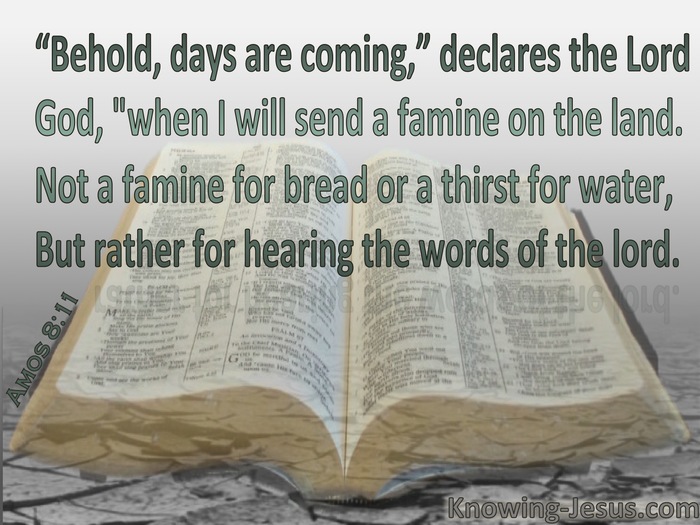
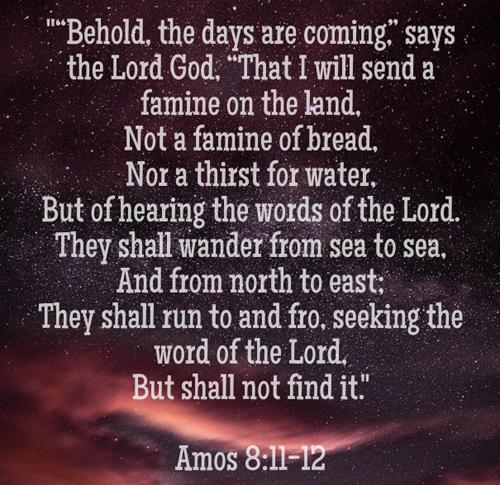
        Praise the Lord Saints!! Praise the Lord!!  How are you doing today?  Fine, I hope.  I want to inform all of you that this Bible verse in Amos 8:11-12 Says: Behold, days are coming, declares the Lord God, when I will send a famine on the land.  Not a famine for bread or a thirst for water, but rather for hearing the words of the Lord.  This is very serious because it has happened before.  For 400 years, before the messenger Malachi’s Prophesy.  There was a drought because God has not spoken to anyone for that length of time.  The reason why God has not spoken is because of man’s disobedience towards God.

        Next, it would be very difficult to hear from God.  If this happens again in the present time, it means that life will end abruptly.  I know for me personally, I have never heard God’s Voice before in my entire life.  This means that I do not belong to God.  However, I am hearing God’s Voice by reading the Bible, praying, and listening to Church sermons.  I know that it is very difficult for mankind to figure out God’s Voice.  During that time, people will be wandering from sea to sea, north to east, and traveling from to and fro, but the word of the Lord they shall not find it.  This is not a laughing matter because when this happens, people every where will be bewildered.  People will panic!!  People will be scared.

        Moreover, people everywhere will become nervous.  I know that if It happens to me, I will panic and become fearful because I rely on God’s Word through other means.  If this supply is cut off, I will be very scared. 

        As I recall, King Saul went through the same exact thing because of his disobedience to the Lord.  1st Samuel 28:6 says: And when Saul inquired of the Lord, the Lord answered him not, neither by dreams, not by Urim, nor by prophets.  Who is Urim?  How did the Urim and the Thummim function?

Here’s probably the best word on the Urim and Thummim. It’s a couple of paragraphs from Dr. Bruce Waltke’s excellent book (which I highly recommend), entitled, “Finding the Will of God” (pp. 62-64):

“The priest could use the urim and thummin to determine God’s will in a particular situation. We are not exactly sure what the urim and thummin were, but the priest carried in his breastplate perhaps two sticks or stones, one white and the other black, that would give a yes or no answer to a specific question. Should Israel be preparing for battle, they would somehow shake or toss the sticks? If they turned up black the Israelites would not go to battle, and if they turned up white they would proceed into battle with the knowledge that they were in the will of God. That is one form of divination that God allowed in the Old Testament. We read in Exodus 28:30, “Also put the Urim and the Thummin in the breastpiece, so they may be over Aaron’s heart whenever he enters the presence of the Lord. Thus, Aaron will always bear the means of making decisions for the Israelites over his heart before the Lord.”

Much has been made of the urim and thummin by modern mystics, who want to find in them the key to the divine mind. All sorts of fanciful explanations have been put forward, including that the items may have glowed, that they had secret words engraved on them, or that they were ancient artifacts with magical powers. However, it should be noted that 1 Samuel 28:6 makes clear a definite answer was not always obtainable, so it may not have been as simple as tossing two stones on ground. Moses never used them; they were given for the high priest in aiding those who could not find God’s guidance any other way.

Some translate the words urim and thummin to mean “curse” and “blessing,” others simply “dark” and “light,” although the literal translation seems to be “light” and “perfections.” There is no proof that there were only two items; some early rabbis believed that the urim and thummin were a series of stones with Hebraic characters on them by which the Lord could spell out a message for the high priest. However, most scholars believe them to be two sticks or stones, perhaps precious stones, that God used in a miraculous way to reveal His will. They were used for national decisions like going to war, and for priestly matters.

The Old Testament seems to indicate that the urim and thummin faded from use during the early days of Israel’s monarchy, and are only referred to once after the Babylonian exile. This may be so because the institution of monarchy God inaugurated the office of prophet. The prophets now participated in God’s heavenly court and communicated God’s messages to the courts in Jerusalem and Samaria. Apparently, prophets who revealed God’s word to the king replaced the urim and thummin, through which He revealed His mind to the priest. Nevertheless, we still find Ezra using this device to determine the ancestry of the priests who returned from the exile in Ezra 2:63. After this the Bible never mentions the urim and thummin again. God did not preserve it for His people. They are one more allowance from God to assist His people at a certain point in history.”

        Finally, I believe that Urim and Thummin are considered as medium psychics in the Bible.  I believe this because these two people were appointed from the office of the prophet.  Urim and Thummin did not exist anymore after the Old Testament.  I guess Saul was looking for a mediator between God and himself.

Isaiah 43:18 Revised

Isaiah 43:18: And What it means to All People!!!

By Anthony Joseph Hopkins March 18, 2021

Frames of trees

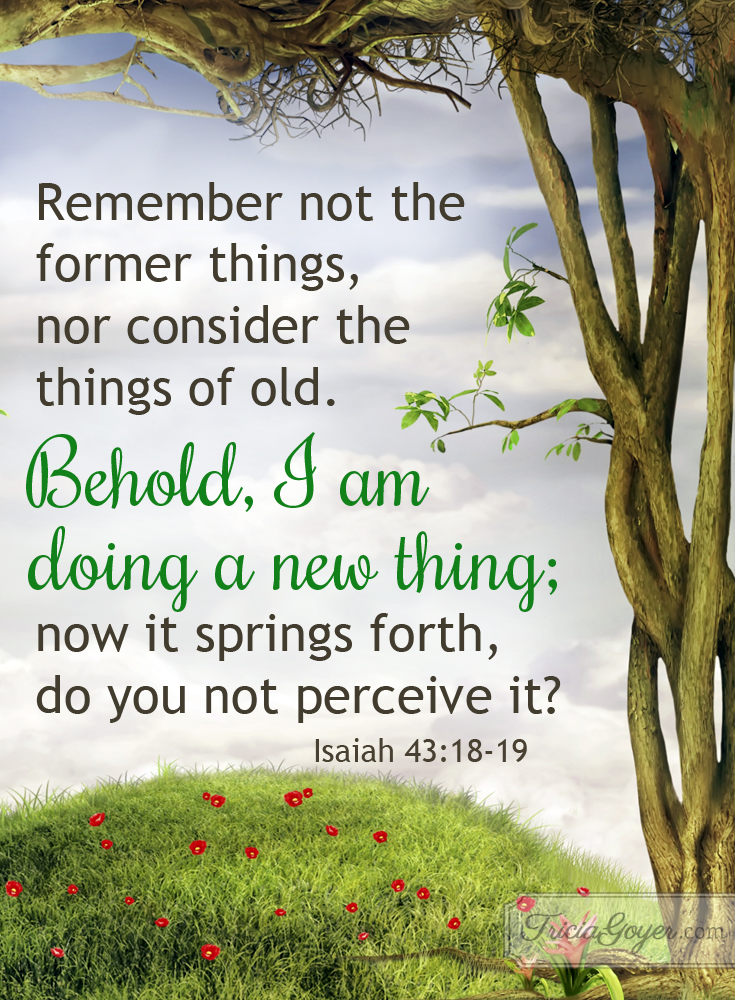
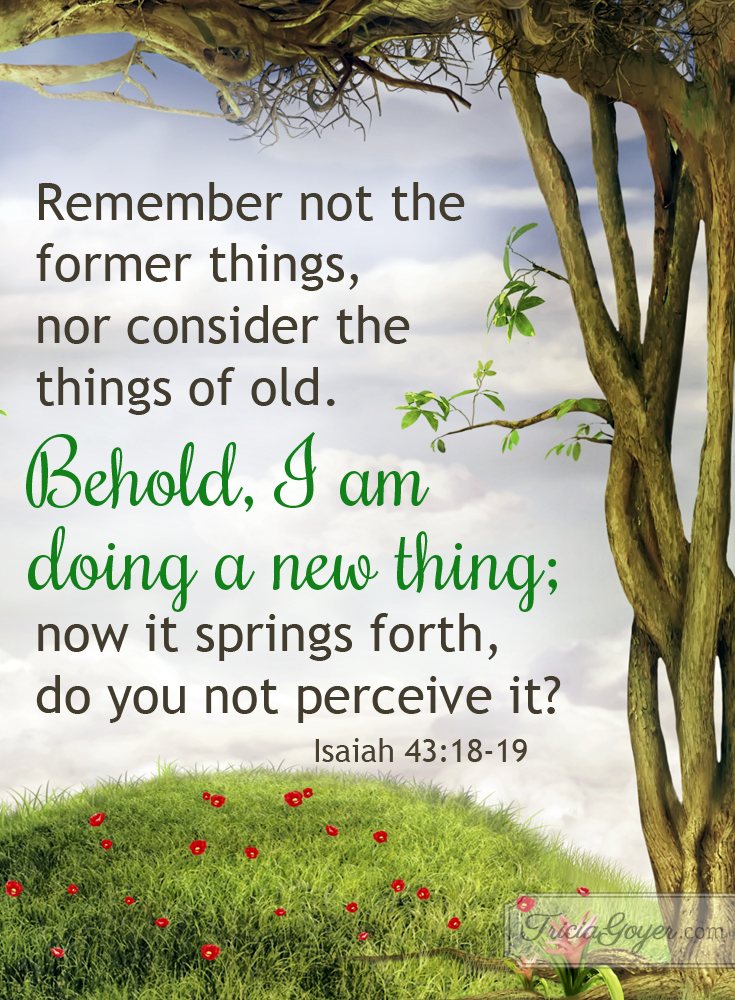
        Praise the Lord Saints!! Praise the Lord!!  How are you doing today?  Fine, I hope.  I want to inform all of you that Isaiah 43:18 Says: Remember not the former things, nor consider the things of old.

 This means that we are not supposed to remember the former things when it comes to the affairs of others.  I want to say that we are supposed to love one another and forgive each other as well.  For example, my brothers and sisters constantly talk about the past when it comes to me.  I do not understand why my siblings do this all of the time?  The only thing that I have been doing is praying for my family members.  I know that something is not right, especially when it comes to my family members.

Next, I want to inform everyone that my family members are constantly cursing me out each time I affiliate with them.  I do not understand why my family members do me this way?  Frankly, I want to say to everyone that I need all of you to please keep me and my family members in your prayers. 

Further, please allow me to explain what it means to live in the past.  Do you spend a lot of time reminiscing about the past? If the answer is yes, that’s okay. Thinking fondly about the past and looking back at the way things used to be isn’t a bad thing until it is.  There is a difference between thinking about the past and living in it. Sometimes we live in the past because it’s familiar — we know what happened; there are no surprises. Think about why you watch your reruns of your favorite old sitcoms over and over again.

This is what happens when we live in the past.

We choose to live there because it’s familiar. We know everything that happened. When the past was really good, you can live there because just thinking back on it gives you a feeling of comfort and happiness.

Moreover, please answer the following question regarding the past. 

Is there one particular period from the past that you find yourself clinging on to?
2. Do you feel that you will never reach that level of happiness/status/satisfaction/acceptance/etc. again?
3. Are you frustrated with where you currently are in life?
4. Are you fearful of the future?
5. Does thinking about the past actually make you sad?

If you find that you are clinging to a specific period from your past because you don’t feel there is anything in the present or future that could possibly better, and if thinking about the past in that way actually makes you sad, you may be stuck in the past.

Why is this a problem?

Living in the past is a problem because it robs you of the opportunity to enjoy the present. Not enjoying the present? If you aren’t happy where you are, living in the past won’t help! Living in the past allows you to avoid dealing with issues in the present.

In my family, my siblings always constantly remind me of the things that I have done in the past.  It really hurts me when my family members and friends talk to me about the past.  Therefore, I refuse to affiliate with my family members and friends because they constantly bring up things from the past.

 It damages my self-esteem and self-confidence.  I would rather be alone instead of being around condemning people.  It makes me feel sad and depressed because every time my family members and friends say something about my past, it hurts me to the point that I cannot deal with them after all. 

Finally, I would like for everyone who is reading this essay to please find it in your heart to pray for me.  Please pray for my family members.

 Like they say in Court, you are innocent until proven guilty under a Court of Law.  I am saying this because there is a period of innocence and there is a period where a person is guilty.  I guess I am guilty of the things in my past.  I do not need to be reminded of my human past from anyone.  Only God can Judge Me!!!!!  I might be hurt by the things that I have done to other people in the past.  Currently, I am seeking peace from all parties involved.  God Bless All of You!!!  I love all of you!!  I love all of my family members and friends.  It is that, I want peace!!!

What if nothing in the future will ever feel as good as what has happened in the past?

You may be fearful of the future if:

1. You find yourself feeling very anxious about what may happen in the next few months and/or years.
2. You avoid making long-term plans.
3. You currently feel frustrated or “stuck” in life and have no plan for how to move ahead.
4. You honestly and truly believe that your best days are behind you.

If you are fearful of the future, there are a few things you can do to help you move to a healthier and more optimistic place.

  1. Take stock of what you currently have in your life and all the things you have to be grateful for.
    2. Spend some time planning ahead. The future will seem a lot less scary if you have some kind of plan in place and a direction and goals to move towards.

3. Acknowledge that there are some things in life that you just can’t control. Learn to let go of those things and feel some of the weight lift off your shoulders.

Life is hard. Anyone who said it wasn’t lied to you. Harsh, I know, but very true. But the good news is that you do have control over much of your life; you just have to learn to exercise that control.

And remember this old adage, “Yesterday is history, tomorrow is a mystery, today is a gift; that’s why they call it the present!”

Isaiah 43:18: And What it means to All People!!!

By Anthony Joseph Hopkins March 18, 2021

        Praise the Lord Saints!! Praise the Lord!!  How are you doing today?  Fine, I hope.  I want to inform all of you that Isaiah 43:18 Says: Remember not the former things, nor consider the things of old.

 This means that we are not supposed to remember the former things when it comes to the affairs of others.  I want to say that we are supposed to love one another and forgive each other as well.  For example, my brothers and sisters constantly talk about the past when it comes to me.  I do not understand why my siblings do this all of the time?  The only thing that I have been doing is praying for my family members.  I know that something is not right, especially when it comes to my family members.

Next, I want to inform everyone that my family members are constantly cursing me out each time I affiliate with them.  I do not understand why my family members do me this way?  Frankly, I want to say to everyone that I need all of you to please keep me and my family members in your prayers. 

Further, please allow me to explain what it means to live in the past.  Do you spend a lot of time reminiscing about the past? If the answer is yes, that’s okay. Thinking fondly about the past and looking back at the way things used to be isn’t a bad thing until it is.  There is a difference between thinking about the past and living in it. Sometimes we live in the past because it’s familiar — we know what happened; there are no surprises. Think about why you watch your reruns of your favorite old sitcoms over and over again.

This is what happens when we live in the past.

We choose to live there because it’s familiar. We know everything that happened. When the past was really good, you can live there because just thinking back on it gives you a feeling of comfort and happiness.

Moreover, please answer the following question regarding the past. 

Is there one particular period from the past that you find yourself clinging on to?
2. Do you feel that you will never reach that level of happiness/status/satisfaction/acceptance/etc. again?
3. Are you frustrated with where you currently are in life?
4. Are you fearful of the future?
5. Does thinking about the past actually make you sad?

If you find that you are clinging to a specific period from your past because you don’t feel there is anything in the present or future that could possibly better, and if thinking about the past in that way actually makes you sad, you may be stuck in the past.

Why is this a problem?

Living in the past is a problem because it robs you of the opportunity to enjoy the present. Not enjoying the present? If you aren’t happy where you are, living in the past won’t help! Living in the past allows you to avoid dealing with issues in the present.

In my family, my siblings always constantly remind me of the things that I have done in the past.  It really hurts me when my family members and friends talk to me about the past.  Therefore, I refuse to affiliate with my family members and friends because they constantly bring up things from the past.

 It damages my self-esteem and self-confidence.  I would rather be alone instead of being around condemning people.  It makes me feel sad and depressed because every time my family members and friends say something about my past, it hurts me to the point that I cannot deal with them after all. 

Finally, I would like for everyone who is reading this essay to please find it in your heart to pray for me.  Please pray for my family members.

 Like they say in Court, you are innocent until proven guilty under a Court of Law.  I am saying this because there is a period of innocence and there is a period where a person is guilty.  I guess I am guilty of the things in my past.  I do not need to be reminded of my human past from anyone.  Only God can Judge Me!!!!!  I might be hurt by the things that I have done to other people in the past.  Currently, I am seeking peace from all parties involved.  God Bless All of You!!!  I love all of you!!  I love all of my family members and friends.  It is that, I want peace!!!

What if nothing in the future will ever feel as good as what has happened in the past?

You may be fearful of the future if:

1. You find yourself feeling very anxious about what may happen in the next few months and/or years.
2. You avoid making long-term plans.
3. You currently feel frustrated or “stuck” in life and have no plan for how to move ahead.
4. You honestly and truly believe that your best days are behind you.

If you are fearful of the future, there are a few things you can do to help you move to a healthier and more optimistic place.

  1. Take stock of what you currently have in your life and all the things you have to be grateful for.
    2. Spend some time planning ahead. The future will seem a lot less scary if you have some kind of plan in place and a direction and goals to move towards.

3. Acknowledge that there are some things in life that you just can’t control. Learn to let go of those things and feel some of the weight lift off your shoulders.

Life is hard. Anyone who said it wasn’t lied to you. Harsh, I know, but very true. But the good news is that you do have control over much of your life; you just have to learn to exercise that control.

And remember this old adage, “Yesterday is history, tomorrow is a mystery, today is a gift; that’s why they call it the present!”

And remember this old adage, “Yesterday is history, tomorrow is a mystery, today is a gift; that’s why they call it the present!”

Isaiah 43:18-19: And What It Means To All People!!!!

Isaiah 43:18: And What it means to All People!!!

By Anthony Joseph Hopkins March 18, 2021

Frames of trees

        Praise the Lord Saints!! Praise the Lord!!  How are you doing today?  Fine, I hope.  I want to inform all of you that Isaiah 43:18 Says: Remember not the former things, nor consider the things of old.

 This means that we are not supposed to remember the former things when it comes to the affairs of others.  I want to say that we are supposed to love one another and forgive each other as well.  For example, my brothers and sisters constantly talk about the past when it comes to me.  I do not understand why my siblings do this all of the time?  The only thing that I have been doing is praying for my family members.  I know that something is not right, especially when it comes to my family members.

Next, I want to inform everyone that my family members are constantly cursing me out each time I affiliate with them.  I do not understand why my family members do me this way?  Frankly, I want to say to everyone that I need all of you to please keep me and my family members in your prayers. 

Further, please allow me to explain what it means to live in the past.  Do you spend a lot of time reminiscing about the past? If the answer is yes, that’s okay. Thinking fondly about the past and looking back at the way things used to be isn’t a bad thing until it is.  There is a difference between thinking about the past and living in it. Sometimes we live in the past because it’s familiar — we know what happened; there are no surprises. Think about why you watch your reruns of your favorite old sitcoms over and over again.

This is what happens when we live in the past. We choose to live there because it’s familiar. We know everything that happened. When the past was really good, you can live there because just thinking back on it gives you a feeling of comfort and happiness.

Moreover, please answer the following question regarding the past. 

Is there one particular period from the past that you find yourself clinging on to?
2. Do you feel that you will never reach that level of happiness/status/satisfaction/acceptance/etc. again?
3. Are you frustrated with where you currently are in life?
4. Are you fearful of the future?
5. Does thinking about the past actually make you sad?

If you find that you are clinging to a specific period from your past because you don’t feel there is anything in the present or future that could possibly better, and if thinking about the past in that way actually makes you sad, you may be stuck in the past.

Why is this a problem?

Living in the past is a problem because it robs you of the opportunity to enjoy the present. Not enjoying the present? If you aren’t happy where you are, living in the past won’t help! Living in the past allows you to avoid dealing with issues in the present.

In my family, my siblings always constantly remind me of the things that I have done in the past.  It really hurts me when my family members and friends talk to me about the past.  Therefore, I refuse to affiliate with my family members and friends because they constantly bring up things from the past.

 It damages my self-esteem and self-confidence.  I would rather be alone instead of being around condemning people.  It makes me feel sad and depressed because every time my family members and friends say something about my past, it hurts me to the point that I cannot deal with them after all. 

Finally, I would like for everyone who is reading this essay to please find it in your heart to pray for me.  Please pray for my family members.  Like they say in Court, you are innocent until proven guilty under a Court of Law.  I am saying this because there is a period of innocence and there is a period where a person is guilty.  I guess I am guilty of the things in my past.  I do not need to be reminded of my human past from anyone.  Only God can Judge Me!!!!!  I might be hurt by the things that I have done to other people in the past.  Currently, I am seeking peace from all parties involved.  God Bless All of You!!!  I love all of you!!  I love all of my family members and friends.  It is that, I want peace!!!

What if nothing in the future will ever feel as good as what has happened in the past?

You may be fearful of the future if:

1. You find yourself feeling very anxious about what may happen in the next few months and/or years.
2. You avoid making long-term plans.
3. You currently feel frustrated or “stuck” in life and have no plan for how to move ahead.
4. You honestly and truly believe that your best days are behind you.

If you are fearful of the future, there are a few things you can do to help you move to a healthier and more optimistic place.

1. Take stock of what you currently have in your life and all the things you have to be grateful for.
2. Spend some time planning ahead. The future will seem a lot less scary if you have some kind of plan in place and a direction and goals to move towards.
3. Acknowledge that there are some things in life that you just can’t control. Learn to let go of those things and feel some of the weight lift off your shoulders.

Life is hard. Anyone who said it wasn’t lied to you. Harsh, I know, but very true. But the good news is that you do have control over much of your life; you just have to learn to exercise that control.

And remember this old adage, “Yesterday is history, tomorrow is a mystery, today is a gift; that’s why they call it the present!”

No Weapon formed against me will Prosper!

Toggle navigation Search Browse The Bible Toggle Dropdown Search The Bible Find it! How Does God Protect Us if “No Weapon Formed against Me Will Prosper”? Heather Adams | Contributing Writer 2021 16 Mar Life presents us with many challenges, but thankfully encouragement can be found literally at our fingertips. Reading God’s Word might not change circumstances in the moment, but our strength can be renewed and our attitude can be adjusted while we walk through a trial.  Isaiah 54:17 is one of my go-to verses, because it always calms my heart and sets me right. “No weapon formed against you shall prosper, and every tongue which rises against you in judgment You shall condemn. This is the heritage of the servants of the Lord, and their righteousness is from Me,” Says the Lord” (Isaiah 54:17). God made a powerful declaration and promise here. He was reminding His people of His might and sovereignty, as well as His abiding love for them. The idea actually echoes an assurance the Lord gave the young nation of Israel: “…I will be an enemy to your enemies and will oppose those who oppose you” (Exodus 23:22). Though it evokes images from an older age, this verse has meaning for us today in our struggles, whether small and large. What Does This Verse Mean? Simply put, God was stating that anyone who is seeking to do evil against believers will fail. Though for a time it may seem that we are defeated in a situation, God assures us the victory.  Isaiah says something similar in other parts of his book: “All who rage against you will surely be ashamed and disgraced; those who oppose you will be as nothing and perish” (Isaiah 41:11). “They will say of me, ‘In the Lord alone are deliverance and strength. All who have raged against him will come to him and be put to shame. But all the descendants of Israel will find deliverance in the Lord and will make their boast in him” (Isaiah 45:24-25). When my spirit sags, these words bolster me up. Photo credit: ©Getty Images/matt_benoit Will We Never Face Enemies or Trails? God’s Word doesn’t promise His people a life free of problems. In fact, from the very beginning, the Israelite nation dealt with a harsh journey through the desert and enemy armies that wanted to destroy them. But God remained faithful to care for them.  Jesus stated plainly that, “in this world you will have trouble” (John 16:33) and “each day has enough trouble of its own” (Matthew 6:34). But He also added reassurances that God was near and would be active in a believer’s life. The truth is that everyone must handle all sorts of problems. Sometimes we find ourselves at odds with other people for one reason or another. The Apostle Paul later addressed another battle that Christians face in the Book of Ephesians – spiritual warfare: “For our struggle is not against flesh and blood, but against the rulers, against the authorities, against the powers of this world’s darkness, and against the spiritual forces of evil in the heavenly realms” (Ephesians 6:12). But no matter what comes against us, seen or unseen, we can be “able to stand” when we lean into God’s grace.  The Context of This Verse The Prophet Isaiah directed this book to the nation of Judah. Written between 700 and 681 B.C., it was a plea to the people who had strayed from God. It contained a warning of disaster that God planned for His people if they remained unfaithful. The second section of the book is a hopeful prophecy about the restoration to come after the Jew’s exile.  Verses 15-17 are a description of the protection and eventual victory God will bless His people with. He used an image of a blacksmith forming metal tools and weapons to introduce the idea that He is the Creator, fully in control of all that happens to His people. “If anyone does attack you, it will not be my doing; whoever attacks you will surrender to you” (v.15). “See, it is I who created the blacksmith, who fans the coals into flame and forges a weapon fit for its work. And it is I who have created the destroyer to wreak havoc…” (v. 16). Photo credit: ©Getty Images/Antonio Guillem What Is Happening in Isaiah 54? In the NIV translation, this chapter has the heading, “The Future Glory of Zion.” It is a prophecy that God speaks through Isaiah to encourage the Israelites. The Lord begins by using the image of a barren woman, and promises her enough children to “spread out to the right and to the left” (v. 3), driving out nations before them. “…more are the children of the desolate woman than that of her who has a husband” (v.1). “Enlarge the place of your tent, stretch your tent curtains wide, do not hold back…” (v. 2). Next, the prophet shares God’s comparison of Israel to a widow facing reproach. He vows to take away their disgrace and lovingly bring them back into relationship with Him. “You will forget the shame of your youth and remember no more the reproach of your widowhood” (v. 4). “For your Maker is your husband – The Lord Almighty is his name – the Holy One of Israel is your Redeemer…” (v. 5). “The Lord will call you back…” (v. 6). Verses 7-11 are a comforting vision of God’s faithfulness to His people. After a time of rebuke, He says that restoration will come. “For a brief moment I abandoned you, but with deep compassion I will bring you back” (v. 7). “Though the mountains be shaken and the hills be removed, yet my unfailing love for you will not be shaken nor my covenant of peace be removed…” (v. 10). The Lord goes on to give a thrilling description of the rebuilding of the city. By His touch, Jerusalem would become better and stronger than it was before. “…I will rebuild you with stones of turquoise, your foundations with lapis lazuli” (v. 11). “I will make your battlements of rubies, your gates of sparkling jewels, and all your walls precious stones” (v. 12). “Tyranny will be far from you; you will have nothing to fear” (v. 14). In the midst of this rebuilt city, God declares that He will be Israel’s protection, and that nothing intended to harm His nation will succeed. Photo credit: ©SparrowStock Why Will “No Weapon Formed Against Me Prosper”? God, in His love, provides a way through and out of trials. After Isaiah finishes with his prophecies of destruction for Jerusalem, he speaks a reminder that the Lord is always watching over His people. “When you pass through the waters, I will be with you; and when you pass through the rivers, they will not sweep over you. When you walk through the fire, you will not be burned; the flames will not set you ablaze” (Isaiah 43:2).  Our human nature can lead us to question this truth, especially when we have to sit with a problem longer than we want to. That’s when we need to acknowledge God’s authority. We must trust that He will work good for us, even if it’s in a different way or time frame than we expect. We need to see God’s deliverance, whatever form it takes, as a blessing. Why Is This “the Heritage of the Servants of the Lord”? God calls His people “chosen” – set apart from the rest of the world.  “For you are a people holy to the Lord your God. The Lord your God has chosen you out of all the peoples on the face of the earth to be his people, his treasured possession” (Deuteronomy 7:6). So, His care and covering has always been reserved for those who have known Him and obeyed His commands. “’On the day when I act,’ says the Lord Almighty, ‘they will be my treasured possession. I will spare them, just as a father has compassion and spares his son who serves him’” (Malachi 3:17). Our Heavenly Father is glorified when we trust Him to protect and keep us during trials. “Even though I walk through the darkest valley, I will fear no evil, for you are with me; your rod and your staff, they comfort me” (Psalm 23:4). Photo credit: ©Getty Images/Tomertu How Will God Protect Us? We often ask God to change our circumstances or to take away our problems. Those are natural human responses, but God has a higher standard for us. As He has said, “My ways are not your ways” (Isaiah 55:8-9). God is able to change our situation and sometimes does. But more often, He is concerned with our character, and will use a trial to refine us. It can be a painful process, but He promises to protect us while we travel through. He protects us from destruction: “The Lord will keep you from all harm— he will watch over your life; the Lord will watch over your coming and going both now and forevermore” (Psalm 121:7-8). He protects us from sinning: “And God is faithful; he will not let you be tempted beyond what you can bear. But when you are tempted, he will also provide a way out so that you can endure it” (1 Corinthians 10:13). He protects us from discouragement: “But let all who take refuge in you be glad; let them ever sing for joy. Spread your protection over them, that those who love your name may rejoice in you” (Psalm 5:11). What Should I Do When I Face Trials? It’s easy to let trials upset or frighten us. But we have the opportunity to use challenges to draw us closer to God. He will meet us where we are, but we need to seek His presence. Sometimes, the first step is to just stop for a moment. Taking even a few moments to breathe deeply will slow our pulse and sharpen our ability to focus. Praying is a vital time way to connect with the Lord. We can start with asking for God’s comfort on our hearts and to strengthen our spirits. Then, we can boldly claim God’s victory for ourselves, even speaking it out loud. As we wait to see victory, we need to stay confident that in His timing and in His Way, we will see God work on our behalf. In the meantime, we can get inspiration from the experiences of others.  If I’m honest, my thoughts can turn toward the negative when trials hit. But by reaching for God in His Word and in prayer, I’m quickly reminded that I have reason for confidence, and even joy, in the midst of difficulties. In His goodness, the Lord protects us from our enemies, and delivers us out of our troubles. “Surely he will save you from the fowler’s snare and from the deadly pestilence. He will cover you with his feathers, and under his wings you will find refuge; his faithfulness will be your shield and rampart. You will not fear the terror of night, nor the arrow that flies by day, nor the pestilence that stalks in the darkness, nor the plague that destroys at midday. A thousand may fall at your side, ten thousand at your right hand, but it will not come near you” (Psalm 91:3-7). Photo credit: ©Getty Images/mixedreality Heather Adams is an author, speaker, and singer living in Connecticut. Heather’s passion is to equip and encourage believers to seek more of God’s truth and to experience more of His joy each day. Her book, Bow Down: The Heart of a True Worshipper is a practical, 30-day devotional about worship based on the writings of King David. Heather’s blog, Worship Walk Ministries, offers weekly Scripture passages and insights to ponder. A native New Englander, Heather is settling into her home in the South, trying out local foods and watching for the alligators that live nearby! You can connect with her on her website: heatheradamsworshipwalk.com Bible / Bible Study / Topical Studies Share Tweet Save Popular Articles What Did Jeremiah Mean by ‘There Is Balm in Gilead’? Blair Parke Is Divorce Really a Sin? Clarence L. Haynes Jr. Prayers for Health of Body, Mind, and Soul Christianity.com Editorial Staff Who Wrote Proverbs? Dr. Sandra Hamer Smith A Beautiful Prayer for Easter Sunday to Celebrate, Reflect, and Challenge Noelle Kirchner What are Seraphim and What Power Do They Have? Annette Griffin Featured Verse Topics Healing Bible Verses Worry and Anxiety Bible Verses Prayer Bible Verses Bible Verses for Overcoming Grief Comforting Bible Verses Bible Verses About Protection God’s Promises – Verses in the Bible Bible Verses For Faith in Hard Times Encouraging Bible Verses Hope Bible Verses Friendship Bible Verses Forgiveness Bible Verses Strength Bible Verses Love Bible Verses Inspirational Bible Verses About Online Bible Sitemap Link to Us Advertise with Us Feedback Proud member of Salem Media Group. Copyright © 2021, Bible Study Tools. All rights reserved. Article Images Copyright © 2021 Getty Images unless otherwise indicated. California – Do Not Sell My Personal Information  California – CCPA Notice

John 3:16

Free eBook: Getting Through the Storms in Life

Bible Study Tools

Toggle navigation

The Bible Toggle DropdownFind it!null

What Does it Mean that “God So Loved the World” in John 3:16?

Jennifer Slattery| JenniferSlatteryLivesOutLoud.com201926 Nov

What Does it Mean that 'God So Loved the World' in John 3:16?

For God so loved the world that he gave his one and only Son, that whoever believes in him shall not perish but have eternal life.” – John 3:16null

John 3:16 can easily run through our brains without much cognizant thought, but have we paused to consider what it truly means? Have we contemplated the depth of truths packed within this verse, preserved by God Himself, throughout countless generations? Most importantly, how do we live in the reality that John 3:16presents—that God, who is love, actively demonstrated His love through Jesus Christ, His only begotten Son, and through Him, offered salvation to all mankind.

The Biblical Context of John 3:16

Let’s take a look at that verse now. It reads, “For God so loved the world,” or, as the NLT puts it, “This is how God loved the world: He gave His only Son, so that everyone who believes in Him will not perish but have eternal life.” There’s so much to unpack in those words, but first, we need to understand the historical and literary context surrounding them. We find John 3:16, perhaps one of the clearest presentations of the gospel, tucked in a conversation between Jesus and a prestigious religious ruler. You may be familiar with the story. 

One night, presumably after many of his colleagues were home in bed, a Pharisee named Nicodemus from the Jewish ruling council came to Jesus. “Rabbi,” he said, “we know that You are a teacher who comes from God. For no one could perform the signs You are doing if God were not with him” (John 3:2). This statement suggests a few things: Nicodemus was familiar with Jesus, most likely respected Him, and recognized that He indeed came from God, just like John 3:16 later states. Nicodemus obviously knew of the miracles Jesus had performed. He’d probably heard many truths Jesus spoke as well, all of which seemed to have triggered a driving question: Who are you? Perhaps you’ve asked God that yourself. Beneath his words of affirmation, of wonderment, Nicodemus appears to be investigating Jesus’ identity. To which Jesus replied, “Very truly I tell you, no one can see the kingdom of God unless they are born again” (John 3:6).null

Initially, one might call His words a redirect, but Jesus was probing something deeper. You see, we must remember whom Christ was speaking to, what kind of life he lived, and how Nicodemus was accustomed to relating to God—through religious works. Can you imagine how confusing Jesus’ statement must have been? I’m not just talking about the whole rebirth analogy, but consider as well the message conveyed to this well-educated, well-trained, and presumably “righteous” man. Jesus, in essence, told Nicodemus that all his years progressing in Judaism, all the time he spent reciting prayers and participating in festivals, accounted for nothing. Oh, they laid the groundwork, a foundation, if you will, for the truths Jesus was presenting. But they didn’t have the strength to carry Nicodemus to salvation.

Why Did Jesus Use an Old Testament Reference to Explain His Point?

“‘Just as Moses lifted up the snake in the wilderness, so the Son of Man must be lifted up, that everyone who believes may have eternal life in him.’ For God so loved the world that he gave his one and only Son, that whoever believes in him shall not perish but have eternal life. For God did not send his Son into the world to condemn the world, but to save the world through him. Whoever believes in him is not condemned, but whoever does not believe stands condemned already because they have not believed in the name of God’s one and only Son” (John 3:14-18). 

To illustrate the point further to Nicodemus, Jesus referenced the bronze snake Moses raised in the wilderness, back when the Israelites wandered in the desert vacillating between rebellion and repentance (Num. 21:4-9). As recorded in the Book of Numbers, a book Nicodemus would have been extremely familiar with, the Israelites chose rebellion and were punished for it in the form of venomous snake bites. To receive healing, they had to look at a bronze snake on a pole. Looking at the snake on the pole was an act of faith, and when they looked they were healed by God. The Israelites knew this was the only way they could be saved from this certain death by venom. 

To get the full extent of this picture we need to remember Israel’s pattern when they left Egypt: the people would rebel, the Lord’s judgment would come, Moses would intercede on their behalf, and the Lord responded mercifully (NIV Biblical Theology Study Bible). In Jesus’ earthly days the people of Israel were still rebelling, but this time there was a different intercessor . . . this time Jesus was the One whom the Lord would lift up and grant mercy through. However, this mercy that comes through Jesus the Son, our Savior, is an everlasting mercy. When Nicodemus heard about Jesus’ death on the cross, you can imagine his memory of these words. Just like the rebellious Israelites in the desert, Nicodemus needed an intercessor so that he could have salvation and be ‘born again.’ It is an illustration that likely stayed with Nicodemus for the rest of his earthly life. null

“For God So Loved the World” Is a Picture of Love

John 3:16 follows this rich and theologically dense explanation of sin and salvation. “This,” Jesus said, “is how much God loves you. He sent you Me” (paraphrased). In Christ, we see a love so intense, so sacrificial, so incomprehensible, it makes all human expressions seem frivolous in comparison. The words Jesus spoke likely didn’t make much more sense to Nicodemus than Jesus’ talk of rebirth. After all, he likely had no idea Jesus was planning to die—for him (and us). He didn’t understand that Christ would, quite literally, be lifted on a pole, just as the snake had been, and that Christ’s death and resurrection, not well-spoken prayers or good deeds, would bring life. But we do have that knowledge, thanks to Scripture.

Now, considering all Jesus suffered, all God watched Him suffer, for you and I, evaluate the beginning of John 3:16 again, “This is how God loved the world,” and everyone in it. “He gave His one and only Son.” Through His death, Christ revealed what pure, unfathomable love looks like. But He did more than that. Through the cross, God proved the depths of His love, because “While we were still sinners, Christ died for us” (Romans 5:8). Such a passionate, self-sacrificing act is hard for my mind to comprehend. God reached out, expecting nothing in return, and emptied Himself completely, for the very ones who spurned Him. You and I included.

God knew how helpless we were. Watching us hurt, manipulate, use, and kill one another, God could’ve left us to our destruction. He could’ve been repelled and turned away in disgust. Instead, He drew near. Speaking of Jesus, Philippians 2:6-8says, “being in very nature God, [He] did not consider equality with God something to be used to His own advantage; rather, He made Himself nothing by taking the very nature of a servant, being made in human likeness. And being found in appearance as a man, He humbled Himself by becoming obedient to death—even death on a cross.” God took action from the beginning of time, from that first sin in the Garden of Eden. The first thing God did was to remove the tree of life, lest we be trapped in a life of sin forever. He acted throughout history, weaving a plan and keeping His promise to save His people. He acted when He sent His Son through the Holy Spirit to be born incarnate of the virgin, Mary. And He acted when His Son was laid upon the cross, offering a sacrifice of His perfect life for our stained lives, which was the payment for sin. null

Whenever I think of the cross, I’m reminded of the price Christ paid so I could be free. But I’m also reminded of how much I needed that freedom. 

“For God So Loved the World” Is the First Part of God’s Rescue Plan

Jesus came so that, though we were guilty and tarnished by sin, we could receive forgiveness and pardon for all we’d done or will do. Because of Jesus, we can have peace with God the Father, be adopted as His child, and empowered by the Holy Spirit to live, fully, in His freedom. Christ’s life and death were prophesied and the gift of salvation promised, from the beginning of time. Adam and Eve rebelled against their good, attentive, and faithful Father. They chose pleasure in the moment over the peace and joy of a relationship with God. They chose their will and their wants, over trusting and obeying their God, and in this, they tried to elevate themselves above the very Creator who had loved them so faithfully.

Jesus is not surprised by sin; He was there in the beginning, the second person of the Trinity, and after He was born incarnate of the virgin, Mary, He learned God’s Word from an early age and kept it in His heart. In Genesis 3:15, He said, “I will put enmity between you and the woman, and between your offspring and her offspring; he shall bruise your head, and you shall bruise his heel” (ESV).

 In this, God promised sin would not win; though a battle would rage between light and dark, between good and evil, Christ would ultimately prevail, and He did. He secured His victory through His death on the cross. Colossians 2:15 puts it this way, “He disarmed the rulers and authorities” of darkness “and put them to open shame, triumphing over them” (ESV). This allows all who believe in Christ to say, “Death has been swallowed up in victory. ‘Where, O death, is your victory? Where, O death, is your sting.’ The sting of death is sin, and the power of sin is the law. But thanks be to God! He gives us the victory through our Lord Jesus Christ” (1 Cor. 15:55-57).null

“For God So Loved the World” He Sent His One and Only Son to Save

God sent Christ for one reason only, and here’s why: “So that everyone who believes in Him will not perish but have eternal life.” We receive God’s free gift of eternal life through faith, by believing Jesus is who He says He is—the sinless Son of God who paid for the world’s sins—and did what He said He did—died in our place to grant us entrance into eternity with Him. But to receive that precious gift, we must acknowledge we need it. That’s hard because it pricks against our pride. We often take great satisfaction in our achievements and knowing we’ve progressed solely through our own merits. But the Holy Spirit helps us realize the futility of our efforts; we cannot earn grace, but we can accept it by the power of the Holy Spirit.

Paul stated, “Who will deliver me from this body of death? Thanks be to God through Jesus Christ our Lord!” (Romans 7:24-25). 

This was the offer Jesus made to Nicodemus on that dark night so long ago. The offer was free. Nicodemus didn’t have to earn it; he simply needed to accept it. To step out of the darkness and into the light, out of death and into life. We don’t know how that conversation ended that night. Perhaps Nicodemus’ heart leapt with hope and he embraced the grace that Christ offered. Or perhaps he retreated, contemplated, and wrestled with his sin and pride, before finally finding the courage to surrender. Regardless, we know Christ revealed a beautiful picture of love, of grace, and the freedom of complete absolution. No more guilt. No more shame. Zero condemnation. Only freedom, light, and life, and all because God so loved this world.


 Photo credit: ©GettyImages/AlessandroPhoto


This article is part of our larger resource library of popular Bible verse phrases and quotes. We want to provide easy to read articles that answer your questions about the meaning, origin, and history of specific verses within Scripture’s context. It is our hope that these will help you better understand the meaning and purpose of God’s Word in relation to your life today.

“Be Still and Know that I Am God” 
“Pray Without Ceasing” 
“Fearfully and Wonderfully Made”
“All Things Work Together for Good” 
“Do Not Fear”

ShareSavenullnullnull

Popular Articles

What Were the Last Words of Jesus and Why Are They so Powerful?

What Were the Last Words of Jesus and Why Are They so Powerful?Josie Siler

How Can We Grow in Biblical Patience?

How Can We Grow in Biblical Patience?Dave Jenkins

How Does God Protect Us if “No Weapon Formed against Me Will Prosper”?

How Does God Protect Us if “No Weapon Formed against Me Will Prosper”?Heather Adams

What Is the Meaning of Easter and Why Do We Celebrate it?

What Is the Meaning of Easter and Why Do We Celebrate it?Compiled & Edited By

4 Easter Dinner Prayers to Celebrate as a Family

4 Easter Dinner Prayers to Celebrate as a FamilyLori Freeland

How Is God the Same Yesterday, Today, and Forever?

How Is God the Same Yesterday, Today, and Forever?Aaron Brown


Featured Verse Topics


https://99f3c16f0c87f427e7e564379380bd60.safeframe.googlesyndication.com/safeframe/1-0-37/html/container.html

Thriven
Salem Web Network

Proud member of Salem Media Group.Copyright © 2021, Bible Study Tools. All rights reserved. Article Images Copyright © 2021 Getty Images unless otherwise indicated.California – Do Not Sell My Personal InformationCalifornia – CCPA Notice