My Personal Observation of James 1:19 and What it really means to all people.

James 1:19 And What It Means to All People.

James 1:19 says: My Dear beloved brethren, be quick to listen, slow to speak, and slow to get angry.   To me personally it means that we must watch what we are doing at all times. 

Next, I want to inform all of you that something like this takes a lot of practice.  This is a skill that someone does not learn overnight.  It takes years of practice.  I really think that something like this should be utilized.

Moreover, I want to inform all of you that I have to learn this new skill because I have been very angry all of the time.  I know that I tend to struggle with listening to people. 

Also, I want to say that it takes a lot of practice to learn all three things.  First, listening.  Listening is a process of learning how to understand the spoken word.  I want to inform all of you that if someone tells you something, you should be able to repeat it right back to them.  I know for me; I have to learn how to accept what it is being said out of the person’s mouth.

Another problem that I have is that I do not believe everything that people tell me.  This is true because people will tell a lie in your face.  They even want you to accept it.

 Then, if you do not fully accept what they are saying: There is a major problem.  I want to say that certain people especially if they are from a different culture; can say something to you that you do not agree with.  I know that I have been living inside of an environment that consists of people who comes from different countries.  A person from another country can say something to you, it would offend you.

In Addition, I want to inform all of you that people can cuss you out and get away with it.  This is the reason why you have to pay attention to another person’s non-verbal communication.  I want to inform you that everyone has to pay attention to a person’s movements of their arms and legs as well as fingers.

I also have to pay attention to their verbal communication as well.  If it is in a language that you do not understand, then you have to ask them what they are saying.

 If they are offended with you after you asked them a question, then there is another problem.  Quick to listen is another way of paying close attention to what is being said out of a person’s mouth as well as movements called gestures.  I know that in my neighborhood, it is integrated.  I know that there are people from diverse backgrounds and cultures.  Quick to Listen is just paying attention to what is being said as a person’s language.

Slow to Speak is a way of interpretation.  It is a way of understanding what someone else is saying.  I know for me, I have to learn how to fully understand another person’s speech.  If it is different from what I am used to, then I must take a stand.  I want to inform you that I have learned how to take a non-violent approach when it comes to dealing with other people.

Slow to Speak means that we have to ingest what another person is saying.  To fully understand what they are saying out of their mouth.  Sometimes people who are younger tend to act impulsive.  They also use language that only millennials are able to understand even if it is a threat.  Sometimes a person can say things just to provoke you in some kind of way.

Slow to Speak means that if the communication is different, then you have to defend yourself.  With me personally, I have to fully explain what I actually think they said as long as it is not a form of vulgarity. 

You see, I am a 58-year-old man who fully understand vulgarity in many different cultures.  I even know if it is street slang or gang language.  I understand young people because I have nieces and nephews who are much younger than me.  Therefore, I understand street slang that comes from different regions of the United States.  This is because I used to live in the Midwest and the Southeast USA.

I am more of the proper type, and highly educated.  Just because someone is acting the fool does not mean that I have to act like them. 

You see, I was told by my AA Sponsors to always take a long walk and calm down.  Some young people do not respect older people.  This means that they think that everyone think that you have to yield to them.  I will not yield to anyone but God and Jesus Christ.  I know that inside of a changing culture, there are people who have personalities that are different than yours.  This is the reason why I listen with the intent of exchanging whatever a person is feeling at a particular time.

Slow to Get Angry Means: to learn how to never allow anyone else push your buttons.  Anger is a universal emotion.  I know that a people today are pugnacious.  I understand that my primary intention is to understand your point of view.  It is best for a mature person to walk away from a cowardice fight.  This means that people who are younger than you will try to kill you over nonsense. 

Another intention that I have is to respect you in the long run.  I want to inform you that I am trying to prevent myself from fighting in the first place. 

Slow to Get Angry Means: to think about your consequences in advance.  I know that my objective is to not fight anyone even though they are much angrier than me.  I am trying to stay out of trouble in the first place.  I am trying to diffuse any situation before it gets worse.  I am trying to learn how to forgive everyone 490 times in life.  This means that I have to forgive each person a total of 490 times.  This is the reason why I have to avoid you, if we cannot make peace.

Slow to Get Angry Means: that you do not have to always act like the next person all of the time.  I am still learning how to act like a mature adult.  I really do not like fighting verbally or physically.  Therefore, I will not kiss anyone’s Gluteus Maximus in any way.  I cannot complete that task on myself.  Respect me and I will respect you.  This is my interpretation of James 1:19 inside of the Bible.

What sacrifices have you made in life?

What sacrifices have you made in life?

The sacrifices that I have made in my life are staying in the Dayton Ohio area just to avoid homelessness again.   In addition I am a victim of age discrimination in the Dayton Area.   I have been praying about my decision to stay at home.  Also I didn’t want to fall out with anyone anymore.   The Lord is still handling finances for me.   Furthermore I am not able to go back to UNCC CAMPUS anymore.   Therefore I am staying in the Dayton Ohio Area for good now.

What Does The Bible Say about Slander?

What Does The Bible Say About Slander?

Answer: The old adage “Sticks and stones may break my bones, but words will never hurt me” is not true. Words can do a great deal of damage to those who have been slandered. Slander is making a false verbal statement that damages someone’s reputation. Slander differs slightly from libel in that libel is a written defamation of character; slander is only spoken. The Bible says a lot about slander, in both Old Testament and New (Proverbs 10:18; 1 Peter 2:1). Slander is so high on God’s list of wrongs that He included it in the Ten Commandments (Exodus 20:16). The ninth commandment says, “You shall not bear false witness against your neighbor.” Bearing false witness includes slander because of the untruths being spread. Slander is simply lying about someone with the intent of causing others to view that person in a negative light.

Slander is malicious lying, and God hates lying (Proverbs 6:16–19; 12:22). Since God is the author of truth (John 14:6; 1 John 5:6), anything untrue is in opposition to His nature and therefore repulsive to Him. Both slander and gossip are wrong, and Scripture often condemns them together (Leviticus 19:16; Proverbs 16:27; 2 Corinthians 12:20), but slander takes gossip to a whole new level. Gossip collects someone’s secrets and passes them to others; slander makes up its own secrets and broadcasts them wherever they will do the most harm.


The New Testament references slander as part of our old sinful nature. Slander has no place in our lives when we become new creatures in Christ (2 Corinthians 5:17). Colossians 3:7–8 says, “You used to walk in these ways, in the life you once lived. But now you must also rid yourselves of all such things as these: anger, rage, malice, slander, and filthy language from your lips.” Our words are to be dedicated to the glory of God, just as our bodies are (Romans 12:1–2; Ephesians 4:29). Those who know God have a responsibility to refrain from slander: “With the tongue we praise our Lord and Father, and with it we curse human beings, who have been made in God’s likeness. Out of the same mouth come praise and cursing. My brothers and sisters, this should not be” (James 3:9–10). Slander is one practice that must be put to death if we intend to follow Jesus (see Romans 6:11–14).

In Romans 1:28–32, Paul lists many traits of a depraved mind, and slander is included in this list (verse 30). When we slander others, we are choosing to step out of the path God designed for us. He will not participate with us in our attempts to destroy someone else with our words. Slander comes from the heart, and when we are tempted to speak untruths about someone, we should first examine our own hearts to see what ugly root is producing those desires. Jesus said, “But the things that come out of a person’s mouth come from the heart, and these defile them.

For out of the heart come evil thoughts—murder, adultery, sexual immorality, theft, false testimony, slander” (Matthew 15:18–19). God wants us to see that slandering someone is an indicator that our hearts are not right with Him. A desire to slander can spring from a root of bitterness (Hebrews 12:15), from unresolved hurt (1 Peter 3:14–16), from unforgiveness (2 Corinthians 2:10–11; Ephesians 4:32), from jealousy (Galatians 5:20; 2 Corinthians 12:20), or from other sins of the heart.

God’s solution for slander is to love each other (John 13:34). We don’t slander people whom we love (1 Corinthians 13:4–7). Love wants the best for others, and that means guarding their reputations as we do our own (Matthew 7:12). “Love does no harm to a neighbor. Therefore love is the fulfillment of the law” (Romans 13:10). When we focus on obeying the Lord by loving as He loves us, slander will not tempt us.

        This is an essay that ask one good question.  What does the Bible say about slander?  What is the definition of the word slander?  Slander is make false and damaging statements about (someone).  The action or crime of making a false spoken statement damaging to a person’s reputation.  However, there is one particular Bible verse that has a whole lot to do with slander.  Psalms 73:9 says: They set their mouths against the heavens, and their tongue walketh through the earth.  This means when people talk about you, it spreads throughout the community, internet, social media, school, or neighborhood.

        When it comes to the Bible, we are supposed to avoid foolish talk and empty philosophies.  1st Timothy 6:4 says: He is proud knowing nothing, but doting about questions and strifes of words, where if cometh envy, strife, railings, evil surmisings.  You know what this means, we have to pray for those who are our enemies.  We must keep our friends close and our enemies closer.  I know that this is very difficult for some people to accomplish on their own.  Therefore, we have to be mindful of other people at all times.  To be honest with everyone, I realize that my problem stems from my past.  For Example, the people that I have affiliated with were bad.

        Slander hurts both the victim and the perpetrators themselves.  Titus 1:10-11 Says: (10) for there are many unruly and vain talkers and deceivers, especially they of the circumcision: (11) whose mouths must be stopped, who subvert whole houses, teaching things which they ought not, for filthy lucre’s sake.  This means that we cannot affiliate with the ungodly in any way; especially those people who are vain talkers and deceivers.  This also goes for false prophets.  As I recall, I was a victim of malicious slander and fraud growing up in my own hometown of Dayton, Ohio.  I was hurt really bad because the people who I thought were my friends were using me.

        To be honest, both people are hurt by these false accusations.  Titus3:2 says as follows: To speak evil of no man, to be no brawlers, but gentle, shewing all meekness unto all men.  We must learn how to be polite in our expressions to one another.  Titus 3:3 says: For we ourselves also were sometimes foolish, disobedient, deceiving, serving divers lusts and pleasures, living in malice, and envy.  We were hateful and hating one another.  I can truly can identify with Titus 3:3 because I was living in sin.  I was living inside of the world, and doing the things of the world.  I also used to be selfish and bitter by nature.  Through prayer from others and being admonished in a positive matter by others.  I have changed my ways.

        Hebrews 8:11 says: And they shall not teach every man his neighbor, and every man his brother saying, know the Lord: For all shall know me, from the least to the greatest.  Everyone will know the Lord.  This is because He is a righteous Judge.  I am very happy that I have Him as my personal Savior.  Titus 3:9 says: But avoid foolish questions, and genealogies, and contentions, and strivings about the law: For they are unprofitable and vain.  We must avoid anything that is not of God.  There are false prophets that are inside of the world deceiving others that are in the faith.  We must test the Spirits to see whether or not they are of God. 

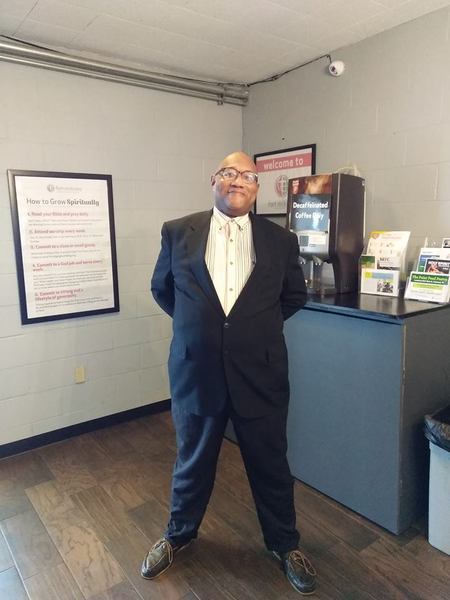
   My name is Anthony Joseph Hopkins and I am from Dayton, Ohio.  I am a Blogger.  I have been clean and sober for 34 years.  My hobbies consists of reading the Bible, traveling, meditating, and using the computer on a daily basis.  I am a very nice person.  I am very intelligent, kind, giving, helpful, friendly, brave, bold, sincere, and truthful.

Honesty with God

Not Found

Honesty with God means sharing everything with God not simply gratitude and praise and not just things that are appropriate for prayer. Good Evening Everyone.  How are you doing tonight? Fine I hope.  I’m doing good today.  I will admit that I was depressed because of my own personal trials in my life.

Not Found

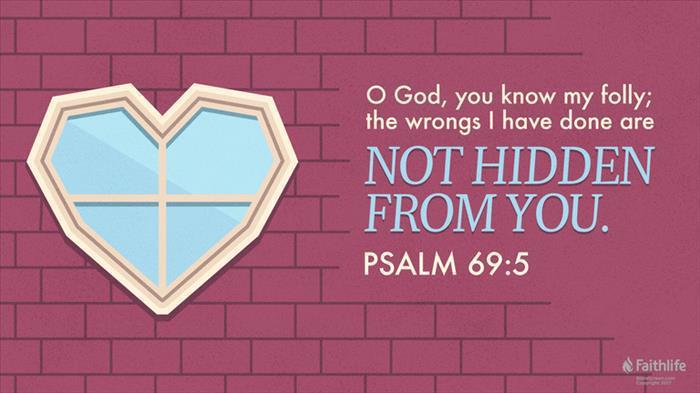
I am a person who is honest and truthful about my life.  I have nothing to hide from God and man.  I have to also admit that I have to site all of my sources that I use online.  I use Bible verses from the New King James Version of the Bible.  I use images from the website Google.  I know that God is watching me and everyone else on Earth.  Lord God, You are absolutely right when You say our sins are not hidden from You ���.  You know our foolishness as well.

Finally, I want to thank you for doing for me; more than I am doing for myself.

What is the oldest thing you are wearing today?

What’s the oldest things you’re wearing today?

The oldest thing that I am wearing is a pair of jeans that I have had for a total of 8 years now.   My house shoes are 9 years old.  The apartment that I am living is 13 years old.   I have been attending AA Meetings online for 9 years now.   I have been attending Fort McKinley United Methodist Church located in Dayton Ohio for 12 years now.   I have been living in Dayton Ohio for 14 years now.

Are You A Leader or a Follower?

Are you a leader or a follower?

I am a leader because I have been taking care of my siblings since 1972.  I remember when my mother used to go gambling at various places in the Dayton, Ohio.   I remember for 9 years, I had to take care of them by changing diapers and giving my younger siblings a bath at 9:00pm each night for 9 years.  I was a 7 year old boy who was responsible for performing adult responsibilities.  I was also responsible for leading Troop 19 in the Boy Scouts.  I remember camping and teaching my troops how to pitch a tent and catch fish inside of a Lake inside of the State of Ohio Area.  My mother and grandparents taught me how to survive inside of the forest.  For three years. My grandparents taught me how to shoot a gun and pistol when I was 9 years old.  I was on the YMCA Basketball team for 3 years.   I also was attending church with my grandparents and siblings twice a week for 7 years at Bethel Church of God in Christ in Dayton Ohio.   When I was in high school I was in NjROTC at Nettie Lee Roth High School in Dayton Ohio for 3 years.   I remember being in the Color Guard for 3 years.  After my Sophomore year in high school I was truant for 3 years.   I really did not go to school from 1981 through 1984.  My mother signed me up for Job Corps in Grand Rapids  Michigan in 1983.  During that time  I became a Follower for 7 years.   From 1983 through 1990.  I was involved with street gangs in Michigan and Ohio.  I graduated from high school in June 10, 1986 at 7:00pm through 10:00pm at the Memorial Hall in Dayton Ohio.   I was married for less than a year to a much older woman.  I asked God to please remove the desire for me to drink alcohol and smoking marijuana as well.   I have been clean and sober for 34 years now.  I graduated from the University of Toledo in Toledo OH from 1991 through 1996.  Currently I am a Leader more than a Follower because I have achieved many years of success in Toledo  Dayton and Charlotte NC.  I went through Anger Management Class for 8 years in Charlotte NC.   I also am taking AA Meetings Online and I am staying out of trouble.   I have achieved success in the Dayton Ohio area for 13 years living inside of the same apartment at Wentworth HI Rise Apartments located on 2765 Wentworth Avenue Apt #607 Dayton Ohio 45406.  I had to learn how to be honest and responsible for my actions.   God Loves You and God Bless You All.  Thank You for reading my essay 🙏.

Spirituality As a Coping Mechanism for a Mental Illness

Spirituality as a Coping Skill for Mental Illness

                                        By

                        Anthony Joseph Hopkins

Mental illness alone is very challenging for more than 40 million people living in the United States. People who struggle with the diagnosis of a mental illness find themselves struggling to make it. Frankly, there are people, who turn to their faith in God just to make it. Personally, I suffer from schizoid affective disorder. I have been suffering from a mental illness for almost 22 years now. Why having a serious mental illness would is so difficult?

 For me, I hear voices that are not the Holy Spirit. In my report, I have found that spirituality is an often overlooked resource in mental illness recovery. My assessment of religious or spiritual beliefs are under researched, and in most cases, it is laughed at by the Mental Health Community. Honestly, most psychiatrist refuse to actually listen to their patients. Many psychiatrist and therapist that I have consulted with during the past 22 years, feel that my spirituality is pointless.

I will admit that I have benefitted from pastoral counseling more than consulting with a psychiatrist and therapist. There are three main reasons how people with a mental illness cope with their problem. First, through spirituality, as well as relying on a power that is greater than the person themselves. As for me, I attend Fort McKinley United Methodist Church. The address to the church is 3721 West Siebenthaler Avenue Dayton, Ohio 45406. I have attended Fort McKinley Church for 7 years now.

 It helps me to cope much better with a mental illness by attending church as well as Bible study during the week. I feel a whole lot better when I am at church. Second, there are over 50 million people who have been diagnosed with a mental illness and a substance abuse problem. This statistic comes from the National Institute of Mental Health. People who suffer from a mental illness, at least some of them drink alcohol or self-medicate themselves just to cope with their problem. Third, another coping mechanism that some people have used is suicide. I remember on February 13, 2010; I tried to kill myself because I was responding to internal stimuli.

The voices that I was hearing told me to kill myself. Smolak, Gearing, Alonzo, Baldwin, Harmon, and McHugh (2013) reflected and reviewed 43 original research studies over the past 30 years. These people have discovered that patterns that were related or pertaining to religious beliefs and a patient’s recovery from a serious mental illness such as schizophrenia.

 This observation found that religion and spirituality have a mostly positive association with mental illness recovery. However, the intensive observation indicated that spiritual perceptions of family, caregivers, the community at large, and professionals affiliated to the mental illness saw tremendous progress.

 The results pointed out that religious themes were often evident in the perception of disease etiology, that family members and caregivers used religion as well as religious based professionals over mental health professionals. I would admit that working with a Pastor each week is much more feasible than dealing with a psychiatrist on a monthly basis. However, this report has better reflections of the patient.

 It also has a better understanding of a patient’s spiritual and religious beliefs as it assists in improving coping with a mental illness better than relying on medication. Religion and spirituality in conjunction with mental illness recovery remained historically under emphasized and minimized by mental health professionals. This means that spirituality will have to be emphasized by the patient themselves as a means to better cope with their mental illness.

The report finished with the idea of how enhancing the treatment provider’s awareness of a patient’s religious and spiritual interaction may improve treatment outcomes. I would like to say that religion and spirituality is not emphasized during an average consultation or therapy session. The majority of professionals prefer the use of medication to eradicate mental illness. Corrigan, McCorkle, Schell, and Kidder (2003) studied a total of 1,824 patients living with serious mental illness, who also had significant functional disability, but did not engage in substance abuse.

The information pointed out that the self-reporting of spirituality and religion as well as measured outcomes in psychological well-being, psychiatric symptoms, and life goal achievement such as employment and housing. This study determined whether religion and spirituality yielded similar benefits in the lives of people challenged and suffering from a serious mental illness, but also determined if those same people benefitted differently from religion. The patient’s themselves participated in community activities and common ways of worshipping versus spirituality defined as thinking about one’s self as part of a larger spiritual force. (P. 488). This study found that patients who self-identified as religious or spiritual has a much greater sense of well-being, better coping skills, and diminished psychiatric symptoms.  There was also no difference in quality of life as far as employment and/or housing.

People who suffer from a serious mental illness usually advocate and assert that religion and spirituality serve essential recovery roles in that they may provide useful coping skills to help with stressors.  Also, as previously noted, mental health professionals tend not to be very religious; therefore, the differences between professionals and patients may lead to a gap in treatment as professionals fail to ask about beliefs.

This could lead to a failure to explore religion or spirituality as a means towards a therapeutic end.  There are conclusions from this study.  The raw facts suggests there may be a need for faith based programs to be integrated into recovery programs for people with serious mental illness.  In the future, more research is needed to determine the role of faith based programs and to more thoroughly examine the causes and effects of spirituality in the lives of people who suffer from mental illness.

In all cases, this study and examination serves to remind mental health professionals of the central role religion or spirituality often play in the lives of patients and to the fact that sensitivity to the patient’s needs in this area lead professionals to helping the patient find appropriate services and resources.

Women and minorities struggles with mental illness are much more intense than other races.  These patients were more likely to be religious and more likely to turn to their faith as a means of coping, getting better, and staying healthy.  These patients length of stay in a psychiatric ward was significantly shorter for patients who attend worship services or used religious thoughts and activities as one of the most important strategies to deal with their mental illness.

An initial spiritual assessment should focus on determining how patient’s spiritual beliefs and practices influences their functioning and recovery.  By doing so, mental health professionals will likely uncover strengths and resources that can be utilized to foster recovery.  Mental Health Professionals can also help patients focus on their capabilities and resilience as well as accessing and using other positive recovery oriented narratives drawn from the patient’s spiritual worldview in order to address their problems more efficiently.

Spiritual Assessment within the mental health area is under researched and given that spirituality and/or religion is identifiably a magnificent and positive part of serious mental illness recovery.  This needs to be a more widely researched and utilized avenues of social science.  In a society where mental illness can be isolating and stigmatizing label; spirituality can be a core identity to which almost everyone can find a community or ways to help make life with serious mental illness worth living.

References

  1. Corrigan, P., McCorkle, B., & Kidder, K. (2003). Religion and Spirituality in the lives of people with serious mental illness.  Community Mental Health Journal, 39(6) 487-99
  1. Smolak, A., Gearing, R. E., Alonzo, D., Baldwin, S., Harmon, S., & McHugh, K. (2013). Social Support and Religion: Mental health service use and treatment of schizophrenia. Community Mental Health Journal 49(4) 444-50

What is one small improvement you can make in your life?

What’s one small improvement you can make in your life?

One small improvement that I can make in my life is to start attending church on a regular basis.   Another improvement that I can make is by reading the Bible each day and become more Christ-like 🙏.   I also need to improve my life by attending AA Meetings and College in Dayton, Ohio.   I have been clean and sober for 34 years now.   I need to learn how to listen to God’s Voice and stay away from trouble.   Yesterday was Mothers Day and I felt depressed and sad because my mother is not here anymore.