https://www.lavc.edu/sites/lavc.edu/files/2022-08/types-of-essays-ada-compliant-2018-.pdf
Essay Writings 2
Skip to contentCollege of Liberal Arts
Purdue OWL® Menu
Menu
Suggested Resources
- Purdue OWL
- General Writing
- Academic Writing
- Essay Writing
- Essay Writing
Essay Writing
This resource begins with a general description of essay writing and moves to a discussion of common essay genres students may encounter across the curriculum. The four genres of essays (description, narration, exposition, and argumentation) are common paper assignments you may encounter in your writing classes. Although these genres, also known as the modes of discourse, have been criticized by some composition scholars, the Purdue OWL recognizes the wide spread use of these genres and students’ need to understand and produce these types of essays. We hope these resources will help.
PARTNER CONTENT
Check for plagiarism & grammar mistakes
Wipe out writing errors that can affect your gradePaste paperCheck my paper

Using paper checkers responsibly
Overview
The essay is a commonly assigned form of writing that every student will encounter while in academia. Therefore, it is wise for the student to become capable and comfortable with this type of writing early on in their training.
Essays can be a rewarding and challenging type of writing and are often assigned either to be done in class, which requires previous planning and practice (and a bit of creativity) on the part of the student, or as homework, which likewise demands a certain amount of preparation. Many poorly crafted essays have been produced on account of a lack of preparation and confidence. However, students can avoid the discomfort often associated with essay writing by understanding some common genres.
Before delving into its various genres, let’s begin with a basic definition of the essay.
What is an essay?
Though the word essay has come to be understood as a type of writing in Modern English, its origins provide us with some useful insights. The word comes into the English language through the French influence on Middle English; tracing it back further, we find that the French form of the word comes from the Latin verb exigere, which means “to examine, test, or (literally) to drive out.” Through the excavation of this ancient word, we are able to unearth the essence of the academic essay: to encourage students to test or examine their ideas concerning a particular topic.
Essays are shorter pieces of writing that often require the student to hone a number of skills such as close reading, analysis, comparison and contrast, persuasion, conciseness, clarity, and exposition. As is evidenced by this list of attributes, there is much to be gained by the student who strives to succeed at essay writing.
The purpose of an essay is to encourage students to develop ideas and concepts in their writing with the direction of little more than their own thoughts (it may be helpful to view the essay as the converse of a research paper). Therefore, essays are (by nature) concise and require clarity in purpose and direction. This means that there is no room for the student’s thoughts to wander or stray from his or her purpose; the writing must be deliberate and interesting.
This handout should help students become familiar and comfortable with the process of essay composition through the introduction of some common essay genres.
This handout includes a brief introduction to the following genres of essay writing:
Resources
Purdue
College of Liberal Arts
Staff/Student Applications

FacebookTwitterYouTubeInstagramLinkedIn
Purdue OWL is a registered trademark. Copyright ©2026 by The On-Campus Writing Lab & The OWL at Purdue and Purdue University. This material may not be published, reproduced, broadcast, rewritten, or redistributed without permission. This website collects and publishes the ideas of individuals who have contributed those ideas in their capacities as faculty-mentored student scholars. The materials collected here do not express the views of, or positions held by, Purdue University. Use of this site constitutes acceptance of our terms and conditions of fair use. Privacy policy.
Write The Perfect Essay

How to Get Better at Writing Essays: 10 Steps
By Joe Bunting·64 Comments
Do you dread essay writing? Are you looking for some essay tips that will help you write an amazing essay—and have fun doing it?
Lots of students, young and old, dread essay writing. It’s a daunting assignment, one that takes research, time, and concentration.
It’s also a piece of writing that you can break up into simple steps that make writing an essay manageable and, yes, even enjoyable.
These ten essay tips completely changed my writing process, and I hope that they can do the same for you.
Essay Writing Can Be Fun
Honestly, throughout most of high school and college, I was a mediocre essay writer.
Every once in a while, I would write a really good essay, but mostly I skated by with B’s and A-minuses.
I know personally how boring writing an essay can be, and also how hard it can be to write a good one.
However, toward the end of my time as a student, I made a breakthrough. I figured out how to not only write a great essay, I learned how to have fun while doing it.
And since then, I’ve become a professional writer and have written more than a dozen books. I’m not saying that these essay writing tips are going to magically turn you into a writer, but at least they can help you enjoy the process more.
I’m excited to share these ten essay-writing tips with you today! But first, we need to talk about why writing an essay is so hard.
Why Writing an Essay is so Hard
When it comes to essay writing, a lot of students find a reason to put it off. And when they tackle it, they find it difficult to string sentences together that sound like a decent stance on the assigned subject.
Here are a few reasons why essay writing is hard:
- You’d rather be scrolling through social media
- You’re trying to write something your teacher or professor will like
- You’re trying to get an A instead of writing something that’s actually good
- You want to do the least amount of work possible
The biggest reason writing an essay is so hard is because we mostly focus on those external rewards like getting a passing grade, winning our teacher’s approval, or just avoiding accusations of plagiarism.
The problem is that when you focus on external approval, it not only makes writing much less fun, it also makes it significantly harder.
Why?
Because when you focus on external approval, you shut down your subconscious, and the subconscious is the source of your creativity.
The subconscious is the source of your creativity.
What this means practically is that when you’re trying to write that perfect, A-plus-worthy sentence, you’re turning off most of your best resources and writing skills.
So stop. Stop trying to write a good essay (or even a “good-enough” essay). Instead, write an interesting essay, write an essay you think is fascinating. And when you’re finished, go back and edit it until it’s “good” or “proficient” according to your teacher’s standards.
You don’t have to sacrifice your interests to make academic progress. Your goal is to learn something new and expand your effective communication skills in the process.
Yes, you need to follow the guidelines in your assignment. If your teacher tells you to write a five-paragraph essay, then write a five-paragraph essay! If your teacher asks for a specific type of essay, like an analysis, argument, or research essay, then make sure you write that type of essay!
However, within those guidelines, find room to express something that is uniquely you.
I can’t guarantee you’ll get a higher grade (although you almost certainly will), but I can absolutely promise you’ll have a lot more fun writing.
The Step-by-Step Process to Writing a Great Essay: Your 10 Essay Writing Tips
Ready to get writing? You can read my ten best tips for having fun while writing an essay that earns you the top grade, or check out this presentation designed by our friends at Canva Presentations.
1. Remember your essay is just a story.
Every story is about conflict and change, and the truth is that essays are about conflict and change, too! The difference is that in an essay, the conflict is between different ideas, and the change is in the way we should perceive those ideas.
That means that the best essays are about surprise: “You probably think it’s one way, but in reality, you should think of it this other way.” See tip #3 for more on this.
How do you know what story you’re telling? The prompt should tell you.
Any list of essay prompts includes various topics and tasks associated with them. Within those topics are characters (historical, fictional, or topical) faced with difficult choices. Your job is to work with those choices, usually by analyzing them, arguing about them, researching them, or describing them in detail.
Academic writing is a conversation. It’s likely one that was started years (maybe centuries?) ago. Experienced writers know that you can wade into that conversation or story and choose or develop an essay question that gives you opportunities to look at the conflict and change happening within a topic.
2. Before you start writing, ask yourself, “How can I have the most fun writing this?”
It’s normal to feel unmotivated when writing an academic essay. I’m a writer, and honestly, I feel unmotivated to write all the time. But I have a super-ninja, judo-mind trick I like to use to help motivate myself.
Here’s the secret trick: One of the interesting things about your subconscious is that it will answer any question you ask yourself. So whenever you feel unmotivated to write your essay, ask yourself the following question:
“How much fun can I have writing this?”
Your subconscious will immediately start thinking of strategies to make the writing process more fun.
The best time to have your fun is during the first draft. Since you’re just brainstorming within the topic, and exploring the possible ways of approaching it, the first draft is the perfect place to get creative and even a little scandalous. Here are some wild suggestions to make your next essay a load of fun:
- Research the most surprising or outrageous fact about the topic and use it as your hook.
- Use a thesaurus to research the topic’s keywords. Get crazy with your vocabulary as you write, working in each keyword synonym as much as possible.
- Play devil’s advocate and take the opposing or immoral side of the issue. See where the discussion takes you as you write.
3. As you research, ask yourself, “What surprises me about this subject?”
The temptation, when you’re writing an essay, is to write what you think your teacher or professor wants to read.
Don’t do this.
Instead, ask yourself, “What do I find interesting about this subject? What surprises me?”
If you can’t think of anything that surprises you, anything you find interesting, then you’re not searching well enough, because history, science, and literature are all brimming over with surprises.
When you look at how great ideas actually happen, the story is always, “We used to think the world was this way. We found out we were completely wrong, and that the world is actually quite different from what we thought.” (This is also at the heart of critical thinking, too.)
These pieces of surprising information often make for the best topic sentences as well. Use them to outline your essay and build your body paragraphs off of each unique fact or idea. These will function as excellent hooks for your reader as you transition from one topic to the next.
(By the way, what sources should you use for research? Check out tip #10 below.)
4. Overwhelmed? Write five original sentences.
The standard three-point essay is really made up of just five original sentences surrounded by supporting paragraphs that back up those five sentences. If you’re feeling overwhelmed, just write five sentences covering your most basic main points instead of trying to create a detailed outline.
Here’s what they might look like for this article:
- Introductory Paragraph: While most students consider writing an essay a boring task, with the right mindset, it can actually be an enjoyable experience.
- Body #1: Most students think writing an essay is tedious because they focus on external rewards.
- Body #2: Students should instead focus on internal fulfillment when writing an essay.
- Body #3: Not only will focusing on internal fulfillment allow students to have more fun, it will also result in better essays.
- Conclusion: Writing an essay doesn’t have to be simply a way to earn a good grade. Instead, it can be a means of finding fulfillment.
After you write your five sentences, it’s easy to fill in the paragraphs for each one.
Now, you give it a shot!
5. Be “source heavy.”
In college, I discovered a trick that helped me go from a B-average student to an A-student, but before I explain how it works, let me warn you. This technique is powerful, but it might not work for all teachers or professors. Use with caution.
As I was writing a paper for a literature class, I realized that the articles and books I was reading said what I was trying to say much better than I ever could. So what did I do? I quoted them liberally throughout my paper. When I wasn’t quoting, I re-phrased what they said in my own words, giving proper credit, of course. I found that not only did this formula create a well-written essay, it took about half the time to write.
It’s good to keep in mind that using anyone else’s words, even when morphed into your own phrasing, requires citation. While the definition of plagiarism is shifting with the rise of online collaboration and cooperative learning environments, always err on the side of appropriate citation to be safe.
When I used this technique, my professors sometimes mentioned that my papers were very “source” heavy. However, at the same time, they always gave me A’s.
Make sure you’re reading the sources in full. You don’t want to cherry pick a paper or study’s content for your own term paper only to realize the author was actually refuting the information you pulled.
To keep yourself safe, I recommend using a 60/40 approach with your body paragraphs: Make sure 60% of the words are your own analysis and argumentation, while 40% can be quoted (or text you paraphrase) from your sources.
Like the five-sentence trick, this technique makes the writing process simpler. Instead of putting the main focus on writing well, it instead forces you to research well, which some students find easier.
6. Write the body first, the introduction second, and the conclusion last.
Introductions are often the hardest part to write because you’re trying to summarize your entire essay before you’ve even written it yet. Instead, try writing your introduction last, giving yourself the body of the paper to figure out the main point of your essay.
This is especially important with an essay topic you are not personally interested in. I definitely recommend this in classes you either don’t excel in or care much for. Take plenty of time to draft and revise your body paragraphs before attempting to craft a meaningful introductory paragraph.
Otherwise, your opening may sound awkward, wooden, and bland.
7. Most essays answer the question, “What?” Good essays answer the “Why?” The best essays answer the “How?”
If you get stuck trying to make your argument, or you’re struggling to reach the required word count, try focusing on the question, “How?”
For example:
- How did J.D. Salinger convey the theme of inauthenticity in The Catcher In the Rye?
- How did Napoleon restore stability in France after the French Revolution?
- How does the research prove girls really do rule and boys really do drool?
If you focus on how, you’ll always have enough to write about.
8. Don’t be afraid to jump around.
Essay writing can be a dance. You don’t have to stay in one place and write from beginning to end.
For the same reasons listed in point #6, give yourself the freedom to write as if you’re circling around your topic rather than making a single, straightforward argument. Then, when you edit and proofread, you can make sure everything lines up correctly.
In fact, now is the perfect time to mention that proofreading your essay isn’t just about spelling and commas.
It’s about making sure your analysis or argument flows smoothly from one idea to another. (Okay, technically this comprises editing, but most students writing a high school or college essay don’t take the time to complete every step of the writing process. Let’s be honest.)
So as you clean up your mechanics and sentence structure, make sure your ideas flow smoothly, logically, and naturally from one to the next as you finish proofreading.
9. Here are some words and phrases you don’t want to use.
- You (You’ll notice I use a lot of you’s, which is great for a blog post. However, in an academic essay, it’s better to omit the second-person.)
- Clichés
- Some
- That
- Things
- To Be verbs (is, are, was, were, am)
Don’t have time to edit? Here’s a lightning-quick editing technique.
Also note: you will need some “to be” verbs, but they often signal passive voice. You want to write in active voice as much as possible.
A note about “I”: Some teachers say you shouldn’t use “I” statements in your writing, but the truth is that professional, academic papers often use phrases like “I believe” and “in my opinion,” especially in their introductions.
10. It’s okay to use Wikipedia if…
Wikipedia is one of the top five websites in the world for a reason: it can be a great tool for research. However, most teachers and professors don’t consider Wikipedia a valid source for use in essays.
Don’t totally discount it, though! Here are two ways you can use Wikipedia in your essay writing:
- Background research. If you don’t know enough about your topic, Wikipedia can be a great resource to quickly learn everything you need to know to get started.
- Find sources. Check the reference section of Wikipedia’s articles on your topic. While you may not be able to cite Wikipedia itself, you can often find those original sources and cite them. You can locate the links to primary and secondary sources at the bottom of any Wikipedia page under the headings “Further Reading” and “References.”
You Can Enjoy Essay Writing
The thing I regret most about high school and college is that I treated it like something I had to do rather than something I wanted to do.
The truth is, education is an opportunity many people in the world don’t have access to.
It’s a gift, not just something that makes your life more difficult. I don’t want you to make the mistake of just “getting by” through school, waiting desperately for summer breaks and, eventually, graduation.
How would your life be better if you actively enjoyed writing an essay? What would school look like if you wanted to suck it dry of all the gifts it has to give you?
All I’m saying is, don’t miss out!
Looking for More Essay Writing Tips?
Looking for more essay tips to strengthen your essay writing? Try some of these resources:
How about you? Do you have any tips for writing an essay? Let us know in the comments.
Need more grammar help? My favorite tool that helps find grammar problems and even generates reports to help improve my writing is ProWritingAid. Works with Word, Scrivener, Google Docs, and web browsers. Also, be sure to use my coupon code to get 10 percent off Yearly Premium and Premium Pro licenses: WritePractice10
PRACTICE
Ready to try out these ten essay tips to make your essay assignment fun? Spend fifteen minutes using tip #4 and write five original sentences that could be turned into an essay.
When you’re finished, share your five sentences in the Pro Practice Workshop. And don’t forget to give feedback to your fellow writers!
Not a member yet? Join us here.
Happy writing!
Continue Learning
Enjoyed this? Join our next live training session:

Write Your Query Letter in 60 Minutes
April 29, 2026 · with Joe Bunting · Free
Watch Replay →About the authorRelated Posts

Joe Bunting
Joe Bunting is an author and the leader of The Write Practice community. He is also the author of the new book Crowdsourcing Paris, a real life adventure story set in France. It was a #1 New Release on Amazon. Follow him on Instagram (@jhbunting).
Want best-seller coaching? Book Joe here.
4.1k
SHARES
Say Yes to Practice

Coming soon
Summer 2026 Writing Contest
Registration opens Jun 1. $300 grand prize.Learn more →
Popular Posts
Your First Writing PracticeCreativity & Inspiration7 Day Creative Writing ChallengeWriter’s Block & DisciplineWhat’s Characterization? What a Writer Really Needs to KnowCharacterization
Free Resources
More Articles
Gunfight Mistakes Writers Make in Fiction (And How to Get Them Right)Creativity & InspirationCharacter Personality: How to Discover Who Your Character Really IsCharacterizationDenouement: Definition and Examples of the Literary TermStoryReedsy Studio Review: Is This the Writing Tool You’ve Been Looking For?Product Reviews
Writing Tools
Best Book Writing SoftwareProWritingAid ReviewScrivener ReviewPublisher Rocket ReviewWriting Teacher ResourcesGifts for Writers
Popular Resources
Best Resources for Writers
Book Writing Tips & Guides
Creativity & Inspiration Tips
Writing Prompts
Grammar & Vocab Resources
Best Book Writing Software
ProWritingAid Review
Writing Teacher Resources
Publisher Rocket Review
Scrivener Review
Gifts for Writers
Services & Programs
The Write Practice Community
100 Day Book
1 Year to Publish
Monthly Writing Classes
Editing Services
Writing Coaching
Site Info
Terms and Conditions
Privacy Policy
Our Free Tools for Writers
Plot Type Assessment
Book Royalty Calculator
KDP Royalty Calculator
Words to Pages Calculator
Writing Deadline Calculator
Writing Sprint Timer
Write or Else
Query Letter Generator
Editing Checklist
Partner Sites
The Write Shop
Short Fiction Break
Let’s Write a Short Story
Character Test Show
Scrivener Superpowers
Site Navigation
Essay Writings
StudentsMenu
Writing a great essay
This resource covers key considerations when writing an essay.
While reading a student’s essay, markers will ask themselves questions such as:
- Does this essay directly address the set task?
- Does it present a strong, supported position?
- Does it use relevant sources appropriately?
- Is the expression clear, and the style appropriate?
- Is the essay organised coherently? Is there a clear introduction, body and conclusion?
You can use these questions to reflect on your own writing. Here are six top tips to help you address these criteria.
1. Analyse the question
Student essays are responses to specific questions. As an essay must address the question directly, your first step should be to analyse the question. Make sure you know exactly what is being asked of you.
Generally, essay questions contain three component parts:
- Content terms: Key concepts that are specific to the task
- Limiting terms: The scope that the topic focuses on
- Directive terms: What you need to do in relation to the content, e.g. discuss, analyse, define, compare, evaluate.
The following examples show how essay questions could be analysed.
2. Define your argument
As you plan and prepare to write the essay, you must consider what your argument is going to be. This means taking an informed position or point of view on the topic presented in the question, then defining and presenting a specific argument.
Consider these two argument statements:
The architectural use of light in Gothic cathedrals physically embodied the significance of light in medieval theology.
Or:
In the Gothic cathedral of Cologne, light served to accentuate the authority and ritual centrality of the priest.
Statements like these define an essay’s argument. They give coherence by providing an overarching theme and position towards which the entire essay is directed.
3. Use evidence, reasoning and scholarship
To convince your audience of your argument, you must use evidence and reasoning, which involves referring to and evaluating relevant scholarship.
- Evidence provides concrete information to support your claim. It typically consists of specific examples, facts, quotations, statistics and illustrations.
- Reasoning connects the evidence to your argument. Rather than citing evidence like a shopping list, you need to evaluate the evidence and show how it supports your argument.
- Scholarship is used to show how your argument relates to what has been written on the topic (citing specific works). Scholarship can be used as part of your evidence and reasoning to support your argument.
4. Organise a coherent essay
An essay has three basic components – introduction, body and conclusion.
5. Write clearly
An essay that makes good, evidence-supported points will only receive a high grade if it is written clearly. Clarity is produced through careful revision and editing, which can turn a good essay into an excellent one.
When you edit your essay, try to view it with fresh eyes – almost as if someone else had written it.
Ask yourself the following questions:
Overall structure
- Have you clearly stated your argument in your introduction?
- Does the actual structure correspond to the ‘road map’ set out in your introduction?
- Have you clearly indicated how your main points support your argument?
- Have you clearly signposted the transitions between each of your main points for your reader?
Paragraphs
- Does each paragraph introduce one main idea?
- Does every sentence in the paragraph support that main idea?
- Does each paragraph display relevant evidence and reasoning?
- Does each paragraph logically follow on from the one before it?
Sentences
- Is each sentence grammatically complete?
- Is the spelling correct?
- Is the link between sentences clear to your readers?
- Have you avoided redundancy and repetition?
See more about editing on our editing your writing page.
6. Cite sources and evidence
Finally, check your citations to make sure that they are accurate and complete. Some faculties require you to use a specific citation style (e.g. APA) while others may allow you to choose a preferred one. Whatever style you use, you must follow its guidelines correctly and consistently. You can use Recite, the University of Melbourne style guide, to check your citations.
Further resources
- Germov, J. (2011). Get great marks for your essays, reports and presentations (3rd ed.). NSW: Allen and Unwin.
- Using English for Academic Purposes: A guide for students in Higher Education [online]. Retrieved January 2020 from http://www.uefap.com
- Williams, J.M. & Colomb, G. G. (2010) Style: Lessons in clarity and grace. 10th ed. New York: Longman.
* Example introduction and conclusion adapted from a student paper.

Looking for one-on-one advice?
Get tailored advice from an Academic Skills Adviser by booking an Individual appointment.
Contact or follow us
We acknowledge Aboriginal and Torres Strait Islander people as the Traditional Owners of the unceded lands on which we work, learn and live. We pay respect to Elders past, present and future, and acknowledge the importance of Indigenous knowledge in the Academy.Read about our Indigenous priorities
Site footer
Phone 13 MELB (13 6352)
International +61 3 9035 5511
Address
The University of Melbourne
Grattan Street, Parkville
Victoria 3010
Australia
https://share.google/images/bbbksMfYuBgP8m8Yn
What is a show that had the perfect series finale?
What’s a show that had the perfect series finale?
What is a show that had the perfect series finale? I would have to say that the show Empire had the perfect series finale as well as Saints and Sinners. As a child, I had always wondered how come there Walt Disney Shows went off the television airways during the 1970s. I have also wondered why Beavis and Butthead show went off the air during the 1990s.
If you could have dinner with any philosopher who would it be?
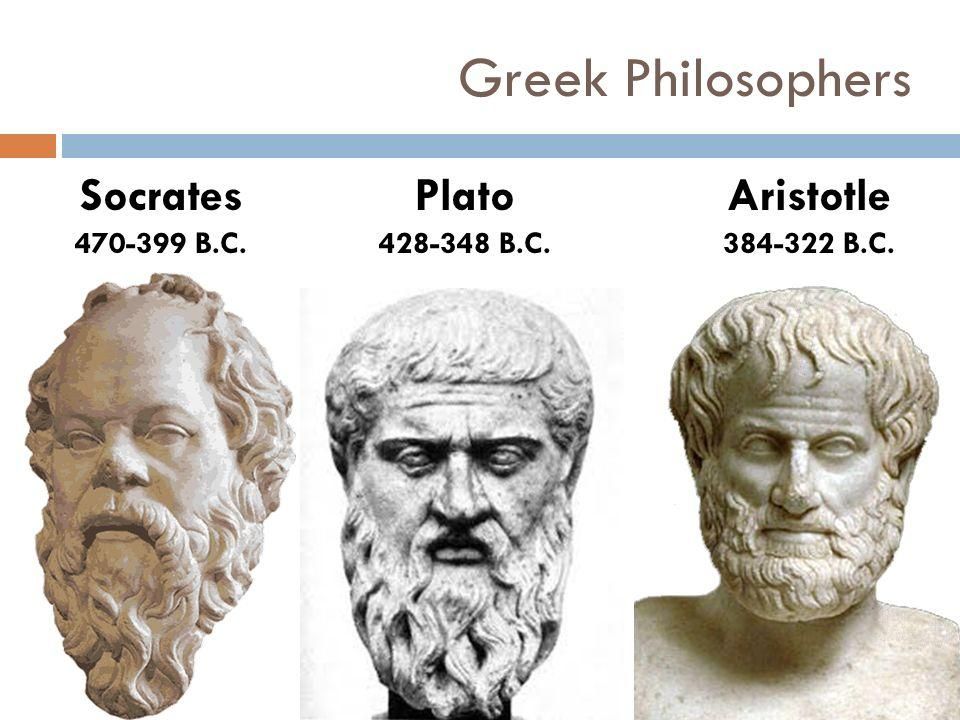
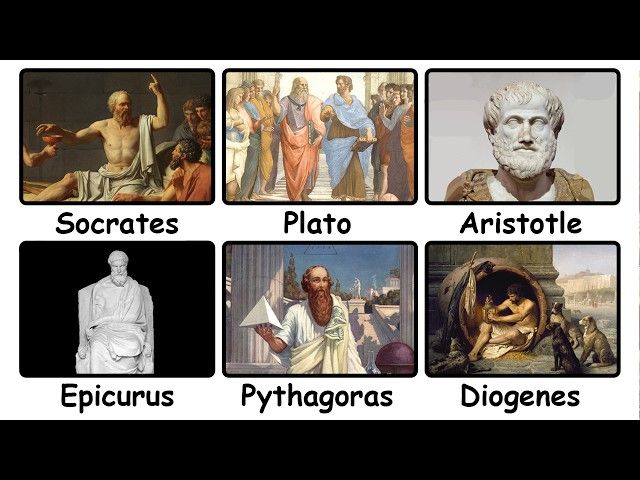
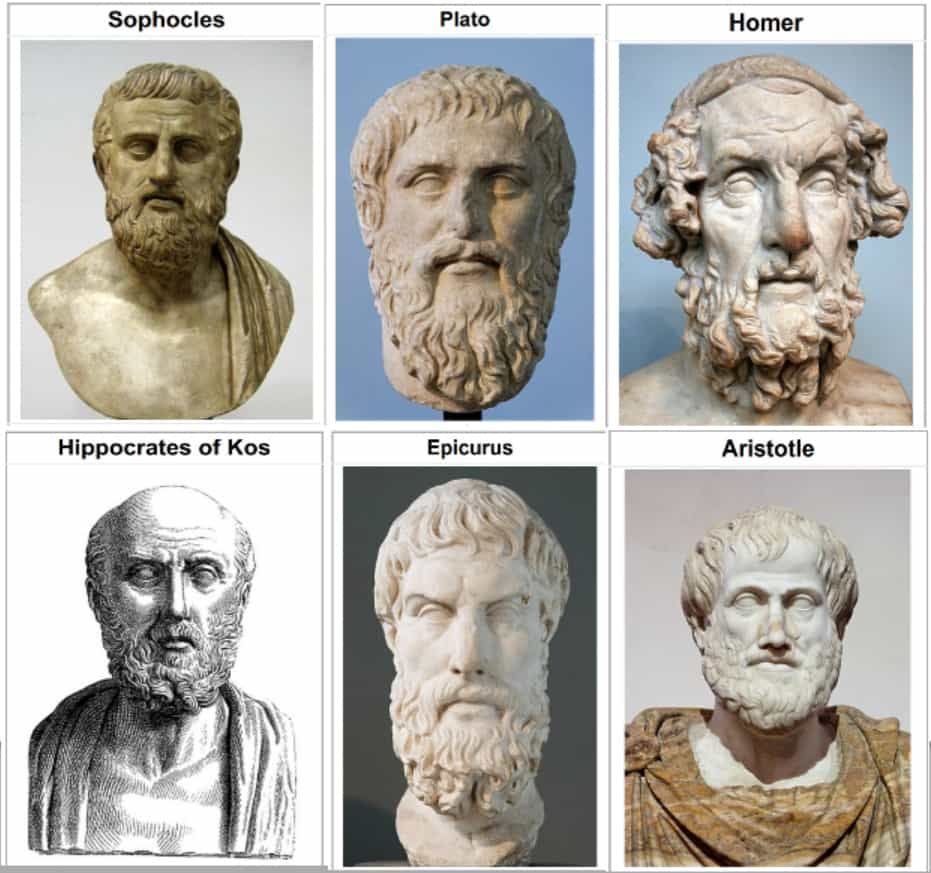
If you could have dinner with any philosopher, who would it be? My choices are as follows: God Jesus Christ, former United States President Barack Obama, and former South African President Nelson Mandela. Although these individuals are not philosophers but I will be honored to have dinner with these people. As far as a philosopher is concerned, I will have to say Plato. Thank you for allowing me to answer this question to the best of my ability. I will have to inform everyone that I have food allergies. My food allergies are as follows: shrimp onions, pineapples, coconut grapefruit mushrooms, and tomatoes.
If you could have dinner with any philosopher, who would it be?
If you could have dinner with any philosopher, who would it be?
If you could have dinner with any philosopher, who would it be? My choices are as follows: God Jesus Christ, former United States President Barack Obama, and former South African President Nelson Mandela. Although these individuals are not philosophers but I will be honored to have dinner with these people. As far as a philosopher is concerned, I will have to say Plato. Thank you for allowing me to answer this question to the best of my ability. I will have to inform everyone that I have food allergies. My food allergies are as follows: shrimp onions, pineapples, coconut grapefruit mushrooms, and tomatoes.

