I would give free haircuts for men who are not able to go to the Barbershop. I also will read to children at school. I would cut grass for free. Lord Jesus, please allow me to do something for free for anyone who asks me in advance. Lord Jesus, please allow me to work for free just to pay off my student loans. I am available to help everyone who has a need help with anything. I need to read my Bible every day and pray for a job. I have to pay my loan from college.
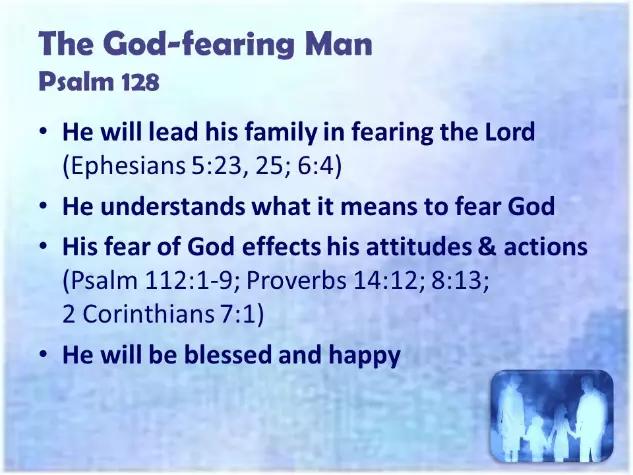
What is the definition of a God-Fearing Man? A God-Fearing Man is a man who loves God and His creation. A God-Fearing Man is a man, who is very humble, gifted, sincere, honest, and understanding towards other people. A God-Fearing Man reads the Bible each day of the week. A God-Fearing Man tells the truth to everyone that he is in contact with. A God-Fearing Man is a man, who attends church on a regular basis. A God-Fearing Man is very honest. What is the Definition of a God-Fearing Man?
A God-Fearing Man is a man who has a lot of respect for members of the opposite sex. A God-Fearing Man is not afraid to share the Gospel of Peace with everyone that he comes in contact with. A God-Fearing Man is a man who loves his own family. A God-Fearing Man listens before he acts on anything. A God-Fearing Man is a man who has respect for women.
What is the Definition of a God-Fearing Man?
God Fearing Men are the epitome of life. I know that I fit the description of a God-Fearing Man because I am a man who shares the Gospel with everyone that I come in contact with each day. A God-Fearing Man does not use vulgarity every time he talks to other people. A God-Fearing Man always think before he acts behaviorally. A God-Fearing Man understands the sacrifice that Jesus Christ made to save mankind.
What is the Definition of a God-Fearing Man? I really feel that I am a God-Fearing Man because I am sharing the Gospel with everyone to whom I come in contact with each day. I say my prayers every single day. I am a God-Fearing Man who spends quality time inside of the public by sharing my God experience with everyone. A God-Fearing Man is a man who understands himself. A God-Fearing Man is kind, gentle, respectful, helpful, honest, and sincere. A God-Fearing Man is a man who loves God.
A God-Fearing man understands what it is like to share his life with everyone. A God-Fearing Man is a man that loves people from all diverse backgrounds. A God-Fearing Man is a perfect man. I know that I am not perfect, but I am willing to share the hope and peace with everyone. I am a positive person. I am a person who is very intelligent, warm, brave, and humble. I am a man who loves people. I am a man who respects all people. I am a man who tells the truth about myself to everyone. A God-Fearing Man is a man who will not argue just to make a point with anyone. A God-Fearing Man thinks before he speaks to everyone.
What is the Definition of a God-Fearing Man?
A God-Fearing Man will not fight anyone. A God-Fearing Man allows God to fight his battles for him. A God-Fearing Man is a man who is willing to share everything with everyone. A God-Fearing Man is a person, who has high expectations about life itself. A God-Fearing Man is a man that loves animals as well as all of God’s Creation. I am a person who will not fight anyone because God is fighting my battles for me. I am a man who is smart, honest, polite, and respectful.
Finally, a God-Fearing Man is a man who loves everything that God has created. A God-Fearing Man is always willing to serve the Lord God. A God-Fearing Man is a man who always take care of himself. A God-Fearing Man is a man who is not afraid to ask for help from anyone. A God-Fearing Man knows how to communicate with everyone. A God-Fearing Man is a man who is capable of making changes in his own behavior just to please God. A God-Fearing Man reads the Bible and pray every single day of the week. A God-Fearing Man pays his tithes and offerings to his church that he attends. A God-Fearing Man respects other people.
What is the Definition of a God-Fearing Man? A God-Fearing Man is a man who lives inside of a clean house. A God-Fearing Man is academically inclined. A God-Fearing Man is a man who shares what he has with everyone. A God-Fearing Man is a man who has a positive thing to say every single day of the week. A God-Fearing Man is not wealthy, but he is willing to help everyone. I want to inform all of you that my friends are God Fearing Men and Women who has common sense. A God-Fearing Person knows how to accept constructive criticism. A God-Fearing People are really humble. In Conclusion, I want to inform all of you that all of my family members and friends are God Fearing People because they have helped me when I needed them. My Friends are God Fearing People because they possess a gift that God had blessed them with. Whatever that gift is, it has been revealed to me as well as other people. Remember one thing, God is watching all of us. We cannot hide from God’s Presence. God is watching all of us. I know because I am a God-Fearing Person Myself.
My name is Anthony Joseph Hopkins and I am an Author and Blogger. I have been writing since 1999.
This is a special report that has a great deal to do with our way of thinking. For instance, does society itself has an influence on our way of thinking? A comparison and contrast between idealistic thinking will be emphasized. First, what does the world idealistic mean? An idea is a plan or action. It is also something that exist inside of the mind; which forms into thoughts or concepts. However, idealism is a philosophical approach or system that when we look at ideas or ideologies, we have to examine our own personality as well as our own parents. When it pertains to politics, we have to explore our ideas and how they shape or influence our decision that pertains to family, culture, education, environment, health, and personal freedom.
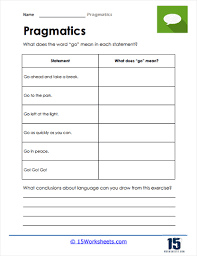
Second, what does the word pragmatic mean? The word pragmatic means dealing with actual facts or occurrences. Of or related to the study if causes and effects. Could a person become dogmatic, obtuse, dictatorial, or meddlesome? The answer to this question is yes!!!!! Politicians who are in control for so many years tend to exercise their authority too much. I would like to say that there are members of Congress who tend to override their own authority!!!!! Why is this case? The answer is power!!! There is too much power among the richest members of the world’s population. Pragmatism has a whole lot to do with the exercising of authority. This authority overrides anyone else’s decisions and in some cases; causes others to feel unwanted or unsure of themselves. This form of authority decreases the value of others by decreasing their self-worth.
Third, let’s look at this from a different perspective. Pragmatism is factual; however, there are differences in opinions when it pertains to other members of a specified population. When one feels like this, you are inside of a world all by yourself. Abstract thinking has a lot to do with the behaviors that we tend to possess as humans. It makes a big difference between actions vs. reaction. This is also a difference between thinking outside of the box and an opinion that disrupts the moral conscious of others. Pragmatic to me is more of a macro perspective. A macro perspective is an expansion of a substance or an idea that develops into a large scale matter. This also pertains to economics.
A macro perspective has a lot to do with people, policy, politics, and the expansion of opinions. Most people who exercise this approach tend to back themselves up with their actions. A very important question one might want to ask themselves is does my opinion really matter? Pragmatic thinkers are people who have a direct influence. These people who are born leaders, but they also can become conceited or vain in their approach at times. There are members of the Conservative and Republican Party who tend to exercise this approach when they are trying to make an impact on a specific group or members of a population. This also can affect anyone no matter who you are as a person.
We also have to explore other personal characteristics of pragmatic thinkers. There are times when certain people do not really understand others from their own personal perspective. It is like our society itself has become one that is apathetic in nature. It is the person themselves that is responsible for making their own decisions for themselves and not others. Now, remind you that there are others who tend to portray themselves as one who possesses a great deal of influence when they do not.
Fourth, pragmatic thinkers I will admit have a preverbal chip on their shoulders. Pragmatic thinkers at times remind me of someone who tends to directly influence your behavior without being inside of your own presence. This is one who makes you really think with their use of propaganda. This reminds you of how influential Adolph Hitler was on the people in his country during World War 2. Let’s look at this from a different perspective, in the United States; this is a country that is a democracy. However, it really makes you feel as if we are living inside of a socialist society. Are we really a democracy or a country filled with socialist ideas?
Finally, what is the definition of the word ideology? Ideology means a body of ideas that influence a person, group, ideas, or political party. Pragmatics on the other hand has a lot to do with mixed emotions that pertains to mixed beliefs. Some or all of mixed beliefs tend to have a negative influence on others. Idealistic thinkers are one who has many ideas, but when placing them into practice, who will believe you? The answer to this question is to work very hard in your efforts to change society by stating your opinions and make certain that it has a level of political correctness. Political correctness is expressing one’s own ideas by protecting yourselves from damaging the reputation of others.
What Olympic sports do you enjoy watching the most?
I really enjoy watching contact sports on the Olympics! For Instance, I enjoy watching wrestling, boxing, football, basketball, and karate. I used to play these sports when I was growing up in the Dayton, Ohio area. I prefer watching college sports on television. My Alma Mater is the University of Toledo in College. In High School, I graduated from Paul Laurence Dunbar High School in Dayton, Ohio class of 1986. I also will admit that I really enjoy watching and spectating Women’s Volleyball. Before I watch television, I usually read the Bible and pray 🙏 to Jesus Christ every single day of the week. I also love watching Women’s Wrestling and Basketball as well. I also spend at least 4 to 8 hours per day at the Library and Church ⛪️.
Ever had a chat with someone and they said something that just didn’t sit right with you?
Sometimes, it’s tricky to put your finger on why certain words make us feel off. Well, often it’s because they show a lack of kindness or understanding.
In this article, I’ll look into ten phrases. These aren’t just any phrases. Nope, these are phrases that might show a person isn’t really that kind or understanding.
These are the phrases that can leave you feeling small or not heard. And it’s not a great place to be in, is it?
So, let’s dive into the 10 phrases that might just hint at a lack of kindness and empathy.
Let’s start with a phrase that screams a lack of empathy: “I don’t care.”
When someone repeatedly uses this phrase, it can feel like they’re dismissing your feelings or experiences. It’s as if they’re saying your concerns and emotions don’t matter to them.
If you’re frequently hearing “I don’t care” from someone, it might be a sign they’re not showing much kindness or empathy.
This phrase is often used to belittle or dismiss someone’s feelings. It suggests that the problem is with the person feeling upset, not the behavior that upset them.
If someone is regularly telling you that you’re too sensitive, it might show that they lack empathy or understanding about your feelings and experiences.
3. “That’s just how I am”
Next up is a phrase I’ve personally encountered: “That’s just how I am.”
Once, a friend of mine would often make harsh jokes at my expense. When I expressed my discomfort, their reply was, “That’s just how I am. You need to deal with it.” It felt as if they were refusing to take responsibility for their actions or consider how they affected me.
This phrase can be a clear sign of a lack of kindness and empathy, as it disregards the feelings of others in favor of self-justification.
4. “It’s not my problem”
Individuals who frequently say, “It’s not my problem,” probably are a little lacking in the empathy department.
They’re accusing, generalizing and often blow things out of proportion.
The truth is, no one always or never does something. These phrases ignore all the times when you acted differently. It’s a way of painting someone in a negative light without considering their feelings or experiences.
We need to remember that everyone has good days and bad days, and it’s unkind and unfair to label someone based on their worst moments.
6. “You’re overreacting”
Now, here’s one I’ve experienced myself: “You’re overreacting.”
A few years ago, I was going through a tough time and shared my feelings with a close friend. Instead of offering support or understanding, they told me I was overreacting.
null
It felt like a slap in the face.
This phrase can belittle your feelings and make you question your own reaction to situations.
7. “Get over it”
This one’s a doozy – “Get over it.” It’s raw and harsh.
This phrase is often used as a way to dismiss someone’s feelings, to push them aside without giving them the consideration they deserve.
It’s as though your pain or your struggle is an annoyance to them.
null
To tell someone to simply “get over it” is to blatantly ignore their emotions and experiences. It shows a clear lack of empathy for what they’re going through, and that’s just not fair or kind.
8. “I’m just being honest”
Did you know that there’s a term called “brutal honesty”? It’s when someone uses honesty as an excuse to be unnecessarily harsh or cruel.
The phrase “I’m just being honest” often falls into this category. Sure, honesty is important, but it should never be used as a cover for unkindness.
null
If someone frequently uses this phrase after saying something hurtful, it might indicate a lack of empathy or understanding for your feelings. Being honest doesn’t mean one has to be hurtful!
9. “It’s all in your head”
This one hits close to home for me – “It’s all in your head.”
I remember a time when I was struggling with anxiety, and someone close to me used this phrase. It felt like they were dismissing my feelings, making them seem unreal or insignificant.
This phrase can make you feel isolated and misunderstood.
If someone frequently tells you that what you’re feeling is all in your head, it can be a sign that they lack empathy or understanding for your experiences.
10. “You should be grateful”
Lastly, we have – “You should be grateful.” Now, this one’s a real kicker.
It’s as if someone is telling you that your feelings aren’t valid because there are people who have it worse. It’s a way of dismissing your struggles and making you feel guilty for having them.
null
Here’s the truth: everyone’s pain is valid, and it’s not a competition. Telling someone to just be grateful without addressing their feelings can show a lack of empathy and kindness.
Many of us find ourselves trapped in patterns that hinder our relationships, feeling stuck in cycles of codependency, unmet needs, or misunderstanding.
The Love and Intimacy Masterclass with Rudá Iandê offers a transformative approach to breaking free from these damaging cycles.
Through insightful exercises and the Out of the Box technique, this masterclass guides you towards cultivating personal magnetism, overcoming destructive patterns, and embracing healthier, more fulfilling relationships.
Ever had a chat with someone and they said something that just didn’t sit right with you?
Sometimes, it’s tricky to put your finger on why certain words make us feel off. Well, often it’s because they show a lack of kindness or understanding.
In this article, I’ll look into ten phrases. These aren’t just any phrases. Nope, these are phrases that might show a person isn’t really that kind or understanding.
These are the phrases that can leave you feeling small or not heard. And it’s not a great place to be in, is it?
So, let’s dive into the 10 phrases that might just hint at a lack of kindness and empathy.
Let’s start with a phrase that screams a lack of empathy: “I don’t care.”
When someone repeatedly uses this phrase, it can feel like they’re dismissing your feelings or experiences. It’s as if they’re saying your concerns and emotions don’t matter to them.
If you’re frequently hearing “I don’t care” from someone, it might be a sign they’re not showing much kindness or empathy.
This phrase is often used to belittle or dismiss someone’s feelings. It suggests that the problem is with the person feeling upset, not the behavior that upset them.
If someone is regularly telling you that you’re too sensitive, it might show that they lack empathy or understanding about your feelings and experiences.
3. “That’s just how I am”
Next up is a phrase I’ve personally encountered: “That’s just how I am.”
Once, a friend of mine would often make harsh jokes at my expense. When I expressed my discomfort, their reply was, “That’s just how I am. You need to deal with it.” It felt as if they were refusing to take responsibility for their actions or consider how they affected me.
This phrase can be a clear sign of a lack of kindness and empathy, as it disregards the feelings of others in favor of self-justification.
4. “It’s not my problem”
Individuals who frequently say, “It’s not my problem,” probably are a little lacking in the empathy department.
They’re accusing, generalizing and often blow things out of proportion.
The truth is, no one always or never does something. These phrases ignore all the times when you acted differently. It’s a way of painting someone in a negative light without considering their feelings or experiences.
We need to remember that everyone has good days and bad days, and it’s unkind and unfair to label someone based on their worst moments.
6. “You’re overreacting”
Now, here’s one I’ve experienced myself: “You’re overreacting.”
A few years ago, I was going through a tough time and shared my feelings with a close friend. Instead of offering support or understanding, they told me I was overreacting.
null
It felt like a slap in the face.
This phrase can belittle your feelings and make you question your own reaction to situations.
7. “Get over it”
This one’s a doozy – “Get over it.” It’s raw and harsh.
This phrase is often used as a way to dismiss someone’s feelings, to push them aside without giving them the consideration they deserve.
It’s as though your pain or your struggle is an annoyance to them.
null
To tell someone to simply “get over it” is to blatantly ignore their emotions and experiences. It shows a clear lack of empathy for what they’re going through, and that’s just not fair or kind.
8. “I’m just being honest”
Did you know that there’s a term called “brutal honesty”? It’s when someone uses honesty as an excuse to be unnecessarily harsh or cruel.
The phrase “I’m just being honest” often falls into this category. Sure, honesty is important, but it should never be used as a cover for unkindness.
null
If someone frequently uses this phrase after saying something hurtful, it might indicate a lack of empathy or understanding for your feelings. Being honest doesn’t mean one has to be hurtful!
9. “It’s all in your head”
This one hits close to home for me – “It’s all in your head.”
I remember a time when I was struggling with anxiety, and someone close to me used this phrase. It felt like they were dismissing my feelings, making them seem unreal or insignificant.
This phrase can make you feel isolated and misunderstood.
If someone frequently tells you that what you’re feeling is all in your head, it can be a sign that they lack empathy or understanding for your experiences.
10. “You should be grateful”
Lastly, we have – “You should be grateful.” Now, this one’s a real kicker.
It’s as if someone is telling you that your feelings aren’t valid because there are people who have it worse. It’s a way of dismissing your struggles and making you feel guilty for having them.
null
Here’s the truth: everyone’s pain is valid, and it’s not a competition. Telling someone to just be grateful without addressing their feelings can show a lack of empathy and kindness.
Many of us find ourselves trapped in patterns that hinder our relationships, feeling stuck in cycles of codependency, unmet needs, or misunderstanding.
The Love and Intimacy Masterclass with Rudá Iandê offers a transformative approach to breaking free from these damaging cycles.
Through insightful exercises and the Out of the Box technique, this masterclass guides you towards cultivating personal magnetism, overcoming destructive patterns, and embracing healthier, more fulfilling relationships.
Does the Bible talk about managing our emotions? The Bible tells us that we are created in the image of God (Genesis 1:27) and also shows us that God has emotions. We have emotions because God does!
When we have emotions, it is because we are designed that way. Emotions in and of themselves are a good and useful thing. However, there are godly ways and ungodly ways to manage our emotions.
Take the emotion of anger, for example. We are shown that God has anger (Psalm 7:11; 1 Kings 11:9–10). We are shown that Jesus got angry (John 2:13–16; Mark 3:4–5). Anger is not wrong. But many times our anger results from selfishness, which is wrong. Other times, we mis-handle our anger. Rather than using our anger to alert us to a negative situation and then seek God’s wisdom in how to respond, we too often lash out in anger without thought. We let our anger control us, rather than managing our anger. James 1:20 says, “The anger of man does not produce the righteousness of God.” Ephesians 4:26 encourages, “Be angry and do not sin; do not let the sun go down on your anger.” We need to learn to manage emotions such as anger.
Sometimes our emotions are “false” in that they are the result of us believing something false. For example, we might be feeling despair because we fear we have failed God, forgetting that God is merciful and willing to forgive us all our sin if we will go to Him (1 John 1:8–9). Or perhaps we feel sad because we perceive we’ve been rejected by a friend, when in reality the friend truly had a previous obligation. Such emotions are natural, but they should not control us. Often it is wise to verify that particularly strong emotions are based on something that is true.
As Christians, we have the Holy Spirit to guide us and instruct us and remind us and help us become more like Christ (Romans 6; Ephesians 5:15–18). When we are aware of our emotions and aware of God’s work in our lives, we change and God is glorified. Rather than let our emotions guide our perception of truth, we let God transform our minds (Romans 12:2). We submit our emotions to Him, asking Him to help us learn what we should from them and appropriately manage them. We also stay grounded in God’s Word so that we know truth and can more easily recognize deceptions.
First Peter 5:6–10 says, “Humble yourselves, therefore, under the mighty hand of God so that at the proper time he may exalt you, casting all your anxieties on him, because he cares for you. Be sober-minded; be watchful. Your adversary the devil prowls around like a roaring lion, seeking someone to devour. Resist him, firm in your faith, knowing that the same kinds of suffering are being experienced by your brotherhood throughout the world. And after you have suffered a little while, the God of all grace, who has called you to his eternal glory in Christ, will himself restore, confirm, strengthen, and establish you.”
This passage gives us many strategies for managing emotions: submit to God, express your concerns to God (Philippians 4:6–7), be sober-minded (Philippians 4:5; Ephesians 5:18; Romans 12:3), be alert regarding spiritual attack (Ephesians 6:10–18), recognize that you aren’t alone, understand God’s eternal plan and trust that He will work it all together for good in the end (Romans 5:1–5; 8:28; James 1:2–4).
A good resource for seeing God at work in people can be found in Psalms. Nearly every human emotion (positive and negative) can be found in Psalms. Yet, throughout the book, God is glorified. You can use the Psalms as a pattern for expressing your emotions to God and gaining His perspective.
Another gift God has presented us for our help and edification, even with our emotions, is one another. Jesus’ prayer for His followers is filled with His desire for Christians to love one another (John 17). We are also instructed to share our burdens, including our emotions, with one another (Romans 12; Galatians 6:1–10; 2 Corinthians 1:3–5; Hebrews 3:13) and be reminded of God’s goodness, long-suffering, and loving care for us.
Remember, our emotions do not define us, nor should they control us. Our value and worth is in God alone. God equips us to manage our emotions instead of being controlled by them. We need not fear emotion nor should we try to be emotionless, but we also shouldn’t be ruled by emotion. Instead, we are to be ruled by God. Enjoy emotion as part of His design of you, bring your emotions to Him, and trust Him to guide you (James 1:5; Proverbs 3:5–8).
“Do not be conformed to this world, but be transformed by the renewal of your mind, that by testing you may discern what is the will of God, what is good and acceptable and perfect” (Romans 12:2).
“Dear Pastor John, hello! So, I have been dealing with much in life, which has been really hard for the past three years. Normally I could face life’s challenges with the assurance that God was in control and that I could trust him. But beginning in 2018, I started to get really depressed about the whole meaning of life and my own purpose. It was in the midst of my challenges that I lost someone I really loved, and it broke me like nothing ever has. My entire view of God and life has been shattered. I can’t seem to get myself out of wondering why life is even a thing. Life, at least my life, often feels like it has no meaning. Can you renew my vision for life? Can you explain to me: What is the meaning of life?”
Lord God, I hear three distinct and interrelated sorrows that have brought you to this place of doubt about the meaning of your life. I hear depression; I hear loss; I hear a kind of fixation in your mind. You say, “I can’t seem to get myself out of wondering why life is even a thing.” In other words, the tape keeps playing over and over in your mind: Is life really significant at all? Or is it just a meaningless jumble coming from nowhere, going nowhere, with nothing in between but randomness?
I take your question, your plea, very seriously. I have tasted a little bit of what you’re talking about, and I know others who have tasted all of what you’re talking about. I have seen myself come through, I have seen others come through, and I believe you can come through. You can come out into the light of confidence in God, confidence in Christ, confidence in the certain purpose that God has for this world — the wise, good, just, holy purpose that God has for this world and your place in it.
Satan’s Strategies
Even in the words that you use, Father God, you put your finger on the meaning of life. You say you are depressed about the whole meaning of your life and your own purpose. And I think that’s right; I think you’re absolutely right that meaning consists in purpose — a good purpose, a wise, just, satisfying purpose or design for you or for the world. So, the whole question is, Does the world, with all of its beauty and ugliness, gladness and groaning, love and hate, pleasure and pain, nobility and vulgarity, kindness and abuse, selfishness and sacrifice — does such a world as ours have a wise, good, just, satisfying purpose under the providence of an all-wise, all-powerful God?
Or was the atheist Bertrand Russell right at the end of his life when he said, “There is darkness without, and when I die there will be darkness within. There is no splendor, no vastness anywhere; only triviality for a moment, and then nothing”? Are the words of Macbeth in Shakespeare’s play, when he hears about his wife’s death — are those words true? Are they a reflection of reality?
Out, out, brief candle! Life’s but a walking shadow, a poor player, That struts and frets his hour upon the stage, And then is heard no more. It is a tale Told by an idiot, full of sound and fury, Signifying nothing.
“The meaning of life is to know God, and to enjoy God, and to reflect some of the beauty of God as we know him in Christ.”
Lord Jesus, I think one of the common strategies of Satan, whom you know is a thief and a murderer — he steals truth from the mind; he kills the soul — one of his common strategies is to fixate our mind on such possibilities: Life is a tale told by an idiot, isn’t it? Full of sound and fury, signifying nothing. Satan doesn’t even care if you believe that; he just wants you to be fixated on it — to think about it all the time and wonder if it might be true. He wants to steal from you and me every vestige of confidence that God is wise and good and just and holy, and that God is working everything together for a great purpose.
Know and Enjoy God
So, my purpose right now in this Ask Pastor John is to pray for you: that you would have power to resist the devil and that I could put a sword, the sword of the Spirit, in your hand, so that you could do battle valiantly and triumphantly against the darkness. The sword of the Spirit is the word of God. When he wrote his book, God knew that you would go through this. God knew about your depression. He knew about your loss. He knew about the fixation of doubt in your mind. And he wrote about these things over and over again in his word to help you and all of us.
The meaning of life, according to that word, God’s word, is to know God as he really is; and to enjoy him and all that he is for us in Christ; and to reflect in this dark world some of the light that he has shown to us when Christ, the very Son of God, died in our place, precisely that we might know God and enjoy God in spite of our sin; and then one day to see him and know him perfectly unendingly. Let me say it again. The meaning of life is to know God, and to enjoy God, and to reflect some of the beauty of God as we know him in Christ, and one day to see him perfectly and unendingly enjoy him.
The meaning of life now, the purpose of life in this age, is not comfort in this world now, nor escape from suffering now, nor the avoidance of loss now, nor the maximizing of physical pleasures now, nor the amassing of riches now, nor the achievement of any fame now, nor the right to any health now, nor that we would be treated with respect and justice now. Those are not the meaning of life in this age for God’s people.
Once sin entered the world and everything was corrupted, and once God’s saving purposes began to rescue people from sin, the glorious and beautiful purposes of this creation were thrust forward into the time when Christ would come again and set everything right: a time of perfect righteousness, a time of perfect peace, a new creation with no crying or pain anymore, so that over and over again in the Scriptures we are told to rejoice in hope — like Romans 5:2: “Rejoice in hope of the glory of God.”
Refiner’s Fire
This present world is primarily a season of testing and a refiner’s fire. If this world is all there is, then life is surely meaningless. The Bible says, “Let us eat and drink, for tomorrow we die,” if there’s no resurrection from the dead” (1 Corinthians 15:32). So, the apostle Paul said, “I consider that the sufferings of this present time are not worth comparing with the glory that is to be revealed to us” (Romans 8:18). And again, he said, “This light momentary affliction” — I’m thinking of your loss, Lord Jesus, for example. “This light momentary affliction is preparing for us an eternal weight of glory beyond all comparison” (2 Corinthians 4:17). The apostle Peter put it most fully and clearly.
By God’s power [you] are being guarded through faith for a salvation ready to be revealed in the last time. In this [the coming, sure remedy for all ills; this salvation] you rejoice, though now for a little while, if necessary, you have been grieved by various trials, so that the tested genuineness of your faith — more precious than gold that perishes though it is tested by fire — may be found to result in praise and glory and honor at the revelation of Jesus Christ. (1 Peter 1:5–7)
“Jesus Christ suffered precisely to bring us through our fiery trials, refined and purified, into the very presence of God.”
Oh, Lord Jesus, that’s your life, right? The words for various trials mean “all kinds of trials” — literally, “many colors of trials and tests.” What an amazing interpretation of this world and our place in it! The meaning of suffering in this life is the refinement of faith by the fires of various trials, that we might know God, love God, show God as more precious than everything that the fires consume. Jesus Christ suffered precisely to bring us through these fiery trials, refined and purified, into the very presence of God for our eternal joy (1 Peter 3:18).
New Perspective on the Puzzle
So I close, Lord Jesus, with an illustration. When COVID-19 shut up my wife and me, someone gave us a puzzle with a thousand pieces. They thought we would need something to do. I spread it out on two card tables. And in the interludes between my work, I would just pause there and try to find a piece or two to put together. I began with the confidence that these thousand chaotic pieces piled in the middle of the table would one day be that beautiful picture on the box — from bedlam to beauty, from chaos to order. Yes, that’s going to come. I saw the picture on the box. It was a kind of promise.
But one day, I had the border almost entirely completed — that’s the way I started, with the border. It was almost entirely completed, everything fitting together, but it wouldn’t fit. There were just one or two pieces that wouldn’t fit. And I was sure a piece was missing. I looked all over the floor. Or maybe they made the puzzle wrong. It’s defective. I went through, time after time, systematically looking at all the pieces. I put them in rows so I could see. I became fixated on the thought: This puzzle is not going to work. This puzzle is defective.
So my prayer, Lord Jesus, is that this Ask Pastor John would perhaps come to you the way my wife came to me and showed me, “Johnny, your fixation on the imperfection of this puzzle and that the makers blew it — that’s out of place. They really do fit. This is going to be a beautiful picture. Just keep at it. Trust the promise that’s on the box there. It’s true.” The sufferings of this life are not worth comparing to the glory that will be revealed.
Share QuizNext Quiz Go to BabaMail Home Subscribe My Profile Topics English Personality Trivia Health Math IQ Spirituality Skill Edit Profile Help Contact us About Terms Of Service Privacy Policy Follow Us English Personality Trivia Health Math IQ Skill My Scores Quizzes > IQ Can You Read These Words? Shai K. Share Join Us To pass this test with flying colors, you’ll need your full attention. You will be presented with words that are partially erased. It will be up to you to decide which word we are showing you! Good luck, and look carefully… Wow! You clearly have an exceptional eye for detail!! It’s not easy to use your brain to continue the formation of words but your adaption to this task is impressive! Only a small percentage of people have the ability to do this! You got 12 out of 15 right – 80% (Show Mistakes) Share your result with friends and see how they compare! Share Result Share Quiz WhatsApp Show My Mistakes Next Quiz Scoreboard Found a mistake? Rate: You may also like: Skip Ad ▶ DM79KDM79KDM79KDM79KDM79KDM79KDM79KDM79KDM79KDM79KDM79KDM79KDM79KDM79K Recommended by Spelling Tests Spelling Challenge 15 QsEye Tests A Colorful Eye Test 12 QsVocabulary Can You Unscramble These Words? 11 QsIQ Can You Perceive Small Changes? 11 QsIQ Can You Pass the Puzzle Test? 10 QsVocabulary 13 Words For You to Figure Out… 13 QsEye Tests Eye Test: Christmas Edition 12 QsIQ How’s Your Visual IQ? 15 Qs PlayvolumeAd IQ Quizzes Can You Read These Words? 15 Qs How’s Your Visual IQ? 15 Qs Are You a Creative Pattern Breaker? 17 Qs How’s Your Logical Reasoning? 13 Qs Logic and Knowledge Test 12 Qs Can You Deduce the Number? 13 Qs How’s Your IQ Today? 16 Qs IQ TEST: Pick the Odd Word! 13 Qs Spatial Logic Quick Quiz 10 Qs Can You See Through These Optical Illusions? 9 Qs Can You Perceive Small Changes? 11 Qs Are You Smarter Than a Gray Parrot? 12 Qs Visual Estimation Test 10 Qs What Are You Looking At? 13 Qs Logic and Math 10 Qs The 3-Part IQ Test 19 Qs The Color Confusion Test 13 Qs Can You Beat This 1987 IQ Test? 11 Qs Which of These Does NOT Belong? 13 Qs How Good a Detective Are You? 11 Qs How Good is Your Verbal Logic? 12 Qs How Good is Your Logic, Really? 12 Qs Are You Feeling Logical Today? 12 Qs Are You Logical Enough For These? 12 Qs Can You Pass the Puzzle Test? 10 Qs How Fit Are You to Be a Billionaire? 12 Qs Can You Pass This IQ Test? 12 Qs Which of These Names Does Not Belong? 15 Qs Pick the Odd One Out! 15 Qs Can You Do Math and Remember as Well? 13 Qs This Video Quiz Will Test Your Memory… 16 Qs How Good is Your Short Term Memory? 13 Qs Can You Answer All 12 Questions? 12 Qs Which Word Is the Odd One Out? 15 Qs Can You Figure Out the Relations?? 14 Qs This Microscope Quiz Will Test Your Powers of Deduction! 10 Qs Sign Up for a Free Daily Quiz! Continue With: By continuing, you agree to our T&C and Privacy Policy English Quizzes Can Your English Vocabulary Reveal Where You’re From? Can You Answer All 21 English Questions? Personality Quizzes What You See in These Pictures Says a Lot About You… How Do You Interpret These Images? Trivia Quizzes Guess Which Country This Person is From Complete the Name of the Famous City Health Quizzes See if You Have Photographic Memory! A Colorful Eye Test Math Quizzes Solve 15 Fun Questions in 20 Minutes! A Challenging Math Test IQ Quizzes How Good a Detective Are You? IQ TEST: Pick the Odd Word! Spirituality Quizzes What is Your Soul’s Flower? What is Your Elemental Guardian Spirit? Skill Quizzes How Perceptive Are You? Find the Numbers Hiding in the Pictures Contact us | Help | About us | Terms | Privacy policy | Categories | Popular Tags | Popular Searches | Archive | Collections
How would I improve my community? I would like to work with all members of Clergy in the Dayton, Ohio Area. I want to make sure that the Great Commission has been fulfilled in the United States. I also will work with young people in the Dayton, Ohio and the United States. I want to read the Bible to every person who are under the age of 18. I have to get a Seminary Degree and perhaps have a job as a Preacher just like my grandparents wanted me to.
Good Evening Everyone 🙏 I want to inform all of you that I am in need of your prayers because I have to resolve all of my active issues with everyone 🙏 I am feeling very sad because I have to only pay my rent and forego paying my life insurance next month. I love all of you! Lord Jesus, please allow me to get a real job. I am in need of your prayers because I suffer from Kidney Disease and Glaucoma. God Loves You and So Do I! I want to say that I really miss being online at night. I also miss working at the Library at the University of Toledo and The University of North Carolina at Charlotte as well. I really need a job so that I can pay off my student loans. Please pray for all of my family members 🙏 I am really getting tired of going to the hospital all of the time. I suffer from Grand Mal Seizures as well.




 Site Title