Social-Work-Skills.pdf
lepy104.pdf
Addictions and Personality Traits: Impulsivity and Related Constructs – PMC
Addictive Thinking.pdf
VisceralAcctAddiction.pdf
L-0000584274-pdf.pdf
Furnace of Affliction part #3
Watch This Week’s TV Message | Free Shipping on Store Orders $35+

Open Menu
The Furnace of Affliction
Mar 29
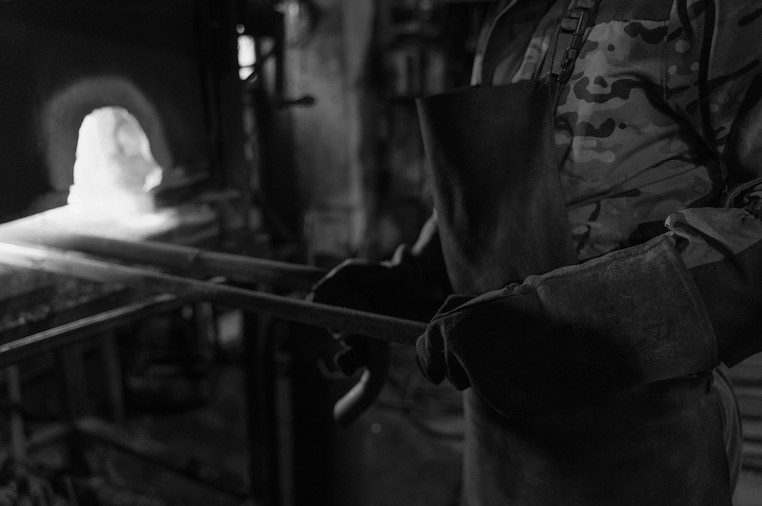
“I have tested you in the furnace of affliction.”
Isaiah 48:10 (NIV)
Have you ever been in the furnace of affliction? Maybe you’re there now as you read this. It’s painful and often confusing. We wonder what God is doing at first and why. It seems so unfair. But, if you embrace the process instead of resisting it, you’ll discover that God is doing a great thing in your life.
God loves us just as we are, but He loves us far too much to leave us that way. His goal is to conform us to the image of His dear Son, the Lord Jesus. The problem is we rarely change when we see the light, but we often change when we feel the heat. How hot and how long you are in the furnace is really up to you. Just as precious metal is refined to remove impurities, God’s design in the furnace of affliction is to remove the impurities in our life that are not Christ-like. The refiner knows when the process is complete when he can see his reflection in the molten metal clearly. All the slag, the wasted material from smelting the metal, is removed and the metal is pure.
Peter understood the furnace of affliction personally. He wrote about it later in his letter of First Peter, when he was encouraging Christ followers who were also experiencing the furnace of suffering in their lives. He told them, “These trials will show that your faith is genuine. It is being tested as fire tests and purifies gold—though your faith is far more precious than mere gold. So when your faith remains strong through many trials, it will bring you much praise and glory and honor on the day when Jesus Christ is revealed to the whole world.” (1 Peter 1:7 NLT)
James must have also experienced the same in his life. In James 1:2-4 (Ph), he said, “When all kinds of trials and temptations crowd into your lives my brothers, don’t resent them as intruders, but welcome them as friends! Realize that they come to test your faith and to produce in you the quality of endurance. But let the process go on until that endurance is fully developed, and you will find you have become men of mature character with the right sort of independence.”
Be encouraged child of God. He is doing a deeper work in you that He may accomplish a greater work through you for His glory.





FacebookXPinterestEmailPrintPreviousFrom Ordinary to ExtraordinaryNextThe Difference Prayer Makes
Sign up to have Pastor Kerry’s daily devotional delivered to your inbox each morning!
Kerry Shook Ministries
501(c)3 non-profit
P.O. Box 131444
The Woodlands, TX 77393
1-844-345-3779
Our Ministry
About
Watch
Devotional
Woodlands Church
Give
Furnace of Affliction #2

Sermon
New Park Street Pulpit Volume 1
No. 35
God’s People in the Furnace
Isaiah 48:10August 12, 1855
NO. 35
A SERMON
DELIVERED ON SABBATH MORNING, AUGUST 12, 1855, BY THE
REV. C.H. SPURGEON,
AT NEW PARK STREET CHAPEL, SOUTHWARK.
“I have chosen thee in the furnace of affliction.”—Isaiah xiviii. 10.
When travelling through the country, you have often noticed that in different spots the old rocks peep out from under the soil, as if they would let us know what earth’s bones are made of, and what are the solid foundations of this globe. So in searching through the Scriptures you will find here instruction, here admonition, here rebuke, and here comfort, but very frequently you will discover the old doctrines like old rocks rising amid other matters; and when you little expect it you will find election, redemption, justification, effectual calling, final perseverance or covenant security introduced, just to let us see what the solid foundations of the gospel are, and what are those deep and mysterious truths on which the entire gospel system must rest. So in this text, for instance, when there seemed in the chapter but little need of the mention of the doctrine of God’s choosing his people, on a sudden the Holy Spirit moves the prophet’s lips and bids him utter this sentiment, “I have chosen thee;” I have chosen thee by my eternal, sovereign, distinguishing grace; I have chosen thee in covenant purposes; I have chosen thee according to my electing love; “I have chosen thee in the furnace of affliction.” Well, it is a good thing that they are mentioned sometimes when we little expect it; for these are things which we are apt to forget. The tendency of the many in the present age is to slight all doctrinal knowledge, and to say, “We care not whether a thing be true or not.” This age is a superficial one. Few ministers plough deeper than the top soil; there are very few who come into the inward matter of the gospel, and deal with the stable things on which our faith must rest; and therefore we bless and adore the Holy Spirit that he so frequently pens these glorious truths to make us recollect that there is such a thing as election, after all. “I have chosen thee in the furnace of affliction.” How ever, I am not going to dwell upon that, but after making one or two preliminary observations, I shall proceed to discuss the subject of the furnace of affliction being the place where God’s chosen ones are continually found.
And the first observation I shall make will be this: all persons in the furnace of affliction are not chosen. The text says, “I have chosen thee in the furnace of affliction,” and it implies that there may be, and there doubtless are, some in the furnace who are not chosen. How many persons there are who suppose that because they are tried, afflicted, and tempted, therefore they are the children of God, whereas they are no such thing. It is a great truth that every child of God is afflicted; but it is a lie that every afflicted man is a child of God. Every child of God will have some trial or other; but every man who has a trial is not necessarily an heir of heaven. The child of God may be in poverty—he frequently is; but we must not infer that therefore, necessarily every man who is poor is a child of God, for many such are depraved and ruined, blaspheming against God and going far into iniquity. Many a child of God loses his property; but we are not therefore to conclude that every bankrupt, or every insolvent is a vessel of mercy; indeed there is often some suspicion that he is not. A child of God may have his crops blasted, and mildew seize his fields, but that does not prove his election, for multitudes who never were chosen of God have had the mildew and the blast as well as he. He may be calumniated. and his character may be slandered, but that may be the case with the wickedest worldling also; for there have been men far from religious who yet have been slandered—in politics, or in literature. No tribulation ever proves us to be children of God, except it be sanctified by grace, but affliction is the common lot of all men—man is born to it, even as the sparks fly upward; and you must not infer, because you happen to be troubled, because you are poor, or sick, or tried in your minds, that therefore you are a child of God. If you do imagine so, you are building on a false foundation; you have taken a wrong thought, and you are not right in the matter at all. I would, this morning, if possible, disturb some of you who may have been laying a healing plaster to your souls when you have no right to do so. I would show you if I could, very plainly, that after all your suffering, you may yet, through much tribulation, enter the kingdom of hell. There is such a thing as through trial going to the pit of perdition, for the road of the wicked is not always easy, nor are the paths of sin ever pleasant. There are trials in the pathway of the ungodly, there are troubles they have to suffer which are quite as acute as those of the children of God. Oh! trust not in your troubles; fix your thoughts on Jesus; make him the only object of your trust, and let the only test be this, “Am I one with Christ? Am I leaning upon him?” If so, whether I am tried or not, I am a child of God. but let me be ever so much tried, ‘though I give my body to be burned, and have not charity, it profiteth me nothing.”‘ Many an afflicted man has not been a child of God. Many of you no doubt can recollect persons in your lifetime whose afflictions made them worse instead of better; and of a great many men it may be said, as Aaron said, “Behold, I put gold into the furnace, and out of it came this calf.” Many a calf comes out of the furnace. Many a man is put into the furnace and comes out worse than he was before—he comes out a calf. Men passed through the fire in the days of the kings of Israel—when they passed through the fire to Moloch; but Moloch’s fire did not purify or benefit them; on the contrary, it made them worse; it made them dedicated to a false god. We are told also in the Word of God, how a certain class of people are put into the furnace and get no good by it, and are not the children of God. But, lest any should doubt what I have said, let them turn to the passage in the 22nd chapter of Ezekiel, 17th and 18th verses, “And the word of the Lord came unto me, saying, son of man, the house of Israel, is to me become dross: all they are brass, and tin, and iron, and lead, in the midst of the furnace; they are even the dross of silver. Therefore thus saith the Lord God; Because ye are all become dross, behold, therefore I will gather you into the midst of Jerusalem. As they gather silver, and brass, and iron, and lead, and tin, into the midst of the furnace, to blow the fire upon it, to melt it; so will I gather you in mine anger and in my fury, and I will leave you there, and melt you.” So you see there are some who feel the furnace who are none of the Lord’s, some to whom there is no promise of deliverance, some who have no hope that thereby they are becoming more and more pure and more fit for heaven; but on the contrary, God leaves them there as dross is left, to be utterly consumed; they have on earth the foretaste of hell, and the brand of the demon is set upon them in their afflictions even here. Let that thought be taken to heart by any who are building their salvation on false grounds. Afflictions are no proof of sonship, though sonship always ensures affliction.
But the second preliminary remark I would make is on the immutability of God’s love to his people. “I have chosen thee in the furnace of affliction.” I chose thee before thou wast here; yea, I chose thee before thou hadst a being, and when all creatures lay before me in the pure mass of creatureship, and I could create or not create as I pleased, I chose and created thee a vessel of mercy appointed unto eternal life: and when thou in common with the whole race, hadst fallen, though I might have crushed thee with them, and sent thee down to hell, I chose thee in thy fallen condition, and I provided for thy redemption: in the fulness of time I sent my Son, who fulfilled my law and made it honourable. I chose thee at thy birth, when a helpless infant thou didst sleep upon thy mother’s breast. I chose thee when thou didst grow up in childhood with all thy follies and thy sins. Determined to save thee, I watched o’er thy path when, Satan’s blind slave, thou didst sport with death. I chose thee when, in manhood, thou didst sin against me with a high hand; when thy unbridled lusts dashed thee on madly towards hell. I chose thee, then, when thou wast a blasphemer and a swearer, and very far from me. I chose thee, then, even when thou wast dead in trespasses and sins: I loved thee, and still thy name was kept in my book. The hour appointed came; I redeemed thee from thy sin; I made thee love; I spake to thee, and made thee leave thy sins and become my child; and I chose thee then over again. Since that hour how often hast thou forgotten me! but I have never forgotten thee. Thou hast wandered from me; thou hast rebelled against me; yea, thy words have been exceeding hot against me, and thou hast robbed me of mine honour; but I chose thee even then; and now that I put thee in the furnace thinkest thou that my love is changed? Am I a summer friend fleeing from thee in the winter? Am I one who loves thee in prosperity and doth cast thee off in adversity? Nay; hearken to these my words. thou furnace-tried one, “I have chosen thee in the furnace of affliction.” Think not, then, when you are in trouble that God has cast you off. Think he has cast you off if you never have any trials and troubles, but when in the furnace, say, “Did he not tell me this beforehand?”
“Temptation or pain?—he told me no less:
The heirs of salvation, I know from his word,
Through much tribulation must follow their Lord.”
O blessed reflection! let it comfort us: his love does not change; it cannot be made to alter; the furnace cannot scorch us, not a single hair of our head can perish; we are as safe in the fire as we are out of it; he loves us as much in the depths of tribulation as he does in the heights of our joy and exultation. Oh! thou who art beloved of friends, “when thy father and mother forsake thee the Lord will take thee up.” Thou who canst say, “He that ate bread with me hath lifted up his heel against me,” “though all men forsake thee,” saith Jehovah, “yet will not I.” O Zion, say not thou art forgotten of God; hear him when he speaks—”Can a woman forget her sucking child that she should not have compassion on the son of her womb? Yea, they may forget, yet will I never forget thee.” “I have graven thee upon my hands; thy walls are continually before me.” Rejoice then, O Christian, in the second thought, that God’s love does not fail in the furnace, but is as hot as the furnace, and hotter still.
And now to the subject, which is this—God’s people in the furnace.And in discussing it we shall first of all endeavour to prove the fact that if you want God’s people you will find them in the furnace; secondly, we will try to show the reasons why there is a furnace; thirdly, the benefits of the furnace; fourthly, comforts in the furnace. And may God help us in so doing!
I. First, then, I state the fact that IF YOU WANT GOD’S PEOPLE YOU MUST GENERALLY LOOK FOR THEM IN THE FURNACE. Look at the world in its primeval age, when Adam and Eve are expelled the garden. Behold, they have begotten two sons, Cain and Abel: which of them is the child of God? Yonder one who lies there smitten by the club, a lifeless corpse; he who has just now been in the furnace of his brother’s enmity and persecution—that is the heir of heaven. A few hundred years roll on, and where is the child of God? There is one man whose ears are continually vexed with the conversation of the wicked and who walks with God, even Enoch, and he is the child of God. Descend further still, till you come to the days of Noah. You will find the man who is laughed at, hissed at, hooted as a fool, a simple ton, an idiot, building a ship upon dry land, standing in the furnace of slander and laughter: that is Noah, the elect of God. Go on still through history; let the names of Abraham, Isaac, and Jacob, pass before you, and you may write upon all of them: “these were God’s tried people.” Then go down to the time when Israel went into Egypt. Do you ask me to find out God’s people? I take you not to the palaces of Pharaoh, I do not ask you to walk through the stately halls of Memphis, or go to hundred-gated Thebes; I take you to none of the places decked with the splendour, the glories, and dignity of monarchs; but I take you to the brick kilns of Egypt. See yonder slaves smarting beneath the lash, whose cry of oppression goes up to heaven. The tale of their bricks is doubled, and they have no straw wherewith to fashion them. These are the people of God. They are in the furnace. As we follow on in the paths of history, where were God’s family next? They were in the furnace of the wilderness suffering privation and pain. The fiery serpent hissed upon them; the sun scorched them, their feet were weary, they lacked water, and bread failed them, and was only supplied by miracle. They were in no desirable position; but amidst them—for all are not Israel that are of Israel—were the chosen ones, those who were most in the furnace, Joshua, the son of Nun, and Caleb, the son of Jephunneh, against whom the people took up stones to stone them; these were the sons of God these were distinguished above their fellows as being elect out of the chosen nation. Still turn over the blessed pages; pass through Judges and come to the time of Saul, and where was God’s servant then? Where is the man whom the king delighteth to honour? Where is the man after God’s own heart? He is in the in the caves of Engedi, climbing the goat tracks, hunted like the partridge by a remorseless foe. And after his days where were the saints? Not in the halls of Jezebel, nor sitting at the table of Ahab. Behold, they are hidden by fifties in the cave, and fed by bread and water. Behold yon man upon the mountain top wrapping his shaggy garment round him; at one time his dwelling is by the rippling brook, where ravens bring him bread and flesh; at another time a widow is his host, whose only possessions are a little oil and a handful of meal—in the furnace Elijah stands, the remnant of God’s chosen people. Take history through; there is no need for me to follow it up, otherwise I might tell you of the days of Maccabees, when God’s children were put to death without number, by all manner of tortures till then unheard of. I might tell you of the days of Christ, and point to the despised fishermen, to be laughed at, and persecuted apostles. I might go on through the days of popery, and point to those who died upon the mountains or suffered in the plains. The march of the army of God may be tracked by their ashes left behind them. The course of the ship of glory may be traced by the white sheen of sufferings left on the sea of time. Like as a comet when it flashes in its glory, leaveth a blaze behind it for a moment, so hath the church left behind it blazing fires of persecution and trouble. The path of the just is scarred on earth’s breast the monuments of the Church are the sepulchres of her martyrs. Earth has been ploughed with deep furrows wherever they have lived. You will not find the saints of God where you do not find the furnace burning round about them. I sup pose it will be so until the latest age. Until that time shall come when we shall sit under our own vine and our own fig-tree, none making us afraid or daring to attempt it, we must still expect to suffer. Were we not slandered, were we not the butt of’ ridicule, we would not think ourselves the children of God. We glory that we stand prominent in the day of battle; we thank our enemies for all their shafts, for each one bears upon it proofs of our Father’s love. We thank our foemen for every stab, for it only cuts our armour and rattles on our mail, never reaching the heart. We thank them for every slander they have forged, and for every lie they have manufactured, for we know in whom we have believed, and know that these things cannot separate us from his love; yea, we take this as a mark of our being called, that we, as the sons of God, can suffer persecution for righteousness’ sake.
It is a fact, I say, that you will find religion in the furnace. If I were asked to find religion in London, I protest the last place I should think of going to look for it would be in yon huge structure that excceds a palace in glory, where you see men decked out in all the toys which the old harlot of Babylon herself once did love. But I should go to a humbler place than that. I should not go to a place where they had the government to assist them, and the great and the noble of the land to back them up; but I should generally go among the poor, among the despised, where the furnace blazed the hottest; there I should expect to find saints—but not among the respectable and fashionable churches of our land. This is a fact then that God’s people are often in the furnace.
II. And now, secondly, THE REASON FOR THIS. Why is it that God’s children get there? Why does God see fit to put them in the furnace?
1. The first reason I have is this—that it is the stamp of the convenant. You know there are certain documents which, in order to be legal, must have a government stamp put upon them. If they have not this stamp, they may be written, but they will not be at all legal and cannot be pleaded in a court of law. Now we are told what the stamp of the covenant is. There are two stamps, and for your information allow me to refer you to the book of Genesis 15:17 and there you will see what they are. When Abraham was lying down at night, a horror of darkness came upon him, and God made a covenant with him, and it is said, “And it came to pass, that when the sun went down and it was dark, behold a smoking furnace and a burning lamp that passed between the pieces.” These two things were the stamps that made the covenant secure: “a burning lamp”—the light for God’s people, light for their darkness, light to guide them all the way to heaven; and beside the lamp “a smoking furnace.” Shall I then wish you to rend the smoking furnace off? Do I wish to get rid of it? No; for that would invalidate the whole. Therefore will I cheerfully bear it, since it is absolutely necessary to render that covenant valid.
2. Another reason is this—that all precious things have to be tried.You never saw a precious thing yet which did not have a trial. The diamond must be cut; and hard cutting that poor jewel has; were it capable of feeling pain, nothing would be more fretted and worried about, than that diamond. Gold, too, must be tried; it cannot be used as it is dug up from the mine, or in grains as it is found in the rivers; it must pass through the crucible and have the dross taken away. Silver must be tried. In fact all things that are of any value must endure the fire. It is the law of nature. Solomon tells us so in the 17th chapter of Proverbs, the 3rd verse. He says, “The fining pot is for silver, and the furnace for gold.” If you were nothing but tin, there would be no need of the “fining-pot” for you; but it is simply because you are valuable that you must be tried. It was one of the laws of God, written in the book of Numbers, 31st chapter, 23rd verse—” Everything that may abide the fire, ye shall make go through the fire, and it shall be clean.” It is a law of nature, it is a law of grace, that everything that can abide the fire—everything that is precious—must be tried. Be sure of this,—that which will not stand trial is not worth having. Would I choose to preach in this house if I thought it would not stand the trial of a large congregation, but might one of these days totter and break down? Would any one forming a railway, construct a bridge that would not stand a trial of the weight that might run across it? No; we have things that would stand the trial, otherwise we should think them of no value. That which I can trust one hour, but find it break the next, when I want it most, is of little use to me. But because ye are of value, saints, because ye are gold, therefore ye must be tried. From the very fact that ye are valuable, ye must be made to pass through the furnace.
3. Another thought is this; the Christian is said to be a sacrifice to God. Now every sacrifice must be burned with fire. Even when they offered the green ears before the harvest, it is said the green ears must be dried with fire. They killed the bullock and laid it on the altar, but it was no sacrifice till they burned it. They slew the lamb, they laid the wood; but there was no sacrifice in the killing of the lamb till it was burned. Know ye not, brethren, we are offerings to God, and that we are a living sacrifice unto Jesus Christ. But how could we be a sacrifice if we were not burned? If we never had the fire of trouble put about us, if we never were kindled, we should lie there without smoke, without flame, unacceptable to God. But be cause ye are his sacrifice, therefore ye must be burned; fire must penetrate you and you must be offered a whole burnt offering, holy and acceptable unto God.
4. Another reason why we must be put in the furnace is, because else we should not be at all like Jesus Christ. If you read that beautiful description of Jesus Christ in the book of Revelation, you will find it says, that “his feet were like fine brass, as if they burned in a furnace.” The feet of Jesus Christ represent his humanity, the head the divinity. The head of his Deity suffered not: as God he could not suffer’ but “his feet were like fine brass, as if they burned in a furnace.” How can we be like Christ, unless our feet, too, are burned in the furnace? If he walked through the flames, must not we do the same?—that “in all things he might be like unto his brethren.” We are we know, to be like Christ in that august appearance when he shall come to be admired of all his saints; we are to be like him when we shall see him as lie is; and shall we fear to be like him here? Will we not tread where our Saviour trod? there is his footstep; shall not our foot fill the same place? There is his track; will we not willingly say—
“His track I see, and I’ll pursue
The narrow way, till him I view?”
Yes! Onward, Christian! the captain of your salvation hath gone through the dark valley before you—therefore, onward! Onward with boldness! Onward with courage! Onward with hope! that ye may be like your Saviour, by participation in his sufferings.
III. And now WHAT ARE THE BENEFITS OF THE FURNACE? for we are quite sure that all these reasons are not sufficient for God’s trying his people unless there is some benefit to be derived from it. Very simply and briefly then, one benefit to be derived from the furnace is, that it purifies us. I was very kindly shown by some of the magistrates of Glasgow over one of the largest ship-building works I had ever seen. I saw them cast certain articles while I was present. I noticed them put the metal in the crucible, and after subjecting it to an intense heat, I saw them pour it out like water into the moulds, but first they removed the impurities from the top; but the scum would never have come on the top had it not been for the fire. They could not extract the dross if it had not been put in the furnace and melted. That is the benefit of the furnace to God’s people; it melts, tries, and purifies them. They get rid of their dross; and if we can but get rid of that, we may be willing to suffer all the misery in the world. The man who is very badly diseased, may stop a long while before he is willing that the doctor’s knife shall be used upon him; but when death comes to his bedside, he will say at last. “Anything, physician; anything, surgeon; if you can but get this disease away—cut as deep as you please.” I confess I have the greatest antipathy to pain; but nevertheless, a greater pain will make one bear a less one to relieve it. And as sin is pain to God’s people; as it is a weary torment, they will be willing, if necessary, to have their right hand cut off, or their right eye plucked out, rather than having two eyes or two hands, to be cast into hell-fire. The furnace is a good place for you, Christian; it benefits you; it helps you to become more like Christ, and it is fitting you for heaven. The more furnace-work you have the sooner you will get home; for God will not keep you long out of heaven when you are fit for it. When all the dross is burned, and the tin is gone, he will say, “Bring hither that wedge of gold; I do not keep my pure gold on earth. I will put it away with my crown jewels in the secret place of my tabernacle of heaven.”
2. Another benefit of the furnace is, that it makes us more ready to be moulded. Let a blacksmith take a piece of cold iron, lay it on the anvil, and bring down his heavy hammer with tremendous force to fashion it. There he is at work. Ah! Mr. Black. smith, you will have many a hard day’s work before you will make anything out of that bar of iron. “But,” says he, “I mean to smite hard, to strike true, and morning, noon, and night. this hammer shall be always ringing on the anvil, and on the iron.” Ah! so it may, Mr. Blacksmith, but there will be nought come of it. You may smite it eternally while it is cold, and you shall be a fool for your pains; the best thing you could do would be to place it in the furnace, then you might weld it; then you could melt it entirely, and pour it into a mould, and it would take any shape you pleased. What could our manufacturers do if they could not melt the metal they use? They could not make half the various things we see around us if they were not able to liquify the metal, and afterwards mould it. There could be no good men in the world if it were not for trouble. We could none of us be made useful if we could not be tried in the fire. Take me as I am, a rough piece of metal, very rough, stern, and hard. You may tutor me in my childhood, and use the rod; you may train me in my manhood, and set the pains of the magistrate and the fear of the law before my eyes, but you will make a very sorry fellow of me, with all your hitting and knocking. But if God takes me in hand, and puts me in the furnace of affliction, and melts me down by trial, then he can fashion me like unto his own glorious image, that I may at last be gathered with him above. The furnace makes us fusible. We can better be poured out and moulded and delivered unto the doctrines, when we have been somewhat tried.
3. Then the furnace is very useful to God’s people because they get more light there than anywhere else. If you travel in the neighbourhood of Birmingham, or in other manufacturing districts, you will be interested at night by the glare of light which is cast by all those furnaces. It is labour’s own honourable illumination. This may be an idea apart from the subject; but I believe there is no place where we learn so much, and have so much light cast upon Scripture, as we do in the furnace. Read a truth in hope, read it in peace, read it in prosperity, and you will not make any thing of it. Be put inside the furnace (and nobody knows what a bright blaze is there who has not been there) and you will be then able to spell all hard words, and understand more than you ever could without it.
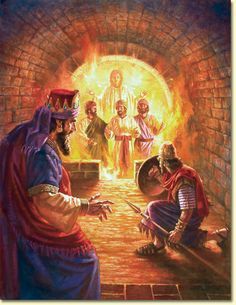
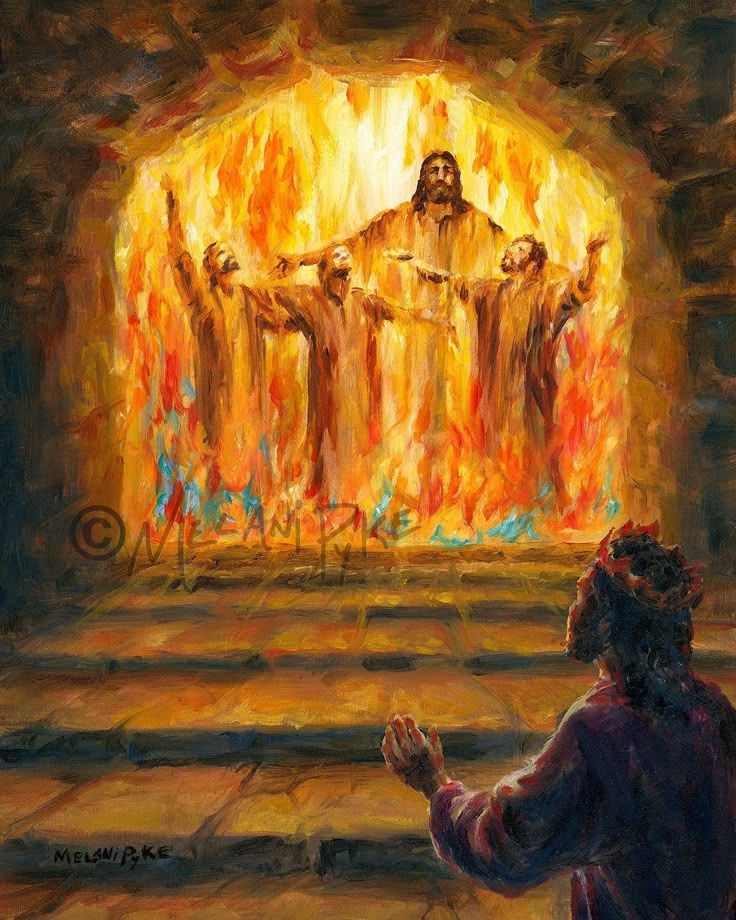
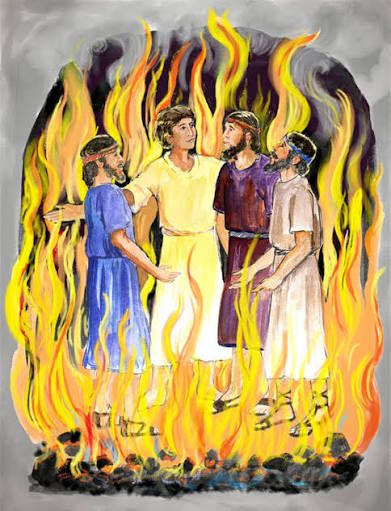
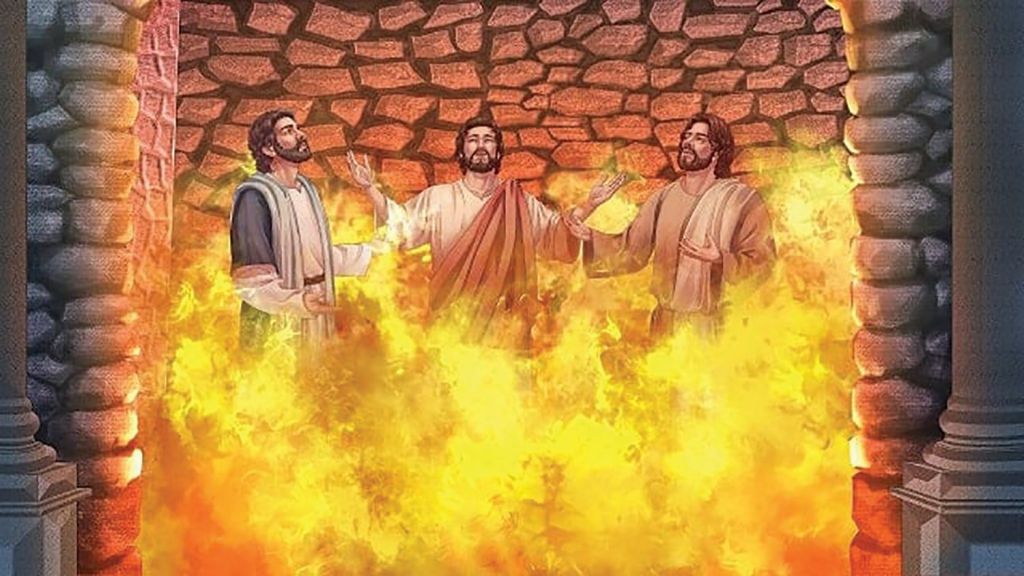
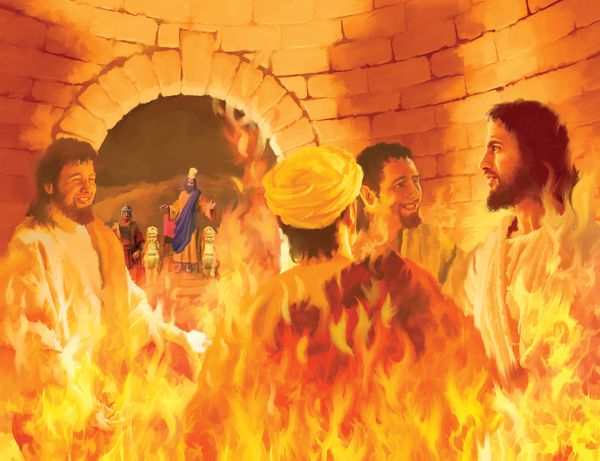
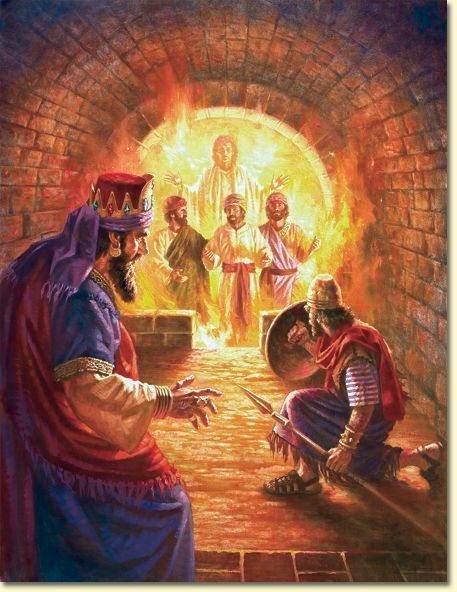
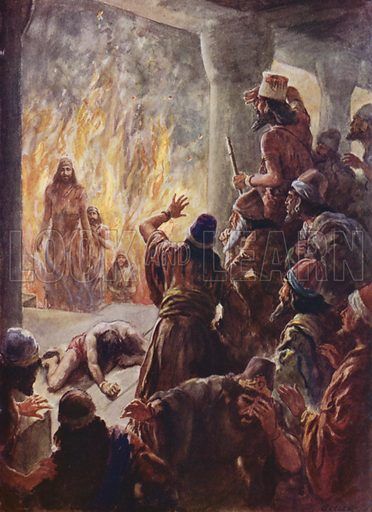
4. One more use of the furnace—and I give this for the benefit of those who hate God’s people—is, that it is useful for bringing plagues on our enemies. Do you not remember the passage in Exodus, where “the Lord saith unto Moses and unto Aaron, take to you handfuls of ashes of the furnace, and let Moses sprinkle it towards the heaven in the sight of Pharaoh. And it shall become small dust in all the land of Egypt, and shall be a boil breaking forth with blains upon man, and upon beast.” There is nothing that so plagues the enemies of Israel as “handfuls of ashes of the furnace” that we are able to cast upon them. The devil is never more devoid of wisdom than when he meddles with God’s people, and tries to run down God’s minister. “Run him down!”Sir, you run him up! You will never hurt him by all you can say against him, for “handfuls of the dust of the furnace” will be scattered abroad to bring plagues upon the ungodly throughout the land. Did any Christian ever suffer yet by persecution—really suffer by it? Does he ever reallylose by it? No; it is quite the reverse. We gain by it. You remember the case of the burning fiery furnace of Shadrach, Meshech, and Abednego, and Nebuchadnezzar’s dealings. You remember he commanded that the furnace should be heated seven times hotter than usual; and he told his brave men, his strongest ones, to take these three men bound and cast them into the furnace. There they go! they have thrown three men bound into the fire; but before they have time to turn back it is said, the heat of the flames slew those men that cast them into the furnace. Nebuchadnezzar said himself, “Did we not cast three bound into the furnace? Behold I see four men loose walking in the midst of the fire, and the fourth is like the Son of God.” Now, just mark these points. Nebuchadnezzar made a great blunder, and heated the fire too hot. That is just what our enemies often do. if they would just speak the truth about us and only tell our imperfections, they would then have enough to do. But, in their endeavours to cast down God’s servants, they heat the fire rather too hot; they make what they say smell, as Rowland Hill said, too much like a lie, therefore, nobody believes them; and instead of doing any hurt, it just kills the men who would have cast us into the fire. I have noticed sometimes when there comes out a desperate article against any particular man, suppose the man is right, the person who writes the article is always damaged by it, but not the man who is thrown into the fire. It does the slandered man good. All that has ever been said of me, as one of God’s servants, has done me good; it has just burned the bonds of my obscurity, and given me liberty to speak to thousands. Moreover, to throw the Christian into the furnace, is to put him into Christ’s parlour; for lo! Jesus Christ is walking with him! Spare yourselves the trouble, O ye enemies; if ye wish to hurt us, spare yourselves the labour. You think that is the furnace. It is not: it is the gate of heaven. Jesus Christ is there; and will you be so foolish as to put us just where we like to be? Oh! kind enemies, thus to render us threefold blessed. But, were ye wise, ye would say, “Let it alone. If the thing be of God it will stands if it be not of God it will utterly fall.” God’s enemies receive more damage from “the ashes of the furnace” than in any other way. They are shots that kill wherever they go. Persecution damages our enemies; it cannot hurt us. Let them still go on; let them still fight; all their arrows fall back upon them selves. And as for aught of evil that is done against us. it is but small and light compared with the damage that is done to their own cause. This, then, is another blessing concerning the furnace—it hurts our enemies though it does not hurt us.
IV. And now, to wind up, let us consider THE COMFORTS IN THE FURNACE. Christian men may say, “It is all well to tell us what good the furnace does; but we want some comfort in it.” Well, then, beloved, the first thing I will give you is the comfort of the text itself-ELECTION. Comfort thyself, thou tried one, with this thought: God saith, “I have chosen thee in the furnace of affliction.” The fire is hot, but he has chosen me; the furnace burns, but he has chosen me; these coals are hot, the place I love not, but he has chosen me. Ah! it comes like a soft gale assuaging the fury of the flame. It is like some gentle wind fanning the cheeks; yea, this one thought arrays us in fireproof armour, against which the heat hath no power. Let affliction come—God has chosen me. Poverty, thou mayest come in at the door—God is in the house already, and he has chosen me. Sickness, thou mayest come, but I will have this by my side for a balsam—God has chosen me. Whatever it is, I know that he has chosen me.
2. The next comfort is that you have the Son of Man with you in the furnace. In that silent bedchamber of yours, there sitteth by your side one whom thou hast not seen, but whom thou lovest; and ofttimes when thou knowest it not, he makes all thy bed in thy affliction, and smoothes thy pillow for thee. Thou art in poverty; but in that lonely house of thine that hath nought to cover its bare walls, where thou sleepest on a miserable pallet, dost thou know that the Lord of life and glory is a frequent visitor; he often treads those bare floors, and putting his hands upon those walls he consecrates them! Wert thou in a palace he might not come there. He loves to come into these desolate places that he may visit thee. The Son of Man is with thee, Christian. Thou canst not see him, but thou mayest feel the pressure of his hands. Dost thou not hear his voice? It is the valley of the shadow of death: thou seest nothing; but he says, “Fear not, I am with thee; be not dismayed, for I am thy God.” It is like that noble speech of Caesar’s—”Fear not, thou carriest Caesar and all his fortune.” Fear not, Christian! thou carriest Jesus in the same boat with thee, and all his fortune! He is with thee in the same fire. The same fire that scorches thee, scorches him. That which could destroy thee could destroy him, for thou art a portion of the fulness of him that fills all in all. Wilt thou not take hold of Jesus, then, and say—
“Through floods and flames, if Jesus lead,
I’ll follow where he goes.”
Feeling that you are safe in his hands, will you not laugh even death to scorn, and triumph over the sting of the grave, because Jesus Christ is with you?
Now, dear friends, there is another great furnace besides the one I have been talk ing of. There is a very great furnace, “the pile thereof is fire and much wood, the breath of the Lord, like a stream of brimstone, doth kindle it.” There is a furnace so hot, that when the ungodly are cast into it, they shalt be as the crack ling of thorns under a pot. There is a burning so exceedingly fierce that all those tormented in its flames spend their time in “weeping, and wailing, and gnash ing of teeth.” There is a furnace “where the worm dieth not, and where the fire is not quenched.” Where it is I know not. Methinks it is not down here in the bowels of the earth. It were a sad thought that earth hath hell within her own bowels, but that it is somewhere in the universe the Eternal has declared. Men and women! ye who love not God, a few more years will set you on a journey through the vast unknown to find out where this place is. Should ye die Godless and Christless, a strong hand will seize you on your death-bed, and irresistibly you will be borne along through the vast expanse of ether, unknowing whither you are tending, but with the dread thought that you are in the hand of a demon, who with an iron hand is bearing you most swiftly on. Down he plungeth thee? Ah! what a fall were that my friends! to find yourselves there in that desperate land of torments! May you never know it! Words cannot tell you of it now. I can but Just call up a few dread horrible emotions; I can but picture it in a few short rough words: may you never know it! Would ye wish to escape: there is but one door. Would ye be saved: there is but one way. Would ye find entrance into heaven and escape from hell: there is but one road. The road is this—”Believe on the Lord Jesus Christ and thou shalt be saved.” “He that believeth and is baptized shall be saved, and he that believeth not shall be damned.” To believe is to trust in Jesus. As an old divine used to say, “Faith is recumbency on Christ.” But it is too hard a word. He meant, faith is lying down on Christ. As a child lieth on its mother’s arms, so is faith; as the seaman trusteth to his bark, so is faith; as the old man leaneth on his staff, so is faith; as I may trust, there is faith. Faith is to trust. Trust in Jesus, he will ne’er deceive you:
“Venture on him, venture wholly,
Let no other trust intrude;
None but Jesus
Can do helpless sinners good.”
Thus may you escape that furnace of fire into which the wicked must be cast. God bless you all, for his name’s sake.
More from Spurgeon
Other sermons connected to this one — by Scripture, and from the same volume.
On this Scripture
Other sermons preached from the same chapter.
Isaiah 48:18The Great Privation: Or, The Great SalvationRead sermonIsaiah 48:9-11Mercy’s Master MotiveRead sermonIsaiah 48:8God’s Foreknowledge of Man’s SinRead sermon
From the same volume
Preached in the same period of Spurgeon’s ministry.
Psalms 17:15The Hope of Future BlissRead sermonPsalms 127:2The Peculiar Sleep of the BelovedRead sermonJohn 5:40Free-Will – A SlaveRead sermon

Making visible the life, legacy, and library of Charles Haddon Spurgeon. A ministry of Midwestern Baptist Theological Seminary.Pursue an MDiv or Doctorate at MBTS.edu
Explore
Connected
Subscribe to Updates
© 2026 The Spurgeon Center. All rights reserved.
©2026 Midwestern Baptist Theological Seminary
“I have a great need for Christ; I have a great Christ for my need.”
Today’s Furnace of Affliction

Opinion | End Times | Gospel of the Kingdom
How The Furnace of Affliction Teaches Us Obedience
February 1, 2024
Some of the most valuable lessons of obedience are learned in the furnace of affliction. Those who have been through seasons of spiritual pruning or divine discipline can attest to this. The challenge for us believers in Yeshua is remaining faithful in the fire of Yah’s testing. And if our ultimate goal is to navigate this present darkness with biblical fidelity, we must expect to be tested and trust that the Ruach will provide the necessary light to stay on course.
A key to remaining faithful during trials is to remember that:
- Embracing and overcoming hardships helps forge resilient and mighty warriors for the Kingdom
- Every follower of Yeshua will encounter seasons of testing
- The purpose of the test is to guide us toward a profound level of spiritual growth and maturity
Hardships Make for Strong Kingdom Soldiers

Times of hardship and soul-crushing disappointments are not unique to believers in the Gospel message. The lives of Moses, Job, Joseph, the Prophets, and Yeshua bear witness to the fact that those who desire to walk the narrow path of righteousness will suffer. This is normal and is to be expected.
Faithful lives dedicated to the pursuit of righteousness and in service of Yahuah require hardship.
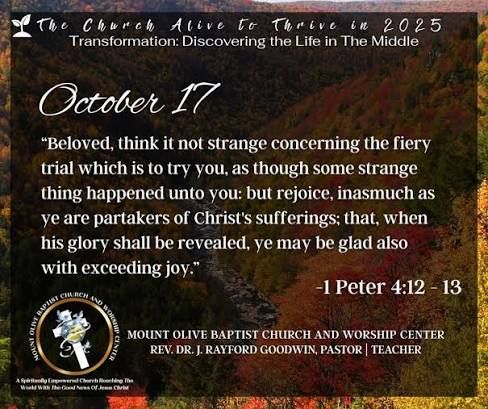
Beloved, do not be surprised at the fiery ordeal which is taking place to test you [that is, to test the quality of your faith], as though something strange or unusual were happening to you.1 Peter 4:12 (AMP)
The word rendered “fiery ordeal” here is the Greek word purosis.1 It can mean to be on fire, to burn, a conflagration, or any severe trial. It can also be used idiomatically to describe a major calamity. Metaphorically, it represents a trial that puts one’s faith to the test, similar to how gold is refined through fire. In this context, the fiery ordeal serves as powerful imagery that conveys the notion of how enduring trials test one’s faith and purify our spiritual walk.
Moreover, a righteous person is not promised peace and tranquility in this life.
“I am the true vine, and My Father is the gardener. Every branch in me that bears no fruit He takes away. And every branch that bears fruit He prunes, so that it bears more fruit.John 15:1-2
The Gardener’s special brand of spiritual pruning comes in a variety of disciplines:
- Discipline administered within a Torah-based congregation
- Allowing the person to experience a period of testing
- Allowing the pressures of life to expose a person’s true character/beliefs
- Removal of ‘worthless branches’ through death
All true followers of Yeshua who are united to him in faith will devote their time and prayer life to abiding in and drawing from the Vine.
Theologian Albert Barnes:
Jesus here says that he sustains the same relation to his disciples that a parent stalk does to the branches, but this does not denote any physical or incomprehensible union. It is a union formed by believing in him; resulting from our dependence on him and our need of him; from embracing him as our Saviour, Redeemer, and Friend. We become united to him in all our interests and have common feelings, common desires, and a common destiny with him. We seek the same object, are willing to encounter the same trials, contempt, persecution, and want, and are desirous that his God shall be ours, and his eternal abode ours.
Of course, no one in their right mind wants to suffer. Almost instinctively we gravitate toward the twisted mindset of the Laodiceans who presumed that their prosperity was evidence that all was well with them and their Creator. (Revelation (Hazon) 3:17-19)
They were doing the “works” but they lacked enthusiasm — they were just going through the motions. Their spiritual blindness and the nakedness of their soul were on full display. (Ephesians 1:18) Confession, repentance, and submission were needed to procure true riches from the proper source – Yeshua, our High Priest.
I advise you to buy from me gold refined in the fire so that you become rich; and white garments, so that you become dressed, so that the shame of your nakedness might not be shown; and anoint your eyes with ointment so that you see.Rev 3:18 (Halleluyah Scriptures)
The cure for their pride and perceived self-sufficiency could only come from the purifying fire of suffering.
…so that the genuineness of your faith, which is much more precious than gold which is perishable, even though tested and purified by fire, may be found to result in [your] praise and glory and honor at the revelation of [Yeshua ha’Mashiah]. Though you have not seen Him, you love Him; and though you do not even see Him now, you believe and trust in Him and you greatly rejoice and delight with inexpressible and glorious joy, 1 Peter 1:7,8 AMP
Unfortunately the spiritual state of today’s “church” is not much different from the lukewarm Laodicean assembly in Revelation.
It can be said that many contemporary congregants have a “form” of godliness. They are taught to gorge on grace while ignoring Torah stipulations designed to teach righteousness — the character of the Most High and His Son. They are taught that ‘grace’ absolves them of any responsibility in ‘working out’ their salvation because Yeshua did all the heavy lifting for us. So they sit back and enjoy the ride, believing that since Jesus paid it all there is nothing left to do but wait for the last trumpet to sound.
Every follower of Yeshua Will Encounter Seasons of Testing
Some assume that suffering is always a sign of punishment from Yah. If this is true, then how do we explain the honor given to those ‘witnesses’ called martyrs who suffer unto death, refusing to bow the knee to religious and political despots?
They were stoned [to death], they were sawn in two, they were lured with tempting offers [to renounce their faith], they were put to death by the sword; they went about wrapped in the skins of sheep and goats, utterly destitute, oppressed, cruelly treated.Hebrews 11:37
While faith is often expressed in words, true biblical faith is always validated in acts.
Moreover, a righteous person is not promised peace and tranquility in this life. To expect this to be true is delusional and misrepresents the Father’s love for us. Unfortunately, this is the message of the apostate church. It is a mindset whereby those who outsource their biblical knowledge and understanding to pastors fall victim to the soulish doctrine that equates blessing with material goods.
This mindset is pervasive today. We are all too familiar with the heart-wrenching stories of individuals who, despite being bestowed with abundant material blessings, tragically find themselves in a state of spiritual and material deprivation. Their lives of ease led to their ultimate downfall. This is as true of the Moabites as it is of those who adhere to a Laodocean brand of theology.
Moab has been at ease from youth, settled like wine on its dregs; he has not been poured from vessel to vessel or gone into exile. So his flavor has remained the same, and his aroma is unchanged.Jeremiah 48:11
‘I know your works, that you are neither cold nor hot. Would that you were cold or hot! Thus, because you are lukewarm and neither hot nor cold, I am about to vomit you out of my mouth! Because you are saying, “I am rich, and have become rich, and I have need of nothing,” and you do not know that you are wretched and pitiable and poor and blind and naked, I advise you to buy from me gold refined by fire, in order that you may become rich, and white clothing, in order that you may be clothed and the shame of your nakedness may not be revealed, and eye salve to smear on your eyes, in order that you may see. As many as I love, I reprove and discipline. Be zealous, therefore, and repent!Revelation 3: 15-19
When we abide in Yeshua our thoughts, dreams, and prayers will align with his desires to bless those following Covenant Torah.
However, we must be willing to go through the fire of adversity with a heart of obedience. It is the only way we can utter “thy will be done” in prayer and truly mean it when we experience life’s hardships.
If you remain in Me and My words remain in you, ask whatever you wish, and it will be done for you.John 15:7
Enduring the Pressures of These ‘Last Days’
Technically, the ‘last days’ began at the resurrection and ascendancy of Yeshua into his High Priesthood. Before departing, he issued this warning:
“I have told you these things so that you will not fall away. They will put you out of the synagogues [sacred assemblies]. In fact, a time is coming when anyone who kills you will think he is offering a service to God. They will do these things because they have not known the Father or Me. But I have told you these things so that when their hour comes, you will remember that I told you about them. I did not tell you these things from the beginning, because I was with you.John 16:1-4
Paul echoed this message in his letter to Timothy.
But understand this: In the last days terrible times will come. For men will be lovers of themselves, lovers of money, boastful, arrogant, abusive, disobedient to their parents, ungrateful, unholy, unloving, unforgiving, slanderous, without self-control, brutal, without love of good, traitorous, reckless, conceited, lovers of pleasure rather than lovers of God, having a form of godliness but denying its power. Turn away from such as these!2 Timothy 3:1-5
Paul’s instructions to Timothy apply to us. First of all, we are to draw strength from knowing that even though we are undeserving of it, Yah ( through our High Priest Yeshua) will ‘grace’ us with eternal life and completely pardon our sins in the resurrection. In the meantime, we are not to be entangled with the distractions of this life. This includes a preoccupation with secular civilian affairs such as presidential politics, social media, or entertainment. These are the distractions of the enemy. We must always remember that Yah is the Sovereign of Creation and all outcomes are in His hands. (Psalm 31: 15)
It is He who changes the times and the seasons; He removes kings and establishes kings. He gives wisdom to the wise and [greater] knowledge to those who have understanding!Daniel 2:21 AMP
Secondly, we need to know who the real enemies are: the principalities and powers behind rulers and those in authority who desire to keep us in bondage to a beast system of spiritual, psychological, medical, and financial enslavement.
We have been warned that, as Yeshua’s return draws near, religious hypocrites will be exposed for all to see, and true believers who proclaim the Gospel of the Kingdom will be vilified and persecuted. This “falling away” will precede the unveiling of the Man of Sin – one of two personalities referred to as ‘beasts’.
The Greek word used for falling away is skandalizo,2 which means “to put a snare (in the way), to cause to stumble, to give offense.” Skandalizo is closely related to the word scandalize, which means to speak falsely or maliciously of, or to bring into reproach.
This is exactly what happens when we try to share new insights with professing believers. Many will reject our message and then proceed to scandalize us without ever examining the veracity of what we are proclaiming. This falling away phenomenon has to occur before Messiah’s second coming — so don’t be shocked when it happens.
Let no one deceive you in any way, for it will not come until the rebellion occurs and the man of lawlessness – the son of destruction – is revealed. He will oppose and exalt himself above every so-called god or object of worship. So he will seat himself in the temple of God, proclaiming himself to be God. 2 Thessalonians 2: 3-42 Thessalonians 2: 3-4
Enduring Testing Yields A Profound Level of Maturity
As mentioned earlier, testing does not necessarily imply guilt or sin. The Father loves us and wants us to experience the fullness of His Kingdom while still on earth in this mortal body. The goal is to become better saints. The way we get there is by enduring the pressure of the test or trial. The prophets of old understood this all too well.
My brothers, and an example of suffering and patience, take the nebi’im (prophets), who spoke in the Name of Yahuah.James 5:10 HalleluYah Scriptures

There was no talk amongst them about a pie-in-the-sky ‘rapture’ event that would spare certain believers from the tribulation and stresses of the last days. This brand of religion falsely promises that no one will ever be tested, asked to defend their position or suffer for their beliefs. Instead, they will be whisked away before the really bad stuff hits the fan. In the book Vain Traditions, the rapture doctrine is explained as such:
The rapture doctrine says that Yahushua will come in two stages: “for” his qodeshim, represented by the Greek word parousia, and the second stage beith “with” his qodeshim, revealed in the Greek word aqpokalupto. In fact, New Testament usage makes no distinction between these two Greek words. The doctrine says that the word parousia in 1 Thessalonians 4: 15-16 is an initial coming “for” his qodeshim before the tribulation. However, parousia is falsely used in 2 Thessalonians 2:1 and 8, where his coming clearly is at the end of the tribulation.1
And indeed, all those wanting to live reverently in Mashiaqh Yahushua, shall be persecuted.2 Timothy 3:12 HalleluYah Scriptures
Blessed is the man who endures trial, for when he has been tested, he shall receive the crown of life which the Master has promised to those who love him.James 1:12
Practices Essential to Enduring Suffering
What are the keys to enduring suffering? There are several.
First, we must begin with prayer and trust in the promise of 1 John 5: 14-15:
And this is the confidence that we have toward him, that if we ask anything according to his will he hears us. and if we know that he hears us in whatever we ask, we know that we have the requests that we have asked of him.
The ‘whatever’ in this passage is limited by ‘anything’ that lines up with Yah’s will for us individually. It has been said that faith is a “relational” response of trust. All relationships have their idiosyncrasies or behaviors unique to each individual. As we spend more time in relationship with the Father through prayer and study, our petitions line up with His. We then are confident in whatever, whenever, and however way He decides to answer, we are going to be alright.
Secondly, we must abide (remain) in the Vine that is Yeshua.
Remain in Me, and I [will remain] in you. Just as no branch can bear fruit by itself without remaining in the vine, neither can you [bear fruit, producing evidence of your faith] unless you remain in Me.John 15:4
Abide is an Old English word signifying progressively to “await,” “remain,” “lodge,” “sojourn,” “dwell,” “continue,” “endure”; to remain stable or fixed in a state.International Standard Bible Encyclopedia
In our times of awaiting an answer to prayer, we often experience restlessness, exasperation, and even hopelessness. We want the pain to end or the problem solved now. So we are tempted to fix the problem using our limited carnal wisdom and strength. Instead, we must resist. And in resisting we allow the fire of the Ruach to burn away our fleshly emotions and carnal attempts at solving the problem. We must trust that the Ruach will help strengthen and guide us until the season of testing is complete.
Thirdly, we must believe that this testing is not meant to hurt but to heal and bring us to a greater level of spiritual and relational maturity. On the other side of the test, when the answer has been provided, we will possess the very thing in our spiritual arsenal to help others who are facing the same situation.
Finally, we must take responsibility for knowing what the Scriptures say and obeying the written Torah.
Study and do your best to present yourself to God approved, a workman [tested by trial] who has no reason to be ashamed, accurately handling and skillfully teaching the word of truth.2 Timothy 2:15 AMP

The only way to know Father and Son relationally is to spend time in the Word. The only way to be shielded from “end time” deception is to love the truth of Yah’s Word as revealed in the totality of the Scriptures. This includes some extra-biblical texts that were removed from most Bibles.
…because they did not welcome the love of the truth [of the gospel] so as to be saved [they were spiritually blind, and rejected the truth that would have saved them]. 11 Because of this God will send upon them a misleading influence, [an activity of error and deception] so they will believe the lie, 12 in order that all may be judged and condemned who did not believe the truth [about their sin, and the need for salvation through Christ], but instead took pleasure in unrighteousness.2 Thessalonians 2:10-12 AMP
A New Testament-only focus will keep you in a state of partial scriptural blindness. The Ruach ha’Kodesh (Holy Spirit) left us the first half of the Bible for a reason. The Biblical canon of 66 was meant to be studied from front to back — in its entirety and in context. Simply defined, context is the circumstances that form the setting for an event, statement, or idea in terms of which it can be fully understood and assessed. It is derived from the Latin contextus (a joining together).
Uncoupling First Covenant (Old Testament) study from Renewed Covenant (New Testament) study has led to profound biblical illiteracy and the tendency to rely solely on the pastorate to guide our thinking. Yahuah’s set-apart Spirit — His Ruach — was given to help believers understand what the Word is saying. Yah’s set-apart Spirit is never wrong, however, men are apt to make mistakes or champion false doctrine.
Fast and pray for understanding. Remember, the people who will be deceived in these last days will be those who reject the truth.
Own Your Faith
We have been blessed to live in a time when technology has put a myriad of study materials at our fingertips. It is the individual’s responsibility and duty to show themselves approved through prayer, study, and endurance.
It is never too late to start owning your faith. A good starting point would be to learn how to study your Bible. Ask the Father to lead you to a Spirit-led community of believers in Yeshua. Build up a library in your home so you can research independently of technology in case the grid goes down. Memorize the Scriptures so you can pray effectively. Learn what it means to walk in Covenant obedience with the Most High.
Expect to be challenged and pray for the courage necessary to remain faithful until the end.
___________
Main image by Stocksnap from Pixabay
FOOTNOTES
1 G#4451: a burning, calamities or trials that test the character, the burning by which metals are roasted and reduced. (Thayer’s Greek definitions)
2 Strong’s #G4624
Vain Traditions is a not-for-sale paperback book published by vaintraditions.com. It is a compilation of information collected from a variety of sources.
Brenda Ross
Brenda Ross is a co-author of the book, “The Gospel Worth Dying For.” She is a former major market radio and television broadcaster who has served as Single’s Ministry Director at one of Houston’s Memorial Drive-area churches, a Jews for Jesus staff volunteer, and participated in mission outreach activities in Costa Rica, Mexico, and China. Urban mission experience includes volunteer work for Habitat for Humanity and catering to the homeless in San Francisco’s Tenderloin district.
Posts
- A Practical Guide To Hosting Sukkot
- 7 Things Most People Miss When Reading Revelation
- Study Topics of the Dead Sea Scrolls: What Does the Qumran Library Reveal?
- Reflections from Sukkot
- Amishav: A Hispanic Community Returning to the Tzadok Calendar
- Walking Beside Tarra Parks in Faith and Hope
Categories
- Ancient Writings
- Apocrypha
- Appointed Times
- Artificial Intelligence (AI)
- Bible Cosmology
- Bible Study
- Commentary
- Dead Sea Scrolls
- Discipleship
- End Times
- Featured Article
- Featured Interview
- Food Laws
- General
- Gospel of the Kingdom
- Guest Article
- Kingdom Health
- LXX Septuagint
- Moedim
- Opinion
- Our High Priest
- Pseudepigrapha
- Resurrection
- Spiritual Warfare
- The Calendar
- The Feasts
- The Last Days
- The Law
- Topical
- Torah
- Women in Scripture
- Yeshua
- Yom Kippur
- Zadok Priestly Calendar
Archives
- March 2026
- November 2025
- August 2025
- May 2025
- April 2025
- February 2025
- January 2025
- December 2024
- November 2024
- August 2024
- May 2024
- April 2024
- February 2024
- November 2023
- October 2023
- September 2023
- August 2023
- July 2023
- June 2023
- May 2023
- April 2023
- March 2023
- February 2023
- December 2022
- November 2022
- October 2022
- September 2022
- August 2022
- July 2022
- May 2022
- April 2022
- March 2022
0 Comments
Submit a Comment
Your email address will not be published. Required fields are marked *
Submit Comment
Related Posts

Shavuot – A Divine Dress Rehearsal
From the foundations of creation, before Sinai and long before Acts 2, Shavuot has stood as an…

The Truth About Torah Is In Front Of Us
Flawed doctrine can obscure the truth, cloud our judgment, lead us astray in life, and…

Examining the Beautiful Symphony of YHWH’s Feast Days
The term ‘crescendo’ is well-known among musicians, signifying the way music intensifies by…
GWDF
The Gospel Worth Dying For
© 2026|All rights reserved.
As an Amazon Associate, GWDF earns a commission from qualifying purchases.