In Bowen Family Systems Theory, an emotional cutoff refers to a strategy individuals use to manage unresolved emotional issues with family members by reducing or eliminating emotional contact. This can involve physical distancing, avoiding sensitive topics, or even complete estrangement. While it might offer temporary relief, it can also lead to unresolved problems and potentially impact relationships in the long run.
Elaboration:
Definition:Emotional cutoff is a concept within Bowen Family Systems Theory that describes how individuals manage their unresolved emotional issues with family members by distancing themselves emotionally, either physically or psychologically.
Motivations:Individuals may cut off to avoid conflict, intense anxiety, or the emotional burden of dealing with unresolved issues.
Methods:Cutoffs can manifest in various ways, including:
Physical distance: Moving away, rarely visiting, or avoiding contact.
Emotional distancing: Avoiding sensitive topics, engaging in surface-level conversations, or refusing to share feelings.
Complete estrangement: Breaking off relationships entirely.
Impact:While emotional cutoffs might provide a temporary sense of relief, they can have long-term consequences:
Unresolved problems: The underlying emotional issues remain unaddressed, potentially surfacing in new relationships.
Dependency: People may rely on new relationships to meet needs that were not met in their family of origin, leading to unhealthy patterns.
Family patterns: Unresolved emotional issues can be passed down through generations, influencing family dynamics.
Examples:
A person who moves away from home and rarely visits to avoid conflict with parents.
A family member who avoids discussing difficult topics with their siblings to maintain a sense of peace.
A person who breaks off contact with a parent due to a disagreement on a fundamental issue.
Bowen’s Perspective:Bowen viewed emotional cutoff as a way for individuals to maintain their sense of self, but it can also be a sign of a lack of differentiation and can lead to unhealthy relational patterns.
Emotional Cutoff – The Bowen Center for the Study of the Family
The concept of emotional cutoff describes how people manage their unresolved emotional issues with parents, siblings, and other family members by reducing or to…
The Bowen Center for the Study of the Family
Cut-Off and the Role of a Bowen Coach
Jun 11, 2024 — Authored by Cecilia Guzman, M.S. Bowen Family Systems Theory, developed by Dr. Murray Bowen in the mid-20th century, revolutionized the understandin…
Center for Family Consultation
How to Heal From an Emotional Estrangement | Psychology Today
Apr 1, 2024 — Imagine a family gathering that ends in an argument. Voices are raised, harsh words exchanged, and suddenly, one family member announces they’re done…
Psychology Today
Personality and Family Risk Factors for Poor Mental Well-Being – PMC
Emotional cutoff describes individuals’ tendency to isolate themselves physically, emotionally, and verbally; to avoid sharing feelings; and to rigidly disconne…
PubMed Central
How to Heal From an Emotional Estrangement – Psychology Today
Apr 1, 2024 — Bowen’s theory posits that unresolved emotional issues are often transmitted through generations, influencing familial interactions and individual be…
Psychology Today
Understanding Family Therapy: What Is Family Therapy?
Emotional cutoff for mental health This principle refers to how individuals may cut ties with families and friends to manage unresolved emotional issues. Cuttin…
BetterHelp
Understanding Bowen Family Systems Theory | Psychology Today
Nov 13, 2023 — Bowen family systems theory underscores the significance of emotional fusion and differentiation in relationships. Emotional fusion refers to a stat…
Psychology Today
How to navigate estrangement and toxic relationships
Jan 27, 2023 — Turn Up Your Support Guests: Both guests agree that estrangement is a complete or almost complete cut off where one person doesn’t want to be in con…
MPR News
Estrangement: Walking Away From Your Roots – Keystone Elder Law
Oct 14, 2021 — The reason for an estrangement may be fairly straightforward, such as childhood abuse or neglect by the parent; mental illness in either the parent …
Keystone Elder Law
Spotting Red Flags: 22 Indicators of Emotional Immaturity
Nov 24, 2024 — 13. Avoidance of Serious Conversations Sign: Conversations may lack depth, with partners avoiding difficult or sensitive topics, or failing to expre…
The concept of emotional cutoff describes how people manage their unresolved emotional issues with parents, siblings, and other family members by reducing or …
People also ask
What is the emotional cut off in family systems theory?
What is family emotional systems theory?
What is emotional reactivity in family systems theory?
Jun 11, 2024 — Emotional cut-off is a critical concept within Bowen Family Systems Theory, reflecting how individuals manage unresolved emotional issues by distancing …
Emo- tional cutoff is understood as it relates to differen- tiation of self (the ability to separate from the family of origin on a personal and intellectual.
5 pages·136 KB
Scholarly articles for Emotional cutoff family Systems theory
Emotional cutoff: Bowen family systems theory …
Titelman · Cited by 124
Emotional cutoff in Bowen family systems theory: An …
Jul 9, 2024 — Bowen defined emotional cutoff as “the process of separation, isolation, withdrawal, running away, or denying the importance of the parental family.”
by M Peleg · 2023 · Cited by 8 — Emotional cutoff describes individuals’ tendency to isolate themselves physically, emotionally, and verbally; to avoid sharing feelings; and to rigidly …
Apr 1, 2024 — Emotional cutoffs happen when individuals distance themselves from family members as a way to manage unresolved emotional issues. Here, we …
Bowen family systems theory is a theory of human behavior that views the family as an emotional unit and uses systems thinking to describe the unit’s complex …
Emotional cutoff is a process where individuals distance themselves from family members, either physically or emotionally, as a way to manage unresolved emotional issues and maintain a sense of self. This distancing can manifest in various ways, including moving away, avoiding sensitive conversations, or creating surface-level harmony while harboring deep emotional tensions.
Elaboration:
Motivation:Emotional cutoff is often a response to feeling overwhelmed or controlled by family dynamics, particularly when individuals struggle with unresolved emotional issues or intense emotional fusion within the family.
Manifestations:It can involve physical distancing (moving away from family), emotional distancing (avoiding sensitive topics or limiting conversation), or even seemingly normal interactions masking underlying unresolved issues, notes the Bowen Center for the Study of the Family.
Consequences:While emotional cutoff might offer temporary relief, it can also hinder the resolution of underlying issues and perpetuate dysfunctional patterns across generations, says the Center for Family Consultation. It can lead to feelings of profound loss, grief, loneliness, isolation, and stigmatization for those experiencing the estrangement, Psychology Today.
Bowen Family Systems Theory:The concept of emotional cutoff is rooted in Bowen Family Systems Theory, which emphasizes the importance of individual differentiation within the family system, explains a Springer article. In highly fused families, individuals may feel compelled to conform to familial expectations, leading to emotional cutoff as a means of self-preservation.
Emotional Cutoff — The Bowen Center for the Study of the Family
The Bowen Center for the Study of the Family
How to Heal From an Emotional Estrangement | Psychology Today
Apr 1, 2024
Psychology Today
Emotional Cutoff in Bowen Family Systems Theory
Description of Concept The concept of emotional cutoff describes people managing their unresolved emotional issues with parents, siblings, and other family memb…
Springer
Leave Taking: Emotional Cutoff as Lack of Differentiation
Bowen (1978) employed the concept of emotional cutoff to mean “the process of separation, isolation, withdrawal, running away or denying the importance of the p…
Taylor & Francis Online
Cut-Off and the Role of a Bowen Coach
Jun 11, 2024 — Emotional cut-off occurs when individuals attempt to manage their unresolved emotional issues by distancing themselves physically or emotionally fro…
Center for Family Consultation
Generative AI is experimental.
Export
Save
People also ask
What does emotionally cut-off mean?
AI Overview
+9
Emotionally cut off means intentionally or unintentionally disconnecting from one’s own feelings and/or from others, particularly family members, as a way to manage unresolved emotional issues or intense anxiety within relationships. It can involve physical distancing, limiting conversations, or avoiding sensitive topics. While it might offer temporary relief, it often prevents resolution and perpetuates unhealthy patterns.
Here’s a more detailed explanation:
1. Intentional vs. Unintentional:
Intentional:Individuals may choose to cut off emotionally as a way to cope with intense anxiety or conflict in relationships, especially with family.
Unintentional:Sometimes, emotional detachment can occur due to factors like trauma, unresolved grief, or a tendency to suppress emotions.
2. Manifestations:
Physical Distance: Moving away from family, reducing visits, or avoiding family gatherings.
Limited Communication: Limiting conversations to superficial topics or avoiding discussing sensitive issues.
Emotional Distance: Difficulty expressing feelings, an aversion to intimacy, or a tendency to keep others at arm’s length.
Emotional Shutdown: Disconnecting from one’s own feelings and experiences.
3. Underlying Causes:
Unresolved Emotional Issues:Emotional cut-offs can be a way to avoid confronting unresolved conflicts, hurt, or trauma from the past.
Intense Emotional Fusion:In highly fused families, individuals may feel overwhelmed by the need to conform to expectations or maintain emotional harmony, leading them to cut off emotionally.
Trauma:Past trauma can lead to emotional detachment as a way to protect oneself from further harm.
4. Consequences:
Perpetuation of Dysfunctional Patterns:Emotional cut-offs can prevent resolution and perpetuate unhealthy family dynamics across generations.
Heightened Anxiety:While initially relieving anxiety, cut-offs can, over time, intensify anxiety and emotional intensity in other relationships.
Difficulty Repairing Relationships:Once a cut-off is established, it can be challenging to repair the relationship.
Loneliness and Isolation:A lifetime of emotional cut-offs can lead to loneliness and social isolation.
5. Differentiation of Self:
In Bowen family systems theory, emotional cut-offs are seen as a response to intense emotional fusion, where individual identities and emotions are intertwined to an unhealthy extent.
Healthy differentiation of self involves the ability to distinguish oneself from the family of origin on a personal and intellectual level.
Emotional Cutoff – The Bowen Center for the Study of the Family
The concept of emotional cutoff describes how people manage their unresolved emotional issues with parents, siblings, and other family members by reducing or to…
The Bowen Center for the Study of the Family
Emotional Cut-off
Sep 19, 2017 — hi I’m Jerry Wise. and this video is on emotional cut off i’d like to first define emotional cut off emotional cut off is the experience of having l…
YouTube ·
Jerry Wise
Emotional Cutoff in Bowen Family Systems Theory
Key concepts of this theory are differentiation of self and emo- tional fusion which refer to the ability of a person to distinguish him/herself from the family…
SpringerLink
Cut-Off and the Role of a Bowen Coach
Jun 11, 2024 — Emotional cut-off occurs when individuals attempt to manage their unresolved emotional issues by distancing themselves physically or emotionally fro…
Center for Family Consultation
Emotional Cutoff: Avoiding Emotional Pain – Kelly Kennedy
Aug 2, 2021 — Bowen explained emotional cutoff involves “separation, isolation, withdrawal, running away, or denying the importance of the parental family” (Bowen,
Modern Wellness Family Counseling
How to Heal From an Emotional Estrangement | Psychology Today
Apr 1, 2024 — Emotional cutoffs happen when individuals distance themselves from family members as a way to manage unresolved emotional issues. … Breaking off a …
Psychology Today
Emotional Detachment: What It Is and How to Overcome It – Healthline
The takeaway Emotional detachment occurs when people willingly or unwillingly turn off their connection with their emotions. This may be intentional, such as a …
Healthline
Why Emotional Cutoffs Are Never a Good Idea – Psychology Today
Aug 10, 2019 — Cutoffs make it difficult to repair the relationship Once you cut off someone, it’s hard to reverse course. Face-saving sets in; both sides are enga…
Psychology Today
Emotional cutoff in the family – Wednesday Journal
Jul 9, 2024 — A lifetime of successive cutoffs is likely to end in loneliness and isolation. Cutoffs can be bridged, contact can be re-established, and people can …
Wednesday Journal of Oak Park and River Forest
How Do You Know If You Are Shutting Down Emotionally? – Hola Health
May 29, 2024 — Summary: Emotional shutdown can happen when overwhelming stress, trauma, or unresolved emotions cause you to withdraw and disconnect from your feeli…
Hola Health
How to Heal From an Emotional Estrangement – Psychology Today
Apr 1, 2024 — Thus, a parent who has experienced a cutoff from their own family may, even unconsciously, instill behaviors and emotional responses in their childre…
Psychology Today
Am I Emotionally Unavailable? – Reach Behavioral Health
Sep 2, 2024 — Emotional unavailability refers to an inability or unwillingness to engage deeply on an emotional level. This can manifest in various ways, such as d…
Reach Behavioral Health
How to respond to an emotional cutoff?
Navigating emotional cutoffs is a journey of self-exploration, understanding, and patience. Healing and reconnection are possible by recognizing the patterns, taking responsibility, and working towards differentiation and open communication.Apr 1, 2024
The Emotional Cutoff Scale (ECS) measures the sense of cognitive con- nection to a person’s mother and father. Scores range on a continuum between 10 and 50. Lower scores mean a greater level of connection to par- ents; higher scores mean a lesser level of connec- tion or more emotional cutoff to parents.
Emotional cutoff describes individuals’ tendency to isolate themselves physically, emotionally, and verbally; to avoid sharing feelings; and to rigidly disconnect from significant others as a way of managing stress and intimate relationships.https://pmc.ncbi.nlm.nih.gov
The concept of emotional cutoff describes how people manage their unresolved emotional issues with parents, siblings, and other family members by reducing …
Jul 9, 2024 — Bowen defined emotional cutoff as “the process of separation, isolation, withdrawal, running away, or denying the importance of the parental family.”
Apr 1, 2024 — Breaking off a significant relationship, known as a cutoff, is a method some people use to manage intense anxiety within relationships. While …
Missing: definition | Show results with: definition
Aug 9, 2016 — Emotional cutoffs are the natural mechanisms people use to counter high anxiety or high emotional fusion, also known as ‘too much closeness. ‘ …
Missing: definition | Show results with: definition
Jun 11, 2024 — At its core, emotional cut-off is an attempt to reduce anxiety. When family relationships are marked by high levels of tension and unresolved …
Aug 10, 2019 — Emotional cutoffs are emotionally driven, often sudden, reactive, and overkill—the never, don’t want to, can’t deal. And those emotional drivers …
Missing: definition | Show results with: definition
Emotional cutoff is experience of having little to no relationship with one’s own feelings and also a little to no relationship emotionally with others.
Emotional cutoff is a process where individuals distance themselves from family members, either physically or emotionally, as a way to manage unresolved emotional issues and maintain a sense of self. This distancing can manifest in various ways, including moving away, avoiding sensitive conversations, or creating surface-level harmony while harboring deep emotional tensions.
Elaboration:
Motivation:Emotional cutoff is often a response to feeling overwhelmed or controlled by family dynamics, particularly when individuals struggle with unresolved emotional issues or intense emotional fusion within the family.
Manifestations:It can involve physical distancing (moving away from family), emotional distancing (avoiding sensitive topics or limiting conversation), or even seemingly normal interactions masking underlying unresolved issues, notes the Bowen Center for the Study of the Family.
Consequences:While emotional cutoff might offer temporary relief, it can also hinder the resolution of underlying issues and perpetuate dysfunctional patterns across generations, says the Center for Family Consultation. It can lead to feelings of profound loss, grief, loneliness, isolation, and stigmatization for those experiencing the estrangement, Psychology Today.
Bowen Family Systems Theory:The concept of emotional cutoff is rooted in Bowen Family Systems Theory, which emphasizes the importance of individual differentiation within the family system, explains a Springer article. In highly fused families, individuals may feel compelled to conform to familial expectations, leading to emotional cutoff as a means of self-preservation.
Emotional Cutoff — The Bowen Center for the Study of the Family
The Bowen Center for the Study of the Family
How to Heal From an Emotional Estrangement | Psychology Today
Apr 1, 2024
Psychology Today
Emotional Cutoff in Bowen Family Systems Theory
Description of Concept The concept of emotional cutoff describes people managing their unresolved emotional issues with parents, siblings, and other family memb…
Springer
Leave Taking: Emotional Cutoff as Lack of Differentiation
Bowen (1978) employed the concept of emotional cutoff to mean “the process of separation, isolation, withdrawal, running away or denying the importance of the p…
Taylor & Francis Online
Cut-Off and the Role of a Bowen Coach
Jun 11, 2024 — Emotional cut-off occurs when individuals attempt to manage their unresolved emotional issues by distancing themselves physically or emotionally fro…
Center for Family Consultation
Generative AI is experimental.
Export
Save
People also ask
What does emotionally cut-off mean?
AI Overview
+9
Emotionally cut off means intentionally or unintentionally disconnecting from one’s own feelings and/or from others, particularly family members, as a way to manage unresolved emotional issues or intense anxiety within relationships. It can involve physical distancing, limiting conversations, or avoiding sensitive topics. While it might offer temporary relief, it often prevents resolution and perpetuates unhealthy patterns.
Here’s a more detailed explanation:
1. Intentional vs. Unintentional:
Intentional:Individuals may choose to cut off emotionally as a way to cope with intense anxiety or conflict in relationships, especially with family.
Unintentional:Sometimes, emotional detachment can occur due to factors like trauma, unresolved grief, or a tendency to suppress emotions.
2. Manifestations:
Physical Distance: Moving away from family, reducing visits, or avoiding family gatherings.
Limited Communication: Limiting conversations to superficial topics or avoiding discussing sensitive issues.
Emotional Distance: Difficulty expressing feelings, an aversion to intimacy, or a tendency to keep others at arm’s length.
Emotional Shutdown: Disconnecting from one’s own feelings and experiences.
3. Underlying Causes:
Unresolved Emotional Issues:Emotional cut-offs can be a way to avoid confronting unresolved conflicts, hurt, or trauma from the past.
Intense Emotional Fusion:In highly fused families, individuals may feel overwhelmed by the need to conform to expectations or maintain emotional harmony, leading them to cut off emotionally.
Trauma:Past trauma can lead to emotional detachment as a way to protect oneself from further harm.
4. Consequences:
Perpetuation of Dysfunctional Patterns:Emotional cut-offs can prevent resolution and perpetuate unhealthy family dynamics across generations.
Heightened Anxiety:While initially relieving anxiety, cut-offs can, over time, intensify anxiety and emotional intensity in other relationships.
Difficulty Repairing Relationships:Once a cut-off is established, it can be challenging to repair the relationship.
Loneliness and Isolation:A lifetime of emotional cut-offs can lead to loneliness and social isolation.
5. Differentiation of Self:
In Bowen family systems theory, emotional cut-offs are seen as a response to intense emotional fusion, where individual identities and emotions are intertwined to an unhealthy extent.
Healthy differentiation of self involves the ability to distinguish oneself from the family of origin on a personal and intellectual level.
Emotional Cutoff – The Bowen Center for the Study of the Family
The concept of emotional cutoff describes how people manage their unresolved emotional issues with parents, siblings, and other family members by reducing or to…
The Bowen Center for the Study of the Family
Emotional Cut-off
Sep 19, 2017 — hi I’m Jerry Wise. and this video is on emotional cut off i’d like to first define emotional cut off emotional cut off is the experience of having l…
YouTube ·
Jerry Wise
Emotional Cutoff in Bowen Family Systems Theory
Key concepts of this theory are differentiation of self and emo- tional fusion which refer to the ability of a person to distinguish him/herself from the family…
SpringerLink
Cut-Off and the Role of a Bowen Coach
Jun 11, 2024 — Emotional cut-off occurs when individuals attempt to manage their unresolved emotional issues by distancing themselves physically or emotionally fro…
Center for Family Consultation
Emotional Cutoff: Avoiding Emotional Pain – Kelly Kennedy
Aug 2, 2021 — Bowen explained emotional cutoff involves “separation, isolation, withdrawal, running away, or denying the importance of the parental family” (Bowen,
Modern Wellness Family Counseling
How to Heal From an Emotional Estrangement | Psychology Today
Apr 1, 2024 — Emotional cutoffs happen when individuals distance themselves from family members as a way to manage unresolved emotional issues. … Breaking off a …
Psychology Today
Emotional Detachment: What It Is and How to Overcome It – Healthline
The takeaway Emotional detachment occurs when people willingly or unwillingly turn off their connection with their emotions. This may be intentional, such as a …
Healthline
Why Emotional Cutoffs Are Never a Good Idea – Psychology Today
Aug 10, 2019 — Cutoffs make it difficult to repair the relationship Once you cut off someone, it’s hard to reverse course. Face-saving sets in; both sides are enga…
Psychology Today
Emotional cutoff in the family – Wednesday Journal
Jul 9, 2024 — A lifetime of successive cutoffs is likely to end in loneliness and isolation. Cutoffs can be bridged, contact can be re-established, and people can …
Wednesday Journal of Oak Park and River Forest
How Do You Know If You Are Shutting Down Emotionally? – Hola Health
May 29, 2024 — Summary: Emotional shutdown can happen when overwhelming stress, trauma, or unresolved emotions cause you to withdraw and disconnect from your feeli…
Hola Health
How to Heal From an Emotional Estrangement – Psychology Today
Apr 1, 2024 — Thus, a parent who has experienced a cutoff from their own family may, even unconsciously, instill behaviors and emotional responses in their childre…
Psychology Today
Am I Emotionally Unavailable? – Reach Behavioral Health
Sep 2, 2024 — Emotional unavailability refers to an inability or unwillingness to engage deeply on an emotional level. This can manifest in various ways, such as d…
Reach Behavioral Health
Show more
How to respond to an emotional cutoff?
Navigating emotional cutoffs is a journey of self-exploration, understanding, and patience. Healing and reconnection are possible by recognizing the patterns, taking responsibility, and working towards differentiation and open communication.Apr 1, 2024
The Emotional Cutoff Scale (ECS) measures the sense of cognitive con- nection to a person’s mother and father. Scores range on a continuum between 10 and 50. Lower scores mean a greater level of connection to par- ents; higher scores mean a lesser level of connec- tion or more emotional cutoff to parents.
Emotional cutoff describes individuals’ tendency to isolate themselves physically, emotionally, and verbally; to avoid sharing feelings; and to rigidly disconnect from significant others as a way of managing stress and intimate relationships.https://pmc.ncbi.nlm.nih.gov
Why People Emotionally Shut Down. Trauma, prolonged stress, anxiety, depression and grief all contribute to feeling emotionally shut down. Nemmers says medication, while lifesaving for many, can also trigger a side effect of emotional numbness.
What is the purpose of emotional cutoff in families?
At its core, emotional cut-off is an attempt to reduce anxiety. When family relationships are marked by high levels of tension and unresolved conflict, individuals may resort to distancing strategies to manage their discomfort.Jun 11, 2024
The concept of emotional cutoff describes how people manage their unresolved emotional issues with parents, siblings, and other family members by reducing …
Jul 9, 2024 — Bowen defined emotional cutoff as “the process of separation, isolation, withdrawal, running away, or denying the importance of the parental family.”
Apr 1, 2024 — Breaking off a significant relationship, known as a cutoff, is a method some people use to manage intense anxiety within relationships. While …
Missing: definition | Show results with: definition
Aug 9, 2016 — Emotional cutoffs are the natural mechanisms people use to counter high anxiety or high emotional fusion, also known as ‘too much closeness. ‘ …
Missing: definition | Show results with: definition
Jun 11, 2024 — At its core, emotional cut-off is an attempt to reduce anxiety. When family relationships are marked by high levels of tension and unresolved …
Aug 10, 2019 — Emotional cutoffs are emotionally driven, often sudden, reactive, and overkill—the never, don’t want to, can’t deal. And those emotional drivers …
Missing: definition | Show results with: definition
Emotional cutoff is experience of having little to no relationship with one’s own feelings and also a little to no relationship emotionally with others.
Share Join Us Amid these times, stress and anxiety have become commonplace, but there are those for whom this state of tension was familiar even before recent events. While some individuals maintain a serene composure under pressure, others succumb to stress more readily, encountering mental fatigue during various points of their day. Do you recognize yourself in this description, or do you possess responses that usher in tranquility? Respond to the following 10 questions to gauge your mental state based on your reactions to diverse scenarios. You are a very calm person You are part of a select few with a resilient mindset, adept at discerning urgent matters from those that warrant your attention in due course. Your life, potentially filled with stressors, doesn’t succumb to overwhelming pressure. This stems from your practice of attending to tasks in their own time, without overextension or multitasking excessively. With an understanding that some things can wait until tomorrow while others demand today’s focus, you’ve cultivated a habit that significantly tempers stress levels in various scenarios. This ability to allocate mental resources where they are needed most at any given time serves you well. Kudos to you! Share your results with friends to learn more about them! Share Result Share Quiz WhatsApp Next Quiz
DictionaryDefinitions from Oxford Languages · Learn morephrase of writerthe condition of being unable to think of what to write or how to proceed with writing.”the novelist recovered from a two-year bout with writer’s block”Translate writer s block toChoose languageAfrikaansAkanAlbanianAmharicArabicArmenianAssameseAymaraAzerbaijaniBambaraBanglaBasqueBelarusianBhojpuriBosnianBulgarianBurmeseCatalanCebuanoCentral KurdishChinese (Simplified)Chinese (Traditional)CorsicanCroatianCzechDanishDivehiDogriDutchEsperantoEstonianEweFilipinoFinnishFrenchGalicianGandaGeorgianGermanGreekGuaraniGujaratiHaitian CreoleHausaHawaiianHebrewHindiHmongHungarianIcelandicIgboIlokoIndonesianIrishItalianJapaneseJavaneseKannadaKazakhKhmerKinyarwandaKonkaniKoreanKrioKurdishKyrgyzLaoLatinLatvianLingalaLithuanianLuxembourgishMacedonianMaithiliMalagasyMalayMalayalamMalteseManipuri (Meitei Mayek)MāoriMarathiMizoMongolianNepaliNorthern SothoNorwegianNyanjaOdiaOromoPashtoPersianPolishPortuguesePunjabiQuechuaRomanianRussianSamoanSanskritScottish GaelicSerbianShonaSindhiSinhalaSlovakSlovenianSomaliSouthern SothoSpanishSundaneseSwahiliSwedishTajikTamilTatarTeluguThaiTigrinyaTsongaTurkishTurkmenUkrainianUrduUyghurUzbekVietnameseWelshWestern FrisianXhosaYiddishYorubaZulu
Show less
Feedback
People also ask
What causes writer’s block?
AI Overview
+4
Writer’s block can stem from a variety of factors, including physiological reasons like stress, anxiety, and burnout, as well as motivational issues like fear of criticism or performance anxiety. Cognitive factors like perfectionism and a lack of clarity about the writing task or audience can also contribute. Furthermore, behavioral causes such as procrastination and interruptions can hinder the writing process.
Elaboration:
Physiological Causes:Stress, anxiety, and intense emotions can make it difficult to focus and connect with the writing. Physical and mental health issues, including burnout, can also lead to a lack of inspiration and motivation.
Motivational Causes:Fear of criticism or rejection, performance anxiety, and a lack of enjoyment in the writing process can all lead to a writer’s block. Some writers might feel pressured to perform well or may be stifled by an unnerving experience with a writing group.
Cognitive Causes:Perfectionism, rigid thinking, and difficulty with planning or understanding the material can also contribute to writer’s block. A lack of clarity about the audience, the purpose of the writing, or the specific task can also lead to a writer’s block.
Behavioral Causes:Procrastination, frequent interruptions, and being too busy to write can all prevent a writer from getting started or making progress.
Other Factors:Some writers might struggle with a lack of inspiration, feeling like their ideas are unoriginal, or feeling like they don’t have enough knowledge about the topic. Negative self-beliefs and a fear of comparison with others can also contribute to writer’s block.
The four causes of writer’s block and what to do about them
May 15, 2024 — Physiological causes: Stress, anxiety, extreme emotional states such as grief, mental or physical health issues, and exhaustion. Motivational causes…
Substack ·
Why Aren’t I Writing?
How to Deal with Writer’s Block | The Creative Penn
Some of the blocks are caused by fears, anxieties and your inner critic, as covered earlier, but here are some more examples of when you might find writing grin…
The Creative Penn
Writer’s Block: What Causes Writer’s Block, and How to Overcome It
Jan 7, 2025 — In the 1970s, two researchers at Yale studied writer’s block, and concluded that it had four main causes: Feeling constrained and creatively blocked …
Writers.com
Writer’s Block – University of Toronto – Writing Advice
Writing is never a smooth process, and most successful writing proceeds in fits and starts. Writer’s block refers to those greater-than-ordinary blockages. It o…
University of Toronto – Writing Advice
Writer’s Block | University of Illinois Springfield
Writer’s block can be broken up into two main categories: motivation/distraction or writing anxiety. … Sometimes you might just be under the weather, tired, o…
University of Illinois Springfield
Writer’s block – Wikipedia
Negative self-beliefs and feeling of incompetence. Mike Rose stated that writer’s block can be caused by a writer’s history in writing, rules and restrictions f…
Wikipedia
How to Overcome Writer’s Block | Psychology Today
Mar 2, 2022 — In the research, the main causes of writer’s block were to be found physiological: not having a “free” mind because of stress, intense emotions, or i…
Psychology Today
Show more
How do you fix a writer’s block?
Overcoming Writer’s Block
1) Reading. Reading good writing is like a shot of concentrated ambition.
2) Going to the movies. Ideas, projects and deadlines can be overwhelming for me.
3) Change of Scenery. Some people can only write at home in front of their computer, or in their special writing outfit.
Writer’s block can last anywhere from a few minutes to several years. It’s a frustrating and variable experience, and the duration can depend on individual factors and the type of block being experienced. Some writers may find themselves stuck for only a few hours, while others may struggle with it for months or even years.
Here’s a more detailed breakdown:
Short-term:Writer’s block can be a temporary hurdle, lasting for a few minutes or even a couple of hours.
Mid-term:Some writers may experience writer’s block for a few days, weeks, or even months.
Long-term:In some cases, writer’s block can be a persistent issue, lasting for years.
It’s important to remember that the duration of writer’s block can vary significantly from person to person. Some writers may find it easier to overcome than others, and the specific circumstances of their block can also play a role.
Aug 9, 2022 — Even simply starting to write can feel like a huge hurdle when you’re experiencing writer’s block. Writer’s block can occur for a couple of minutes t…
BBC Maestro courses
How to Overcome the Two Types of Long-Term Writer’s Block
Mar 25, 2021 — Writer’s block comes in a wide variety of shapes, and it can last anywhere from a few hours to months or even years. … More often than not, writer…
Story Embers
Show more
What are the symptoms of writer’s block?
AI Overview
+15
Writer’s block manifests as a feeling of being unable to write or a significant decrease in writing output, along with a sense of frustration or anxiety. It can also involve difficulty articulating ideas, feeling stuck in a project, and a lack of inspiration.
Here’s a more detailed look at the symptoms:
1. Difficulty Getting Started and Maintaining Momentum:
Lack of motivation: Feeling unable to find inspiration or get started on a writing task.
Stalling or hesitating: Getting stuck and unable to move forward.
Writer’s Block | University of Illinois Springfield
Motivation/Distraction * Finding a lack of inspiration or motivation to begin. * Trouble articulating your own ideas. * Indecision between different directions…
Writer’s Block: What Causes Writer’s Block, and How to Overcome It
Jan 7, 2025 — What Causes Writer’s Block * Feeling constrained and creatively blocked by the “rules” of writing. * Seeking external validation and attention throu…
Writers.com
As a writer how does it feel to be suffering from writer’s block? – Quora
Apr 12, 2013 — It feels like you’ve been paused, but you haven’t because everything else around you is still in motion. … You feel sad, frustrated, worthless or …
Quora
What causes writer’s block: understanding the root of the problem
Jun 16, 2023 — Lack of momentum: Finally, writer’s block can be caused by a lack of momentum. Writers who take long breaks between writing sessions may find it dif…
Valley of Writers
“Challenges in Writing”—The Writer’s Block? – PMC
“Writer’s block” or misery block is a depressive feeling where writing feels like a painful thought and one questions why one is even bothering. … The victim …
National Institutes of Health (NIH) (.gov)
Strategies to Overcome Writer’s Block – Open Colleges
Mar 16, 2018 — Some of the most common reasons for writer’s block are as follows: * Fear. Most writers struggle with fear. … * Perfectionism. One of the most co…
Open Colleges
Writer’s Block – University of Toronto – Writing Advice
Writer’s block refers to those greater-than-ordinary blockages. It occurs when a writer feels truly stuck and unable to write. There are many possible causes, i…
University of Toronto – Writing Advice
How to overcome writer’s block
Sep 23, 2024 — Writer’s block is a condition in which a person is completely unable to produce text, the amount they can write decreases, or they feel that writing…
MailMaestro
In Which I Rage-Write About Writer’s Block Being a Real Thing — Kendra Patterson
Mar 25, 2022 — A mistake people make is that it ( writer’s block ) means you can’t write a word. More likely it ( writer’s block ) manifests as a feeling of having…
Kendra Patterson
AI Writing Assistant: Overcome Writer’s Block
Dec 8, 2023 — Understanding Writer’s Block and AI’s Role Writer’s block manifests as difficulty beginning or continuing a writing project. Symptoms include lack of…
Yomu AI
Hypergraphia and other impacts of bipolar depression and mania on the physical act of writing
Mar 26, 2025 — Difficulty concentrating or focusing makes it challenging to write coherently if at all. Brain fog makes you feel like you’re struggling just to fin…
Create Me Free
Writer Burnout: 19 Tips for Recovery and Prevention
With writer’s block, you usually want to write, but the creativity is simply not flowing. This can be from a problem with the writing itself, with your outline,
Kindlepreneur
What does bad writing sound like to you? : r/writing
Jan 20, 2015 — To me, ‘bad’ writing feels like trying. Like it doesn’t come natural to the author and they are ticking boxes or filling a quota. When I read ‘good’
Reddit
How to Overcome Obstacles to Writing Online
Sep 13, 2023 — For example, you may be unable to allocate enough time to write due to numerous deadlines, or feel intimidated by other writers. Additionally, you m…
LinkedIn
Profile for Bookends Writing
One thing we hear from writers all the time is that they struggle with getting started and maintaining momentum in the writing process. It is incredibly frustra…
Facebook
ADHD In Adults: Symptoms, Challenges, Diagnosis, And Treatment
Jun 13, 2024 — Being easily distracted by unrelated thoughts or external stimuli, disrupting focus on current tasks.
The Ladder Method
Managing Bipolar’s Racing, Obsessive, and Cluttered Thoughts
Jan 14, 2025 — You have difficulty maintaining focus on a task or conversation, because you feel pulled away by external stimuli or your own thoughts. It’s like si…
bpHope.com
Show more
What is the psychology behind writer’s block?
How do you survive a writer’s block?
Is a writer’s block permanent?
What is not a good way to overcome writer’s block?
Writer’s block is a non-medical condition, primarily associated with writing, in which an author is either unable to produce new work or experiences a creative …
Feb 16, 2024 — At its core, writer’s block is a nagging sense that inspiration just isn’t there. And those questions, concerns, distractions? Those feed the …
by M Castillo · 2014 · Cited by 23 — The most common causes cited for writer’s block are lack of inspiration, illness, depression, financial pressure, and a sense of failure.
Jul 27, 2020 — Writer’s block, on the other hand, is a condition in which a writer loses the ability to come up with original ideas or even produce new work.
Jan 7, 2025 — Writer’s block happens when we can no longer silence parts of ourselves—that are bound up in shame, inferiority, craving the approval of others, …
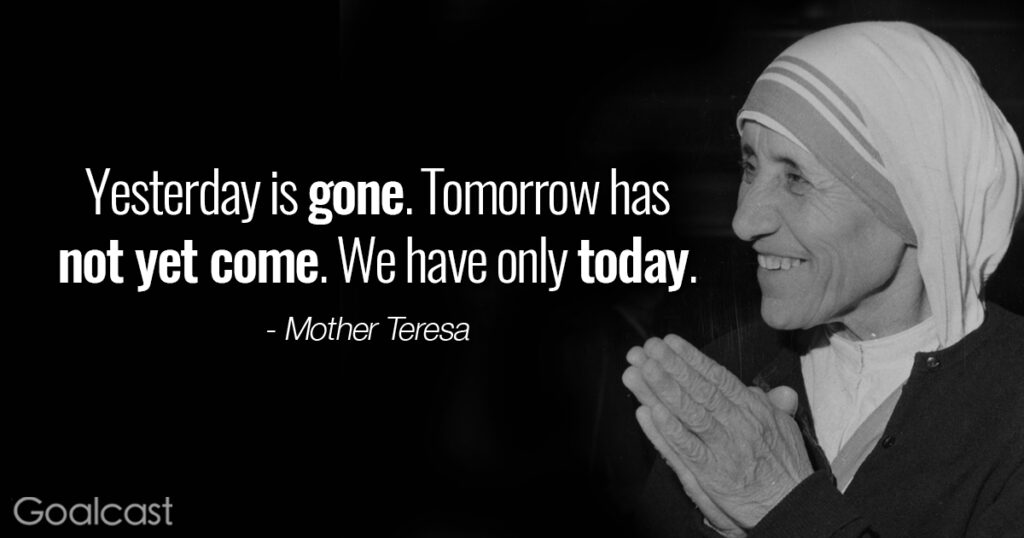
Most days seem very long…long and slow. I wanted to take some time today to consider how to go from long and slow…to full and fulfilling. In regular circumstances, we welcome worry into the day we’re in by looking back and looking forward. Very rarely are we just where we are. In considering how to best exist in the day we’re in, these wise words from Mother Teresa come to mind:
“Yesterday is gone. Tomorrow has not yet come. We have only today. Let us begin.”
It’s easy to get on board with this, but much harder to put it to practice. Keeping ourselves focused on the moment we’re in is something that we have to redirect ourselves towards multiple times a day, from the moment we wake up. It might just be that adding some purpose and plans, while remaining flexible, will allow us to focus on the day we’ve got and foster some real peace and joy. How can we keep ourselves in the present day long enough to add value to it?
Today needs all your energy. Let’s face it. It’s likely that distributing energy and effort between where we are, where we’ve been, and where we’re going is just too much for today. It will actually make things feel heavier when you are adding to the current pile you’re carrying. Today comes with things to do, but it also comes with room to breathe. There’s time for quiet, time for exercise, time for work, and time for generosity. What’s also very true is being where you are will naturally prepare you for whatever tomorrow brings and heal the wounds from yesterday. Ultimately, your days will be less slow when you are fully in them.
Yesterday happened. Don’t allow it to keep happening. The things we’ve done, the words we’ve said, etc, often replay in our minds. These moments on repeat have a deep effect on our hearts, bodies, and souls. If there is something unresolved from the past, take the steps to wrap it up and do what’s needed to let that go. Sometimes the heavy stuff from the past fall into the, “I wish I could undo that” category. Here’s the thing. You can’t do it over, but you can acknowledge to yourself and whoever it involves that you recognize your missteps. If anything from the past, from this category or another, still keeps coming up, take time to think about why. Ask yourself if there’s anything you can do about it. If you can, do it. If you can’t, practice letting it leave your mind quickly when it pops in. Let each day be it’s own story by not replaying the past.
Tomorrow is truly unknown. Stop trying to “WHAT IF?!” what it’s going to be. I got some simple advice recently…advice that’s not easy to take. Stop getting lost in: What ifs? This activity of imagining all the things that might happen is poison to the heart and soul. Imagining what tomorrow might be is a natural thing, but an awful distraction that leads to unnatural amounts of anxiety. If you are going to write the story of tomorrow, let it be about what you hope for and how what you choose today can prepare you for it. Don’t imagine that anything is finite or for sure besides God’s presence and your desire to care for your life and for the lives of others. When tomorrow comes to mind, think about the possibilities that are in your control. Don’t write stories about things you can’t possibly predict. Today will be full when your mind is engaged in what’s at hand. Who we are today will prepare us to receive the unknown of tomorrow.
Fill today with a good amount of routine. With so much unknown, it’s good to wake up with some things you can expect. Something simple that is surprisingly helpful is setting an alarm. Just because you don’t have anywhere to go, it doesn’t mean that you don’t have anything to do. Plan for purpose. Set time aside for the things you have to do and the things you want to do. See small things as big moves. If you move from working on your desk to reading on your couch, you’ve accomplished something. If you set time and space aside for being quiet, you’ve accomplished something. The days will blend together less if it feels like every hour matters. Don’t let the day happen to you. Make it happen. Because it is likely you will be interrupted, it’ll be easier to go with the flow if there is a flow.
Have at least one identifier for each day. Switching it up here and there is just as important as routine. Think about something special that differentiates one day from another. Maybe it’s an online gathering you have, or a show you like. It might be that there is something you eat on Saturday that reminds you that it’s Saturday! Having a daily identifier gives you 1- something to look forward to and 2- a way to embrace each day for what it is. If it’s just another day, then it’s easier to fall into complacency and boredom. You’ll also be easily drawn towards the past or anticipate the future. Knowing and owning the day will guide you towards the moment. Find a way to let each day stand out.
Prayer, quiet, and conversation. You will have a full and fulfilling day ahead of you if you’re in touch with God, others, and yourself. Quiet time will reveal where you are and allow you to identify what might be causing unrest…because there will likely be some level of disrupted peace in your heart each day. Stillness will also refresh you and center you. Set time aside for quiet, as well as prayer. Prayer that is part of a routine is crucial for a multitude of reasons. Creating a daily prayer routine…what prayers, where, and when… will help equip you with peace and clarity to respond to the things you can’t control. And friends and family will help support you and strengthen you through it all. Conversation with others is necessary because community is necessary. It’s also necessary because figuring everything out on your own can add burdens. Sharing burdens lifts them. Be quiet. Be with God. Be with others.
Give it a shape! Don’t think of it as a straight line. Give each day a shape. This is a weird way of explaining how I’m trying to see each day in my head. It’s not just a chronological series of events that I’m getting through. It’s an all encompassing experience. Each day is it’s own big oval! Or a diamond! Or whatever shape comes to mind. It’s full and complete on it’s own. A line cannot hold anything. Try not to see your day as a line. It’s an experience that you can both design and be surprised by. It may be formed by the past and forming the future, but it doesn’t depend on either. It’s where you are and what you’ve got.
Do what you can to bring purpose and peace to each and every day. Let small moves be meaningful. Don’t have the past on repeat and let the future come on it’s on. Put your energy and effort into the present.
Most days seem very long…long and slow. I wanted to take some time today to consider how to go from long and slow…to full and fulfilling. In regular circumstances, we welcome worry into the day we’re in by looking back and looking forward. Very rarely are we just where we are. In considering how to best exist in the day we’re in, these wise words from Mother Teresa come to mind:
“Yesterday is gone. Tomorrow has not yet come. We have only today. Let us begin.”
It’s easy to get on board with this, but much harder to put it to practice. Keeping ourselves focused on the moment we’re in is something that we have to redirect ourselves towards multiple times a day, from the moment we wake up. It might just be that adding some purpose and plans, while remaining flexible, will allow us to focus on the day we’ve got and foster some real peace and joy. How can we keep ourselves in the present day long enough to add value to it?
Today needs all your energy. Let’s face it. It’s likely that distributing energy and effort between where we are, where we’ve been, and where we’re going is just too much for today. It will actually make things feel heavier when you are adding to the current pile you’re carrying. Today comes with things to do, but it also comes with room to breathe. There’s time for quiet, time for exercise, time for work, and time for generosity. What’s also very true is being where you are will naturally prepare you for whatever tomorrow brings and heal the wounds from yesterday. Ultimately, your days will be less slow when you are fully in them.
Yesterday happened. Don’t allow it to keep happening. The things we’ve done, the words we’ve said, etc, often replay in our minds. These moments on repeat have a deep effect on our hearts, bodies, and souls. If there is something unresolved from the past, take the steps to wrap it up and do what’s needed to let that go. Sometimes the heavy stuff from the past fall into the, “I wish I could undo that” category. Here’s the thing. You can’t do it over, but you can acknowledge to yourself and whoever it involves that you recognize your missteps. If anything from the past, from this category or another, still keeps coming up, take time to think about why. Ask yourself if there’s anything you can do about it. If you can, do it. If you can’t, practice letting it leave your mind quickly when it pops in. Let each day be it’s own story by not replaying the past.
Tomorrow is truly unknown. Stop trying to “WHAT IF?!” what it’s going to be. I got some simple advice recently…advice that’s not easy to take. Stop getting lost in: What ifs? This activity of imagining all the things that might happen is poison to the heart and soul. Imagining what tomorrow might be is a natural thing, but an awful distraction that leads to unnatural amounts of anxiety. If you are going to write the story of tomorrow, let it be about what you hope for and how what you choose today can prepare you for it. Don’t imagine that anything is finite or for sure besides God’s presence and your desire to care for your life and for the lives of others. When tomorrow comes to mind, think about the possibilities that are in your control. Don’t write stories about things you can’t possibly predict. Today will be full when your mind is engaged in what’s at hand. Who we are today will prepare us to receive the unknown of tomorrow.
Fill today with a good amount of routine. With so much unknown, it’s good to wake up with some things you can expect. Something simple that is surprisingly helpful is setting an alarm. Just because you don’t have anywhere to go, it doesn’t mean that you don’t have anything to do. Plan for purpose. Set time aside for the things you have to do and the things you want to do. See small things as big moves. If you move from working on your desk to reading on your couch, you’ve accomplished something. If you set time and space aside for being quiet, you’ve accomplished something. The days will blend together less if it feels like every hour matters. Don’t let the day happen to you. Make it happen. Because it is likely you will be interrupted, it’ll be easier to go with the flow if there is a flow.
Have at least one identifier for each day. Switching it up here and there is just as important as routine. Think about something special that differentiates one day from another. Maybe it’s an online gathering you have, or a show you like. It might be that there is something you eat on Saturday that reminds you that it’s Saturday! Having a daily identifier gives you 1- something to look forward to and 2- a way to embrace each day for what it is. If it’s just another day, then it’s easier to fall into complacency and boredom. You’ll also be easily drawn towards the past or anticipate the future. Knowing and owning the day will guide you towards the moment. Find a way to let each day stand out.
Prayer, quiet, and conversation. You will have a full and fulfilling day ahead of you if you’re in touch with God, others, and yourself. Quiet time will reveal where you are and allow you to identify what might be causing unrest…because there will likely be some level of disrupted peace in your heart each day. Stillness will also refresh you and center you. Set time aside for quiet, as well as prayer. Prayer that is part of a routine is crucial for a multitude of reasons. Creating a daily prayer routine…what prayers, where, and when… will help equip you with peace and clarity to respond to the things you can’t control. And friends and family will help support you and strengthen you through it all. Conversation with others is necessary because community is necessary. It’s also necessary because figuring everything out on your own can add burdens. Sharing burdens lifts them. Be quiet. Be with God. Be with others.
Give it a shape! Don’t think of it as a straight line. Give each day a shape. This is a weird way of explaining how I’m trying to see each day in my head. It’s not just a chronological series of events that I’m getting through. It’s an all encompassing experience. Each day is it’s own big oval! Or a diamond! Or whatever shape comes to mind. It’s full and complete on it’s own. A line cannot hold anything. Try not to see your day as a line. It’s an experience that you can both design and be surprised by. It may be formed by the past and forming the future, but it doesn’t depend on either. It’s where you are and what you’ve got.
Do what you can to bring purpose and peace to each and every day. Let small moves be meaningful. Don’t have the past on repeat and let the future come on it’s on. Put your energy and effort into the present.
The phrase “all I have is today” emphasizes the present moment as the only reality, and encourages focusing on living fully in the here and now. It suggests that the past is gone and the future is uncertain, making the current day the only time you have control over and can truly experience.
Here’s a more detailed breakdown:
The Past is Gone:The past cannot be changed, and its existence is limited to memories and remnants.
The Future is Uncertain:While you can plan and imagine the future, it’s not guaranteed and is also a concept rather than a tangible reality.
Focus on the Present:The phrase urges you to make the most of the current moment, to be fully engaged in what you’re doing, and to appreciate the opportunities and experiences that the present offers.
Embrace the Unknown:By acknowledging that you only have today, you can better prepare yourself for the unknown possibilities of the future, by focusing on making the most of the present.
All we have is Today – YES North America
Apr 6, 2020 — Don’t imagine that anything is finite or for sure besides God’s presence and your desire to care for your life and for the lives of others. When tomo…
YES North America
What is meant by the phrase ‘the now is all there is’? – Quora
Oct 31, 2019 — * Gloria Schoofs. Co-Operator in Co-Creating a Better World with More Joy for All. · 5y. It simply means what it says, Now is all there is. There i…
Quora
What does ‘Today is the first day of the rest of your life’ mean? – Quora
Oct 17, 2015 — It means just what it says! Every morning when we wake up, provided that there’s a sunrise (which so far there have been), every one of us has an in…
Jun 9, 2012 — that’s all I’ve time for today, = that [story] has used up all the time that, today, I am allowed for my writing/speaking (implied = but …
‘About Today’ is about someone worried that their partner/close friend is depressed and thinking about commiting suicide, and the speaker is worried about them.
All I Have Is Today Lyrics: I woke up in another strange … Q&A. Find answers to frequently asked questions about the song and explore its deeper meaning.
Mar 17, 2015 — “Today of all days” is synonymous to saying “just my luck…”. It implies that the early arrival of this woman (to the narrator) is an inconvenience.
I don’t know the context of the story, but generally, ‘today of all days’ is a way of saying …More
1 vote
In this context, “today of all days” is synonymous to saying “just my luck…”. It implies …More
0 votes
Get the answer you’re looking for added to the web
Your question will be shared with online publishers who may be able to answer it. When shared, it won’t be associated with your Google Account.
Good Morning Everyone 🙏 My name is Anthony Joseph Hopkins and I am a grateful recovering alcoholic. I have a lot of gratitude about staying clean and sober for 35 years as of yesterday. I am very happy to just live to see another day clean and sober today. To be honest with all of you, I have to give God the credit for everything in my personal life. I even thank Him for my entire existence. I want to thank God for completely saving my life 15 years ago. Please pray for me and my entire family members and friends as well as everyone else who I do not know for their spiritual guidance and support 🙏! We are all in need of a Savior Jesus Christ! Thank you for keeping it real with me and everyone else!




 Site Title